Introduction: Windows Is No Longer Just for Humans
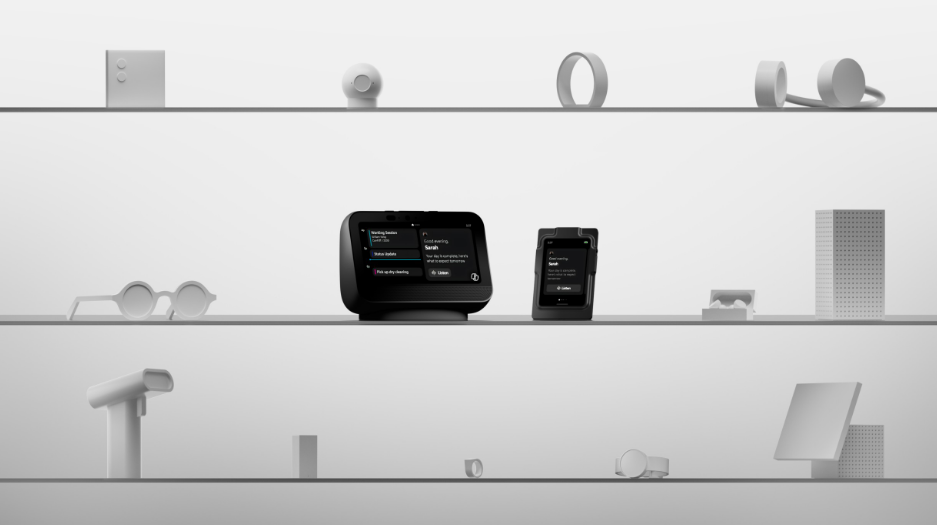
On June 2, at the Build 2026 developer conference in San Francisco, Microsoft dropped a bombshell: Windows is changing its last name to “Agent.” No longer serving apps, it is becoming the landlord for AI agents. Project Solara, this hardware platform, represents Microsoft’s ultimate answer to “what should the next computer look like”—no keyboard, no mouse, no grid of app icons. You walk up, and the AI agent knows who you are and what you need.
This is not a concept slide. Microsoft has already produced two reference designs: a desktop terminal resembling a smart speaker, and a wearable digital badge hanging from your chest. Their shared characteristic: you do not need to learn any operations. Just talk.
Event Details: Full-Stack Reconstruction from OS to Hardware
Windows Agent Runtime: System-Level Citizenship for Agents
Windows 11 24H2 will embed Agent Runtime—the “household registration” for agents within the system. Previously, AI assistants were plugins inside apps. Now agents stand equal to users, with their own identity, permissions, and lifecycle. More critically, they can directly tap hybrid compute across NPU, GPU, and CPU without routing through any third-party app.
Microsoft demonstrated a local meeting minutes agent live: no internet connection, analyzing locally stored Teams recordings within 2 seconds and generating complete summaries. All data stays on device—this is a knockout punch for enterprise users who refuse to upload internal meeting content to the cloud.
Project Solara Desktop Terminal: Your Dedicated AI Workstation
Powered by MediaTek chips with minimalist design, no traditional keyboard or mouse. Windows Hello automatically recognizes and logs you in as you approach, immediately connecting to your personal AI agent. It displays daily priorities, accepts voice or tap commands for task delegation, and serves as a companion to Windows PCs or connects to Cloud PC.
The design logic is clear: it does not replace your laptop but handles what your agent should do when you are away from the desk. Imagine leaving work—the agent continues processing emails, scheduling tomorrow’s meetings on the device, only vibrating for true emergencies.
Wearable Digital Badge: AI Assistant on Your Chest
This is more radical. Worn on the chest, integrating identity recognition, voice interaction, and haptic feedback. Employees issue voice commands to their agent anytime; the agent confirms completion through vibration, never requiring phones or computers. Picture factory inspections, hospital rounds, or retail floor operations—when both hands are occupied, voice plus vibration becomes the most efficient interaction mode.
Scout Enterprise Agent: Digital Employee That Never Clocks Out
Nadella calls it the “enterprise lobster,” because lobsters continuously molt and grow. Built on the OpenClaw framework, Scout operates 24/7, interacting in Teams like a human colleague. It reads emails, checks calendars, processes work messages, automatically completes repetitive tasks, reschedules conflicting meetings, and drafts professional replies.
Microsoft Corporate VP Omar Shahine put it bluntly: “Your company is essentially hiring your assistant. The whole point of having a personal assistant is that they keep working when you are not.”
Background Analysis: Why Microsoft Is Betting Big
Windows dominated the PC market for 40 years but was crushed by Apple and Google in the mobile era. The AI age gives Microsoft a chance to flip the board—if Windows becomes the “best agent execution platform,” the reason users choose Windows shifts from “needing Office” to “needing to run my AI agent.”
The business model transforms alongside: from one-time software licensing to continuous subscription services. You are not buying Windows; you are buying agent compute power and services.
Microsoft’s confidence stems from its complete AI ecosystem: Azure cloud services, MAI large models, GitHub developer tools, and Microsoft 365 productivity suite. What was missing was a hardware entry point to bundle and deliver these capabilities to users. Project Solara is that entry point.
Industry Impact: Giants Racing for Next-Gen Computing Entry
Microsoft is not the only player betting on AI-native hardware. Google released the Fitbit Air screenless band and Gemini AI glasses in May; Meta cut metaverse budgets by 30% to focus on AI glasses, with the Orion AR prototype already unveiled; Apple is secretly developing screenless Apple Glasses and camera-equipped AirPods; Amazon acquired Bee to enter the AI health wearable space.
All giants are pursuing the same goal: making AI agents the new operating system, and hardware the body for agents. For 40 years, users learned to use apps. In the future, apps will learn to understand users.
Follow-Up: Deployment Challenges and Competitive Landscape
Project Solara remains at the reference design stage, with mass production timelines and pricing yet to be announced. Microsoft must resolve several critical issues: agent reliability (24/7 operation without errors), enterprise data security compliance, and compatibility with existing IT systems.
More realistic competition comes from Apple. If Apple launches Apple Glasses by end of 2026, leveraging iPhone ecosystem stickiness, users may prefer running agents within their familiar environment rather than migrating to Windows.
Conclusion
Project Solara represents a radical vision of the future: computing devices are no longer machines you operate, but employees that work for you. This vision is beautiful, but widespread adoption remains a long road. For Microsoft, this is a do-or-die battle. For the industry, it is Operating System War 2.0. Whoever defines the interaction standards for the agent era will claim the next 40 years.
Leave a Reply