Category: AI Wearables

AI Wearables dedicated zone, focusing on the latest news, in-depth reviews, technical principles and industry trends of AI smart wearable devices. It covers smart watches, AI glasses, smart earbuds, health monitoring wearables and other full-category content.

  • L’Attitude 52°N Berlin Review: The First AI Glasses Built for Travelers

    L’Attitude 52°N Berlin Review: The First AI Glasses Built for Travelers

    Rating: 8.9/10

    L'Attitude 52°N Berlin Dune Aviator frame on model
    L’Attitude 52°N Berlin Dune Aviator frame on model

    Introduction: While Tech Giants Are Still Pitching, This Chinese Team Already Shipped

    The smart glasses market went absolutely insane this year. Google I/O 2026 just showcased its AI audio glasses concept co-developed with Samsung and styled by Gentle Monster. Meanwhile, a relatively unknown Chinese startup has already put its unit on shelves.

    The L’Attitude 52°N Berlin series opened pre-orders on May 19, with full sales beginning May 26. This is not a PowerPoint product. It has already raised over $400,000 on Kickstarter, won the IFA 2025 Innovation Award, and drawn attention from both WIRED and T3. More importantly, its founding team comes from the core product leadership of OPPO, OnePlus, and HTC—people who know exactly how to build wearable devices that are both beautiful and functional.

    Product Overview: Not Glasses with AI, But an AI Terminal Born for Travel

    The Berlin series adopts the classic Aviator double-bridge frame, available in Obsidian and Dune colorways. The entire unit weighs approximately 50g, constructed from Swiss EMS TR90 thermoplastic with titanium alloy hinges. The nano-grade crafted pivot boasts hardness roughly 3x that of standard steel. With IP65 body protection and an IP67-rated charging case, it handles rain, dust, and sweat better than you do.

    But what truly sets Berlin apart is its refusal to be a “jack of all trades.” Instead, it zeroes in on one scenario: outdoor travel and exploration.

    Killer Feature #1: 107° Ultra-Wide Field of View

    The Ray-Ban Meta camera is decent. L’Attitude 52°N went straight for a 12MP Sony IMX681 with a 107° field of view. What does this mean? Standing before the Mona Lisa at the Louvre, you do not need to step back three paces to capture the entire hall. Trekking along an Alpine ridge, you do not need to turn your head to record snow peaks on both sides.

    Even smarter is Flexible Framing technology—switch between portrait and landscape with one touch. Portrait for Instagram Stories, landscape for travel vlogs. Video records at 1080p/30fps with selectable durations of 30 seconds, 1 minute, or 3 minutes. With 32GB of local storage, shoot first and sync later, even without connectivity.

    T3’s hands-on review noted: “Images came out clear, colourful and very decent—arguably better than through my Gen 1 Ray-Bans.”

    Killer Feature #2: Goya AI Companion, Smarter Than a Tour Guide

    Berlin’s AI assistant is named Goya (paying homage to Spanish Romantic painter Francisco Goya), powered by a Google Gemini-trained cultural exploration model. This is not generic ChatGPT-style Q&A. It is vertically optimized for travel scenarios:

    • AI Tour Guide: Point at landmarks or museum artifacts. “Hey Goya, what’s the story of the Mona Lisa?” It delivers professional-grade commentary.
    • Live Translation: Supports English, German, French, Spanish, Italian, Japanese, and more. No more guessing menu items or street signs.
    • Travel Concierge: Restaurant recommendations, local discoveries, ask while you walk.

    A WIRED journalist tested it on-site with Goya’s most horrifying masterpiece, Saturn Devouring His Son—Goya responded fluently.

    Killer Feature #3: Offline Intercom for No-Network Environments

    This is Berlin’s most underrated killer feature. Via the dedicated Intercom Sports Band accessory, it supports offline group intercom for up to 8 people, requiring zero cellular signal. In mountains, islands, or deserts with no coverage, this is your safety lifeline.

    Imagine: a four-person team climbing Siguniang Mountain, the lead spots rockfall risk and notifies the entire squad instantly. A family gets separated at Disneyland, no need to hunt for signal—just talk through the glasses. This kind of scenario-hardened functionality is something neither Meta nor Google currently offers.
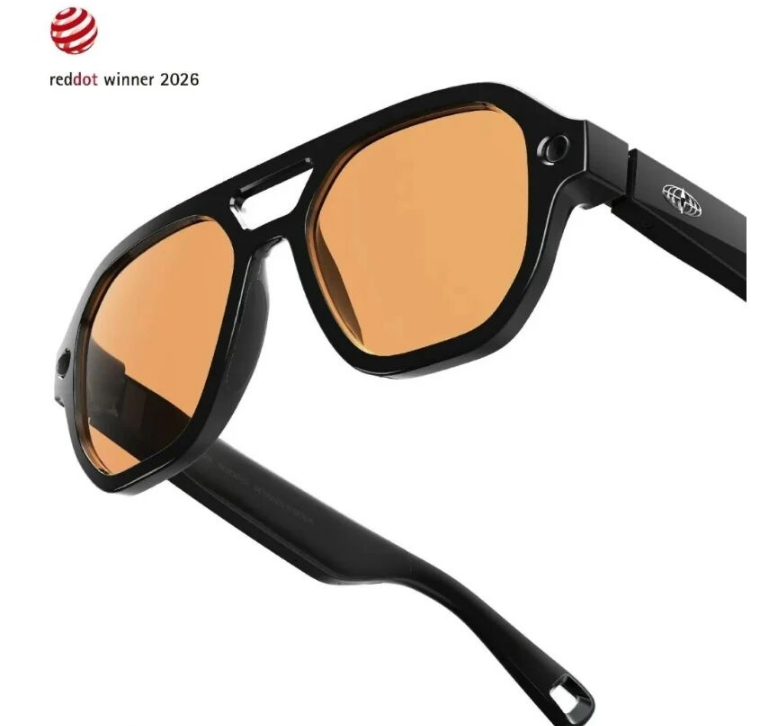
    L'Attitude 52°N Berlin Obsidian Aviator frame with camera module
    L’Attitude 52°N Berlin Obsidian Aviator frame with camera module

    Killer Feature #4: Battery Life and Fast Charging, Built for All-Day Adventures

    The built-in 200mAh battery delivers up to 6 hours per charge. The charging case provides 8-10 full additional charges, totaling approximately 66 hours of combined use. 20 minutes of fast charging reaches roughly 70%—power up during lunch, shoot all afternoon.

    Compared to the Ray-Ban Meta’s 4-5 hour single-charge life, Berlin is clearly optimized for long-haul travel.

    Specs Comparison: Berlin vs Ray-Ban Meta

    FeatureL’Attitude 52°N BerlinRay-Ban Meta Gen 2
    Weight~50g~50g
    Camera12MP, 107° FOV12MP, standard FOV
    Video1080p/30fps1080p
    AI AssistantGoya (Gemini cultural model)Meta AI (general model)
    Offline IntercomYes (8-person)No
    ProtectionIP65 (glasses) / IP67 (case)IPX4
    Battery6h + 66h total with case4-5h
    Fast Charge20min to 70%None
    Price$399$299-379

    Berlin runs roughly $20-100 more, but trades that for wider FOV, longer battery life, stronger protection, and deep travel-scenario optimization. For serious outdoor enthusiasts, the math works.

    Design and Wearability: First a Great Pair of Glasses, Then a Tech Product

    Gary Chen’s team understands one truth: smart glasses must first be glasses you actually want to wear every day.

    Berlin’s Aviator silhouette carries more visual identity than Ray-Ban Meta’s Wayfarer, with the double-bridge design radiating “pilot cool.” T3’s review observed: “They look more street-fashion than sports gear—but I can also picture skiers wearing them on the piste.”

    Nano-grade UV-hardened protective coating, scratch-resistant treatment, Swiss EMS TR90 construction—these details scream: this is not a toy, but gear built to accompany you up mountains and across deserts.

    Who Should Buy Berlin?

    Highly Recommended For:

    • Frequent international travelers and digital nomads
    • Hiking, mountaineering, and cycling enthusiasts
    • Museum and art exhibition regulars (the AI tour guide is genuinely transformative)
    • Adventure teams requiring off-grid communication

    Consider Alternatives If:

    • You are a daily commuter (feature overkill; Ray-Ban Meta is cheaper)
    • You are budget-sensitive ($399 base, plus $50 for photochromic lenses)

    Note on the Subscription Model

    Berlin includes a 12-month free AI feature trial, after which a paid subscription is required. Founder Gary Chen states pricing is still being finalized, but emphasizes that “most features will remain free, with only advanced capabilities charged,” analogizing to “hiring a British Museum tour guide for about $3.”

    For Kickstarter early backers, lifetime free AI access was promised—a show of good faith to early supporters and a commitment kept.

    Conclusion: A Chinese Team Just Taught the Global Market a Lesson

    The L’Attitude 52°N Berlin is not a spec-sheet stuffer. It is a scenario definer. It solves travel photography pain points with a 107° ultra-wide lens. It reinvents the museum experience with the Goya AI guide. It fills the outdoor communication gap with offline intercom. The former OPPO/OnePlus team has transferred their extreme user-scenario understanding from smartphones to eyewear, intact.

    While Google and Meta are still educating the market with general-purpose products, this Chinese company has already built the first AI glasses truly born for travel. If you are planning an Iceland ring road trip, a Nepal trek, or a Paris museum marathon this year—Berlin belongs on your gear list.


    Bottom Line: The most travel-focused AI glasses on the market. Not perfect, but purpose-built in ways competitors are not.
  • Insta360 Mic Pro Review: E-Ink Screen Redefines Wireless Mics

    Insta360 Mic Pro Review: E-Ink Screen Redefines Wireless Mics

    Rating: 8.7/10

    The wireless microphone track has gotten interesting lately.

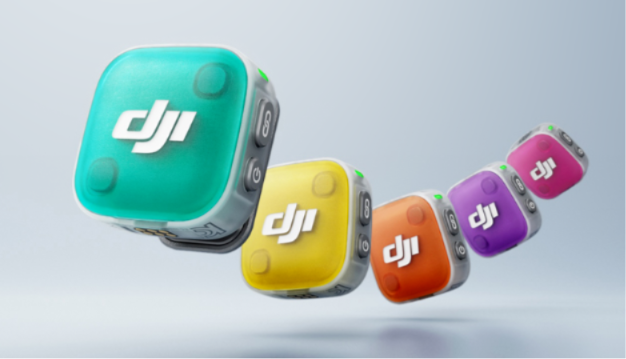
    DJI Colorful Wireless Mic
    DJI Colorful Wireless Mic

    Recently, DJI gave the Mic Mini 2 a “new wardrobe” — 8 magnetic color shells plus 5 windscreen colors, turning microphones into trendy accessories that match daily outfits. DJI’s move clearly tells young people that microphones aren’t just recording tools, but fashion accessories in your vlogs.

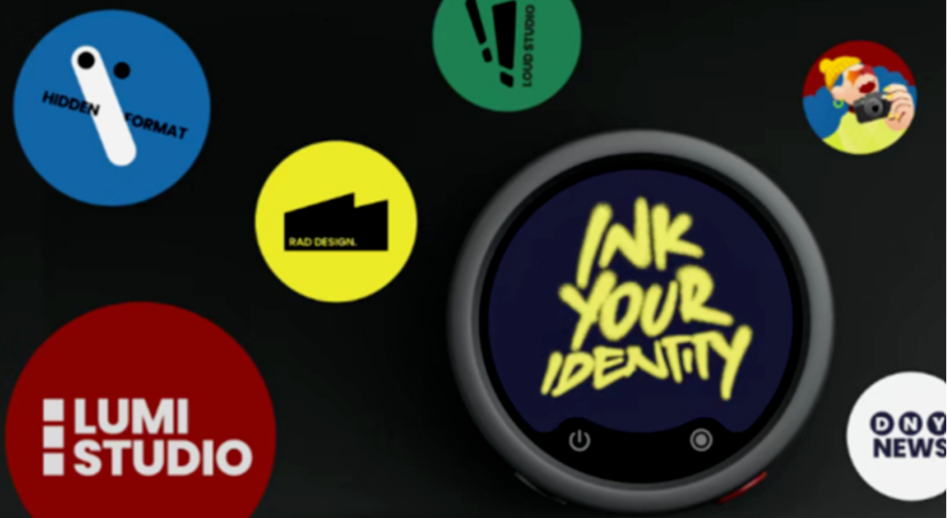
    But if DJI is “applying makeup to microphones,” Insta360 directly transformed its Mic Pro into a “digital badge.”

    Custom Device Identity Display
    Custom Device Identity Display

    Product Overview

    On May 19, Insta360 officially launched the flagship wireless microphone Mic Pro. The most eye-catching design is the color E-Ink screen embedded in the transmitter front, capable of displaying custom logos, emojis, brand identifiers, and even complex patterns in six colors.

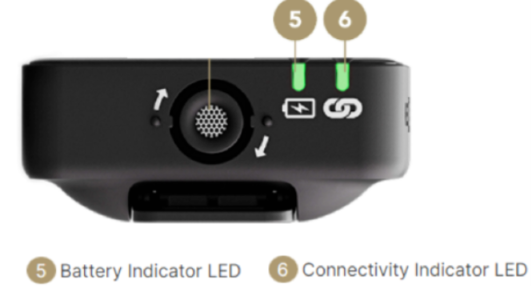
    Mic LED Indicator Layout
    Mic LED Indicator Layout

    Pricing: single transmitter at 528 yuan, one-transmitter-one-receiver at 978 yuan, two-transmitters-one-receiver at 1698 yuan. This pricing is basically on par with RODE, DJI and similar products, but adds E-Ink interaction, triple mic array, and NPU noise reduction.

    Core specifications:

    ParameterSpecification
    Transmitter ScreenSix-color E-Ink display
    Microphone CountThree (single transmitter)
    Pickup PatternsOmnidirectional/Hyper-directional/Cardioid/Figure-8
    Noise Reduction ChipNPU neural processing unit
    Internal Recording32-bit float
    Built-in Storage32GB
    Battery Life30 hours (with charging case)
    Screen CoverAG+AR coated Corning glass

    Technical Analysis

    E-Ink Display: From Function to Expression

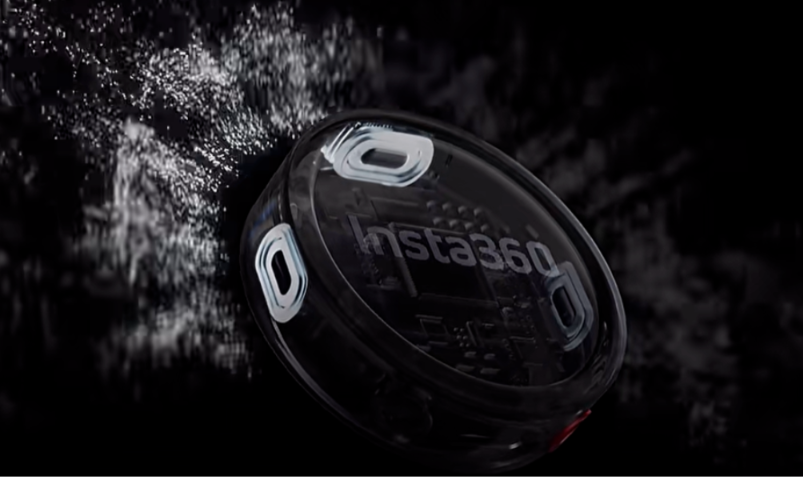
    Insta360 Mic mini 2
    Insta360 Mic mini 2

    Traditional lavalier microphones rely entirely on a few LED lights for status: red means recording, green means normal, flashing means low battery. But how loud is the volume? Is noise reduction on? Which track is running? Creators can only guess, or frequently interrupt shooting to check the phone app. In outdoor bright light, those indicator lights are virtually useless.

    Mic Pro’s E-Ink screen directly visualizes this information: remaining battery, noise reduction mode, channel status… More importantly, E-Ink has no blue light, extremely low power consumption, and staying on doesn’t drain battery life.

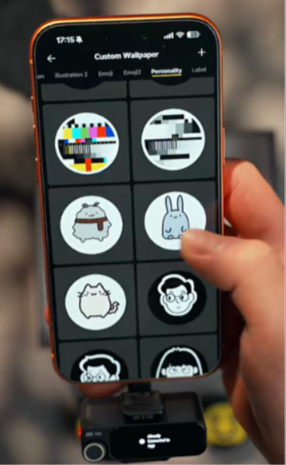
    But the screen’s true ambition clearly exceeds “displaying parameters.” Insta360 allows users to upload custom patterns through the app — personal channel logos, brand identifiers, even team numbers. During multi-person recording, each microphone screen can display different identifiers, making post-production track alignment instantly clear; MCN agencies can unify visual styles for their creators, syncing with a QR code scan; for commercial shoots, the microphone directly becomes a small billboard on the chest.

    This move is clever: it transforms the microphone from “functional hardware” to “expression medium,” giving creators an additional unique display position in every frame they appear.

    Triple Mic Array + NPU: Audio Hard Power

    Mic Pro packs three microphones into a single transmitter, supporting four switchable directional pickup patterns: omnidirectional, hyper-directional, cardioid, and figure-8. This means it can serve as a lavalier for voiceovers, a camera-top mic for ambient sound, or simultaneously capture both sides during face-to-face interviews. Truly one device covering vlogs, live streaming, podcasts, and interviews.

    Mic Pro is the first wireless microphone with built-in NPU (Neural Processing Unit). This processor designed specifically for AI tasks drives noise reduction algorithms to precisely identify and separate environmental noise, offering “weak” and “strong” noise reduction modes. Coffee shop background chatter, street wind noise, exhibition crowd noise — these high-frequency creator pain scenarios are all specifically addressed by the algorithm.

    Meanwhile, 32-bit float internal recording, 32GB built-in storage, safety track backup, three voice presets, dual auto-gain modes… these professional features are all present. And the transmitter can record independently without the receiver, providing an additional insurance policy for audio.

    Ecosystem Closed Loop: Insta360’s Creator Toolbox Logic

    Mic Pro continues Insta360’s ecosystem direct-connection DNA: without a receiver, it can directly transmit audio to Insta360 cameras like Luna, X5, and Ace Pro 2. This seemingly just eliminates one accessory, but actually represents Insta360 building a seamless creation workflow. From panoramic/action cameras to stabilizers, and now professional audio, creators’ migration costs within the Insta360 ecosystem are decreasing.

    Device Custom Wallpaper App
    Device Custom Wallpaper App

    Competitor Comparison

    FeatureInsta360 Mic ProDJI Mic Mini 2RODE Wireless Pro
    Single TX Price¥528¥299¥1595
    ScreenColor E-InkLED indicatorLED indicator
    Mic Count322
    Pickup Patterns4 typesOmnidirectionalOmnidirectional
    NPU Noise Reduction
    32-bit Recording
    Built-in Storage32GBNone32GB
    Battery Life30h18h7h

    Mic Pro offers class-leading features at the 528 yuan price point, with E-Ink screen and NPU as exclusive advantages.

    Pros and Cons

    ProsCons
    Color E-Ink screen, status visualization + custom patternsSingle transmitter 528 yuan,套装 price on par with competitors
    Triple microphone array, four pickup patternsE-Ink display area limited, complex patterns效果一般
    First NPU noise reduction wireless mic, precise降噪Custom pattern feature limited value for non-creators
    32-bit float recording + 32GB storageEcosystem direct connection limited to Insta360 cameras
    30-hour ultra-long battery lifeCharging case relatively large
    Transmitter can record independently

    Who Should Buy

    Highly Recommended:

    • Frequent on-camera vloggers/streamers
    • MCN agencies (unifying creator visual styles)
    • Commercial shoot teams (brand exposure needs)
    • Insta360 ecosystem users (seamless direct connection)

    Consider Alternatives:

    • Occasional recording users (DJI Mic Mini 2 better value)
    • Pure audio podcasters (RODE more professional sound quality)
    • Non-Insta360 camera users (ecosystem advantage unavailable)

    Conclusion

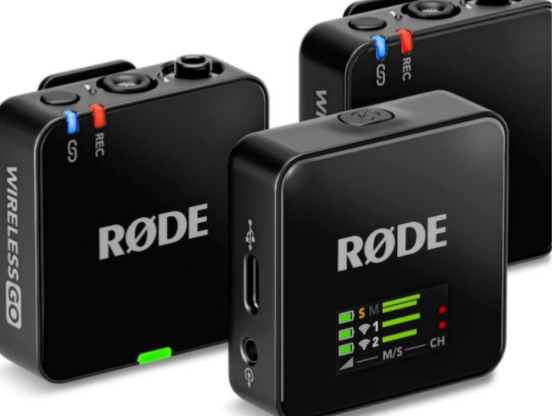
    RODE Wireless GO Mic Set
    RODE Wireless GO Mic Set

    While traditional microphones brand creators’ chests with manufacturer logos, Insta360 gives this space back to creators themselves.

    The Insta360 Mic Pro is a product of “smart addition.” It doesn’t compromise on sound quality, yet creates an entirely new interaction dimension through the E-Ink screen. This screen is not a gimmick, but a profound insight into the creator economy: when everyone is shooting video, the device itself becomes part of the content.

    The 528 yuan single-transmitter starting price makes this innovation accessible. For creators, Mic Pro is not just a microphone, but a small billboard on the chest, a visual tag for post-production alignment, and an extension of brand style.

    The wireless microphone track has crossed the basic competition stage of “good enough sound quality, stable connection,” entering the deep waters of experience differentiation. DJI uses color shells to切入 fashion and emotional value; Insta360 redefines interaction logic with the E-Ink screen. Different paths, same essence — transforming the microphone from a passive recording box into an extension of creators’ active expression.

  • Zhongjian Tech Funding Signals Smart Glasses Market Split

    Zhongjian Tech Funding Signals Smart Glasses Market Split

    I. Funding and Team Composition

    Smart glasses company Zhongjian Technology, founded in 2023, has completed three funding rounds totaling tens of millions of yuan. Investors include Shokz, Gaofeng Patience Fund (under Professor Gao Bingqiang), Haochen Capital, SEEFund, listed company Appotronics (688007), and Professor Gao Bingqiang personally, with Qiyu Capital serving as exclusive financial advisor. Funds will advance R&D, with the first-generation product already completed.

    Founder Zhao Peng is a gold medalist of the 26th National Physics Competition, with a bachelor’s and PhD from Tsinghua University’s Department of Electronic Engineering, specializing in novel display and micro-nano optoelectronics technologies, with multiple SCI papers published. His career includes serving as Research Institute Director at Appotronics, responsible for frontier technology R&D and industrialization, focusing on novel displays and AR glasses, covering team building, technology innovation, product planning, R&D implementation, and business development. Zhao has traditional glasses industry resources, with relatives working in Danyang, a major glasses manufacturing hub.

    Danyang glasses factory lens coating production line
    Danyang glasses factory lens coating production line

    Among investors, Shokz is a bone conduction headphone company, Appotronics is Zhao’s former employer, and Professor Gao Bingqiang is an emeritus professor at HKUST’s Department of Electronic and Computer Engineering.

    II. Technical Solution and Product Form

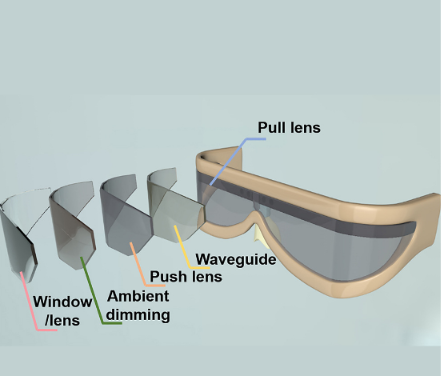
    Zhongjian Technology’s core product is smart zoom daily glasses using electrochromic zoom optical devices, changing lens optical properties through electrical signals. The product integrates distance sensors, inertial sensors, posture sensors, etc., automatically adjusting lens power based on viewing distance.

    Electrochromic zoom glasses lens structure diagram
    Electrochromic zoom glasses lens structure diagram

    For anti-dizziness design, the product filters non-zoom noise signals by identifying user movement intentions through sensors. The zoom experience approaches single-vision glasses. The team is simultaneously advancing eye-tracking technology, further reducing dizziness through gaze-point adjustment. Optical design adopts a full-stack self-developed solution, with self-developed zoom components.

    The ultimate target form is consistent with ordinary glasses, but early versions will be strongly function-oriented with a tech-style appearance, integrating full automation and strong interaction functions, with subsequent iterations gradually reducing form factor and simplifying design. The product is planned for crowdfunding in 2026.

    III. Market Background and Demand Analysis

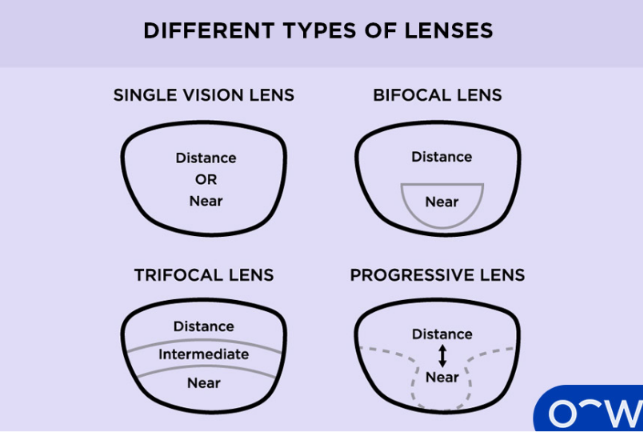
    With information technology development, myopia prevalence among post-80s and post-90s generations has risen significantly. The industry saying “age 43, eye transition” refers to people in their 40s beginning to experience presbyopia, with declining dynamic focusing ability, creating “myopia-presbyopia coexistence” vision needs. Current market solutions include using two pairs of glasses or progressive multifocal lenses.

    :单焦、双焦、三焦点和渐进镜片比较
    :单焦、双焦、三焦和渐进镜片对比

    Progressive multifocal lenses integrate multiple focal points on a single lens, simultaneously satisfying far, mid, and near vision needs, but suffer from narrow usable field of view, obvious dizziness, high channel fitting costs, and expensive retail prices. Electrochromic zoom optical devices can achieve single-lens zoom, higher integration, smaller size and weight, and lower cost. This technology has currently reached the industrialization critical point.

    China’s glasses market has exceeded 100 billion yuan scale.

    IV. Industry Competition Landscape

    From 2025 to 2026, the smart glasses market remains active. Public information shows: Xiaomi AI glasses entered the market at 1999 yuan starting price; Meta Ray-Ban continues iterating; Thunderbird Innovation completed Series C funding; Fourth Paradigm partnered with Anyka Microelectronics to release 13-megapixel full-scene AI glasses; Meizu StarV Snap AI shooting glasses with Snapdragon AR1 chip went on sale; XREAL, Yingmu Technology and other AR manufacturers actively raised funding.

    These products generally feature AI functions (shooting, voice assistant, real-time translation, etc.) as core selling points. Zhongjian Technology’s product positioning differs, with core functions being optometric zoom and AI functions as subsequent add-on directions.

    CES 2026 most anticipated smart glasses collection
    CES 2026 most anticipated smart glasses collection

    V. Analysis Perspectives

    1. Track Divergence Signal

    The smart glasses market is developing two parallel paths: one with AI interaction as core, emphasizing shooting, voice, translation and other functions, represented by Meta Ray-Ban, Xiaomi AI glasses, etc.; the other with optometric functions as core, emphasizing solving real vision problems, with Zhongjian Technology representing this path. The two paths are not mutually exclusive, but current product definition stages have different emphases.

    2. Crowdfunding Model Rationality

    Choosing crowdfunding as the debut channel has dual significance for electrochromic zoom as an entirely new category: first, validating real market demand; second, obtaining early user feedback to guide subsequent iterations. Considering progressive multifocal lenses’ long-standing user experience pain points, if the electrochromic zoom solution can achieve expected optical performance and wearing comfort, there is clear replacement space.

    3. Technology Maturity Assessment

    The judgment that electrochromic zoom devices “have reached the industrialization critical point” can be verified from two dimensions: first, Zhongjian Technology’s first-generation product has been completed; second, funding continues to be invested in R&D rather than mass production, indicating the product remains in optimization stage rather than large-scale manufacturing. The crowdfunding timeline set for 2026 also reflects the team’s prudent assessment of technology maturation pace.

    4. Competition Boundary Uncertainty

    Current smart glasses market competition boundaries have not solidified. AI-function-centered products may integrate zoom capabilities in future versions, while optometric-function-centered products are also planning to add AI functions. The two paths’ endgame may be convergence, but in the short term, product definition differences will determine respective target user groups and pricing strategies.

    5. Investors’ Industrial Logic

    Among the investor portfolio, Shokz (acoustic wearable devices), Appotronics (novel displays), and Professor Gao Bingqiang (semiconductors) represent different technology dimensions respectively, indicating capital recognizes the long-term logic of “glasses as visual entry point,” but has not formed consensus on specific technology paths, adopting a diversified layout strategy.

  • Meta Muse Spark Rollout: Voice, Vision, Wearables Converge

    Meta Muse Spark Rollout: Voice, Vision, Wearables Converge

    扎克伯格介绍元人工智能多模态策略
    扎克伯格介绍Meta AI多模态战略

    I. Three Waves, One Goal

    On May 12, Meta announced three major AI updates:

    First, voice conversation upgrade. The Meta AI App integrated Muse Spark, supporting interruption at any time, topic switching, seamless multilingual transitions, and image generation during conversations.

    Second, vision capability expansion. “Live AI” extended from glasses-exclusive to mobile, enabling real-time Q&A by simply opening the camera.

    Third, glasses system overhaul. Ray-Ban Meta and Oakley Meta glasses will receive Muse Spark updates within weeks, with screen-equipped versions coming in summer.

    All three waves target one goal: letting Muse Spark’s “native multimodal” brain occupy every entry point for user-digital world interaction.

    II. What is Muse Spark?

    One month earlier, on April 8, Meta Superintelligence Labs released its first fully proprietary LLM Muse Spark, codenamed “Avocado.”

    This marks a major strategic shift for Meta AI — from the open-source Llama route to proprietary closed models.

    Muse Spark’s core capability is simultaneous processing of voice, text, and vision — not simple concatenation, but native fusion. It supports both “Instant” quick response and “Thinking” deep reasoning modes, and can run multiple sub-agents in parallel for complex tasks.

    On capital expenditure, Meta spent $70-72 billion in 2025, increasing to $115-135 billion in 2026. Zuckerberg stated in the January earnings call: “We rebuilt the foundation in 2025, now we’re rolling out new products in the coming months.”

    Meta AI app voice and image generation interface
    Meta AI app voice and image generation interface

    III. Glasses Data Shines, Meta Goes All In

    Ray-Ban Meta glasses’ market performance is Meta’s core confidence in betting on wearables.

    Q1 2026 earnings show AI glasses DAU tripled year-over-year. Zuckerberg called it “one of the fastest-growing consumer electronics categories.”

    In the global AI glasses market, Meta leads with 85.2% share.

    The update rollout starts in the US and Canada, with screen-equipped versions arriving in summer. This means every frame users see through their glasses, AI can understand in real-time and converse instantly.

    Additionally, WhatsApp, Instagram, Facebook, Messenger, and Threads will fully integrate Meta AI across search, group chats, and posts.

    IV. Meta’s Ambition Extends Beyond Better Glasses

    These three updates appear as feature upgrades, but本质上 represent an entry point war.

    Bringing “Live AI” to mobile cultivates user habits — getting users accustomed to asking AI questions through their camera. When glasses experience becomes good enough, migration cost approaches zero.

    Voice conversation naturalness improvements solve wearable device interaction bottlenecks. Glasses have no keyboard; voice is the only efficient input method. Interruption, topic switching, and multilingual support determine whether users are willing to talk to their glasses in public.

    Muse Spark going proprietary copies OpenAI’s playbook — building moats with proprietary models. Open-source Llama builds reputation; proprietary Muse Spark generates revenue.

    Most noteworthy is the prototype of “proactive AI.”

    In shopping scenarios, AI automatically integrates web results, filters by price/style/distance, presents maps, even @ brand creators. This isn’t search; it’s intent prediction. When AI can “see” products you see, “hear” your needs, and “proactively” push solutions, it ceases being a tool — becoming a shopping guide, secretary, translator, and photographer combined.

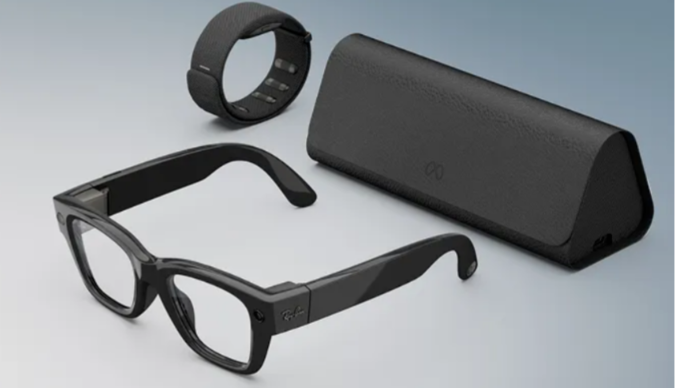
    Meta智能眼镜,带充电盒和腕带
    Meta智能眼镜,带充电盒和腕带

    V. Meta Can’t Wait to Take Mobile’s Lunch

    Meta’s anxiety hides in the data. 85.2% market share looks impressive, but the overall AI glasses market remains small.

    $115-135 billion capital expenditure converts to nearly trillion RMB.

    If AI glasses cannot transform from “novelty toys” to “daily necessities,” Meta’s earnings will suffer.

    So Meta’s strategy is clear —

    First cultivate users through mobile apps, then harvest scenarios with glasses, finally lock in stickiness through ecosystem.

    But the question remains: do users really need a pair of always-online AI glasses?

    VI. Conclusion: Everywhere is the Answer, and the Question

    Meta says AI should live Everywhere.

    This answer is grand, but also exposes a problem: when AI is everywhere, do users still have the right to be “offline”?

    Glasses are more intimate than phones, more concealed, harder to ignore. Every frame they see becomes AI training data. Whether Meta’s privacy policy can keep pace with hardware penetration is the biggest variable ahead.

    Meta is betting $115 billion that AI glasses will become the next computing platform.

    Whether this money burns a future or not, we’ll see in H2 2026.