AI fitness hardware is designed for home and personal fitness scenarios. It utilizes artificial intelligence visual recognition, motion analysis, and data algorithms as core technologies to provide functions such as motion correction, intelligent guidance, exercise monitoring, personalized courses, and data tracking.
A smart meditation cushion called MEIKE is challenging the $27.5 billion global meditation market. This product attempts to elevate traditional meditation from “metaphysics” to “science” using sensors and algorithms. As observers at the intersection of hard technology and psychology, we find its core selling point lies in its “unobtrusive monitoring,” which solves the incongruity of wearable devices in various settings.
MEIKE Smart Meditation Cushion
From Metaphysics to Data: A Paradigm Shift in the Healing Economy The global meditation market is expanding at a CAGR of 23.3%, and is projected to exceed $27.5 billion by 2030. In China, among the 680 million people with sub-optimal mental health, young and middle-aged adults aged 25-49 account for a staggering 66%. However, the market is saturated with products that exploit the placebo effect, such as “thousand-yuan crystals” and “ten-thousand-yuan lucky candles,” revealing a pressing consumer demand for emotional healing and a lack of effective solutions.
The MEIKE cushion from Shenzhen Beyond Mind Technology Co., Ltd. offers another possibility: by capturing heart rate and respiratory rate through built-in sensors, it uses AI algorithms to quantify the effects of meditation. Its founder, Sun Haiyang, holds a master’s degree in psychology, and the core team comes from the Institute of Psychology, Chinese Academy of Sciences—this “psychology + hard technology” background provides professional endorsement for the product.
Form Revolution: Why Abandon Headbands and Watches?
Currently, meditation hardware is mostly concentrated in wearable devices: brain-computer interface headbands (such as Muse) can monitor brainwaves, but they are restrictive; smart rings (such as Ora) focus on sleep and exercise, which conflicts with the meditation scenario. The essence of meditation is “letting go,” while wearable devices “increase” the burden on the body.
MEIKE’s breakthrough lies in the digital upgrade of the “meditation” scenario: the cushion, a basic necessity for meditation, is embedded with sensors to achieve “imperceptible monitoring.” Users do not need to wear additional devices, avoiding distractions caused by the presence of devices. This “old scenario + new technology” approach precisely addresses the core need of meditators to “return to their bodies.”
How Does an AI Coach Work?
MEIKE’s competitive advantage lies in its closed-loop data system and real-time feedback:
● Non-contact monitoring: Captures physiological data while seated, without skin contact;
● AI emotion intervention: Dynamically adjusts the rhythm of guided meditation when anxiety levels rise, acting like an “AI personal trainer”;
● Quantitative assessment: Generates visual reports based on meditation depth, breathing stability, and relaxation level, making progress “visible”;
● Comprehensive content library: Covers needs such as sleep aid and stress reduction, adaptable to environments like offices and bedrooms.
For meditation beginners, real-time feedback effectively establishes practice habits; for experienced users, data reports provide direction for improvement.
MEIKE Helps You Focus
Who needs this “scientific cushion”?
Suitable users include:
● High-pressure corporate employees or entrepreneurs;
● Young and middle-aged people with sleep disorders or anxiety;
● Meditation beginners who need real-time feedback to establish habits;
● Rational users who value scientific data and are skeptical of “mystical healing.”
Price and value: A health investment or a waste of money? Referring to similar high-end meditation hardware (such as the Muse headband, priced at around $250 or more), MEIKE is expected to be priced between $299 and $350. While higher than ordinary cushions, its long-term health investment value makes it worthwhile as a “personalized meditation coach.” It’s important to note that hardware is only an aid; the effectiveness of meditation ultimately depends on consistent practice and cannot replace medical devices.
Conclusion: Rebuilding Inner Order in the Digital Age In the current era of rapid growth in the healing economy, MEIKE represents a rational force: deconstructing meditation with data and empowering tradition with technology. It is not just a cushion, but a bridge connecting mindfulness and technology. For consumers seeking scientific healing solutions, this product deserves to be on their 2026 watchlist.
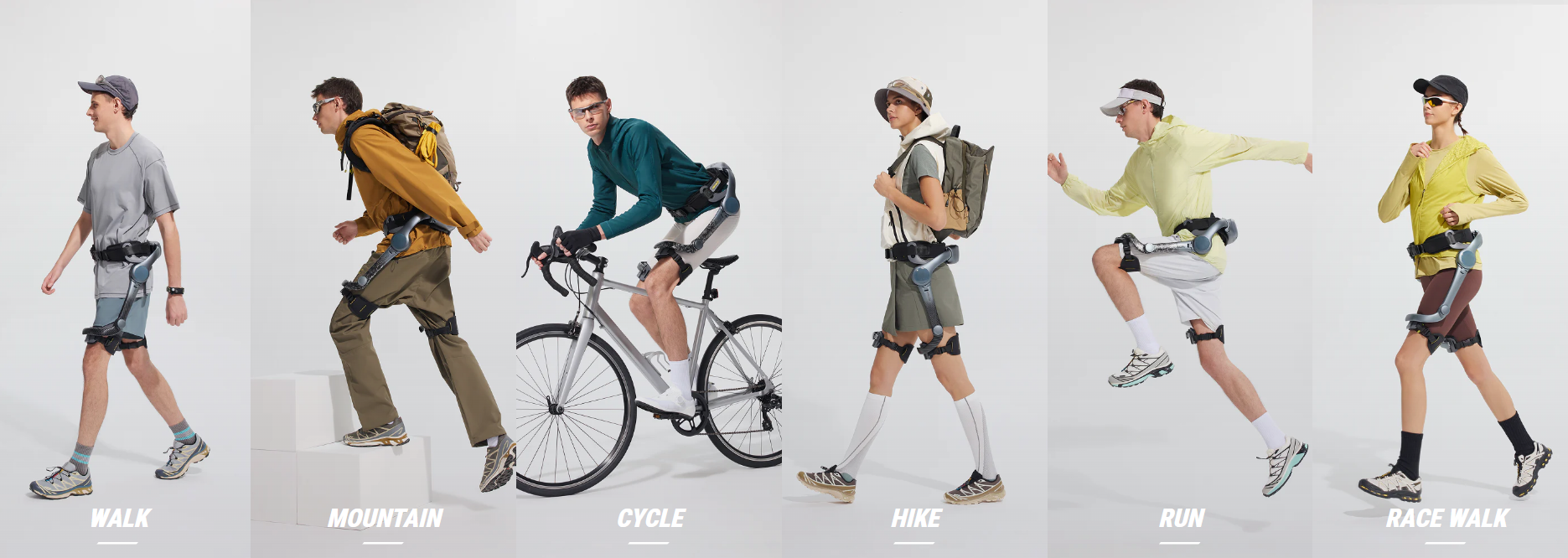
For a long time, exoskeleton technology has been confined to specialized fields such as industrial handling, medical rehabilitation, and special operations. High costs, bulky structures, and complex operating procedures have kept it out of reach of ordinary consumers. However, on March 19, 2026, Sumbu, a company specializing in civilian wearable smart exoskeletons, launched its S3 series exoskeleton at the AWE exhibition, attempting to rewrite this landscape. It not only lowers the price of exoskeletons to the thousand-yuan level but also achieves a crucial leap from “professional tools” to “mass consumer products” through lightweight design and intelligent algorithms.
As one of the first media outlets to receive internal testing devices, our reporter conducted comprehensive testing of the three models in the S3 series (S3 Basic, S3 Pro Advanced, and S3 Ultra Flagship) during the exhibition and the following two weeks. From design and performance to practical application scenarios, we analyze how this “second pair of legs” can shake up the civilian exoskeleton market and how ordinary consumers can choose according to their needs.
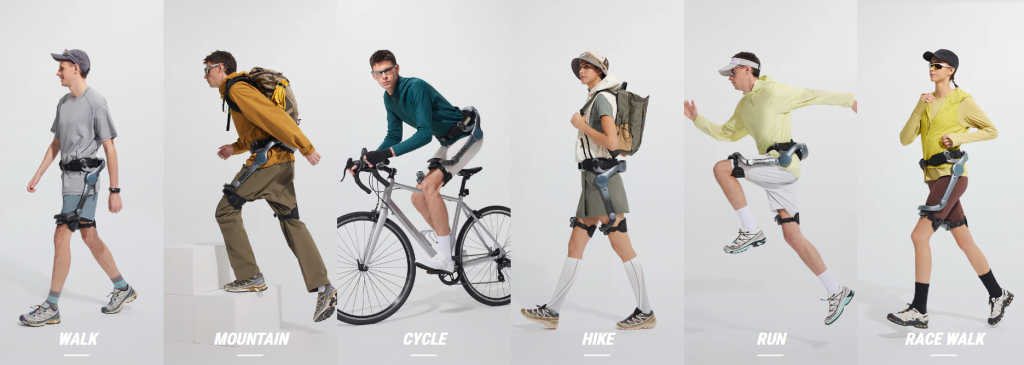
Sumbu S3 Series
Design Innovation: Lightweight and Seamless Design, Solving Core Pain Points for Consumer Use
Traditional exoskeletons are often perceived as cold steel structures and cumbersome strap designs, which has been a major obstacle to their widespread adoption. The core breakthrough of the Sumbu S3 series lies first and foremost in its extreme pursuit of “lightweight” and “ergonomics.”
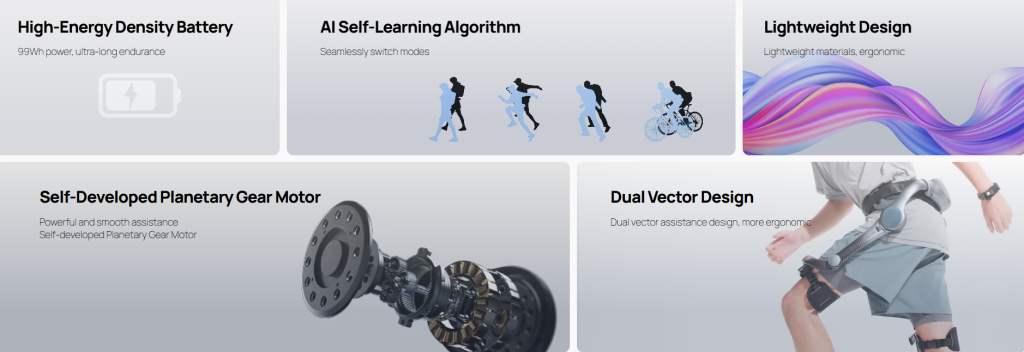
The entire series utilizes a hybrid structure of aerospace-grade aluminum alloy and carbon fiber composite materials. Official data shows that the entire device weighs only around 2.0 kg—equivalent to only a 15-inch laptop. Furthermore, through optimized lumbar support design, the weight is effectively distributed to the hips and waist, resulting in virtually no noticeable burden when worn. For a device that requires powerful power assistance, this lightweight design represents a significant breakthrough in engineering.
To address the issue of “foreign object sensation,” the S3 series features targeted optimization in the lumbar support. Its curved design closely conforms to the waist contours of different users, achieving even force distribution. Of particular note is the series’ 100mm infinitely retractable lumbar support, which can support waist circumferences up to 120cm, covering the vast majority of body types from petite women to robust men, offering far greater adaptability than similar products.
Easy to wear further lowers the barrier to entry for civilian use. Without assistance, a single user can complete the donning process in under a minute—the device abandons the complex locking design of traditional industrial exoskeletons, employing a combination of magnetic attachment and quick-release mechanisms, truly achieving “wearable in everyday life and usable on the go,” breaking the limitation that exoskeletons are “only usable in specific scenarios.”
Wearable Body Intelligence
Core Performance: Embossed Intelligence Empowerment, Breakthroughs in Response Speed and Power Performance
The S3 series is defined as an “embodied intelligent device,” rather than a simple power booster, primarily due to the synergistic effect of its self-developed power system and intelligent algorithms—a fundamental difference between it and traditional exoskeletons.
In terms of power, this series is equipped with a planetary gear motor independently developed by Sumbu, with a measured response speed of 0.008 seconds (8 milliseconds). This means that the motor has already completed its assist output the instant the user issues the “lift your leg” command, achieving seamless human-machine collaboration. Peak torque varies across different models: the basic S3 has 28 N·m, the Pro model has 32 N·m, and the Ultra flagship model reaches 36 N·m (at full power), sufficient for high-load scenarios such as climbing hills and stairs. Meanwhile, the motor system has an efficiency exceeding 80% and excellent heat control; even after prolonged walking, the motor surface will not become hot to the touch.
Intelligent algorithms constitute the “brain” of the S3 series. The device has a built-in nanosecond-level high-speed processor and a self-developed electronic control system, capable of recognizing 13 movement modes within 0.2 seconds, without requiring manual switching by the user. Its core advantages lie in two aspects: first, human-machine closed-loop detection, which uses multi-point sensors on the lower limbs to capture the user’s posture in real time and accurately match the assistance level; second, self-learning capability, where the device continuously records the user’s gait habits, pace, and rhythm. The longer it is used, the more the assistance adapts to the user’s needs, achieving “better harmony with use.”
Battery life and environmental adaptability ensure its daily use. All models are equipped with automotive-grade high-energy-density batteries, support PD3.1 fast charging, and extreme environment tests show that its operating temperature range covers -20℃ to 60℃, making it suitable for complex scenarios such as extremely cold snowfields and hot deserts. Furthermore, the battery meets aviation carry-on standards, allowing business travelers to board with peace of mind, further expanding its usage scenarios.
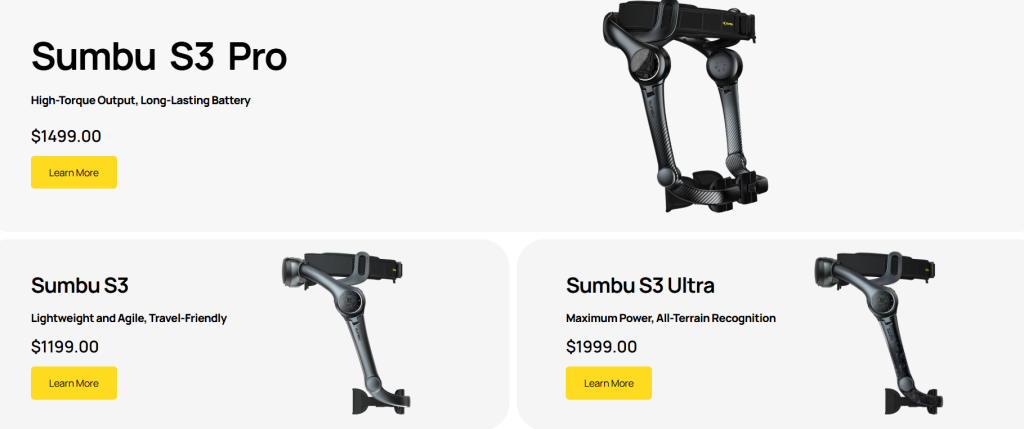
Sumbu S3 Series Pricing
Comparison of the three models: tiered positioning, covering different consumer needs
The S3 series shares a core architecture, but forms a clear tier in configuration, battery life, and smart features, with prices ranging from $1199 to $1999, precisely covering the needs of different consumer groups. The following is a detailed comparative analysis compiled by this newspaper:
Feature Dimension
S3 (Basic Model)
S3 Pro (Advanced Version)
S3 Ultra (Flagship Model)
Official pricing
$1,199
$1,599
$1,999
Core positioning
Daily commute, assistance from elders
Outdoor hiking, light exercise
Extreme exploration, professional fitness
peak torque
28 N·m
32 N·m
36 N·m (Full power version)
range
Approximately 15 kilometers
Approximately 20 kilometers
25 km (99Wh battery)
Power Mode
Gentle, Normal, Sport
+ Fitness Mode
+ Mega Mode (Full Unlocked)
AI learning ability
Basic gait recognition
Enhanced habit memory
Deep Neural Networks Self-Evolution
Body material
Mainly aviation aluminum alloy
Aluminum-carbon mixture
All carbon fiber composite materials
Protection level
IP54
IP54
IP54 (Reinforced Structure)
Recommended audience
Urban commuters, senior citizens
Weekend outdoor enthusiasts
Hardcore gamers, long-distance hikers
S3 Basic Model ($1199): Affordable Entry-Level Choice
As a core model breaking the price barrier for civilian exoskeletons, the S3 basic model, while slightly reducing torque and battery life, retains its core 8ms response time and intelligent posture recognition functions. Real-world testing shows that its 15km range is sufficient to cover the daily travel needs of most urban users. Whether it’s daily walks and grocery shopping for the elderly or commuting light for office workers, it meets basic needs, highlighting its cost-effectiveness.
S3 Pro ($1599): A Balanced All-Round Choice
The S3 Pro achieves an optimal balance between power and range. Its 20km range and 32N·m peak torque make it suitable for daily urban use as well as weekend outings and light hikes. The newly added Fitness mode is suitable for low-impact gym training and is also ideal for delivery and takeout workers who need to work outdoors for extended periods, making it a rational choice for most consumers.
S3 Ultra ($1999 USD): The Benchmark of Ultimate Performance
As the flagship model of the series, the S3 Ultra incorporates all of Sumbu’s top technologies: a full-power torque of 36 N·m, a long battery life of 25 km, and a Mega fully unlocked mode that provides a near-running boost; the all-carbon fiber construction further reduces weight and enhances wearing comfort. This model is primarily aimed at long-distance hikers, mountaineering enthusiasts, and tech geeks seeking the ultimate technological experience, representing the highest level of civilian exoskeleton technology in 2026.
Safety and Durability: The Core Bottom Line for Civilian Products
For wearable power devices, safety is the core prerequisite for market acceptance and a key area of investment for Sumbu’s innovation. Real-world testing shows that the S3 series has three core advantages in safety protection:
Firstly, a preventative safety system. Within 0.5 seconds of power-on, the highly sensitive sensor completes a full self-check. If it detects that the user is in a lying position or not properly fitted, the system immediately locks the assist function to prevent injury from misoperation. This design is particularly user-friendly for middle-aged and elderly users.
Secondly, a professional Battery Management System (BMS) monitors the battery’s health in real time, effectively preventing overcharging, over-discharging, and overheating risks, ensuring battery safety and lifespan, while meeting automotive-grade safety standards.
Thirdly, structural durability. The lumbar support features a stress-balanced design to prevent breakage due to excessive stress at a single point; its IP54 dust and water resistance allows it to operate stably in complex environments such as light rain and sandstorms, significantly reducing maintenance costs and extending the device’s lifespan.
Ecosystem and Interaction: Multi-Platform Adaptation for Personalized Customization
The S3 series is not limited to the hardware itself but has built a multi-platform interactive ecosystem, supporting联动 control with Android phones, iOS devices, and Apple Watch, balancing convenience and customization needs.
Users can adjust five power modes, from Gentle to Mega, via the device or mobile app to suit different road conditions and physical states. Exercise data is synchronized to the mobile app in real time, generating health reports such as steps, assistance duration, and calories burned, allowing users to easily track their exercise status. More importantly, in most scenarios, users do not need to operate the device manually; it can automatically recognize terrain (such as uphill or stairs) and adjust the assistance level autonomously, achieving “seamless operation.”
Purchase Recommendations and Market Outlook
After two weeks of in-depth testing, this newspaper believes that the core value of the Sumbu S3 series lies in its successful breaking down the civilian barriers of exoskeleton technology—it does not replace the user’s legs, but rather extends the boundaries of human movement through intelligent assistance, making what was once “out-of-reach” wearable smart technology an accessible everyday tool for ordinary consumers.
For different consumers, this newspaper offers the following purchasing recommendations:
For budget-conscious consumers primarily using the product for short urban trips, or those planning to give it as a gift to elders, the S3 basic model ($1199) is the best choice. Its core experience is consistent with the flagship model, effectively addressing the basic pain points of limited range and offering the best value.
For weekend outdoor enthusiasts, those seeking longer battery life, or those needing reduced burden during outdoor work, the S3 Pro ($1599) is the optimal choice. It achieves a perfect balance between performance and price, with a 20km range covering most weekend outdoor scenarios.
For tech geeks, long-distance hiking enthusiasts, or sports aficionados seeking the ultimate assistive experience, the S3 Ultra ($1999) is the best option. Its full-performance capabilities and all-carbon fiber construction represent the highest level of current civilian exoskeletons.
From a market perspective, the release of the S3 series marks 2026 as the year civilian exoskeletons become widespread. With continuous technological advancements and further cost reductions, wearable smart devices are expected to become a new growth point for next-generation consumer electronics. With its first-mover advantage, Sumbu, if it can continue to optimize product experience and expand application scenarios, may take a leading position in the civilian exoskeleton market.
The ultimate meaning of technology lies in making life better. The emergence of the S3 series has not only reshaped the market landscape of exoskeleton technology but also brought the vision of “free travel” into the daily lives of more people.
At the AWE (Appliance & Electronics World Expo), GuangLi unveiled two new smart swimming goggles—the Holoswim 3 AR Smart Swim Goggles and the SollaWave AI Smart Music Swim Goggles—competing in the underwater smart device market with two distinct technological approaches. The launch of these two products not only continues GuangLi’s first-mover advantage in the AR underwater device field but also attempts to cover swimming needs across all scenarios, from professional training to recreational fitness, through differentiated positioning.
Traditional swimming training has long been plagued by “data disconnect” and “monotonous experience”: professional swimmers struggle to obtain real-time core data such as pace and trajectory, while recreational swimmers are often deterred by the monotony of long lanes. GuangLi’s two new products address these two pain points with their respective solutions.
GPS + AR Empowerment
Holoswim 3: GPS + AR Empowerment, Targeting Professional Outdoor Scenarios
As an iteration of GuangLi’s flagship series, the Holoswim 3 focuses on “data visualization + outdoor safety” as its core selling points. Building upon the AR display technology of its predecessor, it has undergone a dual upgrade in both functionality and appearance, directly targeting professional swimmers and outdoor enthusiasts.
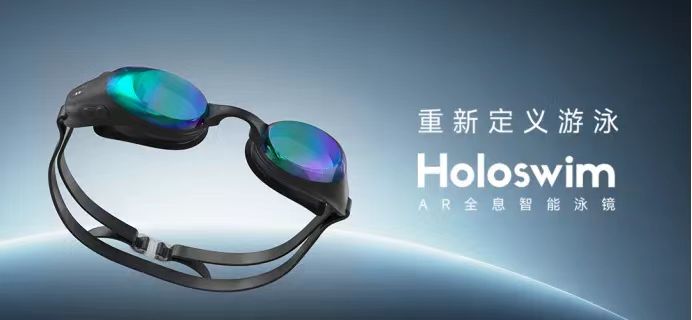
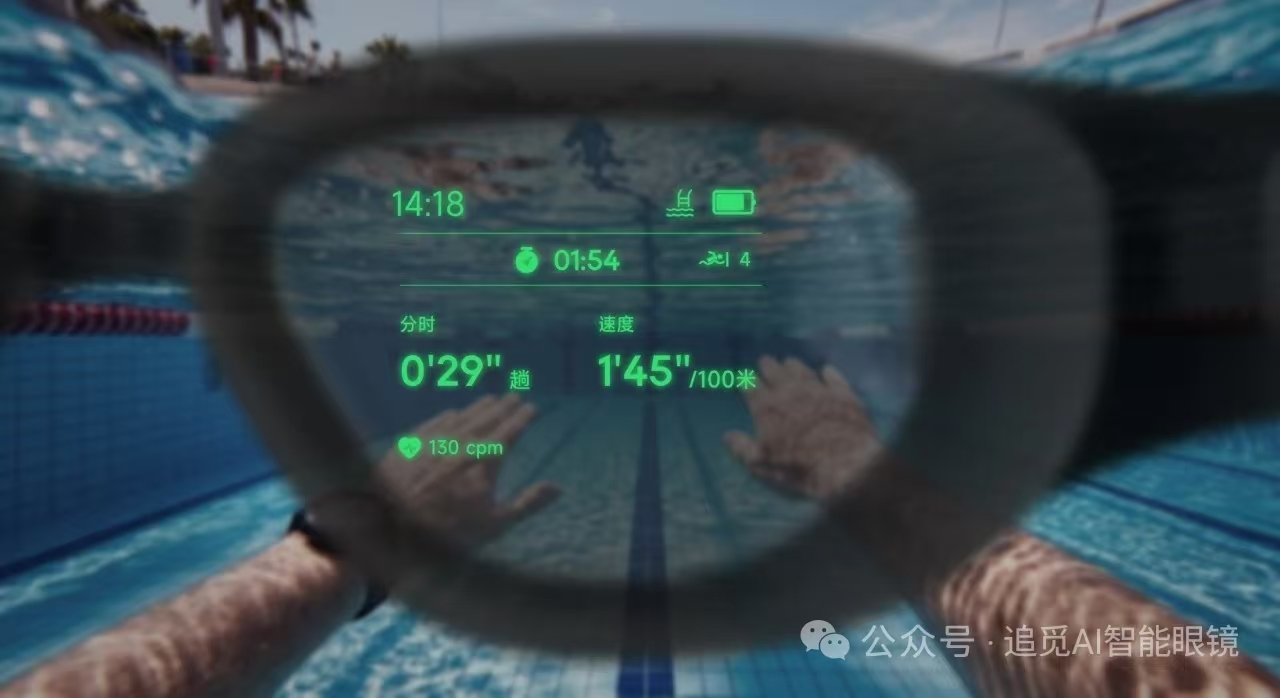
The product’s core competitiveness lies in the combination of real-time AR underwater display and GPS trajectory guidance. Through optical projection technology, users can clearly view key training data such as pace, distance, and time in front of their field of vision without interrupting their swimming rhythm, solving the pain point of “blind swimming” with traditional goggles. The built-in GPS module is a core differentiator from similar products—in open waters such as lakes and oceans, it can record movement trajectories in real time and provide directional guidance, significantly improving the safety of outdoor swimming. This has irreplaceable practical value for triathletes and professionals who conduct long-term outdoor training.
Ecosystem connectivity further strengthens its position as a data hub. The Holoswim 3 can be paired with smartwatches, fitness trackers, and other accessories to sync heart rate data in real time, helping users accurately control training intensity and avoid overexertion. In terms of appearance, the new symmetrical design not only improves visual balance but also enhances comfort during extended wear, while the vibrant coated lenses balance practicality and style.
However, the upgraded functionality also brings potential considerations. With the integration of GPS and AR display modules, its battery life performance needs to be referenced based on official test data; simultaneously, due to technological costs, its price is expected to be higher than ordinary smart swimming goggles, positioning it in the high-end market.
From a target audience perspective, the Holoswim 3 is more suitable for open water swimmers, serious trainees seeking accurate data, and tech enthusiasts who value technological experience and design.
SollaWave
SollaWave: Music at its Core, Focusing on Leisure and Fitness Scenarios
In stark contrast to the Holoswim 3’s “professional orientation,” the SollaWave focuses on “auditory experience,” targeting leisure and fitness enthusiasts, attempting to break the monotony of swimming through the combination of music and AI voice.
Offline music playback is its core function. The built-in storage module allows users to download music in advance, eliminating the need to carry a phone, rely on waterproof bags and cables while swimming, truly achieving “listen as soon as you get in the water.” GuangLi has optimized its in-ear acoustic technology to address the underwater sound transmission characteristics, ensuring clear underwater sound quality and a strong sense of rhythm, turning swimming into an immersive “underwater concert.”
Data feedback employs a “screenless” design—AI voice prompts provide users with training data such as distance and time during swimming breaks or turns, avoiding visual interference with swimming focus and allowing users to concentrate more on the strokes themselves. Furthermore, the rhythm of the music can help users regulate their breathing, indirectly improving athletic performance.
The product’s shortcomings are also apparent: in-ear comfort varies from person to person, and users need to pay attention to earbud size fit; additionally, it lacks GPS positioning, making its safety guidance capabilities in open water far inferior to the Holoswim 3.
Holoswim 3
SollaWave’s target users are clearly defined: fitness enthusiasts who primarily exercise in indoor pools and have low GPS requirements, those who rely on music to enhance their workout experience, and users who dislike visual distractions and prefer auditory feedback.
Market Positioning and Purchase Decision: Precise Matching to Scenarios is Key
The differentiated positioning of the two products essentially reflects GuangLi’s segmented strategy in the underwater smart device market. To help consumers make informed decisions, the following is a comparison of the two products’ core dimensions:
From a decision-making perspective, if users frequently swim in open water, prioritize the accuracy of training data, or have high requirements for equipment aesthetics, the Holoswim 3 is a better choice; if users primarily exercise in indoor pools, seek a relaxed workout experience, and rely on music to alleviate boredom, the SollaWave offers better value for money.
Price Prediction and Market Outlook
As of the end of the AWE press conference, GuangLi has not yet announced the global unified retail price for both products. Based on their technical specifications, product positioning, and the market pricing of their predecessors, industry analysts predict that the Holoswim 3, with its integrated GPS and AR display technology, will be priced in the high-end range of $350-$450; the SollaWave, as a differentiated leisure product, will be priced more affordably, expected to be between $250-$350.
It should be noted that the above prices are only market predictions and not the official final prices. The final pricing will be announced on GuangLi’s official website and at the AWE launch event. Consumers are advised to pay attention to official channels, as early bird discounts may be available during the initial product launch period.
Conclusion
GuangLi’s newly launched Holoswim 3 and SollaWave have avoided homogeneous competition, instead precisely addressing the needs of different swimming groups through a dual approach of “professional data” and “leisure experience.” The Holoswim 3 pushes AR technology from “conceptual” to “practical,” solving a core safety pain point in open water swimming; the SollaWave takes a different approach, using music to reconstruct the swimming experience, lowering the entry barrier for smart swimming goggles.
For consumers, the key to choosing between the two products lies in “scenario matching”—there is no absolute superiority or inferiority, only differences in whether they suit their own needs. With smart wearable devices continuously penetrating sports scenarios, GuangLi’s dual-product strategy may further solidify its leading position in the underwater smart device field.
In the eyes of consumers, the name Dreame has long been inextricably linked with cleaning appliances—such as robot vacuums and hair dryers. However, at the 2026 Appliance & Electronics World Expo (AWE 2026) in China, the tech company shattered these preconceived notions. It officially unveiled its first pair of AR smart swimming goggles, the “AQUA 100,” thereby announcing its entry into the high-end smart wearable sector.
Priced at an estimated $329, this product embodies Dreame’s ambition to expand its scope from “home cleaning” into the realm of “personal health technology.” Is this merely a speculative foray into a new market, or a carefully calculated strategic maneuver? By conducting an in-depth analysis of the product’s specifications, technical details, and the competitive landscape, we may just find the answer.
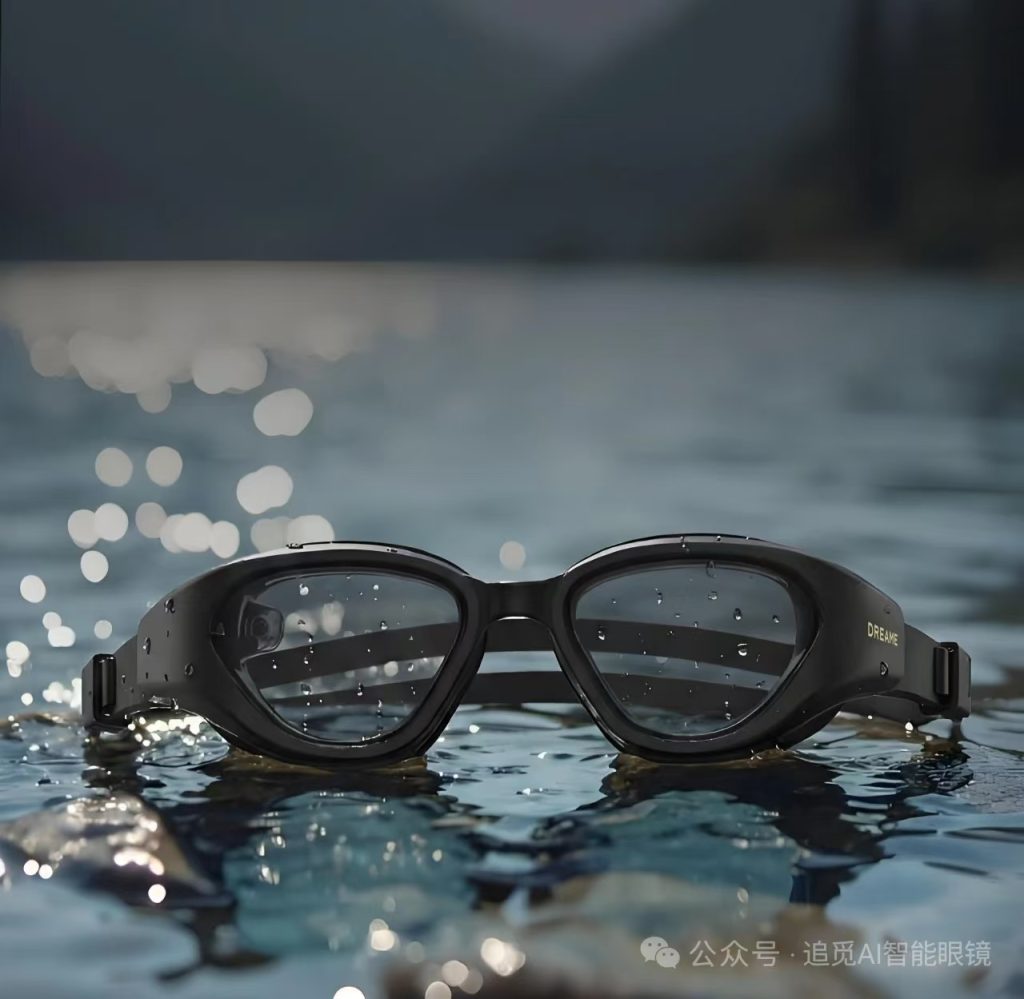
AQUA 100 Smart Wwimming Goggles
Lightweight Breakthrough: A 68-Gram Body Solves a Key Industry Pain Point
For wearable devices such as smart swimming goggles, wearing comfort is the pivotal factor determining market acceptance. Previously, most smart goggles suffered from excessive weight due to the integration of components like batteries and display screens; prolonged wear often exerted pressure on the bridge of the nose and the eye sockets—a significant source of discomfort for both professional swimmers and enthusiasts alike.
With the AQUA 100, Dreame demonstrates its accumulated technical expertise in product lightweighting: the device’s total weight is kept to approximately 68 grams—roughly 20% lighter than the mainstream smart goggles currently available on the market. This figure represents more than just a simple optimization of specifications; it reflects a precise insight into the specific demands of the swimming environment. For users who train for over 1,000 meters daily, this lightweight design significantly reduces fatigue during extended wear, thereby enhancing the overall user experience.
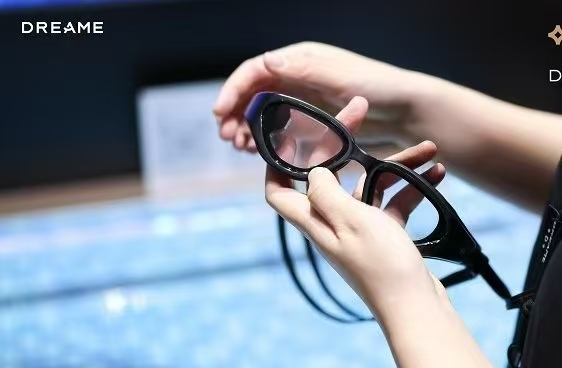
Beyond its weight advantage, the AQUA 100’s integrated, retractable nose bridge design also addresses a common pain point associated with traditional swimming goggles. Traditional goggles often require users to swap out nose pieces of various sizes to accommodate different facial structures—a process that is not only cumbersome but also carries the risk of accessory loss, which can render the entire product unusable. In contrast, the integrated retractable design requires no additional parts and flexibly adapts to a wide range of nose bridge sizes, thereby enhancing user convenience while simultaneously reducing long-term ownership costs.
Furthermore, the device features a low-drag, fully symmetrical streamlined body design that effectively minimizes hydrodynamic resistance during swimming. This specific detail holds tangible practical value for professional swimmers focused on optimizing their training performance, while also serving as a testament to Dreame’s expertise in product design.
AQUA 100
Core AR Technology: A Breakthrough in Underwater Applications Using Diffractive Waveguides
The core competitive advantage of AR smart swimming goggles lies in the stability and clarity of their underwater display technology. The AQUA 100’s most significant technical highlight is its adoption of diffractive waveguide technology—typically found in high-end AR glasses—rather than the prism-based solutions prevalent throughout the rest of the industry. This strategic choice immediately sets it apart from its competitors.
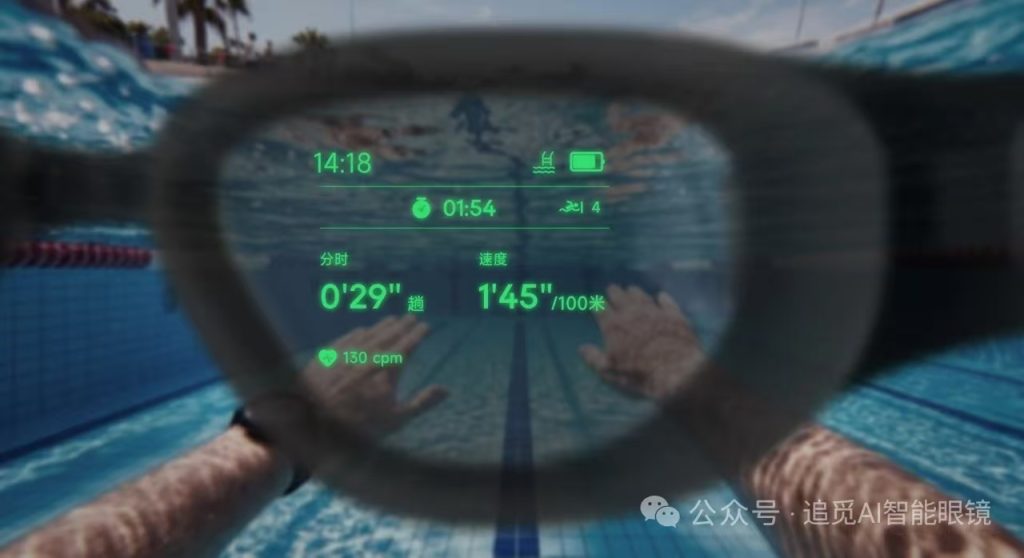
In terms of technical specifications, the AQUA 100 features a monocular green display with a resolution of 640×480 and a field of view (FOV) of 30°. The choice of a green display was not arbitrary; rather, it was an optimization based on underwater optical properties. Green light offers superior penetration and contrast in water compared to other colors, ensuring users can clearly read data while submerged. The 30° field of view strikes a balance between “data display” and “underwater visibility,” ensuring that the display area does not obstruct the user’s line of sight while simultaneously guaranteeing that data remains clearly legible.
Compared to traditional prism-based solutions, the advantages of diffractive waveguide technology are far more pronounced. First, it offers superior light transmission, resulting in lenses that appear more transparent; this eliminates the distinct “screen-like” sensation often associated with traditional smart goggles, thereby enhancing their aesthetic appeal. Second, it features a more compact structure, providing the technical foundation necessary for achieving a lightweight device design. In an interview, a representative from Dreame stated that the implementation of diffractive waveguide technology constituted one of the most significant investments during the AQUA 100’s R&D phase, serving as a core technological barrier that distinguishes the product.
The content displayed underwater focuses on key swimming metrics—including duration, stroke rate, pace, heart rate, and distance—providing real-time feedback on the user’s training status. This proves immensely practical for swimmers who rely on data analysis to refine their technique and improve their performance.
Underwater Effect of AQUA 100
Solidifying Core Capabilities: Anti-Fogging and Battery Life Establish a Robust Product Baseline
No matter how sophisticated the underlying technology may be, the AQUA 100 remains, fundamentally, a pair of swimming goggles. Consequently, core capabilities such as waterproofing, anti-fogging, and battery life serve as the essential prerequisites for its viability in the market. Dreame has not taken these fundamentals lightly, employing a multi-layered technical approach to ensure the product’s reliability.
Fogging is one of the most persistent pain points associated with swimming goggles; indeed, if the lenses fog up, even the most advanced AR display capabilities become entirely useless. The AQUA 100 addresses this issue through a combined solution featuring “wear-resistant silicone” and a “nano anti-fog coating.” According to official specifications, this anti-fog coating remains effective for at least 1,000 activation cycles (wipes)—meaning its anti-fogging properties are not a one-time feature. This ensures long-term underwater visibility and effectively resolves the chronic issue plaguing traditional goggles, where lenses tend to fog up after just a few uses. Furthermore, the product incorporates a proprietary sealing structure, which further enhances stability during underwater use and prevents water ingress from disrupting normal device operation.
In terms of waterproofing and battery life, the AQUA 100 meets the professional IP68 waterproofing standard, capable of withstanding prolonged underwater immersion—a core requirement for professional-grade swimming goggles. Regarding connectivity, it features low-power Bluetooth 6.0 technology; compared to Bluetooth 5.0, this offers more stable transmission and lower power consumption, enabling both rapid data synchronization and extended battery life.
As for battery endurance, the AQUA 100 delivers up to 7 hours of operation under typical usage scenarios. When viewed alongside market research data—which indicates that the vast majority of amateur swimmers do not swim for more than two hours per session—this level of battery life means a single charge can satisfy a user’s weekly needs (assuming one hour of swimming per day). Even during long-distance open-water training, users can effectively avoid any “battery anxiety.”
AI Empowerment: Upgrading from “Data Logging” to “Intelligent Coaching”
Dreame’s core strength lies in its AI and sensor technologies—an advantage that has been seamlessly extended to the AQUA 100. Unlike most smart goggles currently on the market—which merely record data—the AQUA 100 features Dreame’s proprietary “Sports & Health Large Language Model” built right in, marking a significant leap from simple “data logging” to sophisticated “intelligent coaching.”
Based on the user’s real-time performance metrics—including heart rate fluctuations, stroke rate, and pace—this model conducts multi-dimensional analyses to generate personalized training regimens. For instance, if the user’s swimming speed becomes excessive, causing their heart rate to spike, the system will display a visual prompt on the lens, guiding the user to adjust their breathing rhythm. Furthermore, by analyzing the user’s historical training data, the model can automatically calibrate the optimal training intensity for the following day—effectively providing the user with a personal AI coach on demand.
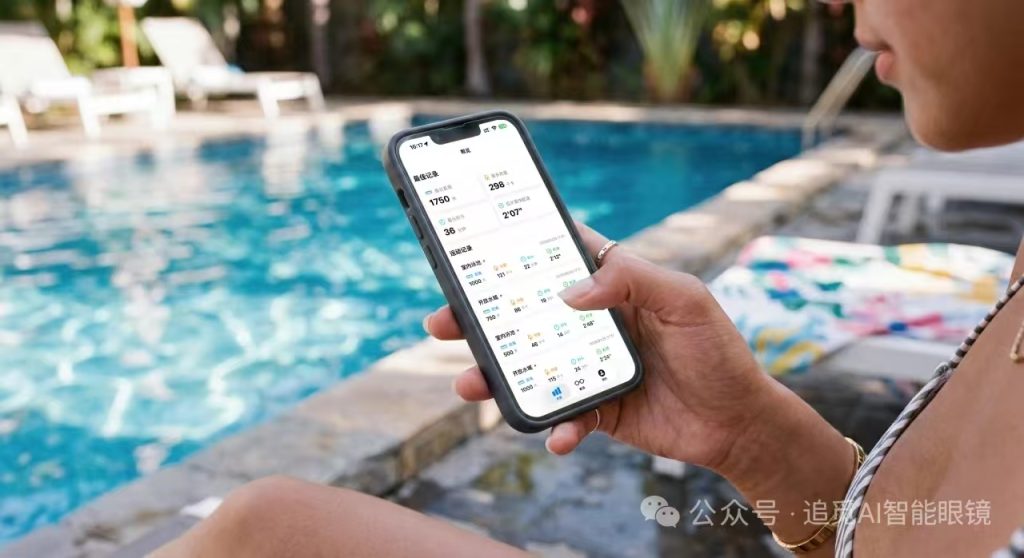
The true value of this feature lies in its ability to lower the barrier to professional-level swim training. For amateur swimmers who lack access to a professional coach, this AI-driven guidance helps them train more scientifically—preventing injuries caused by improper technique or excessive intensity—while simultaneously boosting training efficiency. Dreame has announced that, in the future, it will continue to enrich these AI capabilities through software updates, establishing deep integration with the Dreame Health App to create a comprehensive sports and wellness ecosystem.
Market Dynamics: Priced at $329—How Competitive Is It? With a projected price tag of $329, the AQUA 100 positions itself firmly within the premium segment of the smart swimming goggles market. Whether this pricing is justifiable—and whether it can secure a competitive edge in the marketplace—ultimately depends on the product’s intrinsic value and how effectively it differentiates itself from its rivals.
A comparison with competing products reveals that current market leaders in the premium smart goggles category—such as the FORM Smart Swim 2, priced at $249—derive their strength from a mature ecosystem, offering extensive training data and robust community features. In contrast, the AQUA 100’s core strengths lie in its use of diffractive waveguide display technology and AI-driven coaching capabilities; furthermore, its integrated nose bridge design offers superior convenience, giving it distinct and unmistakable differentiating features. For users who prioritize advanced technological experiences and professional-grade training support, the premium price point of the AQUA 100 appears entirely reasonable.
Compared to traditional swimming goggles (typically priced around $30), the price gap is substantial; however, the target demographics for the two categories are entirely distinct. Traditional goggles merely fulfill basic requirements for waterproofing and anti-fogging, making them suitable for casual recreational swimming. The AQUA 100, conversely, targets serious swimmers, tech enthusiasts, and existing users within the Dreame ecosystem—a demographic willing to pay a premium for professional-grade data, intelligent coaching, and a superior user experience.
Dreame officials have indicated that the AQUA 100 may launch with “early bird” promotional offers, potentially lowering the introductory price to $299 and further bolstering the product’s market competitiveness. Industry analysts suggest that this pricing strategy serves a dual purpose: it maintains the product’s premium market positioning while simultaneously appealing to a segment of potential customers who are more price-sensitive.
Your Personal AI Tutor
Summary: The Ambition and Challenges of Cross-Industry Expansion
The launch of the AQUA 100 by Dreame is not merely a serendipitous foray into a new sector, but a pivotal step in expanding its business horizons and strategically positioning itself within the personal health technology domain. The core value of this product lies in its ability to deeply integrate Dreame’s accumulated technological expertise—spanning sensors, AI algorithms, and optical display systems—with the specific demands of the swimming environment, thereby resolving numerous pain points associated with both traditional goggles and standard smart goggles.
A lightweight design weighing just 68 grams, diffractive waveguide display technology, AI-driven intelligent coaching features, and robust anti-fog and battery life capabilities collectively constitute the AQUA 100’s core competitive edge. While its $329 price tag may not be considered budget-friendly, given the professional-grade experience and technological innovation it delivers, the product is poised to stand out in the 2026 smart wearables market and emerge as a “dark horse” within this niche segment.
Naturally, Dreame also faces significant challenges: the smart goggles market is currently still in its nascent stage, and consumer acceptance remains to be cultivated. Furthermore, competitors such as FORM possess distinct advantages in ecosystem development; consequently, Dreame must continue to exert substantial effort in building its software ecosystem and refining its user operations. Additionally, as a newcomer to this cross-industry space, Dreame must actively gather user feedback from the swimming community to continuously optimize the product experience.
For consumers, if you are a serious swimmer in training, a technology enthusiast, or someone seeking a more scientifically grounded approach to training, the AQUA 100 is undoubtedly worth your attention. However, if your needs are limited to casual recreational swimming or if you are working with a limited budget, traditional swimming goggles remain the more cost-effective choice.
Note: This article is based on information presented at the AWE 2026 launch event and product specifications provided by Dreame. Specific retail pricing, product details, and actual user experience are subject to the final official release version.