On May 7, 2026, IDC and the China Semiconductor Industry Association jointly released their latest market report, revealing that domestic AI chips surpassed the 50% market share threshold in China for the first time in Q1 2026, reaching 52.3%. This milestone data not only sets a new historical record but also marks a critical turning point in China’s AI computing autonomy, ending the near-monopoly of foreign chips in the Chinese market.
Four-Year Quintupling Growth: Historic Reversal from Following to Competing
Over the past four years, domestic AI chips have achieved remarkable growth in market share. From less than 10% in 2022 to 41% in 2025 and 52.3% in Q1 2026, the market share has quintupled in just four years. Meanwhile, foreign giants have seen their market shares halved—NVIDIA’s share in China plummeted from a peak of 95% to 42.7%, while AMD maintains around 4%, marking the complete collapse of the monopoly pattern.

In national strategic sectors such as government, finance, and energy, domestic chip procurement has exceeded 70%, becoming the main battlefield for domestic substitution. This breakthrough reflects not only market choice but also the comprehensive improvement of domestic chips in performance, reliability, and supply chain security.
Tiered Competitive Landscape: Huawei Ascend Takes Commanding Lead
The domestic AI chip camp has formed a clear tiered competitive landscape. The first tier is led by Huawei Ascend, which firmly holds the top position in China with 37% market share, accounting for nearly 70% of total domestic chip volume. The Ascend 950PR achieves 1.56 PFLOPS inference performance, 2.87 times that of NVIDIA’s China-exclusive H20, becoming the core choice for government and enterprise procurement.
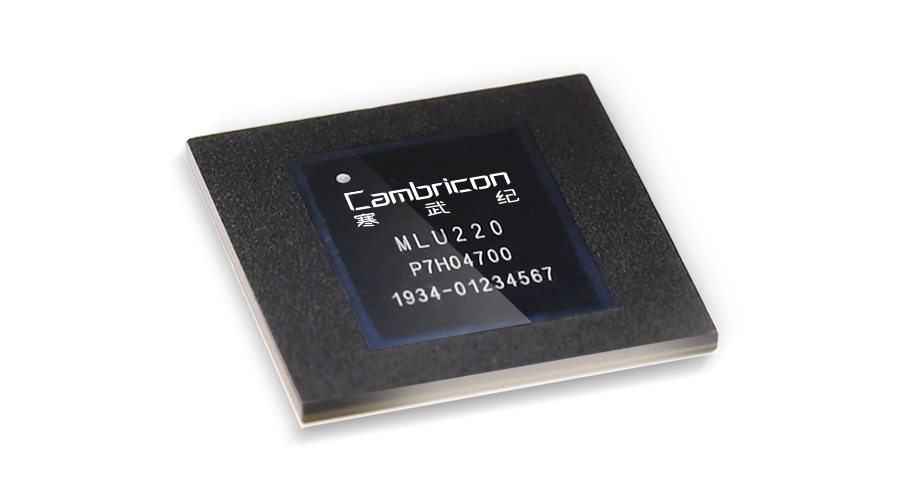
The second tier includes Alibaba T-Head (6.6%), Cambricon (4.2%), and Hygon (3.5%), collectively accounting for 14.3% market share. Among them, Cambricon delivered particularly impressive Q1 performance, with revenue surging 159.56% YoY and achieving quarterly profitability for the first time, marking a crucial step in commercialization.
Third-tier companies such as MetaX, Biren, and Moore Threads collectively hold approximately 1% market share but have significantly accelerated technology catching-up. Some products have already entered the supply chains of leading internet companies, demonstrating enormous market potential.
Three Core Breakthroughs: Performance Lead + Ecosystem Maturity + Cost Advantage
Behind the market share breakthrough of domestic AI chips lies the comprehensive improvement of three core competitiveness factors. First is the comprehensive lead in inference performance. Products such as Huawei Ascend 950PR and Cambricon Siyuan 370 demonstrate significant energy efficiency advantages, with single-card computing power increased by over 30%, perfectly adapting to high-concurrency inference scenarios.
Second is the accelerated breaking of ecosystem barriers. Domestic frameworks such as MindSpore and Baidu PaddlePaddle have achieved deep synergy with chips. Leading large models like DeepSeek V4 have included domestic chips in their hardware verification lists, reducing end-to-end latency by 35%. The improved software-hardware synergy provides users with complete domestic solutions.
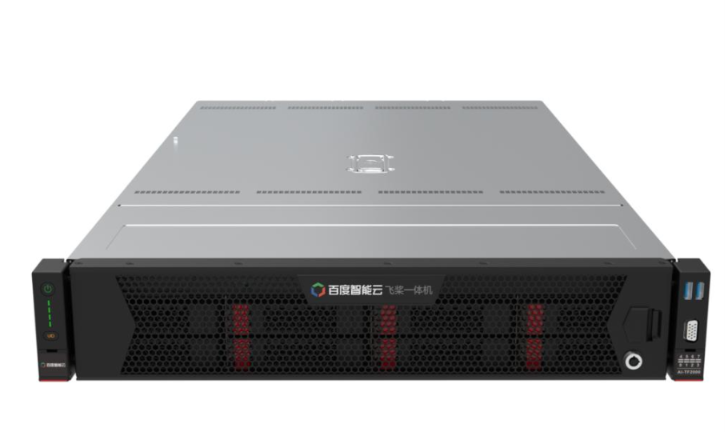
In terms of cost advantage, domestic chips are 40%-60% cheaper than comparable imported products with stable supply, unaffected by overseas export controls. Against the backdrop of increasing global supply chain uncertainty, supply chain security has become a key consideration in enterprise procurement decisions.
Strong Capital Market Reaction: Industry Chain Stocks Surge Collectively
Following the announcement of domestic AI chips’ market share breakthrough, the capital market reacted swiftly. Huawei Ascend industry chain-related companies saw collective stock price increases, with Digital China, Talkweb Information, and Changshan Beiming hitting daily limit-ups. Ascend server shipments grew 280% YoY. Cambricon rose 12.3% in a single day, Hygon gained 8.7%, and Unigroup Guoxin increased 7.5%.
Notably, AI infrastructure providers such as Inspur and Sugon, benefiting from the domestic chip substitution wave, have orders extending to the end of the year. This market performance reflects investor confidence in the long-term development of China’s domestic AI chip industry.
Strategic Significance: Computing Autonomy Eliminates Technology Dependency
The strategic significance of this historic breakthrough far exceeds the market share figure itself. First, computing autonomy in key sectors effectively prevents external technology blockade risks, safeguarding national digital economy security. Second, AI chip localization accelerates downstream industries such as large models, intelligent manufacturing, and autonomous driving, forming a complete ecosystem closed loop.
In international competition, domestic chips have begun to emerge in global markets. Huawei Ascend has entered Southeast Asian and Middle Eastern markets, directly competing with NVIDIA. This marks an important step for China’s AI chip industry from following and competing to leading.
Challenges and Outlook: High-End Training Chips Still Need Breakthroughs
Despite the historic breakthrough, the domestic AI chip industry still faces challenges. High-end AI training chips hold only 15% market share, still lagging behind international top levels; some professional software adaptations are insufficient, and the developer ecosystem needs further growth; some core components still rely on imports, and full autonomy remains a long-term endeavor.
However, with the National Integrated Circuit Industry Investment Fund Phase III leading DeepSeek investment, Huawei Ascend 950 series initiating generational transition, and leading companies achieving profitability one after another, China’s domestic AI chip industry is transitioning from R&D investment to commercial returns. In the next 2-3 years, there is a 60%-70% probability that “Ascend + DeepSeek” will form a closed domestic AI loop, with China poised to become the global second AI pole.
The Kunpeng Ascend Developer Conference 2026 will be held in Beijing from May 22 to 23, focusing on Kunpeng and Ascend 950 series chip architectures. This major event will further promote domestic computing ecosystem construction and inject new momentum into the sustainable development of China’s AI chip industry.
Leave a Reply