1. Product Positioning: The Smart Glasses That Finally Went Mainstream
Smart glasses are not a new concept. From Google Glass stalling in 2013 to Snap Spectacles fading quickly, the category has long been stuck in the paradox of “impressive on paper, disappointing in practice.” Then came Ray-Ban Meta, and for the first time, the industry glimpsed genuine mass-market potential.
On April 30, 2026, the Irish Times published a full review of the Ray-Ban Meta Gen 2, with a direct verdict: “More than a fun toy.” Geeky-Gadgets conducted a six-month long-term test, arriving at similarly positive conclusions.
So what problem does the Ray-Ban Meta Gen 2 actually solve?
The core logic is straightforward: take the AI assistant out of the phone and put it on the user’s face. In scenarios where hands are occupied — during exercise, cooking, or commuting — the friction of pulling out a phone, unlocking it, and opening an app becomes a real bottleneck. The Ray-Ban Meta Gen 2 circumvents this entirely through voice commands and a first-person camera.
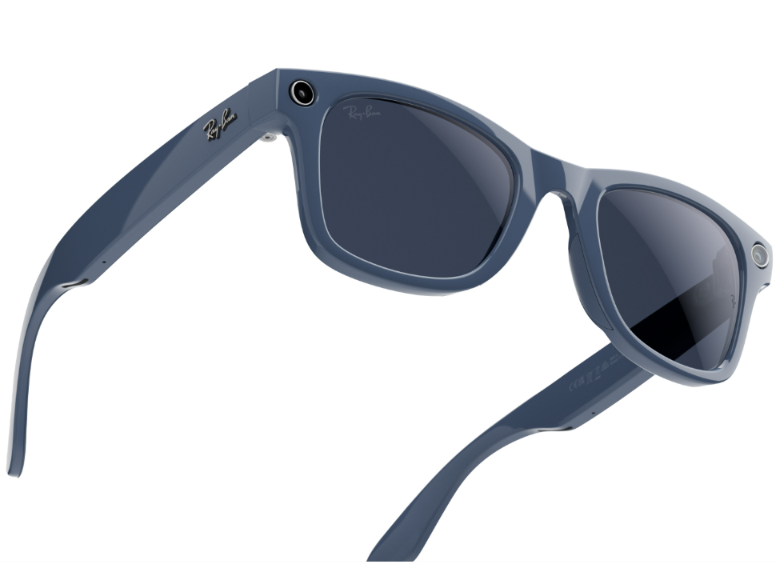
2. Design: 51 Grams of Everyday Disguise
Visually, the Ray-Ban Meta Gen 2 is nearly indistinguishable from a regular pair of Ray-Bans. This is its smartest design move — it does not aggressively market its technology. Instead, it lets the tech recede into daily life.
The full device weighs approximately 51 grams, about 2.8 grams heavier than the first generation — a trade-off for the larger battery. The weight difference is imperceptible during actual wear. Three classic frame styles are available: Wayfarer, Skyler, and Headliner, with over 150 combinations of frame and lens options, including clear, transition, and polarized lenses. Prescription lenses are available for myopia up to -6.0 diopters.
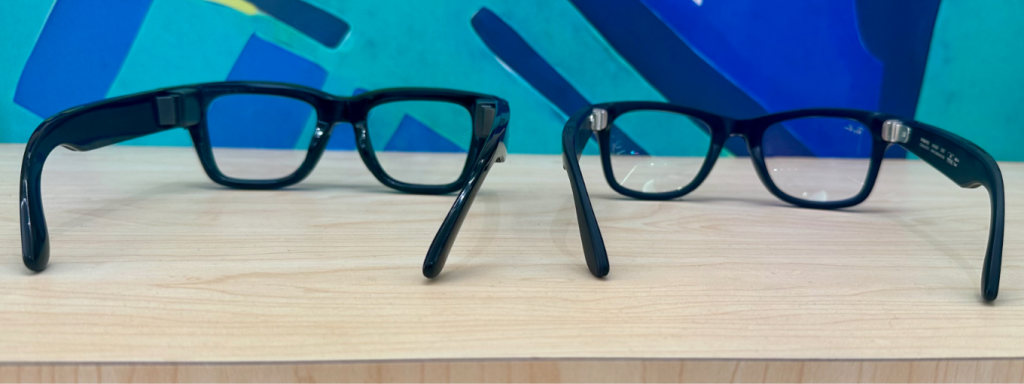
However, the nose bridge design carries one notable limitation. The standard nose pads are optimized for Western facial structures. Asian users frequently find the initial fit sits too low. For extended daily use, purchasing third-party silicone nose pad accessories is a worthwhile investment that significantly improves comfort.
For durability, the Gen 2 maintains an IPX4 splash-resistance rating — sufficient for rain and sweat during exercise but not for submersion. Users should exercise caution in heavy downpours or water sports environments.
3. Camera Performance: A First-Person Content Creation Tool
The 12-megapixel ultra-wide camera is one of the core selling points of these glasses.
In real-world testing, the camera’s image quality exceeded many expectations. Photos are crisp and sharp with accurate color reproduction, and the wide-angle coverage is well-suited for everyday documentation. Video is available in two modes: 3K at 30fps or 1080p at 60fps, both fully adequate for social media sharing.
Creative modes add useful versatility. Slow-motion and Hyperlapse settings give content creators additional expressive options.
One limitation deserves attention: individual video clips are capped at 3 minutes. This constraint likely stems from privacy considerations, but for users wanting to record continuous footage — during a hike or an entire workout — the 3-minute interruption can disrupt the creative flow. Whether this is a hardware or software limitation remains unclear, and a future firmware update could relax this cap.
Notably, a white LED on the outer frame lights up when recording, signaling to bystanders. An inner sensor also prevents recording if the lens is blocked. This dual-mechanism privacy design is among the most proactive in the current smart glasses market, though it cannot eliminate all concerns.
4. Audio Quality: An Underrated Surprise
The open-ear audio system is the Ray-Ban Meta Gen 2’s most underestimated capability.
The directional speakers built into the temples deliver performance beyond what most people expect. In quiet environments like an office or library, audio quality approaches that of entry-level open-ear earphones — clear midrange ideal for calls and podcasts, with bass that does not produce the “hollow” feel common in cheaper open-ear designs. In noisier settings such as a busy street or subway, volume needs to increase, and audio quality degrades accordingly.
Call quality is another highlight. The five-microphone array, combined with AI noise reduction algorithms, performs robustly in noisy environments. The Geeky-Gadgets six-month tester specifically noted that cycling phone calls came through cleanly for the person on the other end, with minimal wind noise.
In quiet environments, people within approximately one meter may occasionally hear faint audio from the open speakers. For maximum privacy, switching to Bluetooth earbuds remains the safer option.
5. Meta AI: From “Talk” to “Do”
Meta AI is one of the most significant upgrades in the Gen 2.
Unlike the first generation, which required pressing a button to activate the assistant, the Gen 2 enables truly hands-free interaction. Simply say “Hey Meta” to set reminders, send text messages, play music, or query directions — all without reaching for the phone. This is particularly valuable in hands-busy scenarios such as cooking, walking a dog, or holding a child.
Real-time translation covers 14 languages, including English, French, German, Italian, Portuguese, and Spanish. Translation is processed locally on the glasses, and audio and text are not uploaded to Meta’s servers, which helps address privacy concerns. Offline use does require pre-downloading language packs in the app, which adds a small preparation step before travel.
Another practical AI feature is visual recognition. Point the camera at something unfamiliar, hold the side button, and Meta AI analyzes the image and provides an explanation. The Irish Times reviewer tested it on menus and landmark buildings, finding accuracy “usable most of the time.” The feature still has room for improvement in more complex real-world scenarios.
6. Battery and Charging
The Ray-Ban Meta Gen 2 delivers a notable improvement in battery life over its predecessor.
The glasses themselves last approximately 4 to 5 hours during music playback. The redesigned charging case extends total runtime to 36 to 40 hours. A 20-minute quick charge restores roughly 50% battery — sufficient for a morning commute or half-day outing.
For most users wearing the glasses 2 to 4 hours daily, charging every one to two days is realistic. Combined with the case’s charging function, the setup handles business travel and short trips without range anxiety.
7. Privacy: An Unavoidable Debate
Privacy is a topic every camera-equipped smart glasses product must confront.
On the hardware side, the Ray-Ban Meta Gen 2 implements the following measures: an outer LED indicator that activates during recording (though visibility decreases in bright sunlight), an inner sensor that blocks recording when the lens is covered, and a 3-minute per-clip recording limit. Meta’s software policies include not uploading translation audio or text to its servers, with photos and videos stored locally in the Meta AI app by default.
Yet technological limitations persist. In dim indoor environments, where the LED indicator may be hard to notice, bystanders cannot reliably tell when recording is in progress. Brands and media outlets consistently urge users to proactively disable the glasses in sensitive locations.
From a regulatory perspective, several countries are discussing specific privacy legislation for smart glasses in 2026. The current privacy design of Ray-Ban Meta Gen 2 places it ahead of most competitors, but as the user base scales, compliance pressures will inevitably increase.
8. Comparison with Other AI Wearables
The 2026 AI wearables market has developed clear segmentation across competing products.
| Product | Form Factor | Display | Price | Target User |
|---|---|---|---|---|
| Ray-Ban Meta Gen 2 | Glasses | None | From $379 | Mainstream consumers |
| Even Realities G2 | Glasses | HUD | From $599 | Business professionals |
| Plaud NotePin S | Pendant/Clip | None | $189 | Office/meeting users |
| Brilliant Labs Halo | Glasses | AR | $349 | Developers/hobbyists |
From this comparison, the Ray-Ban Meta Gen 2 occupies the most accessible position in the market. Rather than chasing flashy AR displays or professional-grade depth, it focuses on making the most commonly used features — photography, calls, AI assistant, and translation — reliably good. For the majority of everyday consumers, this is the most pragmatic choice available.
9. Verdict: Who Should Buy It
The Ray-Ban Meta Gen 2 is a product that convinces you more through use than through spec sheets.
If you spend significant time commuting, exercising, or with hands occupied, and you want on-demand AI assistance, the ability to capture moments instantly, or a convenient hands-free calling option, this product genuinely reduces how often you need to reach for your phone and meaningfully improves daily convenience.
If, however, you expect a “complete AI assistant in glasses” capable of handling complex tasks or flawlessly translating across all scenarios, the current state of AI technology cannot meet those expectations. The AI features work well in straightforward everyday situations but still show limitations in more complex environments.
At a starting price of $379, the Ray-Ban Meta Gen 2 sits in the upper mid-range of the smart glasses market. Compared to competitors with comparable feature sets, its combination of camera quality, audio performance, and software ecosystem gives it a meaningful edge — making it one of the best value propositions in the AI wearables category today.
Leave a Reply