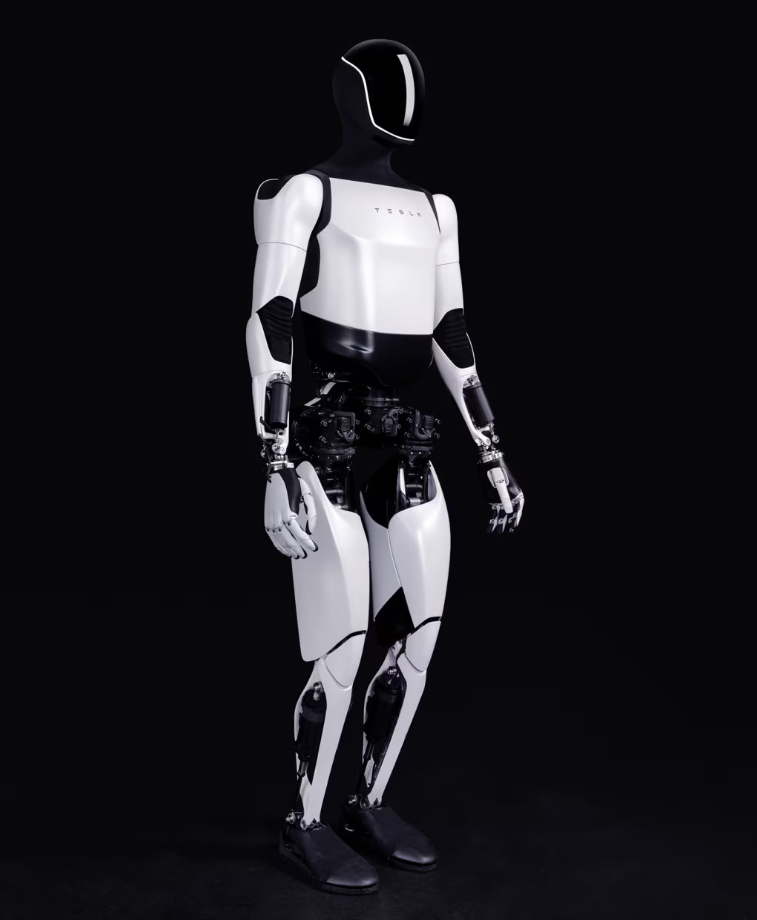
2026 marks a landmark moment for the humanoid robot industry. On April 23, Tesla officially announced that the third-generation Optimus humanoid robot V3 will begin mass production at the California Fremont Factory in late July to August 2026. Notably, the production line undertaking this historic mission is not newly built but converted from the lines previously used for Tesla’s flagship models, the Model S and Model X.
Tesla formally announced the discontinuation of Model S and Model X in January 2026. Official data shows these two classic models accounted for less than 3% of 2025 deliveries. Behind the discontinuation decision lies Musk’s strategic pivot toward robotics. The Fremont Factory space, once filled with aluminum body welding and falcon-wing door installation, is being transformed into an automated fortress producing one million robots annually.
Ambitions Behind Million-Unit Annual Capacity
Tesla’s disclosed production plan reveals the tech giant’s grand ambitions. According to the plan, the converted Fremont Factory line has a designed annual capacity of one million humanoid robots. Simultaneously, Tesla is already deploying second-generation production lines at the Texas Super Factory, with a long-term target annual capacity of 10 million units.
What does this number mean? The current global humanoid robot market annual shipments fall short of 10,000 units. Tesla’s production target exceeds the total market volume by over 100 times. Musk previously stated that he estimates the humanoid robot market valuation could reach $25 trillion by 2050, accounting for 80% of Tesla’s future total market value.
However, industry insiders caution that initial production ramp-up will be “very slow.” The Optimus V3 contains over 10,000 unique components and represents an entirely new product category. The production line requires time to磨合. Musk candidly admitted that currently, they cannot predict the exact ramp-up speed.
From $55,000 to $20,000: The Cost Challenge Remains
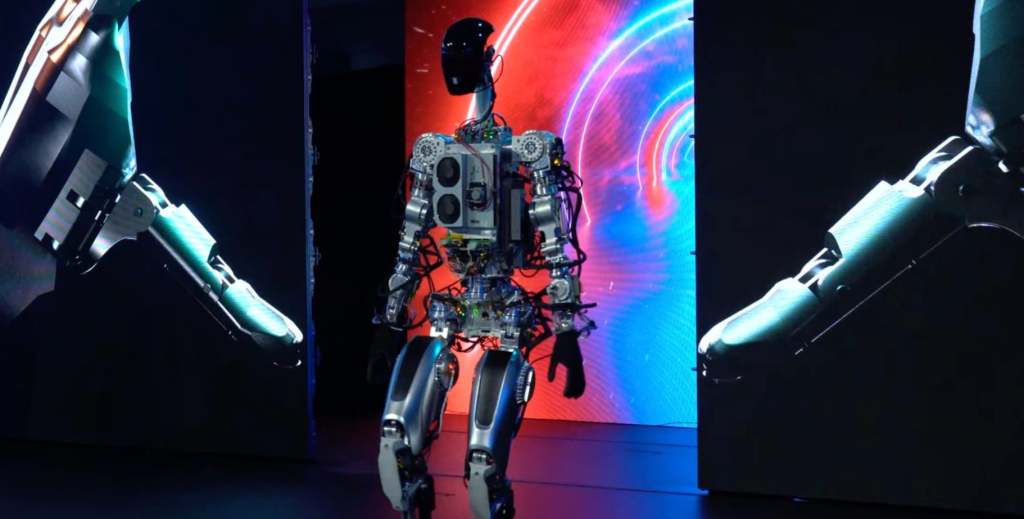
The biggest challenge for mass production lies in cost control. Currently, each Optimus unit costs approximately $55,000 to manufacture, while Tesla’s mass production target is to push costs below $20,000—a reduction exceeding 60%.
The high cost stems from technical difficulties in core components. The Optimus’ dexterous hand has 22 degrees of freedom, requiring manipulation capabilities similar to human hands. This places extremely high demands on the transmission system. Additionally, the core component for 14 linear joints—planetary roller screws—requires precision errors controlled within ±6 micrometers. Currently, the number of suppliers globally capable of stable mass production of this component remains limited.
Supply chain restructuring is Tesla’s core strategy for cost reduction. Unlike directly adopting the automotive supply chain, Tesla chose to redesign components from first principles. Disclosed information shows 70% of core components will come from domestic suppliers, including Tuopu Group (actuators), Sanhua Intelligent Control (rotary joints), and Green Harmonic (harmonic reducers), with costs 40% lower than Japanese and German products.
Commercialization Path: Factories First, Homes Later
In terms of application scenarios, Tesla has adopted a pragmatic “internal first, external later” strategy. The Optimus V3 plans to deliver to enterprise customers in the second half of 2026, then expand to external scenarios in 2027.
Currently, Tesla is conducting internal testing at the Austin factory, having Optimus perform simple tasks like material handling to accumulate actual operational data. This “verify in our own factory first, then promote externally” approach closely mirrors Xiaomi’s robotics deployment path.
Looking across the industry, humanoid robot commercialization has already shown divergence. Domestic companies like UBTECH and Zhiyuan Robotics have achieved substantive breakthroughs in industrial scenarios. Zhiyuan Robotics particularly achieved its 10,000th general embodied intelligence robot offline in March 2026. However, the consumer market still needs to wait for the explosion. The core obstacle remains the balance between cost and reliability—surveys show 78% of household users have a psychological price point below a few thousand yuan, while current high-end models still cost hundreds of thousands of yuan.
Industry Impact and Future Outlook
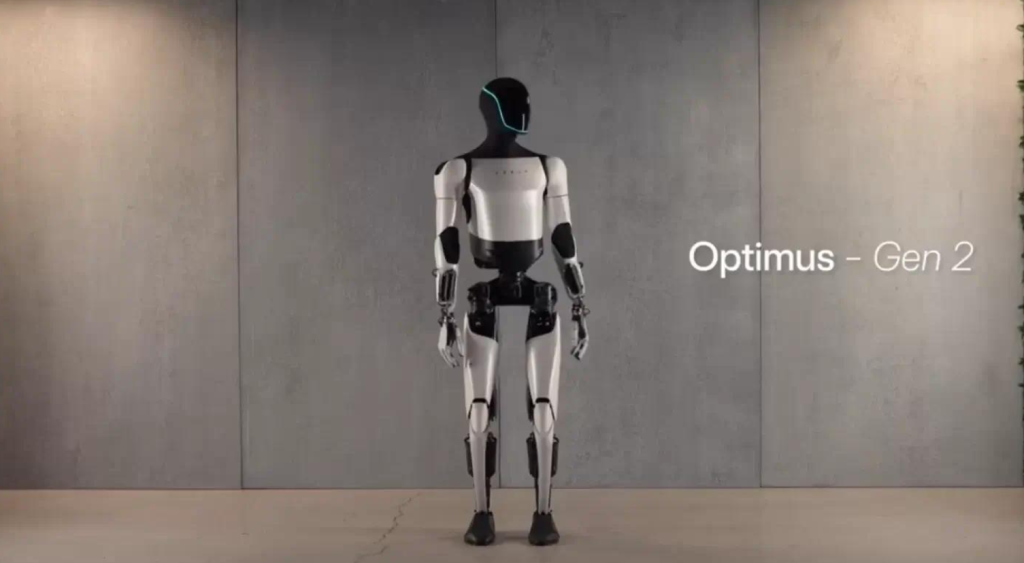
Tesla Optimus V3’s mass production holds benchmark significance for the entire humanoid robot industry. Led by Tesla, tech giants including Honda, Toyota, Baidu, and Xiaomi have intensified their layout, accelerating the global humanoid robot industry from technology verification toward commercial deployment.
Nevertheless, challenges remain formidable. Beyond costs, the durability of core components is also a limiting factor. Current joint module service life is approximately one year, far below the 5+ years required for industrial applications. The dexterous hand longevity issue is equally prominent. Early adoption of full tendon-drive solutions revealed problems like insufficient grip strength and material wear.
Despite this, the industry remains optimistic about humanoid robot prospects. Kaiyuan Securities pointed out that 2026 is the critical node for humanoid robots transitioning from “0 to 1.” As the supply chain matures and scale effects emerge, the humanoid robot cost curve will continue declining, and the commercialization process is expected to accelerate. For the entire manufacturing sector, the intelligent transformation brought by humanoid robots may be just beginning.
Leave a Reply