Tag: Meta

Facebook is an internet social networking platform operated by Meta Platforms, Inc., which provides features such as text messaging, image and video sharing, instant messaging, community interaction, and generative AI image creation. After being renamed Meta in 2021, it accelerated its business expansion.

  • Meta Quest 3S Review: Best Budget VR Under $300

    Meta Quest 3S Review: Best Budget VR Under $300

    Rating: 8.2/10

    The Meta Quest 3S is not the best VR headset, but it may be the most “right” VR headset in 2026. At $299, it packages mixed reality, wireless freedom, and a massive game library into an entry-level bundle with virtually no barrier. If you’ve never experienced VR or want to upgrade from Quest 2, this is currently the safest choice.
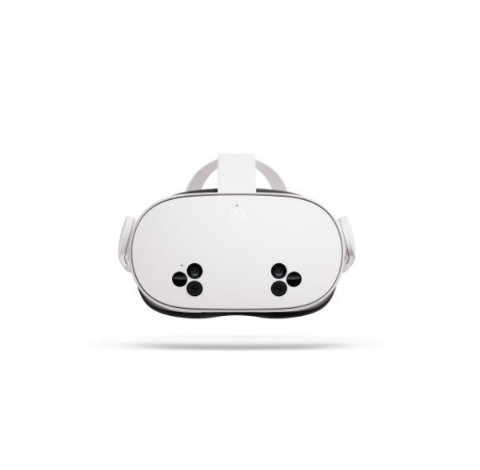
    Meta Quest 3S VR headset front view
    Meta Quest 3S VR headset front view

    Product Overview

    Launched in October 2024, the Quest 3S sits at the entry point of Meta’s current lineup. It shares the exact same Snapdragon XR2 Gen 2 chip and 8GB RAM as the flagship Quest 3, but downgrades the optical system from pancake to Fresnel lenses and drops resolution from 2064×2208 to 1832×1920 per eye — cutting the starting price to $299 (128GB), $200 less than Quest 3.

    Core specifications remain consistent with Quest 3: full-color passthrough cameras, 6DoF inside-out tracking, Touch Plus controllers, Wi-Fi 6E connectivity. This means every game and app that runs on Quest 3 runs on 3S with nearly identical frame rates.

    Performance Analysis

    Visual Experience: Good Enough, Not Stunning

    The Fresnel lenses represent Quest 3S’s biggest compromise. Compared to Quest 3’s pancake lenses, edges are noticeably blurrier with prominent “god rays” in dark scenes. The resolution gap is barely perceptible in actual gameplay, but the lens quality difference is immediately apparent — Quest 3 maintains sharpness from center to edge, while 3S requires keeping your gaze locked to the central “sweet spot” for optimal clarity.

    For fast-paced games like Beat Saber or Gorilla Tag, this limitation matters little since attention stays centered. But for movie watching, reading virtual screens, or exploring open-world games, edge blur accumulates into fatigue.

    Mixed Reality: Pleasantly Surprising

    Full-color passthrough is Quest 3S’s most unexpectedly capable feature. Dual 4MP RGB cameras capture accurate colors with low latency, sufficient to walk around, grab a water bottle, or check phone notifications while wearing the headset. Though grainier than Quest 3, functional completeness is uncompromised — you can play all MR games, place virtual objects on real tables, and turn your living room into a game arena.

    Offering usable mixed reality at $299 is Meta’s dimensional reduction attack on competitors. PlayStation VR2 ($549) lacks passthrough entirely; Apple Vision Pro ($3499) delivers superior MR but at a different price tier.

    Performance and Battery: Flagship-Equivalent

    Thanks to the identical XR2 Gen 2 chip, Quest 3S game frame rates nearly match Quest 3. AAA VR titles like Asgard’s Wrath 2 and Assassin’s Creed Nexus run stably at 72-90fps. The 8GB RAM ensures smooth multitasking and large scene loading.

    Battery life sits at approximately 2-2.5 hours, matching Quest 3. Sufficient for single gaming sessions, but movie watching or extended fitness training requires mid-session charging or a battery head strap.
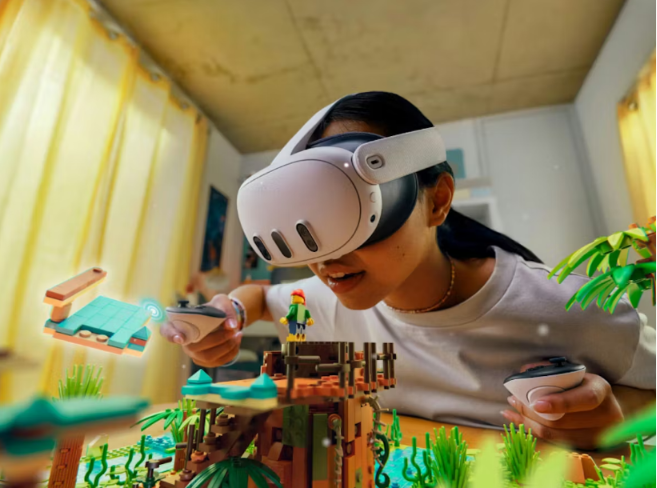
    Quest 3S mixed reality gameplay demo
    Quest 3S mixed reality gameplay demo

    Competitor Comparison

    FeatureQuest 3SQuest 3PlayStation VR2
    Price$299$499$549
    ProcessorXR2 Gen 2XR2 Gen 2Custom AMD
    Resolution (per eye)1832×19202064×22082000×2040
    Lens TypeFresnelPancakeFresnel
    PassthroughFull-colorFull-colorNone
    Requires ConsoleNoNoPS5 Required
    Weight514g515g560g

    Quest 3S’s core advantage is “zero dependency” — no PC, no console, no base stations, just power on and play. This makes it a true consumer product, while PS VR2 remains essentially a PS5 accessory.

    Pros and Cons

    ProsCons
    Flagship chip performance at $299Fresnel lenses with edge blur and god rays
    Full mixed reality functionality retainedThree-step IPD adjustment only
    Wireless design, no external hardware needed2.5-hour battery life
    Massive game library, full Quest app compatibility128GB storage tight for large games
    Lightweight and comfortable for extended wearGrainier passthrough than Quest 3
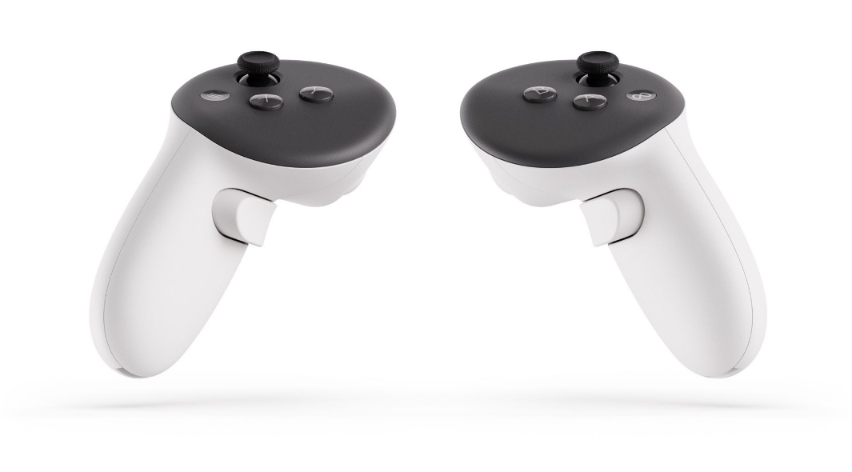
    Meta Touch Plus controllers side view
    Meta Touch Plus controllers side view

    Who Should Buy

    Recommended for:

    • First-time VR users
    • Budget-conscious families wanting mixed reality
    • Quest 2 owners seeking an upgrade
    • Players needing a second headset for guests

    Should Skip:

    • Hardcore gamers demanding maximum visual fidelity (choose Quest 3)
    • Professional users needing extended VR work sessions (choose Vision Pro)
    • Users with existing high-end PC VR setups (3S cannot surpass PC VR quality)

    Conclusion

    The Meta Quest 3S is a product of “smart compromises.” It precisely trims configurations that minimally impact entry-level users (lens quality, resolution) while preserving core elements that determine the experience floor (chip performance, mixed reality, wireless freedom). At $299, no competitor matches its functional completeness.

    Its true value lies not in the spec sheet but in “zero friction” — no researching PC configurations, no setting up sensors, no managing cables. You simply put it on and enter VR. For the average person wanting to try VR in 2026, that zero-barrier access may be the biggest selling point of all.

  • Xu Rui’s Entry into MSL Marks A New Era for AI-Native Hardware

    Xu Rui’s Entry into MSL Marks A New Era for AI-Native Hardware

    Recently, global tech giant Meta officially announced a key personnel appointment: Xu Rui, a former core executive of Xiaomi and ByteDance’s hardware businesses, will head the newly formed AI hardware team at Meta’s Superintelligence Lab (MSL).

    Previously, Dreamer, an AI hardware startup founded by former Xiaomi Vice President Hugo Barra, was acquired by Meta in March of this year, with Xu Rui joining as a core member. This move not only signifies the completion of a key piece in Meta’s smart hardware strategy but also clearly signals a strategic shift in its R&D focus from “meta-universe infrastructure” to “AI-native devices.”

    Dreamer Team
    Dreamer Team

    As Meta’s newly established strategic engine, MSL is personally led by Alexandr Wang, a leading figure in the field of artificial intelligence infrastructure. The lab was established to address the urgent need for next-generation computing terminals driven by the explosion of generative AI.

    According to industry disclosures, MSL’s AI hardware team has initiated a deep structural restructuring, with a large number of senior engineers and product experts from Reality Labs smoothly transitioning to the new department, achieving full integration of software and hardware resources. Unlike traditional hardware R&D, which follows the logic of “specifications define products,” the MSL team’s core objective focuses on the underlying interaction paradigm of “AI native.”

    The team is dedicated to overcoming the challenge of deeply integrating large-scale model capabilities with physical carriers, exploring new device forms with proactive context awareness, multimodal natural interaction, and local privacy computing. Alexandr Wang previously clearly stated Meta’s long-term vision: to transcend the reliance on a single smartphone screen and build a distributed computing network centered on personalized AI agents. To this end, MSL will focus on optimizing edge AI computing power, low-power sensor arrays, and seamless cross-terminal collaboration protocols, striving to launch an AI hardware product line that truly reshapes the human-machine relationship within the next two to three years, making intelligent services as natural as air.

    Xu Rui, a senior hardware technology expert and serial entrepreneur, has previously worked at Intel, Lenovo, Xiaomi, and ByteDance. During his time at Xiaomi, he spearheaded the globalization of the TV business from zero to profitability. At ByteDance, he also created blockbuster hardware products with over a million units sold, possessing comprehensive industry experience spanning consumer electronics and cutting-edge AI hardware.

    Looking globally, the AI ​​hardware sector is experiencing an unprecedented inflection point. Over the past decade, the mobile internet, with its touchscreens and high-speed networks, has completely reshaped lifestyles. Now, standing at the forefront of the big data era, industry consensus is increasingly clear:

    The next generation of personal computing gateways will inevitably be AI-native. From Silicon Valley tech giants to innovative Chinese companies, the global industry chain is collectively focusing on hardware forms for the “post-smartphone” era.

    Simultaneously, with the continuous decline in the cost of large-scale inference on the edge, the commercialization of new solid-state batteries and flexible materials, and the vigorous evolution of open-source chip architectures, the bottlenecks of computing power, battery life, and cost that once constrained the widespread adoption of AI hardware are being broken down one by one. Future smart terminals will completely shed the label of “application container” and evolve into “digital extensions” with spatial understanding, emotional resonance, and autonomous decision-making capabilities. Z

    Meta’s integration of top talent and its ambitious MSL strategy not only represents a strategic upgrade to its own technology ecosystem but also points the way for the entire consumer electronics industry to evolve from “functional overlay” to “intelligent endogenous” transformation.

    It is foreseeable that the explosive growth of AI hardware will spawn a trillion-dollar incremental market and profoundly reshape the industrial logic of education, healthcare, office work, and entertainment.

    In the wave of technology democratization and open collaboration, hardware innovation is returning to its original “human-centered” focus. As leading global laboratories continue to push the boundaries of interaction, AI devices will deeply integrate into daily life in a lighter, more seamless, and more accessible manner.

    In this historical process of reshaping computing paradigms and productivity patterns, the deep integration of China’s well-developed hardware supply chain and cutting-edge global algorithms will undoubtedly provide a solid foundation for the large-scale deployment of AI hardware. The future is here; AI-native hardware is unstoppable in opening the door to a new era of human-machine symbiosis, creating a more efficient, convenient, and imaginative intelligent life for users worldwide.