Tag: Meta

Facebook is an internet social networking platform operated by Meta Platforms, Inc., which provides features such as text messaging, image and video sharing, instant messaging, community interaction, and generative AI image creation. After being renamed Meta in 2021, it accelerated its business expansion.

  • Auren AI Pet Wearable: Can a 50g Camera Really Decode Your Dog’s Soul?

    Auren AI Pet Wearable: Can a 50g Camera Really Decode Your Dog’s Soul?

    If you still think pet smart hardware means automatic feeders and GPS collars, you have probably missed the hottest track of 2026.

    Traini’s cognitive smart collar just secured backing from executives at NVIDIA, Google, and Meta. PettiChat blew past 770% of its Kickstarter goal. MOVA Pets closed a Series A round and now clears millions in monthly GMV. Meanwhile, domestic players like PurrPurr, SATELLAI, and Loona have all raised fresh capital this year. Investors are voting with their wallets faster than a dog can wag its tail.

    Auren AI pet wearable device attached to golden retriever collar front view
    Auren AI wearable captures pet life from first-person view

    The global pet tech market is projected to hit $14.1–20 billion in 2026, yet AI penetration sits at just 8–12%. Translation? This is a massively under-tapped growth market, and AI is the key.

    But here is the catch: most AI pet products on the market today are stuck in “incremental upgrade” mode—slapping behavior recognition onto GPS, adding cameras to feeders, or bolting heart-rate monitors onto collars. These features are useful, but they are not exciting. They solve labor-replacement needs like monitoring and feeding, not the harder question: what is my pet actually thinking?

    Auren shows up with a fundamentally different answer.

    Auren’s Play: Do Not Translate, Just Record

    Auren’s first product is a 50g AI-native wearable. Its core innovation is not translating barks into human language. Instead, it records the world from the pet’s first-person perspective.

    The scenes your pet sees, the sounds it hears, the routes it runs—all captured 24/7. Then AI steps in, sifting through the ocean of data to curate the “top 1% highlight moments” and behavioral anomalies into a “digital life archive” that owners can read, share, and revisit.

    This logic is completely different from Traini’s “emotion translation.” Traini tries to decode pet “language”—analyzing vocalizations, expressions, and behaviors to output “your dog is anxious right now.” Auren chooses a dumber but perhaps more honest path: do not guess emotions, just present facts. It lets owners see “what my dog saw, heard, and visited today,” then leaves the emotional connection to them.
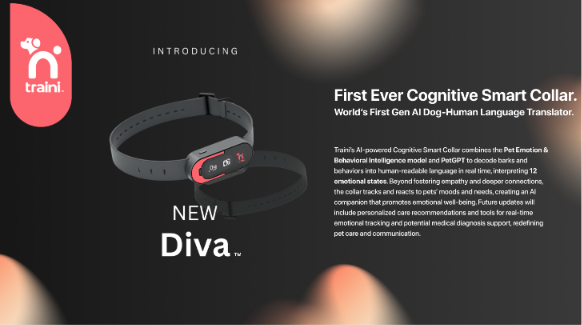
    Traini cognitive smart collar for AI dog emotion translation
    Traini cognitive collar translates dog emotions in real time

    It is basically a GoPro meets a diary, except the protagonist is your pet.

    Why “Recording” Might Be More Reliable Than “Translation”

    Traini’s PEBI system claims 94% emotion-translation accuracy across nearly 120 dog breeds, with models trained on over 900 research papers and behavioral data from 2 million dogs. The numbers look great, but there is a fundamental problem: can an algorithm really translate pet emotions accurately?

    A wagging tail does not always mean happiness. A cat rubbing against your leg does not always mean affection. Animal behavior is inherently uncertain, and feeding that behavioral data into an AI to output “your pet is currently at anxiety level 3” is a translation whose reliability remains questionable.

    Auren’s strategy is clever—it sidesteps this minefield entirely. No emotion translation, just factual recording. Owners see the world from their pet’s perspective and judge for themselves: “my dog looked pretty happy today” or “it seemed nervous about that sound.” AI here plays curator, not translator.

    This design also carries a hidden advantage: privacy. Traini’s collar continuously uploads audio, heart rate, and temperature data to the cloud for analysis. Auren’s first-person video raises privacy concerns too, but at least it does not perform “emotion diagnosis” or make conclusions on the owner’s behalf. The data-use boundary is relatively clearer.

    The Competitive Landscape: Two Routes Colliding

    The AI pet hardware track has split into two distinct camps.

    Camp One: Incremental Upgrades. MOVA Pets’ LB10 Prime smart litter box (monitoring bathroom frequency and weight changes) and SureTrack Pro tracking collar (two-way voice plus multi-layer positioning) fall here. They add AI to mature categories, solving “how to take care of pets more conveniently.”

    Camp Two: Category Creation. Traini (emotion translation), PettiChat (two-way dialogue translation), and Auren (first-person life archive) belong here. They attempt to invent entirely new product categories, solving “how to understand my pet better.”

    Neither route is inherently superior, but the category-creation camp carries both higher risk and higher upside. Traini must prove its 94% accuracy is not just a lab number. PettiChat must prove two-way translation is not a pseudo-demand. Auren must prove owners will actually spend ten minutes a day watching their pet’s “vlog.”
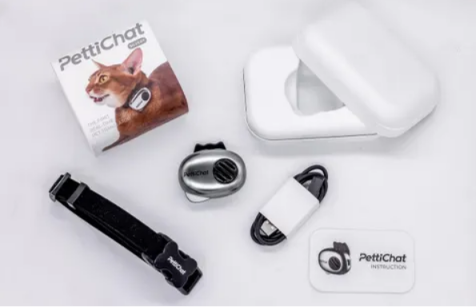
    PettiChat two-way pet translator device unboxing with collar and charger
    PettiChat two-way translator device for cats and dogs

    Commercialization Challenges: From Cool to Essential

    Auren’s “digital life archive” concept is romantic, but commercial reality is brutal.

    First, hardware cost. A 50g device running 24/7 video recording, audio capture, GPS tracking, and on-device AI filtering faces a brutal trade-off between battery life and compute power. If it needs daily charging, user compliance will crater.

    Second, content value. Will AI-curated “top 1% highlight moments” actually move owners? If the curated clips are mostly “my dog sniffed a fire hydrant,” how long does novelty last? This is fundamentally a content-recommendation algorithm problem, and “surprise factor” is the hardest metric to quantify.

    Third, pricing. PettiChat’s crowdfunding starts around $120, and Traini’s collar targets a similar range. If Auren lands in the $150–$200 bracket, it faces a market of “people who own pets” rather than “people who spend heavily on pets.” The latter group is much smaller.

    Conclusion: The Battle for Emotional Premium in AI Pet Tech

    Auren, Traini, and PettiChat are all fundamentally doing the same thing: redefining pets from “property” to “family members,” then charging an emotional premium for that new definition.

    This logic has been validated countless times in the pet economy—from natural pet food to pet insurance, from pet funeral services to pet psychological counseling. “Anthropomorphization” is the most valuable narrative in this industry. AI simply pushes that narrative into the technical layer.

    Can Auren’s 50g camera truly understand pets? Probably not. But it at least offers a new possibility: letting owners “see” the world through their pet’s eyes, instead of forever guessing what they think from a human perspective.

    In that sense, Auren is not selling hardware. It is selling an “empathy illusion”—and in the pet economy, that illusion may be worth more than any technology.


    This analysis is based on publicly available product information and industry data. AICrunchX will continue tracking developments in the AI pet tech sector.
  • Oakley Meta HSTN: Meta’s First Sport-Focused AI Glasses Launch

    Oakley Meta HSTN: Meta’s First Sport-Focused AI Glasses Launch

    Meta has officially partnered with Oakley to launch the Oakley Meta HSTN, its first performance-oriented AI smart glasses. Priced at $399, this device targets athletes and outdoor enthusiasts with upgraded cameras, longer battery life, and sport-specific features. Moreover, pre-orders open on July 11, with standard models shipping later this summer.

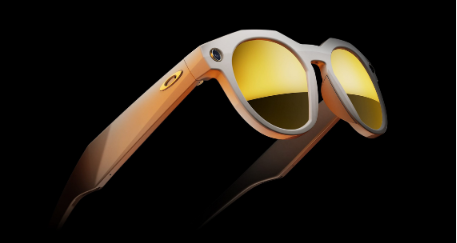
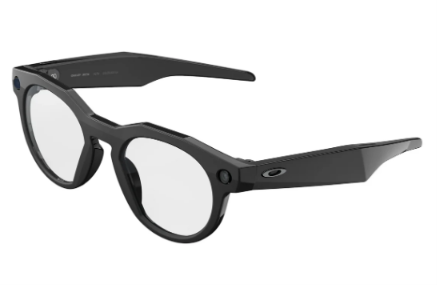
    Oakley Meta HSTN black frame camera
    Oakley Meta HSTN black frame with camera

    What Makes HSTN Different

    The Oakley Meta HSTN stands apart from the Ray-Ban Meta lineup because it prioritizes athletic performance over casual style. Consequently, it features IPX4 water resistance to handle sweat and rain, while the 8-hour battery life covers entire marathons or golf rounds. In addition, Oakley’s signature PRIZM lens technology enhances visibility across varying light conditions.

    The camera system sees a major upgrade. The 12-megapixel ultra-wide sensor now captures 3K video at 2880 by 1620 resolution, a significant jump from the Ray-Ban Meta’s 1080p output. Furthermore, it records up to 3 minutes of continuous footage, enough for complete action sequences. The five-microphone array includes wind noise reduction, ensuring clear audio during cycling or running.

    For safety, open-ear speakers let users hear music and AI responses while remaining aware of surrounding traffic. Therefore, road cyclists and trail runners can stay connected without compromising situational awareness.

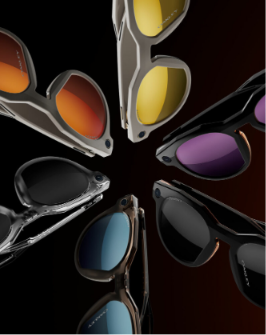
    Oakley Meta HSTN color variants
    Oakley Meta HSTN multiple color options displayed

    Meta AI for Athletes

    Meta AI serves as the HSTN’s core intelligence. Users activate it with “Hey Meta” and ask sport-specific questions in real time. For example, golfers can inquire how wind affects their upcoming shot, and runners can request pace and heart rate zone updates. Meanwhile, the assistant also handles translation, object recognition, and music identification.

    All processing runs through the Meta AI App on a connected phone, since the glasses themselves lack standalone computing power. However, this dependency means users must carry their smartphones during workouts.

    Battery and Pricing

    The HSTN delivers 8 hours of typical use per charge, with 19 hours in standby mode. The included charging case adds roughly 40 extra hours, bringing total portability to 48 hours. Additionally, a 20-minute fast charge restores 50% capacity.

    Meta offers two pricing tiers. The standard collection starts at $399 with six frame and lens combinations. Alternatively, a limited-edition 50th-anniversary model costs $499 and features gold accents with 24K PRIZM lenses.

    Initial launch markets include the United States, Canada, United Kingdom, Ireland, France, Italy, Spain, Austria, Belgium, Australia, Germany, Sweden, Norway, Finland, and Denmark. Mexico, India, and the United Arab Emirates will follow later this year.

    How HSTN Stacks Against Rivals

    The HSTN occupies a unique niche. Compared to the Ray-Ban Meta, it offers higher video resolution, doubled battery life, and sport-optimized optics. On the other hand, it costs $100 more and features a bulkier frame less suited for daily wear.

    Against the Apple Vision Pro, the HSTN weighs a fraction as much and costs nearly one-tenth the price. However, it lacks the immersive spatial computing capabilities of Apple’s headset.

    Oakley Meta HSTN gold edition
    Oakley Meta HSTN limited gold edition model.

    The table below summarizes the key differences:

    FeatureOakley Meta HSTNRay-Ban MetaApple Vision Pro
    Weight~50g~50g600-650g
    Camera12MP, 3K video12MP, 1080pNone
    Battery8h + 48h total4h + 36h total2-2.5h
    Water ResistanceIPX4IPX4None
    AI AssistantMeta AIMeta AISiri
    Lens TechPRIZM/TransitionsStandardNone
    Price$399$299$3,499

    Who Should Buy HSTN

    The HSTN suits athletes who want hands-free POV recording and real-time coaching data. Likewise, outdoor content creators benefit from the durable build and high-resolution capture. Oakley loyalists already familiar with the brand’s lens technology will find the transition seamless.

    However, budget-conscious buyers may prefer the Ray-Ban Meta at $299, since it offers the same core AI features for less. Similarly, users seeking an everyday wearable might find the sporty frame too conspicuous for office or casual settings.

    Final Verdict

    The Oakley Meta HSTN is not revolutionary, but it represents a smart strategic expansion. Meta and EssilorLuxottica are building a multi-brand AI glasses ecosystem, and Oakley brings authentic athletic credibility that Ray-Ban cannot match.

    For sports enthusiasts, the HSTN offers the best balance of performance, durability, and AI intelligence currently available. The 3K camera and 8-hour battery justify the $100 premium over the Ray-Ban Meta for anyone who actually plans to use these glasses during workouts.

    For everyone else, the Ray-Ban Meta remains the better value. But if you have been waiting for AI glasses that can keep up with your training schedule, the HSTN is the closest answer yet.

    Oakley Meta HSTN: Meta’s First Sport-Focused AI Glasses Launch

    Meta has officially partnered with Oakley to launch the Oakley Meta HSTN, its first performance-oriented AI smart glasses. Priced at $399, this device targets athletes and outdoor enthusiasts with upgraded cameras, longer battery life, and sport-specific features. Moreover, pre-orders open on July 11, with standard models shipping later this summer.

    What Makes HSTN Different

    The Oakley Meta HSTN stands apart from the Ray-Ban Meta lineup because it prioritizes athletic performance over casual style. Consequently, it features IPX4 water resistance to handle sweat and rain, while the 8-hour battery life covers entire marathons or golf rounds. In addition, Oakley’s signature PRIZM lens technology enhances visibility across varying light conditions.

    The camera system sees a major upgrade. The 12-megapixel ultra-wide sensor now captures 3K video at 2880 by 1620 resolution, a significant jump from the Ray-Ban Meta’s 1080p output. Furthermore, it records up to 3 minutes of continuous footage, enough for complete action sequences. The five-microphone array includes wind noise reduction, ensuring clear audio during cycling or running.

    For safety, open-ear speakers let users hear music and AI responses while remaining aware of surrounding traffic. Therefore, road cyclists and trail runners can stay connected without compromising situational awareness.

    Meta AI for Athletes

    Meta AI serves as the HSTN’s core intelligence. Users activate it with “Hey Meta” and ask sport-specific questions in real time. For example, golfers can inquire how wind affects their upcoming shot, and runners can request pace and heart rate zone updates. Meanwhile, the assistant also handles translation, object recognition, and music identification.

    All processing runs through the Meta AI App on a connected phone, since the glasses themselves lack standalone computing power. However, this dependency means users must carry their smartphones during workouts.

    Battery and Pricing

    The HSTN delivers 8 hours of typical use per charge, with 19 hours in standby mode. The included charging case adds roughly 40 extra hours, bringing total portability to 48 hours. Additionally, a 20-minute fast charge restores 50% capacity.

    Meta offers two pricing tiers. The standard collection starts at $399 with six frame and lens combinations. Alternatively, a limited-edition 50th-anniversary model costs $499 and features gold accents with 24K PRIZM lenses.

    Initial launch markets include the United States, Canada, United Kingdom, Ireland, France, Italy, Spain, Austria, Belgium, Australia, Germany, Sweden, Norway, Finland, and Denmark. Mexico, India, and the United Arab Emirates will follow later this year.

    How HSTN Stacks Against Rivals

    The HSTN occupies a unique niche. Compared to the Ray-Ban Meta, it offers higher video resolution, doubled battery life, and sport-optimized optics. On the other hand, it costs $100 more and features a bulkier frame less suited for daily wear.

    Against the Apple Vision Pro, the HSTN weighs a fraction as much and costs nearly one-tenth the price. However, it lacks the immersive spatial computing capabilities of Apple’s headset.

    The table below summarizes the key differences:

    表格

    FeatureOakley Meta HSTNRay-Ban MetaApple Vision Pro
    Weight~50g~50g600-650g
    Camera12MP, 3K video12MP, 1080pNone
    Battery8h + 48h total4h + 36h total2-2.5h
    Water ResistanceIPX4IPX4None
    AI AssistantMeta AIMeta AISiri
    Lens TechPRIZM/TransitionsStandardNone
    Price$399$299$3,499

    Who Should Buy HSTN

    The HSTN suits athletes who want hands-free POV recording and real-time coaching data. Likewise, outdoor content creators benefit from the durable build and high-resolution capture. Oakley loyalists already familiar with the brand’s lens technology will find the transition seamless.

    However, budget-conscious buyers may prefer the Ray-Ban Meta at $299, since it offers the same core AI features for less. Similarly, users seeking an everyday wearable might find the sporty frame too conspicuous for office or casual settings.

    Final Verdict

    The Oakley Meta HSTN is not revolutionary, but it represents a smart strategic expansion. Meta and EssilorLuxottica are building a multi-brand AI glasses ecosystem, and Oakley brings authentic athletic credibility that Ray-Ban cannot match.

    For sports enthusiasts, the HSTN offers the best balance of performance, durability, and AI intelligence currently available. The 3K camera and 8-hour battery justify the $100 premium over the Ray-Ban Meta for anyone who actually plans to use these glasses during workouts.

    For everyone else, the Ray-Ban Meta remains the better value. But if you have been waiting for AI glasses that can keep up with your training schedule, the HSTN is the closest answer yet.

  • Meta Muse Spark Rollout: Voice, Vision, Wearables Converge

    Meta Muse Spark Rollout: Voice, Vision, Wearables Converge

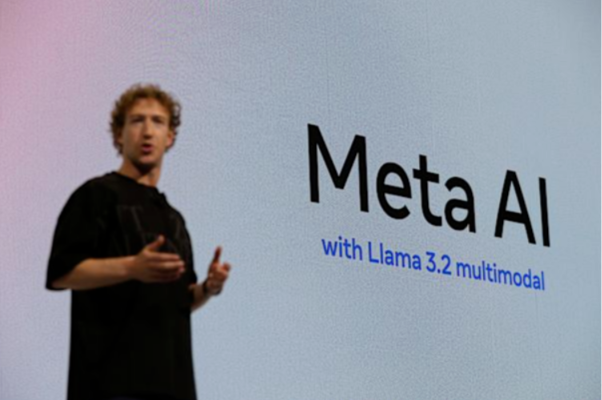
    扎克伯格介绍元人工智能多模态策略
    扎克伯格介绍Meta AI多模态战略

    I. Three Waves, One Goal

    On May 12, Meta announced three major AI updates:

    First, voice conversation upgrade. The Meta AI App integrated Muse Spark, supporting interruption at any time, topic switching, seamless multilingual transitions, and image generation during conversations.

    Second, vision capability expansion. “Live AI” extended from glasses-exclusive to mobile, enabling real-time Q&A by simply opening the camera.

    Third, glasses system overhaul. Ray-Ban Meta and Oakley Meta glasses will receive Muse Spark updates within weeks, with screen-equipped versions coming in summer.

    All three waves target one goal: letting Muse Spark’s “native multimodal” brain occupy every entry point for user-digital world interaction.

    II. What is Muse Spark?

    One month earlier, on April 8, Meta Superintelligence Labs released its first fully proprietary LLM Muse Spark, codenamed “Avocado.”

    This marks a major strategic shift for Meta AI — from the open-source Llama route to proprietary closed models.

    Muse Spark’s core capability is simultaneous processing of voice, text, and vision — not simple concatenation, but native fusion. It supports both “Instant” quick response and “Thinking” deep reasoning modes, and can run multiple sub-agents in parallel for complex tasks.

    On capital expenditure, Meta spent $70-72 billion in 2025, increasing to $115-135 billion in 2026. Zuckerberg stated in the January earnings call: “We rebuilt the foundation in 2025, now we’re rolling out new products in the coming months.”

    Meta AI app voice and image generation interface
    Meta AI app voice and image generation interface

    III. Glasses Data Shines, Meta Goes All In

    Ray-Ban Meta glasses’ market performance is Meta’s core confidence in betting on wearables.

    Q1 2026 earnings show AI glasses DAU tripled year-over-year. Zuckerberg called it “one of the fastest-growing consumer electronics categories.”

    In the global AI glasses market, Meta leads with 85.2% share.

    The update rollout starts in the US and Canada, with screen-equipped versions arriving in summer. This means every frame users see through their glasses, AI can understand in real-time and converse instantly.

    Additionally, WhatsApp, Instagram, Facebook, Messenger, and Threads will fully integrate Meta AI across search, group chats, and posts.

    IV. Meta’s Ambition Extends Beyond Better Glasses

    These three updates appear as feature upgrades, but本质上 represent an entry point war.

    Bringing “Live AI” to mobile cultivates user habits — getting users accustomed to asking AI questions through their camera. When glasses experience becomes good enough, migration cost approaches zero.

    Voice conversation naturalness improvements solve wearable device interaction bottlenecks. Glasses have no keyboard; voice is the only efficient input method. Interruption, topic switching, and multilingual support determine whether users are willing to talk to their glasses in public.

    Muse Spark going proprietary copies OpenAI’s playbook — building moats with proprietary models. Open-source Llama builds reputation; proprietary Muse Spark generates revenue.

    Most noteworthy is the prototype of “proactive AI.”

    In shopping scenarios, AI automatically integrates web results, filters by price/style/distance, presents maps, even @ brand creators. This isn’t search; it’s intent prediction. When AI can “see” products you see, “hear” your needs, and “proactively” push solutions, it ceases being a tool — becoming a shopping guide, secretary, translator, and photographer combined.

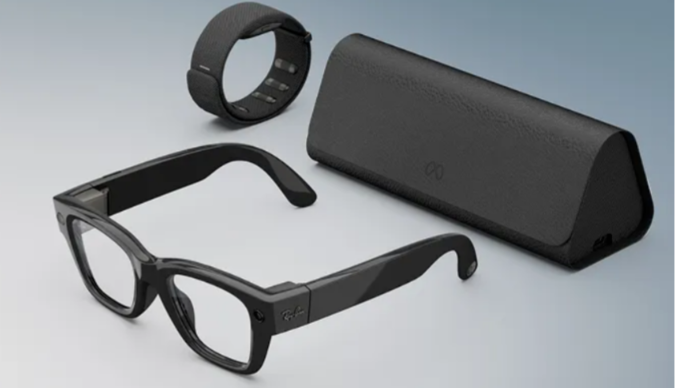
    Meta智能眼镜,带充电盒和腕带
    Meta智能眼镜,带充电盒和腕带

    V. Meta Can’t Wait to Take Mobile’s Lunch

    Meta’s anxiety hides in the data. 85.2% market share looks impressive, but the overall AI glasses market remains small.

    $115-135 billion capital expenditure converts to nearly trillion RMB.

    If AI glasses cannot transform from “novelty toys” to “daily necessities,” Meta’s earnings will suffer.

    So Meta’s strategy is clear —

    First cultivate users through mobile apps, then harvest scenarios with glasses, finally lock in stickiness through ecosystem.

    But the question remains: do users really need a pair of always-online AI glasses?

    VI. Conclusion: Everywhere is the Answer, and the Question

    Meta says AI should live Everywhere.

    This answer is grand, but also exposes a problem: when AI is everywhere, do users still have the right to be “offline”?

    Glasses are more intimate than phones, more concealed, harder to ignore. Every frame they see becomes AI training data. Whether Meta’s privacy policy can keep pace with hardware penetration is the biggest variable ahead.

    Meta is betting $115 billion that AI glasses will become the next computing platform.

    Whether this money burns a future or not, we’ll see in H2 2026.

  • Moonix AI Glasses Review: 14.9g Redefines Wearable AI

    Moonix AI Glasses Review: 14.9g Redefines Wearable AI

    Rating: 8.5/10

    The 2026 AI glasses market is an arms race. Meta Ray-Ban hit $299, Rokid squeezed waveguides into 28g, and 31 new products debuted at CES. While everyone was adding features, Moonix did something counterintuitive — it cut weight to 14.9g.

    This isn’t a concept. It’s mass production data. At 14.9g, Moonix approaches the weight of regular titanium glasses (12-15g). The physical boundary between “wearing glasses” and “wearing a device” disappears.

    Product Overview

    Moonix, from Xinmu Technology (Hangzhou), launches in June 2026 (standard), August 2026 (Pro):

    ParameterStandardPro
    Weight14.9g19.9g
    Optics0.03cc engine + holographic waveguideSame
    Lens Thickness1.8mm1.8mm
    FOV15-18 degrees15-18 degrees
    AI ChipM1 on-device (3B params)M1 on-device (3B params)
    CameraNoneYes
    MicrophonesSix-arraySix-array
    ReleaseJune 2026August 2026

    Source: Moonix Official Launch

    Technical Analysis

    0.03cc Optical Engine: Rice-Grain Engineering

    Moonix’s core optical solution is a self-developed 0.03cc micro-engine weighing under 0.1g. Mainstream AR engines range 0.5-2cc — Moonix compressed two orders of magnitude.

    Volumetric holographic waveguide technology is the key choice. Compared to waveguides and Birdbath solutions, it finds a better balance in thickness, weight, and light transmission. The 1.8mm lens thickness is far below the 3-5mm of traditional AR glasses.

    The cost is FOV compressed to 15-18 degrees, display area roughly equivalent to an A4 sheet at 3 meters. Moonix abandoned “immersive AR” — no virtual big screen, no spatial anchoring, no gesture interaction. It does one thing: quietly placing key information in the corner of vision when needed.

    M1 On-Device AI Chip: Privacy First

    Moonix features the self-developed M1 inference chip supporting local 3B-parameter LLM operation. Core AI functions need no network connection; privacy data never leaves the device.

    Unlike competitors’ passive-response AI, Moonix is proactive — using six-array microphones and environmental sensors to continuously understand context in the background, anticipating and pushing information. Example: during meetings, it automatically identifies content, generates real-time summaries in the lens corner, and syncs to Slack/Teams afterward.

    Unverified hypothesis: How accurate is proactive AI’s “anticipation”? If it pushes wrong information at wrong times, it’s more annoying than no push at all. This is the experience minefield requiring verification post-launch.

    The Camera Controversy

    Moonix standard edition has no camera; Pro (19.9g) adds it back. The official explanation: “We don’t want users wearing devices that might record others in elevators” — ethics over function.

    But no camera means abandoning the entire visual AI track: no object recognition, no QR scanning, no photos, no livestreaming. This “standard without camera, Pro with camera” segmentation raises questions: genuine ethical consideration, or pricing strategy?

    Performance Analysis

    Wearability: Imperceptible

    14.9g achieves truly imperceptible wear. Comparison: Meta Ray-Ban ~49g, Rokid Glasses ~28g. Moonix feels closer to regular glasses than electronic devices.

    Display: Sufficient

    15-18 degree FOV readability in bright light needs verification. Holographic waveguide solutions have inherent challenges in text clarity and brightness. Adequate for notifications, navigation, translation — but limited for long text reading or video watching.

    AI Interaction: Innovative but Unverified

    Proactive AI’s concept is advanced, but effectiveness depends on scene recognition accuracy. In complex scenarios — noisy restaurants, multi-person meetings, fast walking — the M1 chip’s recognition capability requires real-world testing.

    Competitor Comparison

    FeatureMoonix StandardMeta Ray-BanRokid GlassesJOVE S1
    Weight14.9g~49g~28g~35g
    PriceTBD$299¥2499¥1999
    DisplayHolographic waveguideNoneOptical waveguideOptical waveguide
    AI TypeProactive on-devicePassive cloudPassive cloudPassive cloud
    CameraNoneYesYesYes
    BatteryTBD~4hrs~3hrs~3.5hrs

    Moonix’s differentiation is “weight as selling point” — the only brand making lightweight its core competency.

    Pros and Cons

    ProsCons
    14.9g world’s lightest, imperceptible wear15-18 degree FOV, limited display
    Proactive AI, anticipates needsAnticipation accuracy unverified
    On-device AI, privacy data stays localNo camera, abandons visual AI
    Holographic waveguide, 1.8mm lensesBright light readability uncertain
    Six-array microphones, precise pickupBattery life undisclosed

    Who Should Buy

    Recommended for:

    • Daily users pursuing ultimate wear comfort
    • Privacy-conscious users avoiding cloud data
    • Business professionals needing discreet AI assistance
    • First-time adopters transitioning from regular glasses

    Should Skip:

    • Users needing photo/object recognition/visual search (choose Pro or other brands)
    • Players seeking immersive AR experiences (choose JOVE or Rokid)
    • Budget-sensitive users (await price announcement)

    Conclusion

    The Moonix AI Glasses are a product of “smart subtraction.” It precisely trims configurations minimally impacting entry users (camera, large FOV, immersive AR) while preserving core elements determining experience floor (weight, proactive AI, privacy protection).

    14.9g is not just engineering marvel — it’s a product philosophy declaration: AI glasses must first be “glasses,” then “AI.” When technology becomes light enough to forget, it truly integrates into life.

    Can Moonix become the “AirPods” of AI glasses — redefining the category through experience rather than specs? The answer will come after June launch.