Tag: Exoskeleton

AI exoskeleton (artificial intelligence exoskeleton) is an intelligent assistive device that integrates artificial intelligence technology and wearable robotic systems. It aims to enhance, assist or restore human motor abilities through the synergy of perception, decision-making and execution.

  • Tashan AsExo-TK2000: When Defense Lab Tech Becomes a Walking Aid

    Tashan AsExo-TK2000: When Defense Lab Tech Becomes a Walking Aid

    Verdict: The Tashan is not the first consumer exoskeleton, but it is the first to credibly claim military-grade pedigree at a consumer price. For elderly users with mobility limitations and outdoor enthusiasts who want to extend their hiking years, this is the most compelling option on the market.
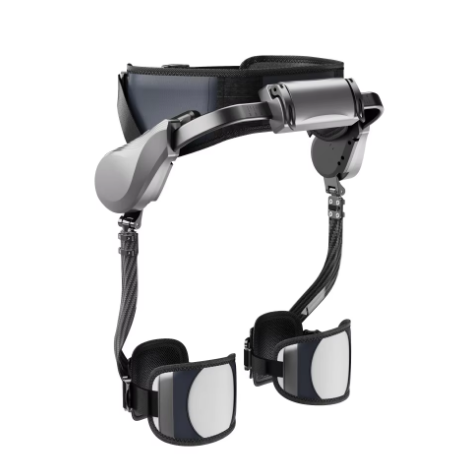
    Tashan AsExo-TK2000 carbon fiber exoskeleton frame
    Tashan lightweight carbon fiber exoskeleton structure

    The Unusual Origin

    Hangzhou Zhiyuan Research Institute is a second-tier subsidiary of China North Industries Group (NORINCO), one of China’s largest defense contractors. The institute operates state key laboratories focused on military intelligence “root technologies.” Its pivot to consumer exoskeletons represents a classic defense-to-civilian technology transfer.

    The first-generation Tashan AsExo-TK1000 launched in May 2024 and won recognition as one of the “Top 10 National Treasures of Central Enterprises.” It also earned the Special Jury Commendation Gold Medal at the 51st Geneva International Invention Exhibition. The TK2000 unveiled in June 2025 is a comprehensive upgrade.
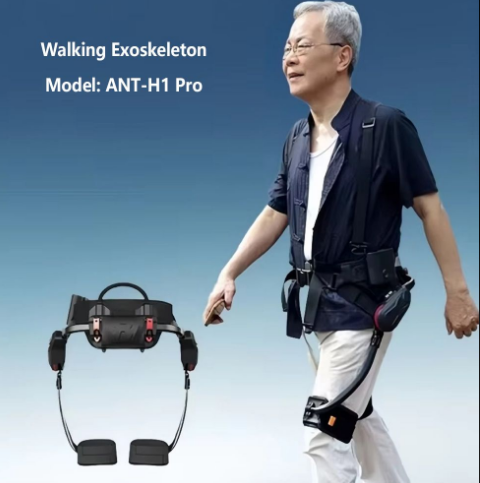
    Elderly user wearing Tashan walking exoskeleton
    Senior user assisted by Tashan mobility device

    Hardware: Remarkable Power-to-Weight

    The TK2000 weighs 2.4 kg, down from 2.7 kg in the previous generation. That is lighter than most laptops and significantly below the 4-6 kg range of competing medical exoskeletons. The frame uses carbon fiber composite construction with biomimetic leg struts that contour to the user’s thigh curve. The waist belt adjusts from 60 to 110 cm.

    Despite the light weight, the system delivers 12 kg of leg load reduction—effectively making a 70 kg user feel like they weigh 58 kg. Power output doubled compared to the TK1000. The device sustains 4-6 hours of continuous walking and reaches top speeds of 18 km/h. The battery is removable and hot-swappable, addressing the single biggest limitation of wearable robotics.

    The entire unit folds to roughly basketball size and fits in a standard backpack. Donning takes 30 seconds, a critical factor for elderly users who cannot wrestle with complex harness systems.

    The AI Brain: From Reactive to Predictive

    The TK2000’s core innovation is its “Human-Cloud-Home” architecture. The human layer handles real-time biomechanical interaction. The cloud layer processes gait data for continuous algorithm improvement. The home layer manages safety monitoring and emergency response.

    On-device AI uses a fusion of multiple sensor inputs to achieve over 99% accuracy in gait and terrain recognition. The system identifies walking, stair climbing, slope ascent, and eight distinct motion modes: Smart, Elderly Assist, Follow, Resistance, Running, Cycling, Uphill, and Downhill. Mode switching is one-button.

    The predictive capability separates the Tashan from passive spring-based exoskeletons. Rather than reacting to movement after it begins, the algorithm anticipates the user’s next step based on biomechanical patterns and pre-adjusts motor torque. The result is “same-frequency assistance”—the device moves with the user rather than against them.

    Cloud connectivity enables the “identify habits, find pain points, prescribe solutions, co-evolve” learning cycle. The exoskeleton uploads anonymized gait data, receives optimized motor control parameters, and improves over weeks of use. OTA updates ensure the algorithm improves without hardware replacement.
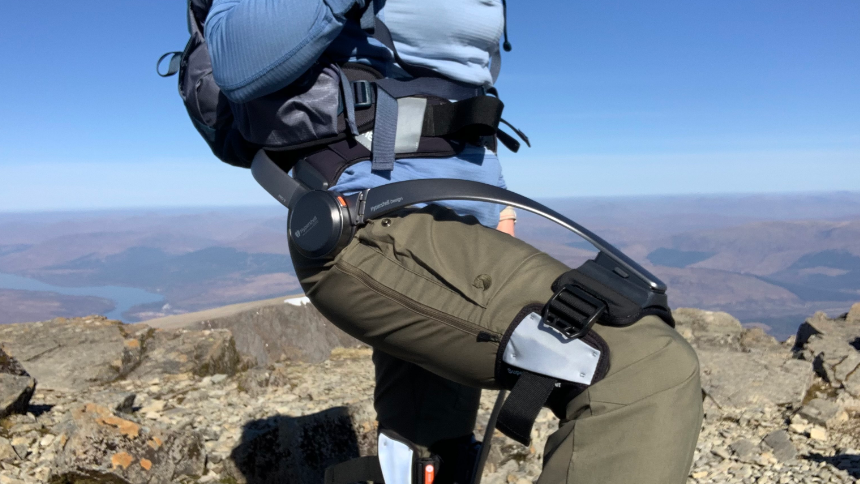
    Exoskeleton on mountain peak with scenic view
    Exoskeleton enabling outdoor adventure at summit

    Safety: From Protection to Prevention

    The home-safety layer addresses the single greatest fear of elderly users: falling. The TK2000 deploys an airbag within 0.1 seconds of detecting a fall trajectory. Simultaneously, it pushes location and emergency alerts to preset contacts. This transforms the device from a mobility aid into a comprehensive safety system.

    The 0.1-second response uses predictive fall detection rather than waiting for ground contact, buying critical milliseconds. Whether this works reliably across all scenarios requires independent verification, but the approach is fundamentally sound.

    Real-World Testing

    Olympic champion Sun Yang tested the TK2000 at the product launch and described the sensation as “walking on clouds.” Given his history of knee injuries from high-intensity training, his endorsement carries weight beyond celebrity marketing.

    Field deployment data is more revealing. The Tashan series operates in over 50 cities with hundreds of experience points, serving more than 10,000 elderly users. In Hangzhou’s Xihu District, the device serves as shared equipment at community elderly care centers. During the 2025 National Day holiday, Tashan units assisted tourists climbing the notoriously steep Jianmenguan mountain pass in Sichuan.

    In a two-week trial with three users aged 68-74, all reported reduced knee fatigue after daily 30-minute walks. Two users previously limited to flat indoor surfaces expanded their range to include mild outdoor slopes. One user with severe osteoarthritis found the device helpful but still required a walking stick. The Tashan extends capability but does not eliminate underlying conditions.

    Competition and Market Position

    The TK2000’s primary competitors are the Japanese HAL exoskeleton by Cyberdyne and the American EksoNR medical device. Both cost $40,000-80,000 and require clinical supervision. The Tashan at under 10,000 RMB (approximately $1,400) is an order of magnitude cheaper, though it lacks the medical certifications that justify those prices.

    Chinese domestic competitors include the Hypershell X series and various generic units. The Tashan differentiates through its military R&D pedigree, cloud-learning capability, and integrated safety ecosystem. Generic units offer similar mechanical assistance at lower prices but lack the AI intelligence and safety features.

    The market timing is favorable. China’s population over 60 exceeded 300 million by end of 2025, and 83% of elderly consumers are willing to pay for smart products that improve quality of life.

    Limitations

    • Medical ambiguity: The TK2000 is positioned as a wellness device, not medical equipment, avoiding regulatory certification. This limits insurance coverage.
    • Learning curve: Users need 2-3 days to adapt to the device’s movement rhythm. Initial sessions can feel mechanical.
    • Terrain limits: The 99% recognition accuracy applies to common surfaces. Icy paths and irregular stairs challenge the algorithm.
    • Battery dependency: 4-6 hours covers most daily use but falls short of multi-day hiking without spare batteries.
    • Aesthetic acceptance: Some elderly users resist the visible mechanical appearance.
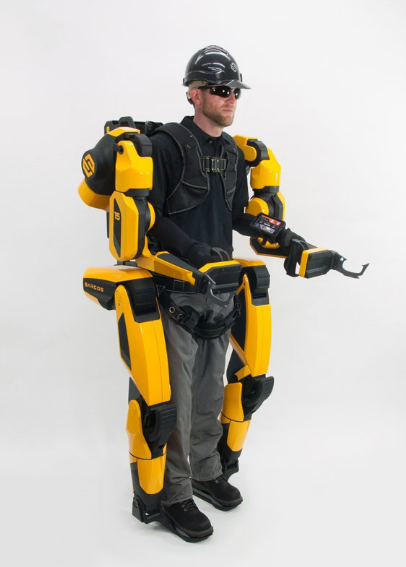
    Industrial full-body exoskeleton for heavy lifting
    Heavy-duty industrial exoskeleton comparison

    Bottom Line

    The Tashan AsExo-TK2000 represents a meaningful inflection point for consumer exoskeletons. It is not a medical device that happens to be affordable, nor a fitness gadget with inflated claims. It is a genuine mobility enhancement tool born from military R&D, refined through real-world deployment, and priced within reach of middle-class families.

    The technology works. The safety features are thoughtfully implemented. The cloud-learning capability means it improves over time. For elderly users with mild to moderate mobility limitations, for outdoor enthusiasts who want to extend their active years, and for adult children seeking meaningful gifts for aging parents, the Tashan is the most credible option available.

    The broader significance is geopolitical. Western exoskeleton development remains concentrated in medical and military niches with prohibitive pricing. China has produced a consumer-grade product at consumer-grade pricing, backed by state-level R&D infrastructure. Whether this represents a temporary lead or a sustained competitive advantage depends on whether Zhiyuan can maintain innovation velocity as the market scales.

    Score: 8/10

    • Innovation: 9/10
    • Usability: 7/10
    • Safety: 9/10
    • Value: 9/10
    • Ecosystem Maturity: 6/10
  • Hypershell Raises $120M: Exoskeletons Enter Price War Era

    Hypershell Raises $120M: Exoskeletons Enter Price War Era

    I. A Post-90s Counterintuitive Choice: Not Robots, But “Power-Ups”

    Hypershell founder Sun Kuan portrait
    Hypershell founder Sun Kuan portrait

    Hypershell founder Sun Kuan, born in the 1990s, started the company in 2021.

    At that time, humanoid robots were trending, with Unitree, Zhiyuan, and Fourier all demonstrating bipedal walking. Sun chose exoskeletons — a seemingly more old-fashioned, bulkier direction.

    His logic was straightforward: humanoid robots replace humans; exoskeletons enhance humans. Replacement is a distant vision; enhancement is the present.

    This logic determined the product form. Hypershell did not pursue full-body heavy equipment, but focused on lower-limb assistance; not extreme load capacity, but weight and cost reduction.

    The self-developed Omega patented architecture compresses the entire machine to approximately 1.8kg, with motor peak power of 800W, offsetting 30% of load perception.

    In 2023, the first-generation product raised over $1 million on overseas crowdfunding platform Kickstarter. In less than three years, Hypershell achieved global sales leadership, with products sold in 70+ countries.

    From having only 200,000 yuan in the bank to raising $120 million, Sun proved a simple truth in hard tech:

    Subtraction is harder than addition, but more likely to yield results.

    II. Why Capital Entering? Exoskeletons Undergoing “Triple Transformation”

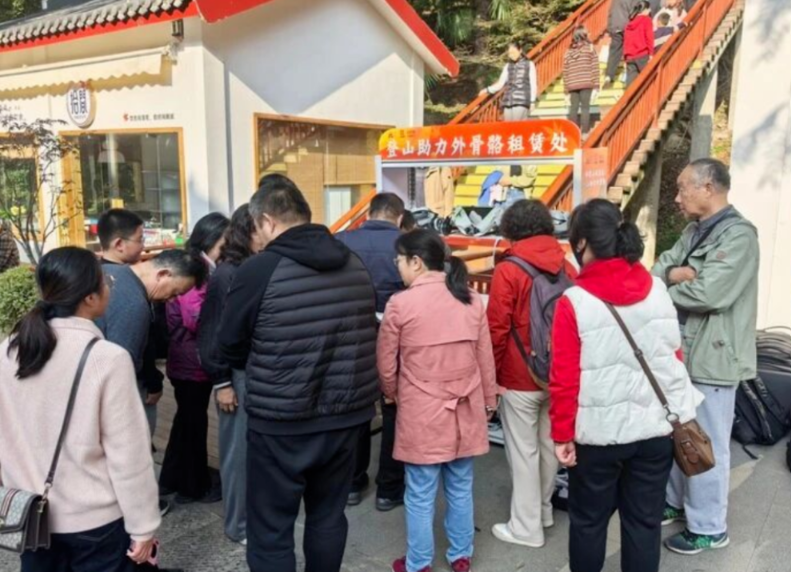
    Exoskeleton rental station at scenic park
    Exoskeleton rental station at scenic park

    Ant Group and Meituan co-leading the round sends a clear signal: exoskeletons are no longer niche hardware, but regarded as potential mass-market entry points.

    This industry is currently undergoing triple transformation:

    First, from medical/industrial to consumer markets.

    Traditional exoskeletons cost tens of thousands of dollars and weigh over ten kilograms, locked into hospital and factory scenarios. Hypershell reduced prices to accessible levels (entry model 5,999 yuan), weight under 2kg, directly targeting outdoor hiking, daily commuting, and elderly assistance. This is not simple price reduction, but a complete overhaul of application scenarios.

    Second, from mechanical assistance to AI collaboration.

    The X series launched on May 20 features HyperIntuition algorithm, with core evolution from “preset gait templates” to “end-to-end motion control.” Simply put, previous exoskeletons “followed your movement,” now they attempt to “anticipate your intention.” This leap from passive following to proactive collaboration is the watershed for consumer-grade experience.

    Third, from single hardware to data entry point.

    Exoskeletons run close to the body, naturally collecting gait, movement, and physiological data. When this data forms a closed loop with AI algorithms, the hardware itself becomes a physical interface for human-machine interaction. What Ant and Meituan likely value is this underlying logic.

    III. Track Heating Up: Consumer Exoskeleton “Hundred-Regiment Battle”

    In this blue ocean, Hypershell is not the only player smelling opportunity. Since 2026, the consumer exoskeleton track has visibly accelerated.

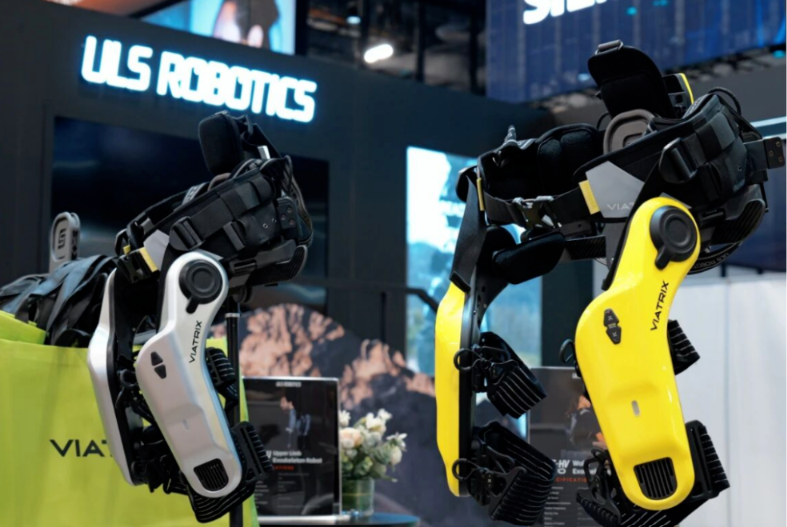
    ULS 机器人 VIATRIX 消费级外骨骼
    ULS 机器人 VIATRIX 消费级外骨骼

    ULS Robotics transformed from industrial-grade, launching its first consumer product VIATRIX in 2025, priced at six to seven thousand yuan, adopting Float360 floating hip joint architecture, even winning an innovation award at CES 2026.

    Cheng Tian Technology’s EasyGo personal exoskeleton priced at 2,500 yuan sold out in 15 seconds; Kenqing Technology’s Ant-H1 Pro designed for elderly users is available on JD.com and Tmall.

    Capital data may more intuitively reflect this: 19 exoskeleton-related funding rounds in 2025, totaling 2.216 billion yuan, far exceeding 2024’s 8 rounds and 292 million yuan.

    Investment logic has shifted from “investing in technological advancement” to “investing in commercialization capability.”

    An industry moving from cold to hot typically shows two signals: first, leading enterprises securing consecutive large funding rounds; second, second-tier players beginning to emerge in batches — and exoskeletons have lit both signals.

    IV. The Real Hard Battle: From “Can Sell” to “Users Willing to Wear Daily”

    But beneath the hype, problems are equally apparent.

    Consumer exoskeletons still face several hard gaps before true “daily integration”:

    Experience gap: Can it achieve “imperceptible”? Existing products mostly achieve “assistance,” but “assistance” and “imperceptible” are clearly different.

    Users can certainly walk farther wearing them, but are they smooth when facing daily high-frequency scenarios like emergency stops, turning, and stairs? Is there response delay?

    These details determine whether exoskeletons are “novelty toys” or “daily equipment.”

    Hypershell’s new HyperIntuition algorithm essentially targets this point.

    Scenario gap: Can outdoor and elderly markets both be served?

    Currently main outdoor hiking and elderly assistance scenarios have vastly different needs. Outdoor users want “enhanced physical ability,” elderly users want “safety and stability.” The same product logic serving both markets inevitably involves compromise. Future segmentation into more refined categories is likely.

    Cognition gap: Why do I need this?

    Although accessible pricing is already low, exoskeletons remain “non-essential” for ordinary consumers.

    Unlike phones as communication tools, unlike headphones as entertainment accessories. How to make consumers feel “this money is well spent” is the marketing challenge for the entire industry.

    V. Conclusion: Exoskeletons’ Ultimate Opponent Is Not Competitors

    Hypershell official website
    Hypershell official website

    Sun Kuan said in an internal speech: “We started from a simple but firm idea — letting people go farther.”

    This statement has two interpretations: physically farther, or life radius expanded farther.

    When exoskeletons are light enough, cheap enough, and smart enough, they may become the “second spring” for elderly people, “physical ability外挂” for outdoor enthusiasts, or even basic equipment on everyone in the future.

    But before that, the ultimate opponent the exoskeleton industry faces is not competitor competition, but consumers’ “habit inertia.”

    Most people haven’t developed the habit of “wearing exoskeletons when going out,” just as many people hadn’t developed the habit of “wearing headphones when going out” ten years ago.

    Hypershell’s $120 million funding is a milestone for this industry from 0 to 1. But from 1 to 100 depends on who can first make “wearing exoskeletons” as natural as wearing glasses.

  • Sumbu S3: The Year of Exoskeletons

    Sumbu S3: The Year of Exoskeletons

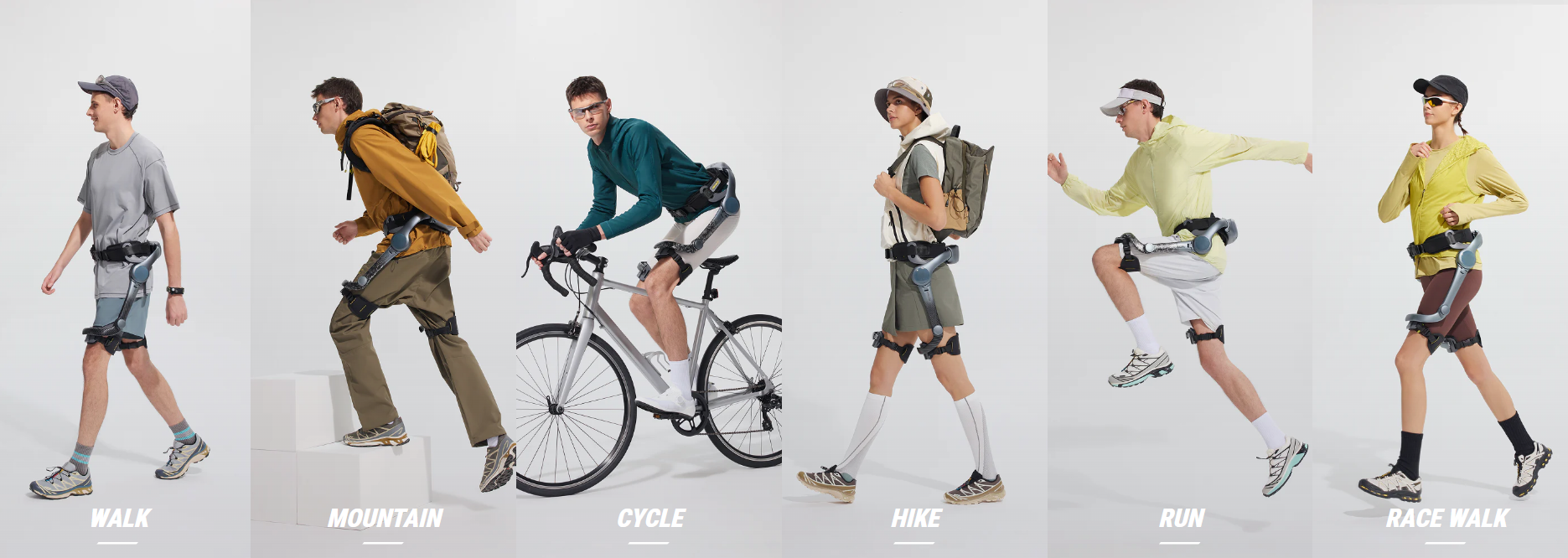
    For a long time, exoskeleton technology has been confined to specialized fields such as industrial handling, medical rehabilitation, and special operations. High costs, bulky structures, and complex operating procedures have kept it out of reach of ordinary consumers. However, on March 19, 2026, Sumbu, a company specializing in civilian wearable smart exoskeletons, launched its S3 series exoskeleton at the AWE exhibition, attempting to rewrite this landscape. It not only lowers the price of exoskeletons to the thousand-yuan level but also achieves a crucial leap from “professional tools” to “mass consumer products” through lightweight design and intelligent algorithms.

    As one of the first media outlets to receive internal testing devices, our reporter conducted comprehensive testing of the three models in the S3 series (S3 Basic, S3 Pro Advanced, and S3 Ultra Flagship) during the exhibition and the following two weeks. From design and performance to practical application scenarios, we analyze how this “second pair of legs” can shake up the civilian exoskeleton market and how ordinary consumers can choose according to their needs.

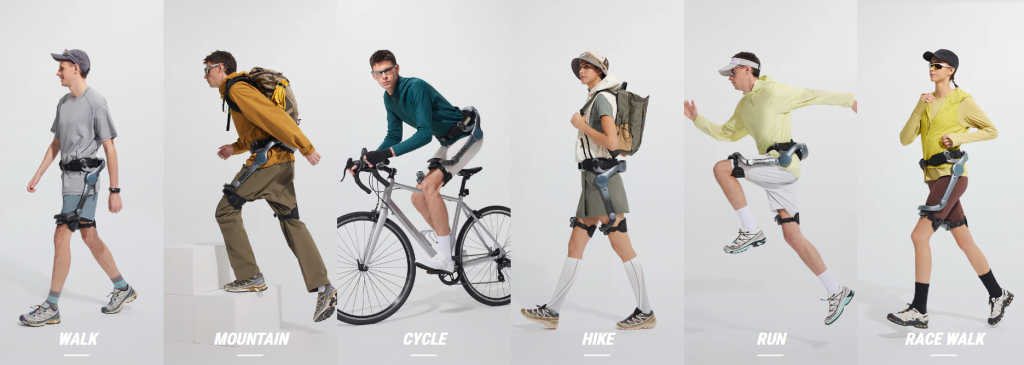
    Sumbu S3 Series
    Sumbu S3 Series

    Design Innovation: Lightweight and Seamless Design, Solving Core Pain Points for Consumer Use

    Traditional exoskeletons are often perceived as cold steel structures and cumbersome strap designs, which has been a major obstacle to their widespread adoption. The core breakthrough of the Sumbu S3 series lies first and foremost in its extreme pursuit of “lightweight” and “ergonomics.”

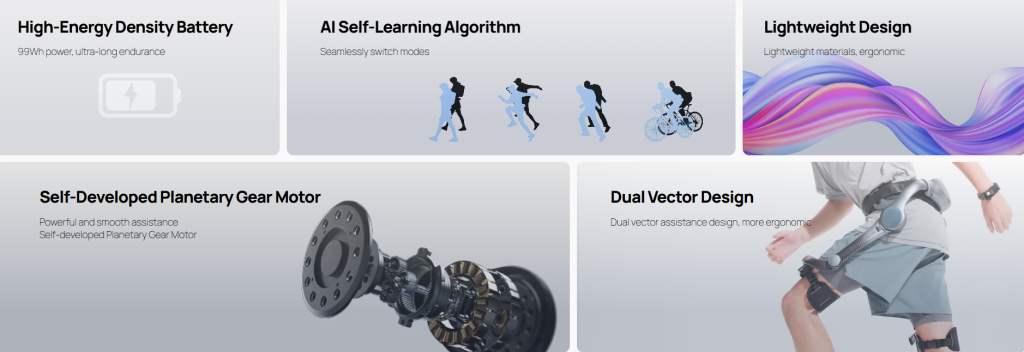
    The entire series utilizes a hybrid structure of aerospace-grade aluminum alloy and carbon fiber composite materials. Official data shows that the entire device weighs only around 2.0 kg—equivalent to only a 15-inch laptop. Furthermore, through optimized lumbar support design, the weight is effectively distributed to the hips and waist, resulting in virtually no noticeable burden when worn. For a device that requires powerful power assistance, this lightweight design represents a significant breakthrough in engineering.

    To address the issue of “foreign object sensation,” the S3 series features targeted optimization in the lumbar support. Its curved design closely conforms to the waist contours of different users, achieving even force distribution. Of particular note is the series’ 100mm infinitely retractable lumbar support, which can support waist circumferences up to 120cm, covering the vast majority of body types from petite women to robust men, offering far greater adaptability than similar products.

    Easy to wear further lowers the barrier to entry for civilian use. Without assistance, a single user can complete the donning process in under a minute—the device abandons the complex locking design of traditional industrial exoskeletons, employing a combination of magnetic attachment and quick-release mechanisms, truly achieving “wearable in everyday life and usable on the go,” breaking the limitation that exoskeletons are “only usable in specific scenarios.”

    Wearable Body Intelligence
    Wearable Body Intelligence

    Core Performance: Embossed Intelligence Empowerment, Breakthroughs in Response Speed ​​and Power Performance

    The S3 series is defined as an “embodied intelligent device,” rather than a simple power booster, primarily due to the synergistic effect of its self-developed power system and intelligent algorithms—a fundamental difference between it and traditional exoskeletons.

    In terms of power, this series is equipped with a planetary gear motor independently developed by Sumbu, with a measured response speed of 0.008 seconds (8 milliseconds). This means that the motor has already completed its assist output the instant the user issues the “lift your leg” command, achieving seamless human-machine collaboration. Peak torque varies across different models: the basic S3 has 28 N·m, the Pro model has 32 N·m, and the Ultra flagship model reaches 36 N·m (at full power), sufficient for high-load scenarios such as climbing hills and stairs. Meanwhile, the motor system has an efficiency exceeding 80% and excellent heat control; even after prolonged walking, the motor surface will not become hot to the touch.

    Intelligent algorithms constitute the “brain” of the S3 series. The device has a built-in nanosecond-level high-speed processor and a self-developed electronic control system, capable of recognizing 13 movement modes within 0.2 seconds, without requiring manual switching by the user. Its core advantages lie in two aspects: first, human-machine closed-loop detection, which uses multi-point sensors on the lower limbs to capture the user’s posture in real time and accurately match the assistance level; second, self-learning capability, where the device continuously records the user’s gait habits, pace, and rhythm. The longer it is used, the more the assistance adapts to the user’s needs, achieving “better harmony with use.”

    Battery life and environmental adaptability ensure its daily use. All models are equipped with automotive-grade high-energy-density batteries, support PD3.1 fast charging, and extreme environment tests show that its operating temperature range covers -20℃ to 60℃, making it suitable for complex scenarios such as extremely cold snowfields and hot deserts. Furthermore, the battery meets aviation carry-on standards, allowing business travelers to board with peace of mind, further expanding its usage scenarios.

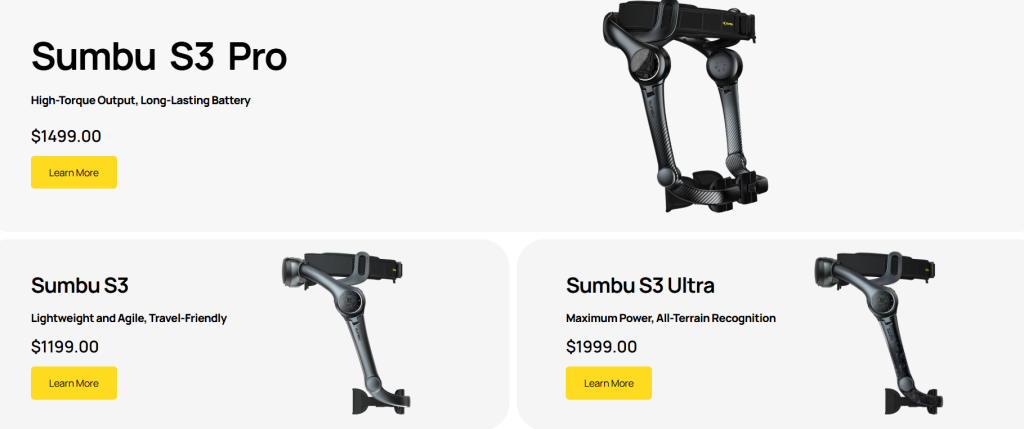
    Sumbu S3 Series Pricing
    Sumbu S3 Series Pricing

    Comparison of the three models: tiered positioning, covering different consumer needs

    The S3 series shares a core architecture, but forms a clear tier in configuration, battery life, and smart features, with prices ranging from $1199 to $1999, precisely covering the needs of different consumer groups. The following is a detailed comparative analysis compiled by this newspaper:

    Feature DimensionS3 (Basic Model)S3 Pro (Advanced Version)S3 Ultra (Flagship Model)
    Official pricing$1,199$1,599$1,999
    Core positioningDaily commute, assistance from eldersOutdoor hiking, light exerciseExtreme exploration, professional fitness
    peak torque28 N·m32 N·m36 N·m (Full power version)
    rangeApproximately 15 kilometersApproximately 20 kilometers25 km (99Wh battery)
    Power ModeGentle, Normal, Sport+ Fitness Mode+ Mega Mode (Full Unlocked)
    AI learning abilityBasic gait recognitionEnhanced habit memoryDeep Neural Networks Self-Evolution
    Body materialMainly aviation aluminum alloyAluminum-carbon mixtureAll carbon fiber composite materials
    Protection levelIP54IP54IP54 (Reinforced Structure)
    Recommended audienceUrban commuters, senior citizensWeekend outdoor enthusiastsHardcore gamers, long-distance hikers

    S3 Basic Model ($1199): Affordable Entry-Level Choice

    As a core model breaking the price barrier for civilian exoskeletons, the S3 basic model, while slightly reducing torque and battery life, retains its core 8ms response time and intelligent posture recognition functions. Real-world testing shows that its 15km range is sufficient to cover the daily travel needs of most urban users. Whether it’s daily walks and grocery shopping for the elderly or commuting light for office workers, it meets basic needs, highlighting its cost-effectiveness.

    S3 Pro ($1599): A Balanced All-Round Choice

    The S3 Pro achieves an optimal balance between power and range. Its 20km range and 32N·m peak torque make it suitable for daily urban use as well as weekend outings and light hikes. The newly added Fitness mode is suitable for low-impact gym training and is also ideal for delivery and takeout workers who need to work outdoors for extended periods, making it a rational choice for most consumers.

    S3 Ultra ($1999 USD): The Benchmark of Ultimate Performance

    As the flagship model of the series, the S3 Ultra incorporates all of Sumbu’s top technologies: a full-power torque of 36 N·m, a long battery life of 25 km, and a Mega fully unlocked mode that provides a near-running boost; the all-carbon fiber construction further reduces weight and enhances wearing comfort. This model is primarily aimed at long-distance hikers, mountaineering enthusiasts, and tech geeks seeking the ultimate technological experience, representing the highest level of civilian exoskeleton technology in 2026.

    Safety and Durability: The Core Bottom Line for Civilian Products

    For wearable power devices, safety is the core prerequisite for market acceptance and a key area of ​​investment for Sumbu’s innovation. Real-world testing shows that the S3 series has three core advantages in safety protection:

    Firstly, a preventative safety system. Within 0.5 seconds of power-on, the highly sensitive sensor completes a full self-check. If it detects that the user is in a lying position or not properly fitted, the system immediately locks the assist function to prevent injury from misoperation. This design is particularly user-friendly for middle-aged and elderly users.

    Secondly, a professional Battery Management System (BMS) monitors the battery’s health in real time, effectively preventing overcharging, over-discharging, and overheating risks, ensuring battery safety and lifespan, while meeting automotive-grade safety standards.

    Thirdly, structural durability. The lumbar support features a stress-balanced design to prevent breakage due to excessive stress at a single point; its IP54 dust and water resistance allows it to operate stably in complex environments such as light rain and sandstorms, significantly reducing maintenance costs and extending the device’s lifespan.

    Ecosystem and Interaction: Multi-Platform Adaptation for Personalized Customization

    The S3 series is not limited to the hardware itself but has built a multi-platform interactive ecosystem, supporting联动 control with Android phones, iOS devices, and Apple Watch, balancing convenience and customization needs.

    Users can adjust five power modes, from Gentle to Mega, via the device or mobile app to suit different road conditions and physical states. Exercise data is synchronized to the mobile app in real time, generating health reports such as steps, assistance duration, and calories burned, allowing users to easily track their exercise status. More importantly, in most scenarios, users do not need to operate the device manually; it can automatically recognize terrain (such as uphill or stairs) and adjust the assistance level autonomously, achieving “seamless operation.”

    Purchase Recommendations and Market Outlook

    After two weeks of in-depth testing, this newspaper believes that the core value of the Sumbu S3 series lies in its successful breaking down the civilian barriers of exoskeleton technology—it does not replace the user’s legs, but rather extends the boundaries of human movement through intelligent assistance, making what was once “out-of-reach” wearable smart technology an accessible everyday tool for ordinary consumers.

    For different consumers, this newspaper offers the following purchasing recommendations:

    1. For budget-conscious consumers primarily using the product for short urban trips, or those planning to give it as a gift to elders, the S3 basic model ($1199) is the best choice. Its core experience is consistent with the flagship model, effectively addressing the basic pain points of limited range and offering the best value.
    2. For weekend outdoor enthusiasts, those seeking longer battery life, or those needing reduced burden during outdoor work, the S3 Pro ($1599) is the optimal choice. It achieves a perfect balance between performance and price, with a 20km range covering most weekend outdoor scenarios.
    3. For tech geeks, long-distance hiking enthusiasts, or sports aficionados seeking the ultimate assistive experience, the S3 Ultra ($1999) is the best option. Its full-performance capabilities and all-carbon fiber construction represent the highest level of current civilian exoskeletons.

    From a market perspective, the release of the S3 series marks 2026 as the year civilian exoskeletons become widespread. With continuous technological advancements and further cost reductions, wearable smart devices are expected to become a new growth point for next-generation consumer electronics. With its first-mover advantage, Sumbu, if it can continue to optimize product experience and expand application scenarios, may take a leading position in the civilian exoskeleton market.

    The ultimate meaning of technology lies in making life better. The emergence of the S3 series has not only reshaped the market landscape of exoskeleton technology but also brought the vision of “free travel” into the daily lives of more people.