Tag: Consumer

Consumer product reviews, featuring AI hardware suitable for everyday users and mainstream consumers. Accessible explanations and practical advice helping general audiences make smart purchasing decisions.

  • Hypershell Raises $120M: Exoskeletons Enter Price War Era

    Hypershell Raises $120M: Exoskeletons Enter Price War Era

    I. A Post-90s Counterintuitive Choice: Not Robots, But “Power-Ups”

    Hypershell founder Sun Kuan portrait
    Hypershell founder Sun Kuan portrait

    Hypershell founder Sun Kuan, born in the 1990s, started the company in 2021.

    At that time, humanoid robots were trending, with Unitree, Zhiyuan, and Fourier all demonstrating bipedal walking. Sun chose exoskeletons — a seemingly more old-fashioned, bulkier direction.

    His logic was straightforward: humanoid robots replace humans; exoskeletons enhance humans. Replacement is a distant vision; enhancement is the present.

    This logic determined the product form. Hypershell did not pursue full-body heavy equipment, but focused on lower-limb assistance; not extreme load capacity, but weight and cost reduction.

    The self-developed Omega patented architecture compresses the entire machine to approximately 1.8kg, with motor peak power of 800W, offsetting 30% of load perception.

    In 2023, the first-generation product raised over $1 million on overseas crowdfunding platform Kickstarter. In less than three years, Hypershell achieved global sales leadership, with products sold in 70+ countries.

    From having only 200,000 yuan in the bank to raising $120 million, Sun proved a simple truth in hard tech:

    Subtraction is harder than addition, but more likely to yield results.

    II. Why Capital Entering? Exoskeletons Undergoing “Triple Transformation”

    Exoskeleton rental station at scenic park
    Exoskeleton rental station at scenic park

    Ant Group and Meituan co-leading the round sends a clear signal: exoskeletons are no longer niche hardware, but regarded as potential mass-market entry points.

    This industry is currently undergoing triple transformation:

    First, from medical/industrial to consumer markets.

    Traditional exoskeletons cost tens of thousands of dollars and weigh over ten kilograms, locked into hospital and factory scenarios. Hypershell reduced prices to accessible levels (entry model 5,999 yuan), weight under 2kg, directly targeting outdoor hiking, daily commuting, and elderly assistance. This is not simple price reduction, but a complete overhaul of application scenarios.

    Second, from mechanical assistance to AI collaboration.

    The X series launched on May 20 features HyperIntuition algorithm, with core evolution from “preset gait templates” to “end-to-end motion control.” Simply put, previous exoskeletons “followed your movement,” now they attempt to “anticipate your intention.” This leap from passive following to proactive collaboration is the watershed for consumer-grade experience.

    Third, from single hardware to data entry point.

    Exoskeletons run close to the body, naturally collecting gait, movement, and physiological data. When this data forms a closed loop with AI algorithms, the hardware itself becomes a physical interface for human-machine interaction. What Ant and Meituan likely value is this underlying logic.

    III. Track Heating Up: Consumer Exoskeleton “Hundred-Regiment Battle”

    In this blue ocean, Hypershell is not the only player smelling opportunity. Since 2026, the consumer exoskeleton track has visibly accelerated.
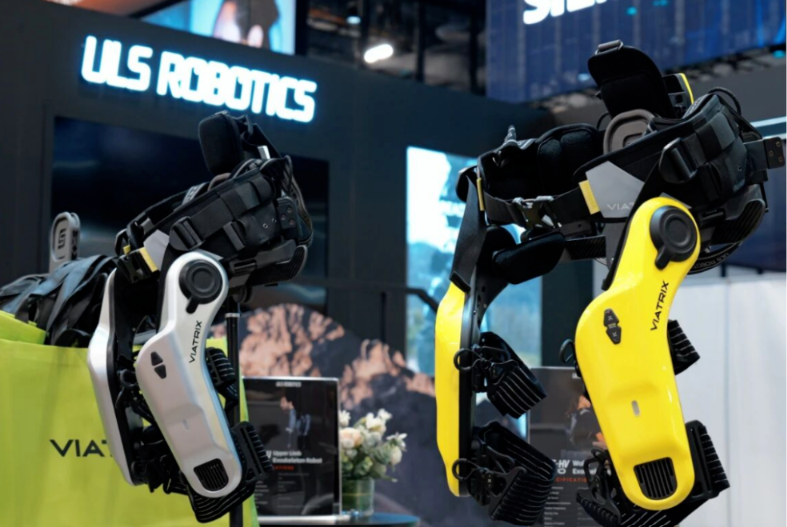
    ULS 机器人 VIATRIX 消费级外骨骼
    ULS 机器人 VIATRIX 消费级外骨骼

    ULS Robotics transformed from industrial-grade, launching its first consumer product VIATRIX in 2025, priced at six to seven thousand yuan, adopting Float360 floating hip joint architecture, even winning an innovation award at CES 2026.

    Cheng Tian Technology’s EasyGo personal exoskeleton priced at 2,500 yuan sold out in 15 seconds; Kenqing Technology’s Ant-H1 Pro designed for elderly users is available on JD.com and Tmall.

    Capital data may more intuitively reflect this: 19 exoskeleton-related funding rounds in 2025, totaling 2.216 billion yuan, far exceeding 2024’s 8 rounds and 292 million yuan.

    Investment logic has shifted from “investing in technological advancement” to “investing in commercialization capability.”

    An industry moving from cold to hot typically shows two signals: first, leading enterprises securing consecutive large funding rounds; second, second-tier players beginning to emerge in batches — and exoskeletons have lit both signals.

    IV. The Real Hard Battle: From “Can Sell” to “Users Willing to Wear Daily”

    But beneath the hype, problems are equally apparent.

    Consumer exoskeletons still face several hard gaps before true “daily integration”:

    Experience gap: Can it achieve “imperceptible”? Existing products mostly achieve “assistance,” but “assistance” and “imperceptible” are clearly different.

    Users can certainly walk farther wearing them, but are they smooth when facing daily high-frequency scenarios like emergency stops, turning, and stairs? Is there response delay?

    These details determine whether exoskeletons are “novelty toys” or “daily equipment.”

    Hypershell’s new HyperIntuition algorithm essentially targets this point.

    Scenario gap: Can outdoor and elderly markets both be served?

    Currently main outdoor hiking and elderly assistance scenarios have vastly different needs. Outdoor users want “enhanced physical ability,” elderly users want “safety and stability.” The same product logic serving both markets inevitably involves compromise. Future segmentation into more refined categories is likely.

    Cognition gap: Why do I need this?

    Although accessible pricing is already low, exoskeletons remain “non-essential” for ordinary consumers.

    Unlike phones as communication tools, unlike headphones as entertainment accessories. How to make consumers feel “this money is well spent” is the marketing challenge for the entire industry.

    V. Conclusion: Exoskeletons’ Ultimate Opponent Is Not Competitors

    Hypershell official website
    Hypershell official website

    Sun Kuan said in an internal speech: “We started from a simple but firm idea — letting people go farther.”

    This statement has two interpretations: physically farther, or life radius expanded farther.

    When exoskeletons are light enough, cheap enough, and smart enough, they may become the “second spring” for elderly people, “physical ability外挂” for outdoor enthusiasts, or even basic equipment on everyone in the future.

    But before that, the ultimate opponent the exoskeleton industry faces is not competitor competition, but consumers’ “habit inertia.”

    Most people haven’t developed the habit of “wearing exoskeletons when going out,” just as many people hadn’t developed the habit of “wearing headphones when going out” ten years ago.

    Hypershell’s $120 million funding is a milestone for this industry from 0 to 1. But from 1 to 100 depends on who can first make “wearing exoskeletons” as natural as wearing glasses.
  • Meta Muse Spark Rollout: Voice, Vision, Wearables Converge

    Meta Muse Spark Rollout: Voice, Vision, Wearables Converge

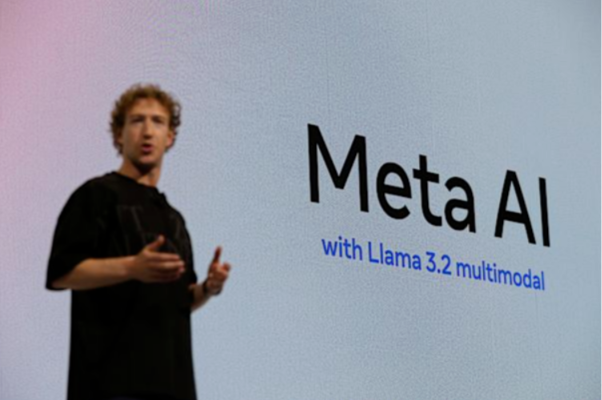
    扎克伯格介绍元人工智能多模态策略
    扎克伯格介绍Meta AI多模态战略

    I. Three Waves, One Goal

    On May 12, Meta announced three major AI updates:

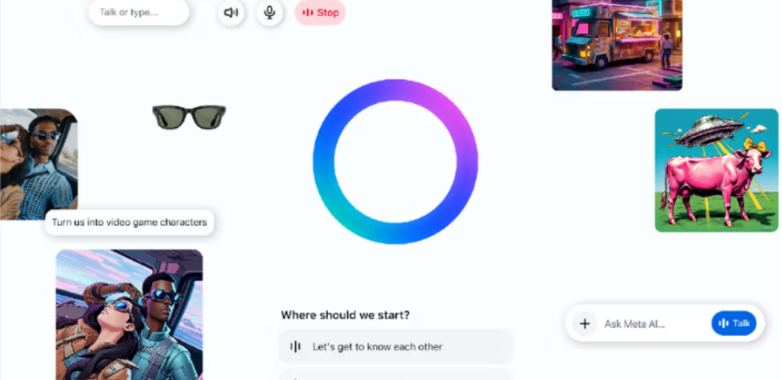
    First, voice conversation upgrade. The Meta AI App integrated Muse Spark, supporting interruption at any time, topic switching, seamless multilingual transitions, and image generation during conversations.

    Second, vision capability expansion. “Live AI” extended from glasses-exclusive to mobile, enabling real-time Q&A by simply opening the camera.

    Third, glasses system overhaul. Ray-Ban Meta and Oakley Meta glasses will receive Muse Spark updates within weeks, with screen-equipped versions coming in summer.

    All three waves target one goal: letting Muse Spark’s “native multimodal” brain occupy every entry point for user-digital world interaction.

    II. What is Muse Spark?

    One month earlier, on April 8, Meta Superintelligence Labs released its first fully proprietary LLM Muse Spark, codenamed “Avocado.”

    This marks a major strategic shift for Meta AI — from the open-source Llama route to proprietary closed models.

    Muse Spark’s core capability is simultaneous processing of voice, text, and vision — not simple concatenation, but native fusion. It supports both “Instant” quick response and “Thinking” deep reasoning modes, and can run multiple sub-agents in parallel for complex tasks.

    On capital expenditure, Meta spent $70-72 billion in 2025, increasing to $115-135 billion in 2026. Zuckerberg stated in the January earnings call: “We rebuilt the foundation in 2025, now we’re rolling out new products in the coming months.”

    Meta AI app voice and image generation interface
    Meta AI app voice and image generation interface

    III. Glasses Data Shines, Meta Goes All In

    Ray-Ban Meta glasses’ market performance is Meta’s core confidence in betting on wearables.

    Q1 2026 earnings show AI glasses DAU tripled year-over-year. Zuckerberg called it “one of the fastest-growing consumer electronics categories.”

    In the global AI glasses market, Meta leads with 85.2% share.

    The update rollout starts in the US and Canada, with screen-equipped versions arriving in summer. This means every frame users see through their glasses, AI can understand in real-time and converse instantly.

    Additionally, WhatsApp, Instagram, Facebook, Messenger, and Threads will fully integrate Meta AI across search, group chats, and posts.

    IV. Meta’s Ambition Extends Beyond Better Glasses

    These three updates appear as feature upgrades, but本质上 represent an entry point war.

    Bringing “Live AI” to mobile cultivates user habits — getting users accustomed to asking AI questions through their camera. When glasses experience becomes good enough, migration cost approaches zero.

    Voice conversation naturalness improvements solve wearable device interaction bottlenecks. Glasses have no keyboard; voice is the only efficient input method. Interruption, topic switching, and multilingual support determine whether users are willing to talk to their glasses in public.

    Muse Spark going proprietary copies OpenAI’s playbook — building moats with proprietary models. Open-source Llama builds reputation; proprietary Muse Spark generates revenue.

    Most noteworthy is the prototype of “proactive AI.”

    In shopping scenarios, AI automatically integrates web results, filters by price/style/distance, presents maps, even @ brand creators. This isn’t search; it’s intent prediction. When AI can “see” products you see, “hear” your needs, and “proactively” push solutions, it ceases being a tool — becoming a shopping guide, secretary, translator, and photographer combined.

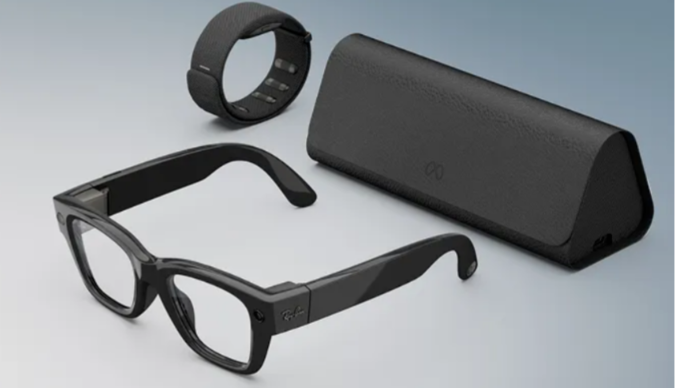
    Meta智能眼镜,带充电盒和腕带
    Meta智能眼镜,带充电盒和腕带

    V. Meta Can’t Wait to Take Mobile’s Lunch

    Meta’s anxiety hides in the data. 85.2% market share looks impressive, but the overall AI glasses market remains small.

    $115-135 billion capital expenditure converts to nearly trillion RMB.

    If AI glasses cannot transform from “novelty toys” to “daily necessities,” Meta’s earnings will suffer.

    So Meta’s strategy is clear —

    First cultivate users through mobile apps, then harvest scenarios with glasses, finally lock in stickiness through ecosystem.

    But the question remains: do users really need a pair of always-online AI glasses?

    VI. Conclusion: Everywhere is the Answer, and the Question

    Meta says AI should live Everywhere.

    This answer is grand, but also exposes a problem: when AI is everywhere, do users still have the right to be “offline”?

    Glasses are more intimate than phones, more concealed, harder to ignore. Every frame they see becomes AI training data. Whether Meta’s privacy policy can keep pace with hardware penetration is the biggest variable ahead.

    Meta is betting $115 billion that AI glasses will become the next computing platform.

    Whether this money burns a future or not, we’ll see in H2 2026.

  • Moonix AI Glasses Review: 14.9g Redefines Wearable AI

    Moonix AI Glasses Review: 14.9g Redefines Wearable AI

    Rating: 8.5/10

    The 2026 AI glasses market is an arms race. Meta Ray-Ban hit $299, Rokid squeezed waveguides into 28g, and 31 new products debuted at CES. While everyone was adding features, Moonix did something counterintuitive — it cut weight to 14.9g.

    This isn’t a concept. It’s mass production data. At 14.9g, Moonix approaches the weight of regular titanium glasses (12-15g). The physical boundary between “wearing glasses” and “wearing a device” disappears.

    Product Overview

    Moonix, from Xinmu Technology (Hangzhou), launches in June 2026 (standard), August 2026 (Pro):

    ParameterStandardPro
    Weight14.9g19.9g
    Optics0.03cc engine + holographic waveguideSame
    Lens Thickness1.8mm1.8mm
    FOV15-18 degrees15-18 degrees
    AI ChipM1 on-device (3B params)M1 on-device (3B params)
    CameraNoneYes
    MicrophonesSix-arraySix-array
    ReleaseJune 2026August 2026

    Source: Moonix Official Launch

    Technical Analysis

    0.03cc Optical Engine: Rice-Grain Engineering

    Moonix’s core optical solution is a self-developed 0.03cc micro-engine weighing under 0.1g. Mainstream AR engines range 0.5-2cc — Moonix compressed two orders of magnitude.

    Volumetric holographic waveguide technology is the key choice. Compared to waveguides and Birdbath solutions, it finds a better balance in thickness, weight, and light transmission. The 1.8mm lens thickness is far below the 3-5mm of traditional AR glasses.

    The cost is FOV compressed to 15-18 degrees, display area roughly equivalent to an A4 sheet at 3 meters. Moonix abandoned “immersive AR” — no virtual big screen, no spatial anchoring, no gesture interaction. It does one thing: quietly placing key information in the corner of vision when needed.

    M1 On-Device AI Chip: Privacy First

    Moonix features the self-developed M1 inference chip supporting local 3B-parameter LLM operation. Core AI functions need no network connection; privacy data never leaves the device.

    Unlike competitors’ passive-response AI, Moonix is proactive — using six-array microphones and environmental sensors to continuously understand context in the background, anticipating and pushing information. Example: during meetings, it automatically identifies content, generates real-time summaries in the lens corner, and syncs to Slack/Teams afterward.

    Unverified hypothesis: How accurate is proactive AI’s “anticipation”? If it pushes wrong information at wrong times, it’s more annoying than no push at all. This is the experience minefield requiring verification post-launch.

    The Camera Controversy

    Moonix standard edition has no camera; Pro (19.9g) adds it back. The official explanation: “We don’t want users wearing devices that might record others in elevators” — ethics over function.

    But no camera means abandoning the entire visual AI track: no object recognition, no QR scanning, no photos, no livestreaming. This “standard without camera, Pro with camera” segmentation raises questions: genuine ethical consideration, or pricing strategy?

    Performance Analysis

    Wearability: Imperceptible

    14.9g achieves truly imperceptible wear. Comparison: Meta Ray-Ban ~49g, Rokid Glasses ~28g. Moonix feels closer to regular glasses than electronic devices.

    Display: Sufficient

    15-18 degree FOV readability in bright light needs verification. Holographic waveguide solutions have inherent challenges in text clarity and brightness. Adequate for notifications, navigation, translation — but limited for long text reading or video watching.

    AI Interaction: Innovative but Unverified

    Proactive AI’s concept is advanced, but effectiveness depends on scene recognition accuracy. In complex scenarios — noisy restaurants, multi-person meetings, fast walking — the M1 chip’s recognition capability requires real-world testing.

    Competitor Comparison

    FeatureMoonix StandardMeta Ray-BanRokid GlassesJOVE S1
    Weight14.9g~49g~28g~35g
    PriceTBD$299¥2499¥1999
    DisplayHolographic waveguideNoneOptical waveguideOptical waveguide
    AI TypeProactive on-devicePassive cloudPassive cloudPassive cloud
    CameraNoneYesYesYes
    BatteryTBD~4hrs~3hrs~3.5hrs

    Moonix’s differentiation is “weight as selling point” — the only brand making lightweight its core competency.

    Pros and Cons

    ProsCons
    14.9g world’s lightest, imperceptible wear15-18 degree FOV, limited display
    Proactive AI, anticipates needsAnticipation accuracy unverified
    On-device AI, privacy data stays localNo camera, abandons visual AI
    Holographic waveguide, 1.8mm lensesBright light readability uncertain
    Six-array microphones, precise pickupBattery life undisclosed

    Who Should Buy

    Recommended for:

    • Daily users pursuing ultimate wear comfort
    • Privacy-conscious users avoiding cloud data
    • Business professionals needing discreet AI assistance
    • First-time adopters transitioning from regular glasses

    Should Skip:

    • Users needing photo/object recognition/visual search (choose Pro or other brands)
    • Players seeking immersive AR experiences (choose JOVE or Rokid)
    • Budget-sensitive users (await price announcement)

    Conclusion

    The Moonix AI Glasses are a product of “smart subtraction.” It precisely trims configurations minimally impacting entry users (camera, large FOV, immersive AR) while preserving core elements determining experience floor (weight, proactive AI, privacy protection).

    14.9g is not just engineering marvel — it’s a product philosophy declaration: AI glasses must first be “glasses,” then “AI.” When technology becomes light enough to forget, it truly integrates into life.

    Can Moonix become the “AirPods” of AI glasses — redefining the category through experience rather than specs? The answer will come after June launch.

  • Meta Quest 3S Review: Best Budget VR Under $300

    Meta Quest 3S Review: Best Budget VR Under $300

    Rating: 8.2/10

    The Meta Quest 3S is not the best VR headset, but it may be the most “right” VR headset in 2026. At $299, it packages mixed reality, wireless freedom, and a massive game library into an entry-level bundle with virtually no barrier. If you’ve never experienced VR or want to upgrade from Quest 2, this is currently the safest choice.

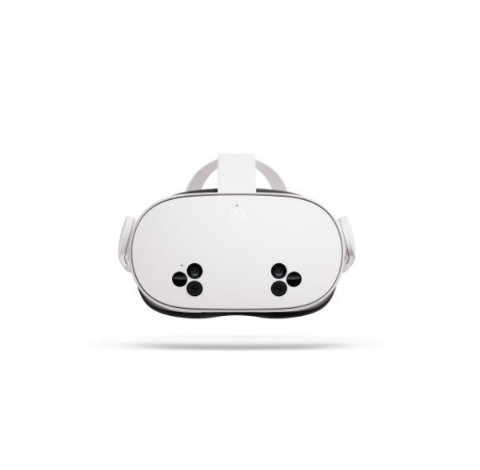
    Meta Quest 3S VR headset front view
    Meta Quest 3S VR headset front view

    Product Overview

    Launched in October 2024, the Quest 3S sits at the entry point of Meta’s current lineup. It shares the exact same Snapdragon XR2 Gen 2 chip and 8GB RAM as the flagship Quest 3, but downgrades the optical system from pancake to Fresnel lenses and drops resolution from 2064×2208 to 1832×1920 per eye — cutting the starting price to $299 (128GB), $200 less than Quest 3.

    Core specifications remain consistent with Quest 3: full-color passthrough cameras, 6DoF inside-out tracking, Touch Plus controllers, Wi-Fi 6E connectivity. This means every game and app that runs on Quest 3 runs on 3S with nearly identical frame rates.

    Performance Analysis

    Visual Experience: Good Enough, Not Stunning

    The Fresnel lenses represent Quest 3S’s biggest compromise. Compared to Quest 3’s pancake lenses, edges are noticeably blurrier with prominent “god rays” in dark scenes. The resolution gap is barely perceptible in actual gameplay, but the lens quality difference is immediately apparent — Quest 3 maintains sharpness from center to edge, while 3S requires keeping your gaze locked to the central “sweet spot” for optimal clarity.

    For fast-paced games like Beat Saber or Gorilla Tag, this limitation matters little since attention stays centered. But for movie watching, reading virtual screens, or exploring open-world games, edge blur accumulates into fatigue.

    Mixed Reality: Pleasantly Surprising

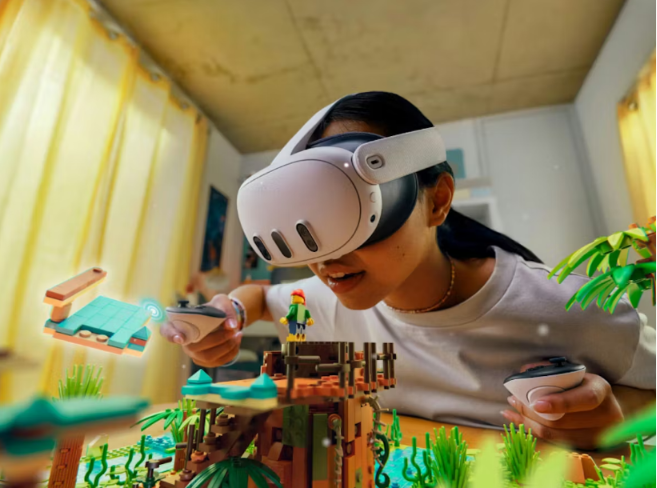
    Full-color passthrough is Quest 3S’s most unexpectedly capable feature. Dual 4MP RGB cameras capture accurate colors with low latency, sufficient to walk around, grab a water bottle, or check phone notifications while wearing the headset. Though grainier than Quest 3, functional completeness is uncompromised — you can play all MR games, place virtual objects on real tables, and turn your living room into a game arena.

    Offering usable mixed reality at $299 is Meta’s dimensional reduction attack on competitors. PlayStation VR2 ($549) lacks passthrough entirely; Apple Vision Pro ($3499) delivers superior MR but at a different price tier.

    Performance and Battery: Flagship-Equivalent

    Thanks to the identical XR2 Gen 2 chip, Quest 3S game frame rates nearly match Quest 3. AAA VR titles like Asgard’s Wrath 2 and Assassin’s Creed Nexus run stably at 72-90fps. The 8GB RAM ensures smooth multitasking and large scene loading.

    Battery life sits at approximately 2-2.5 hours, matching Quest 3. Sufficient for single gaming sessions, but movie watching or extended fitness training requires mid-session charging or a battery head strap.

    Quest 3S mixed reality gameplay demo
    Quest 3S mixed reality gameplay demo

    Competitor Comparison

    FeatureQuest 3SQuest 3PlayStation VR2
    Price$299$499$549
    ProcessorXR2 Gen 2XR2 Gen 2Custom AMD
    Resolution (per eye)1832×19202064×22082000×2040
    Lens TypeFresnelPancakeFresnel
    PassthroughFull-colorFull-colorNone
    Requires ConsoleNoNoPS5 Required
    Weight514g515g560g

    Quest 3S’s core advantage is “zero dependency” — no PC, no console, no base stations, just power on and play. This makes it a true consumer product, while PS VR2 remains essentially a PS5 accessory.

    Pros and Cons

    ProsCons
    Flagship chip performance at $299Fresnel lenses with edge blur and god rays
    Full mixed reality functionality retainedThree-step IPD adjustment only
    Wireless design, no external hardware needed2.5-hour battery life
    Massive game library, full Quest app compatibility128GB storage tight for large games
    Lightweight and comfortable for extended wearGrainier passthrough than Quest 3
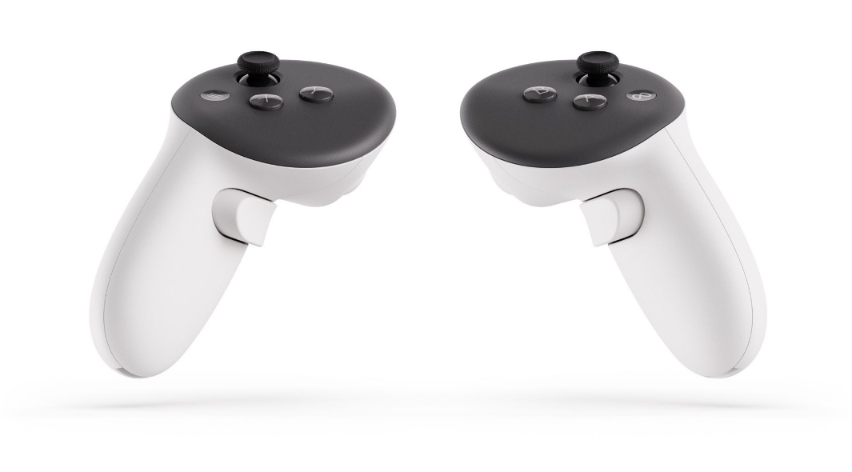
    Meta Touch Plus controllers side view
    Meta Touch Plus controllers side view

    Who Should Buy

    Recommended for:

    • First-time VR users
    • Budget-conscious families wanting mixed reality
    • Quest 2 owners seeking an upgrade
    • Players needing a second headset for guests

    Should Skip:

    • Hardcore gamers demanding maximum visual fidelity (choose Quest 3)
    • Professional users needing extended VR work sessions (choose Vision Pro)
    • Users with existing high-end PC VR setups (3S cannot surpass PC VR quality)

    Conclusion

    The Meta Quest 3S is a product of “smart compromises.” It precisely trims configurations that minimally impact entry-level users (lens quality, resolution) while preserving core elements that determine the experience floor (chip performance, mixed reality, wireless freedom). At $299, no competitor matches its functional completeness.

    Its true value lies not in the spec sheet but in “zero friction” — no researching PC configurations, no setting up sensors, no managing cables. You simply put it on and enter VR. For the average person wanting to try VR in 2026, that zero-barrier access may be the biggest selling point of all.