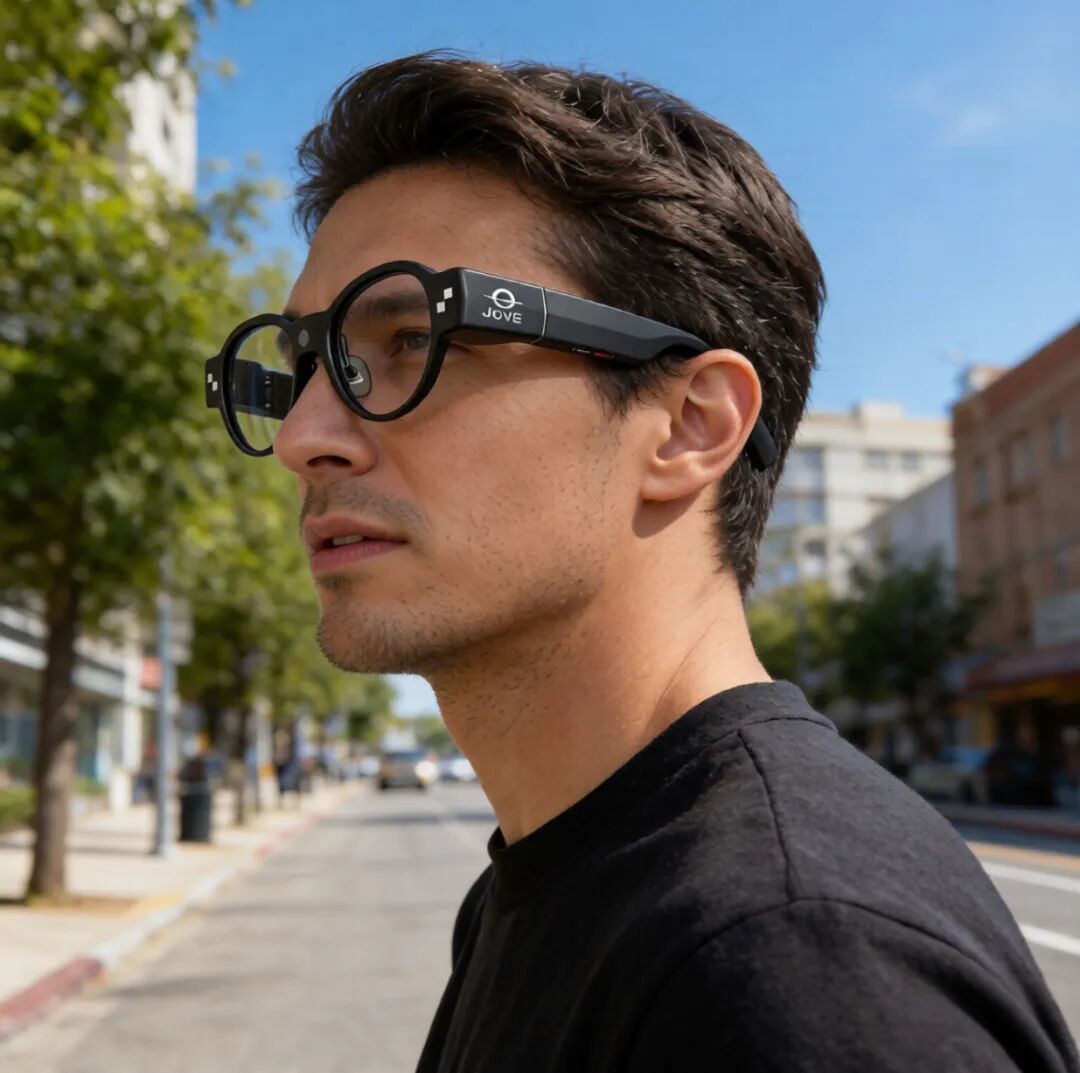
Jupiter officially launched the JOVE Glasses S1 smart glasses in March 2026. Priced at 4999 RMB (approximately $690 USD), this product, marketed as the “world’s cheapest full-color AI+AR smart glasses,” aims to break down the price barrier of high-end AR technology and drive this category, once considered a “geek toy,” into the mass market.
In the current era of deep integration between AI big data models and hardware, smart glasses are evolving from auxiliary display devices to “wearable digital assistants.” The debut of the Jupiter S1 not only tests its ability to balance hardware configuration and software experience but will also redefine the cost-effectiveness benchmark for mid-to-high-end AR glasses. This article will analyze whether this product can truly penetrate the mass market, starting from its technological strength, market positioning, and practical application scenarios.
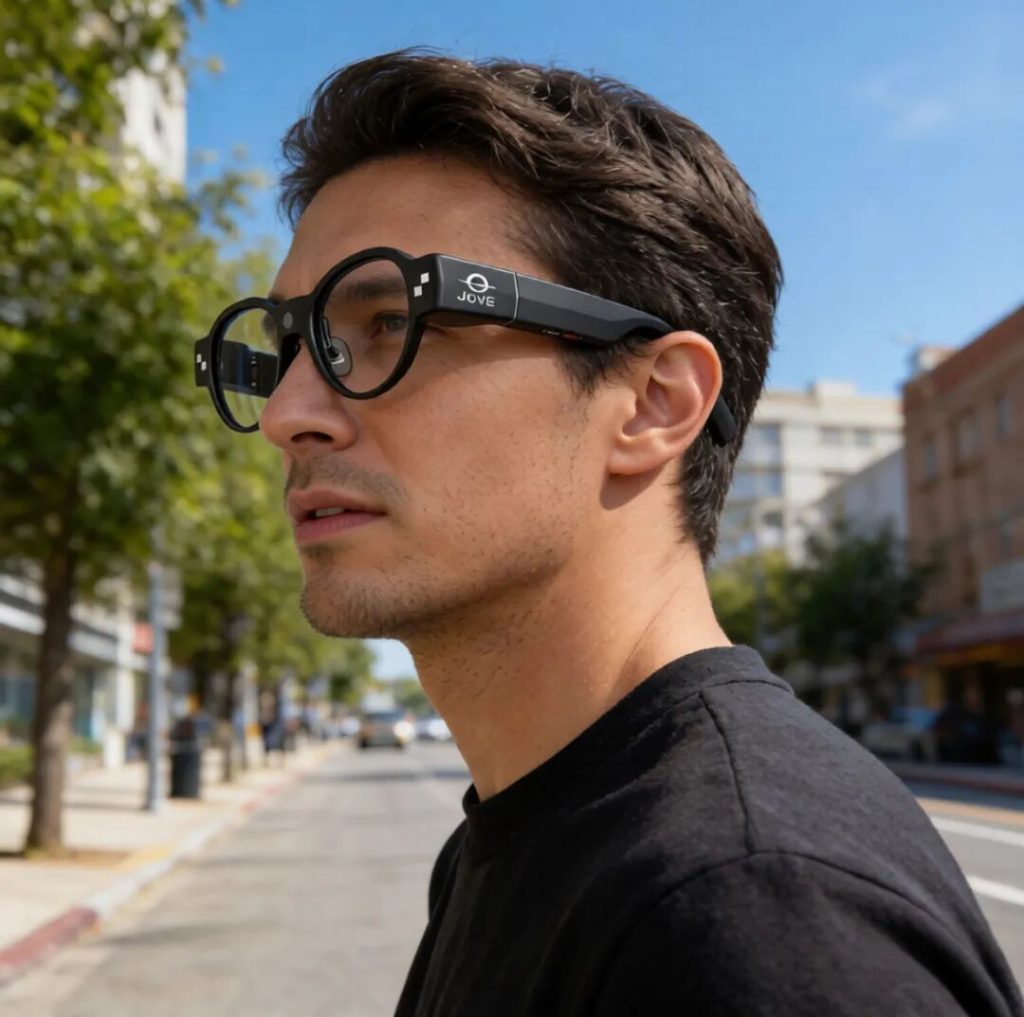
Core Configuration: An Attempt to “Democratize” High-End Technology
The core experience of AR glasses depends on display technology. The Jupiter S1 directly targets high-end products in its hardware selection, employing a combination of arrayed waveguides and MicroOLED—a solution previously mostly used in flagship models priced over $1000 USD.
Unlike the Birdbath solution commonly used in entry-level AR glasses on the market, arrayed waveguide technology achieves full-color display for both eyes while maintaining high light transmittance, avoiding the problem of obstructing the view of reality when worn. Jupiter specifically emphasizes that this product has solved the common “rainbow pattern” optical flaw in waveguide technology. This improvement will significantly enhance the comfort of reading text and overlaying virtual information, and is a key advantage that distinguishes it from similar low-priced products.
Regarding the imaging system, the S1 is equipped with a 16-megapixel camera and supports low-light AF autofocus. This configuration surpasses the “barcode scanning level” cameras of most smart glasses. In low-light environments such as restaurants and nighttime streets, the camera can still capture clear images, providing image quality assurance for core functions such as AI object recognition and first-person perspective shooting—if the image is blurry, the accuracy of AI recognition will drop significantly, which is a core shortcoming of many previous low-priced AR glasses.
Regarding wearing comfort, Jupiter did not disclose the specific weight of the S1, but emphasized that it adopts a lightweight design. For wearable devices that require prolonged wear, weight control directly determines user engagement and is crucial to avoiding them becoming gathering dust.
Software Core: Jenius AI Builds a “Service-Oriented” Intelligent Experience
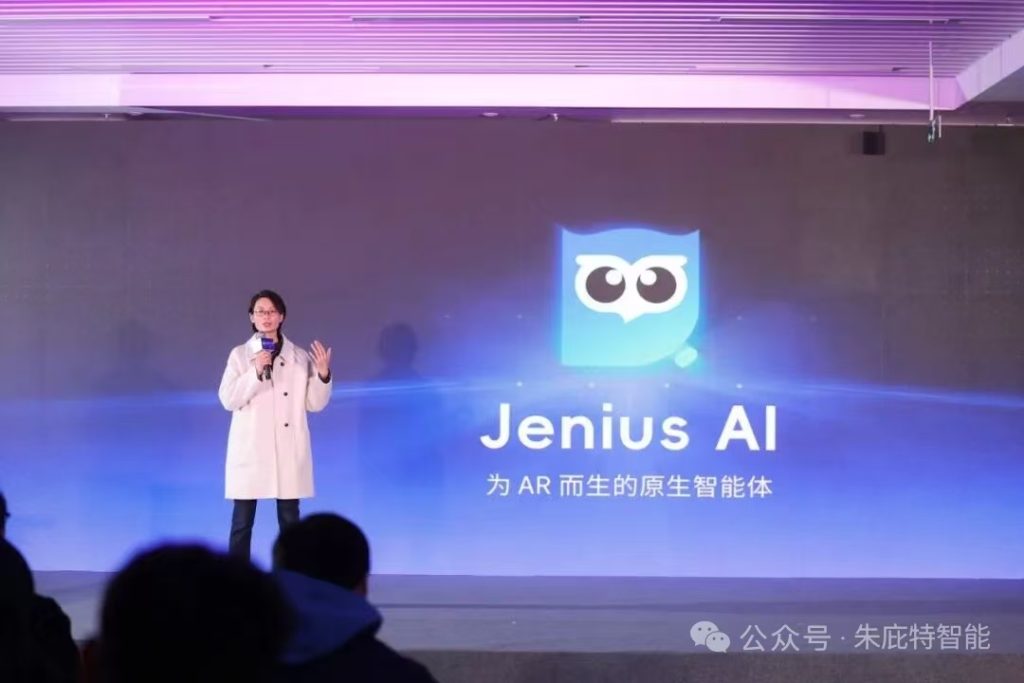
If hardware is the foundation of the S1, then Jenius AI is its core differentiating factor. Unlike ordinary Bluetooth glasses or simple display devices, the S1 leverages the resources of its parent company, Tianjudihe, to access nearly a thousand core data interfaces and MCP services, upgrading AI from a “voice-based question-and-answer tool” to a “digital assistant capable of performing tasks.”
This difference in “service capability” is particularly evident: ordinary AI glasses can only inform users of high-speed rail ticket prices, while the S1 can directly complete the booking process. In the launch event demonstration, a user used the voice command, “Xiaoju, Xiaoju, book me a high-speed rail ticket from Suzhou to Hangzhou for 10 AM tomorrow,” and the glasses immediately displayed train information. After confirmation, the entire order was placed in less than 30 seconds, significantly simplifying the mobile phone operation process.
In addition, Jenius AI supports functions such as product recognition and price comparison, and smart home control: scanning a product displays its price across the entire internet, preventing users from being overcharged when shopping; a single sentence can control IoT devices such as speakers and lights, making it more intuitive than operating a mobile phone—commands can be issued simultaneously with the user’s gaze, eliminating the need to frequently unlock the phone or switch apps.
Application Scenarios: A Dual Strategy from Consumer to Industry-Level
Jupiter S1 is not limited to the consumer market but also covers both daily life and professional industry scenarios, attempting to broaden the product’s application boundaries.
In consumer-level scenarios, the teleprompter function meets the needs of users giving speeches, live broadcasts, and presentations, with the script appearing directly on the lens, achieving “freedom of speaking without a script”; the first-person perspective shooting function frees up hands to record moments of life such as cooking and parent-child interaction, achieving “what you see is what you get”; and real-time translation of minor languages breaks down language barriers for users traveling abroad.
In various industry scenarios, the S1 demonstrates diverse potential: security and specialized industries can utilize it for battlefield vision sharing and AR-based person recognition and early warning; traffic management can use it for vehicle inspection; and engineers can use it to break free from the constraints of “operating while flipping through blueprints,” improving work efficiency. This dual “consumer + industry” approach makes the S1 more competitive among similar products.
Market Comparison: Is the 4999 RMB (approximately US$690) price tag truly worthwhile?
The 4999 RMB price is the S1’s most eye-catching highlight and its core weapon for penetrating the market. Although the reference information mentioned a pre-sale price of 4399 RMB, the official guide price was ultimately set at 4999 RMB. Even so, in the category of full-color + waveguide + AI all-in-one machines, its price still has a significant advantage—international brand products with similar configurations generally cost over US$1000.
From a target audience perspective, the S1 precisely targets four types of users: business professionals who frequently book tickets and need meeting prompts, tech geeks who pursue cutting-edge technology, content creators who need first-person perspective footage, and enterprise users with remote collaboration and on-site verification needs. For these groups, the S1’s price-performance ratio makes it a top choice within a 5000 yuan budget.
However, potential concerns also exist: Jenius AI’s core capabilities heavily rely on the Tianjudihe data interface. Future service subscription fees or interface adjustments could impact user experience. Furthermore, official battery life data is not detailed; heavy use of AI functions (such as real-time recognition and online ticketing) places high demands on power consumption, and actual battery life performance still needs market testing.
Conclusion: A game-changer for the mass adoption of AR glasses?
The release of the Jupiter JOVE Glasses S1 marks the transition of AI+AR hardware from “concept hype” to “practical application.” Priced at 4999 yuan, the S1 brings a high-end array waveguide + Micro OLED display solution to the mainstream market, while Jenius AI endows the glasses with real “functionality,” breaking the industry stereotype that “low price = low configuration.”
For consumers, the S1 lowers the barrier to experiencing high-end AR technology; for the industry, it may drive the AR glasses market into a new phase of “cost-effective competition.” If potential issues such as battery life and ecosystem stability can be resolved, this product has the potential to become a game-changer in the popularization of AR glasses—after all, in the smart wearable device race, “easy to use and affordable” is always the key to unlocking the mass market.
Leave a Reply