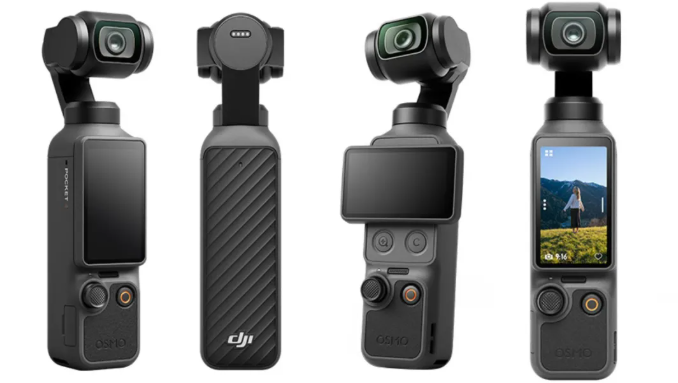
After a long wait by global consumers, DJI has finally released the Osmo Pocket 4 !
DJI will officially release the Osmo Pocket 4 at 8:00 PM on April 16, 2026. With the slogan “A myriad of images in an inch, light and shadow on the go,” this pocket gimbal camera, which has been iterated after two and a half years, once again pushes the balance between “portability” and “professionalism” to a new level.
consumers who are holding off on buying , piling up specifications is not the end goal. The real “decisive moment” lies in how to transform paper data into actual productivity and how to combine accessories to build an efficient workflow .
aicrunchx will provide you with an objective and practical product preview guide, starting from core performance, storage architecture, control ecosystem, and version differences. Once the product is officially released, we will purchase it and conduct a review as soon as possible .
I. Image Quality and Optical System: The Synergy Between a 1-inch Sensor and Hardware-Level 2x Zoom
The most fundamental upgrade in the Pocket 4 is the replacement of the sensor with a 1-inch image sensor. The increased light intake per pixel, combined with 14 stops of dynamic range, significantly improves detail retention in backlit, nighttime, and high-contrast scenes. Optimized shadow clarity and highlight suppression mean that the output images have high commercial delivery potential. For users with post-processing needs, the new 10-bit D-Log color mode (different from the previous generation’s D-Log M) offers wider color gradation latitude, and 1.07 billion color depth makes sky gradients and skin tone transitions smoother, greatly reducing the risk of color banding when applying LUTs or manually adjusting colors.
On the optical level, the all-new hardware-level 2x lossless zoom is an unmissable highlight. Compared to digital cropping, this feature uses sensor area reading and lens optical axis coordination to magnify the image without sacrificing resolution. Combined with a three-axis mechanical stabilization system (not the previously rumored four-axis magnetic levitation), the gimbal provides more precise smooth compensation during zooming, resulting in images free of breathing or tearing. In everyday composition, 2x zoom allows for quick switching between portrait close-ups and environmental details, reducing the risk of continuity errors caused by frequent movement, making it extremely user-friendly for solo vloggers.
II. High Frame Rate and Cropping: The Practical Boundaries of 4K/240fps
Slow-motion performance is doubled to 4K/240fps, stretching dynamic moments nearly 10 times, making it ideal for capturing action, pet interactions, or fluid effects. However, it’s important to note that this mode introduces approximately 1.2 times image cropping. This is not a design compromise, but rather an engineering optimization to ensure sensor data throughput, heat dissipation control, and image stabilization processing power at high frame rates.
In actual shooting, a 1.2x crop is only equivalent to a slight extension of the focal length. It is recommended to leave about 15% of the ambient space when composing the shot, and then crop it again in post-processing to perfectly restore the original image. If a full wide-angle view is required, 4K/120fps or 4K/60fps modes remain the primary formats, and the image quality is still maintained at 10-bit full sampling level. Treating 240fps as an “emotional embellishment” rather than a daily recording format will maximize its creative value.
III. Storage Architecture Restructuring: Workflow Transformation with 107GB Built-in Flash Memory
Eliminating the traditional MicroSD card slot and featuring 107GB of high-speed internal storage as standard is the most revolutionary design of the Pocket 4. Read and write speeds of 800MB/s exponentially improve the efficiency of media export: via USB-C direct connection to a computer or mobile phone, tens of gigabytes of 4K Log footage can be transferred in under a minute, significantly reducing post-production waiting time during outdoor shooting. The card-free design also eliminates memory card compatibility issues and the risk of media loss due to physical damage, resulting in higher system stability.
New habits need to be established for capacity management. 107GB can support a day’s high-intensity creative work under normal 4K/30fps recording, but if 4K/240fps or 10-bit Log is frequently used, the capacity will be consumed significantly faster. It is recommended to develop a light workflow of “shooting and archiving on the same day” and backing up regularly with a high-speed NVMe external hard drive or NAS. If an official docking station or Pro version is released in the future, the capacity anxiety of heavy users will be further alleviated.
IV. Tracking, Reception, and Control: The Leap from “Usable” to “Effective”
At the algorithm level, the intelligent tracking feature has been upgraded to version 7.0, integrating an independent intelligent focus module, which significantly improves the recognition accuracy and focus smoothness for faces, pets, and irregularly moving objects. When the subject is briefly obscured or turns rapidly, the coordinated response of the gimbal and focus system is more decisive, significantly reducing the rate of unusable shots.
In terms of audio, the four-channel Osmo Audio microphone matrix achieves 360° ambient sound field acquisition, with wind noise suppression algorithms and human voice enhancement frequency bands optimized simultaneously. The physical controls have also been redesigned: a new independent zoom lever and a customizable C button have been added. The probability of accidental touches during two-finger pinch zoom is reduced to zero, and the C button can be used to switch frame rates, activate slow motion, or bind frequently used filters, improving blind operation efficiency. The 1545mAh battery, after power consumption optimization, offers a combined battery life exceeding 200 minutes. The Wi-Fi 6 protocol results in lower latency for mobile app monitoring, stronger anti-interference capabilities for image transmission, and a more stable experience for multi-camera collaboration or remote control.
V. Version Selection and Price Prediction: Standard Edition vs. All-in-One Set
Based on DJI’s product line pricing logic and imaging market trends, the Pocket 4 is expected to continue with a dual-version strategy:
- Standard version : Includes the main unit, charging case, and basic adapter. Suitable for existing DJI Mic series microphones and tripods, or for users who simply need a lightweight upgrade. Estimated price: $499–$549 USD .
- The Creator Combo adds a wireless lavalier microphone, wide-angle/telephoto adapter lenses, a multi-functional carrying case, spare batteries, and a fast-charging cable to the standard version. It allows you to build a complete vlog workflow right out of the box, eliminating the hidden costs of purchasing items separately later. Estimated price: $699–$749 USD .
If the shooting scenario involves outdoor interviews, long-term follow-up shooting, or has strict requirements for sound recording/protection, the all-in-one kit offers better overall value; if it is only used for daily recording and a mature audio solution is already available, the standard version can still deliver core performance when paired with third-party accessories.
VI. Purchase Decision Recommendations
- Highly recommended for : Vloggers, travel photographers, short video creators, and pet/sports enthusiasts. 1-inch screen, 200 minutes of battery life, and four-channel audio recording precisely address the core pain points of mobile video.
- It’s advisable to wait and see : This is suitable for users who only want to take casual family photos and don’t need post-processing color correction. The performance of the Pocket 4 is somewhat excessive; older models or entry-level mirrorless cameras may offer better value for money.
- Not suitable for : Professional film and television teams that need to shoot RAW video, use interchangeable lenses, or work in extremely harsh environments. The Pocket series is always positioned as an “efficient portable recording tool,” not a replacement for a main unit.
Conclusion
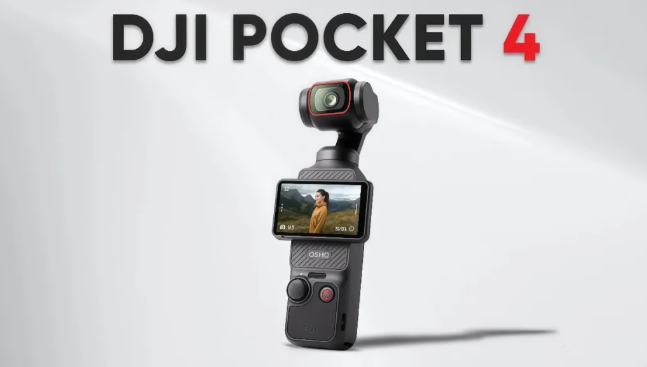
The Osmo Pocket 4 is not simply an iteration of stacked parameters, but a systematic reconstruction centered around the “on-the-go creation” scenario. From the 1-inch sensor to 107GB high-speed flash memory, from 2x hardware zoom to Smart Follow 7.0, every upgrade directly addresses the pain points in real workflows.
After its official release on April 16th, aicrunchx will bring you an in-depth review as soon as possible. At that time, readers are welcome to refer to the actual test results to confirm whether the firmware stability and the color calibration of the output meet their personal aesthetics, and then make a choice based on their budget and accessory ecosystem.
The essence of video creation is capturing moments, and the significance of Pocket 4 is to make every press of the record button easier and more reliable.
Leave a Reply