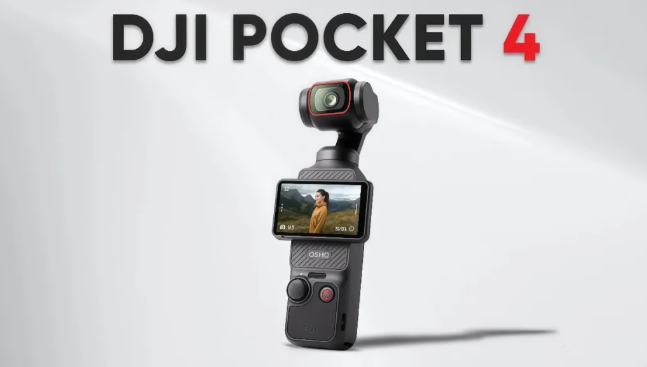
Tag: DJI

A global leader in civilian drone technology and aerial imaging systems, founded in 2006 in Shenzhen, China. Specializing in the research, development, and manufacturing of unmanned aerial vehicles (UAVs), handheld camera gimbals, and stabilization platforms, DJI integrates advanced flight control algorithms, computer vision, AI subject tracking, and low-latency transmission technologies into compact, ready-to-deploy systems. Dominating consumer, professional, and enterprise markets, its product ecosystems—including the Mavic, Inspire, Ronin, and Osmo series—have standardized high-precision aerial robotics for filmmaking, surveying, agriculture, public safety, and creative content production.

  • DJI ROMO 2: Drone Tech Hits the Floor

    DJI ROMO 2: Drone Tech Hits the Floor

    Verdict: The ROMO 2 is not just a better robot vacuum. It is a robot vacuum built by people who solve harder problems in the air. DJI’s drone-derived perception and motion control make this the smartest, most autonomous floor cleaner on the market. The 8.5cm obstacle climbing and transparent-object avoidance are genuine category-firsts. At 3999 RMB ($549) for the entry model, it is also aggressively priced against established competitors.
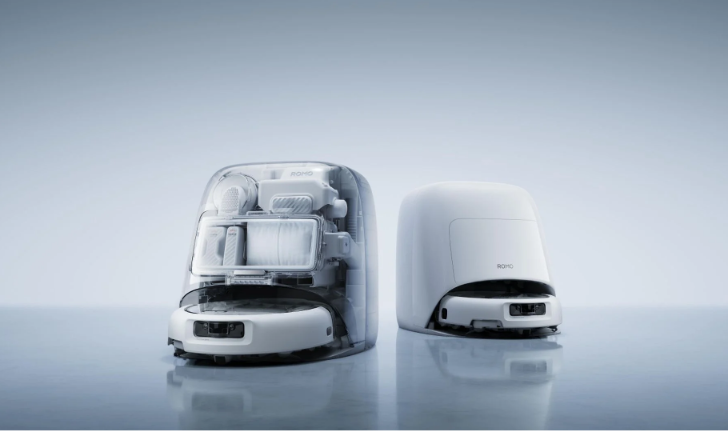
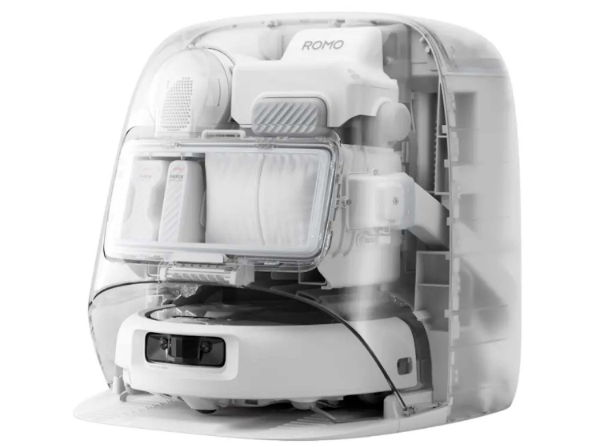
    DJI ROMO 2 robot vacuum with transparent base station
    DJI ROMO 2 transparent design with premium base station

    The Drone DNA

    DJI dominates global drone markets through sensor fusion and real-time spatial computing. The ROMO 2 series transfers that expertise to your living room. The P2 and A2 models carry Smart Obstacle Avoidance 2.0—a system combining array ToF projection LiDAR, binocular fisheye vision sensors, and side-facing array ToF into a perception network that maps obstacles at millimeter precision.

    This is not incremental improvement. It is a different technological lineage. Where competitors rely on single LiDAR or camera-based systems, DJI fuses multiple sensor modalities the same way its drones navigate complex 3D environments. The result is recognition of transparent objects—glass doors, mirrors, water cups—that blind conventional vacuums.

    The AI decision layer completes the loop. Rather than simply avoiding obstacles, the ROMO 2 identifies what it sees and adjusts cleaning strategy: slowing for scattered particles to prevent flinging, isolating liquid spills to avoid smearing, switching to sweep-first-then-mop for heavy dust zones. This is autonomous decision-making, not pre-programmed pattern matching.
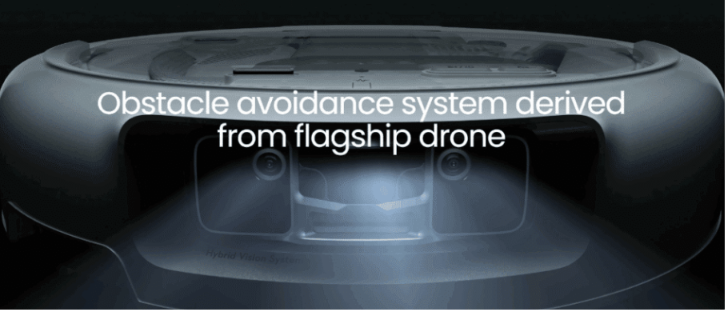
    Drone-derived obstacle avoidance sensor array on ROMO 2
    Millimeter-level perception system from drone technology

    Suction and Cleaning Power

    The P2 and A2 models deliver 36000Pa suction—a 44% increase over the first-generation ROMO’s 25000Pa. This places them in the top tier of current consumer robot vacuums. Airflow reaches 22L/s, sufficient to extract embedded debris from carpet fibers and grout lines.

    The Intelligent Boost Cleaning system adds a mechanical dimension. When the robot detects carpet or concentrated dust, a pressure plate descends to form a semi-sealed chamber against the floor, increasing internal vacuum density. This “turbocharging” effect pulls deep-set dirt that standard suction misses. The system also recognizes carpet edges and adjusts wheel height to prevent dragging.

    Hair and pet fur are addressed through full-body anti-tangle design. The dual side brushes switched from three-prong to two-prong configuration based on user feedback, reducing wrap-around while maintaining edge-sweeping effectiveness. Combined with the boosted suction, the ROMO 2 handles long hair without the daily de-tangling ritual required by lesser machines.

    The 123° Mechanical Arm: Reaching Where Others Cannot

    The standout hardware innovation is the radar-adaptive ultra-wide swing arm. At 123° of extension, the arm reaches 7.8cm beyond the robot’s body perimeter—covering baseboard edges, chair legs, and refrigerator bottoms that conventional round robots ignore.

    Unlike simple pad-extension systems, the ROMO 2’s arm carries its own precision LiDAR. It does not blindly extend; it maps the edge geometry and adjusts swing angle and pressure in real time. The robot traces chair legs in circular patterns, follows irregular furniture contours, and dynamically switches to long-edge-priority strategy in narrow passages. This is robotic manipulation, not mere pad positioning.

    The dust-detection lamp aids human oversight. Covering 2000cm² of floor area, the lamp illuminates fine particles invisible under normal lighting, letting you verify cleaning quality without bending to floor level.
    ROMO 2 robot vacuum in modern living room setting
    Seamless integration into contemporary home aesthetics

    8.5cm Obstacle Climbing: The Mechanical Legs

    The first-generation ROMO’s biggest weakness was threshold navigation. The ROMO 2 eliminates this entirely. Dynamic adaptive mechanical legs enable 8.5cm continuous two-step climbing. The robot predicts upcoming obstacles, aligns its approach, and executes a “sprint” maneuver that lifts the front wheels and drives over in approximately 10 seconds.

    During testing, a 5cm sliding door track was crossed effortlessly during the initial mapping run. The system automatically marked the location as “high-threshold zone” on the generated floor plan. For households with raised door sills, this capability transforms the robot from a single-room appliance to a whole-home solution.

    The Base Station: 365 Days of Hands-Off Operation

    The P2 and A2 base stations support 80°C high-temperature mop washing. The P2 adds automatic disinfectant soaking, deodorizing modules, and an electric hatch door. The A2 offers similar core functionality minus the electric door and deodorizer. The entry S V2 runs 60°C washing.

    The maintenance interval is genuinely extended. DJI claims 365 days of hands-off operation for the base station. The dual-disc mop design allows simple peel-and-replace replacement when pads wear out—cheaper and easier than continuous belt systems. The wastewater tank’s frosted-glass design and silver-ion antibacterial modules address odor and hygiene concerns.

    Software: The Cleanest App in the Category

    The DJI Home app is a statement against smart home bloatware. No advertisements. No embedded shopping malls. No promotional pop-ups. Opening the app lands directly on device control. The store is buried in secondary menus where it belongs.

    The interface matches DJI’s drone apps—clean, information-dense, and operationally intuitive. Real-time cleaning animations show robot position and coverage. Floor plan editing supports no-go zones, priority areas, and room-specific cleaning sequences. Voice control integrates natively with XiaoDu and XiaoAi speakers. Remote video viewing turns the robot’s front camera into a home security patrol tool.
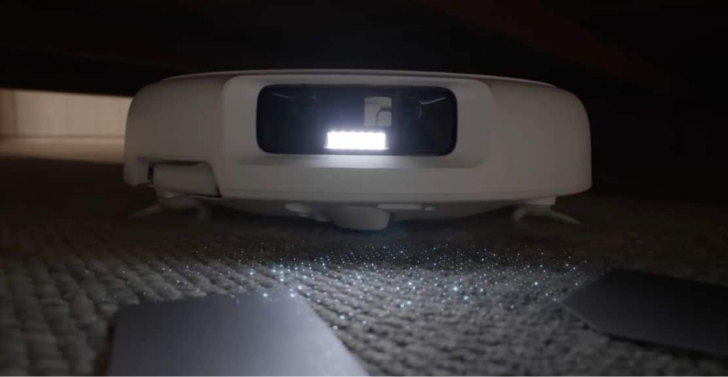
    Dust detection lamp illuminating invisible particles
    2000cm² area dust visualization for quality verification

    Product Lineup and Pricing

    The ROMO 2 series offers three tiers:

    • ROMO P2 (5999 RMB / ~$825): Full feature set including transparent design, 80°C washing, electric hatch, deodorizer, and disinfectant system.
    • ROMO A2 (4299 RMB / ~$590): Core cleaning and avoidance capabilities with 80°C washing and optional water hookup.
    • ROMO S V2 (3999 RMB / ~$549): Basic Smart Avoidance 1.0 without transparent-object recognition. 30000Pa suction and 60°C washing.

    Launch promotions cut 1000 RMB from P2 and A2 prices, positioning the P2 at 4999 RMB and A2 at 3299 RMB temporarily. This undercuts equivalent-spec competitors from Roborock and Ecovacs by 15-20% while offering superior avoidance intelligence.

    Limitations

    • Size: The sensor and battery hardware make the P2 noticeably larger than slim-profile competitors, limiting under-furniture reach.
    • Noise: 36000Pa suction generates substantial noise during deep-cleaning cycles. The 85% noise filtration helps but does not eliminate disturbance.
    • Water consumption: The high-temperature washing and disinfectant systems use more water per cycle than basic stations.
    • Learning curve: The AI’s autonomous decision-making occasionally produces unexpected behavior that unsettles users accustomed to predictable pattern cleaning.
    • Ecosystem lock: Full functionality requires DJI Home app. Third-party smart home integration is limited to basic voice commands.
    • Repair complexity: The transparent shell and integrated sensor arrays make DIY repairs difficult.

    Bottom Line

    The DJI ROMO 2 is the most technologically advanced robot vacuum available in 2026. It does not iterate on existing solutions; it imports solutions from a more demanding domain. The drone-derived perception system, mechanical arm manipulation, and obstacle-climbing legs represent genuine engineering innovation.

    For households with complex floor plans, mixed surfaces, or threshold barriers that defeated previous robots, the ROMO 2 is the first vacuum that truly does not need babysitting. For pet owners and long-haired residents, the anti-tangle design and boosted suction eliminate the daily maintenance ritual. For tech enthusiasts, the transparent aesthetic and clean app experience deliver satisfaction beyond mere cleanliness.

    The pricing is competitive, the technology is superior, and the execution is polished. DJI has moved from proving it can build a robot vacuum to proving it can build the best one.

    Score: 8.5/10

    • Innovation: 9/10
    • Cleaning Performance: 9/10
    • Autonomy: 9/10
    • Design: 8/10
    • Value: 8/10
    • Noise Control: 6/10
  • Insta360 Mic Pro Review: E-Ink Screen Redefines Wireless Mics

    Insta360 Mic Pro Review: E-Ink Screen Redefines Wireless Mics

    Rating: 8.7/10

    The wireless microphone track has gotten interesting lately.

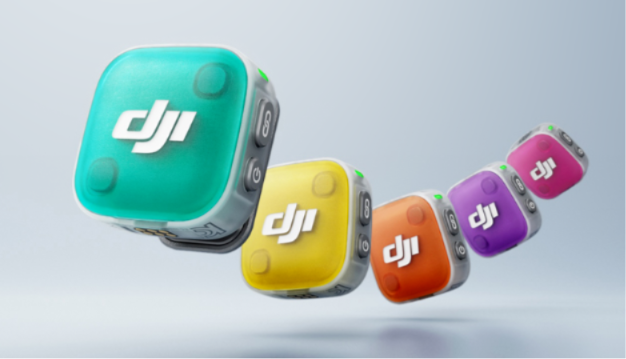
    DJI Colorful Wireless Mic
    DJI Colorful Wireless Mic

    Recently, DJI gave the Mic Mini 2 a “new wardrobe” — 8 magnetic color shells plus 5 windscreen colors, turning microphones into trendy accessories that match daily outfits. DJI’s move clearly tells young people that microphones aren’t just recording tools, but fashion accessories in your vlogs.

    But if DJI is “applying makeup to microphones,” Insta360 directly transformed its Mic Pro into a “digital badge.”

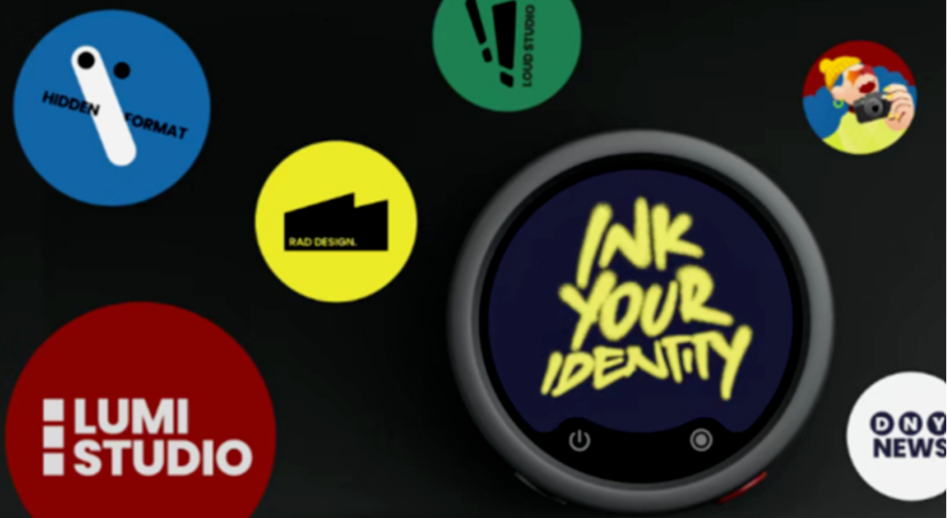
    Custom Device Identity Display
    Custom Device Identity Display

    Product Overview

    On May 19, Insta360 officially launched the flagship wireless microphone Mic Pro. The most eye-catching design is the color E-Ink screen embedded in the transmitter front, capable of displaying custom logos, emojis, brand identifiers, and even complex patterns in six colors.

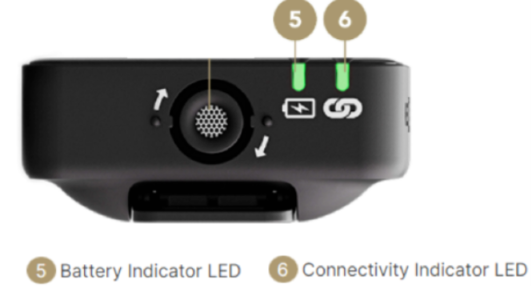
    Mic LED Indicator Layout
    Mic LED Indicator Layout

    Pricing: single transmitter at 528 yuan, one-transmitter-one-receiver at 978 yuan, two-transmitters-one-receiver at 1698 yuan. This pricing is basically on par with RODE, DJI and similar products, but adds E-Ink interaction, triple mic array, and NPU noise reduction.

    Core specifications:

    ParameterSpecification
    Transmitter ScreenSix-color E-Ink display
    Microphone CountThree (single transmitter)
    Pickup PatternsOmnidirectional/Hyper-directional/Cardioid/Figure-8
    Noise Reduction ChipNPU neural processing unit
    Internal Recording32-bit float
    Built-in Storage32GB
    Battery Life30 hours (with charging case)
    Screen CoverAG+AR coated Corning glass

    Technical Analysis

    E-Ink Display: From Function to Expression

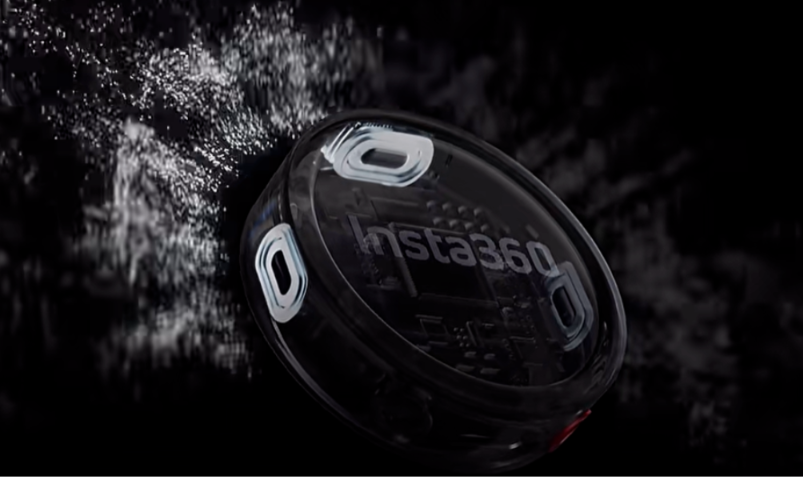
    Insta360 Mic mini 2
    Insta360 Mic mini 2

    Traditional lavalier microphones rely entirely on a few LED lights for status: red means recording, green means normal, flashing means low battery. But how loud is the volume? Is noise reduction on? Which track is running? Creators can only guess, or frequently interrupt shooting to check the phone app. In outdoor bright light, those indicator lights are virtually useless.

    Mic Pro’s E-Ink screen directly visualizes this information: remaining battery, noise reduction mode, channel status… More importantly, E-Ink has no blue light, extremely low power consumption, and staying on doesn’t drain battery life.

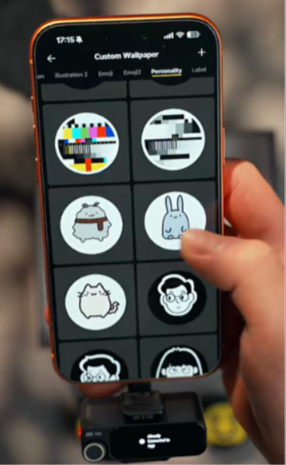
    But the screen’s true ambition clearly exceeds “displaying parameters.” Insta360 allows users to upload custom patterns through the app — personal channel logos, brand identifiers, even team numbers. During multi-person recording, each microphone screen can display different identifiers, making post-production track alignment instantly clear; MCN agencies can unify visual styles for their creators, syncing with a QR code scan; for commercial shoots, the microphone directly becomes a small billboard on the chest.

    This move is clever: it transforms the microphone from “functional hardware” to “expression medium,” giving creators an additional unique display position in every frame they appear.

    Triple Mic Array + NPU: Audio Hard Power

    Mic Pro packs three microphones into a single transmitter, supporting four switchable directional pickup patterns: omnidirectional, hyper-directional, cardioid, and figure-8. This means it can serve as a lavalier for voiceovers, a camera-top mic for ambient sound, or simultaneously capture both sides during face-to-face interviews. Truly one device covering vlogs, live streaming, podcasts, and interviews.

    Mic Pro is the first wireless microphone with built-in NPU (Neural Processing Unit). This processor designed specifically for AI tasks drives noise reduction algorithms to precisely identify and separate environmental noise, offering “weak” and “strong” noise reduction modes. Coffee shop background chatter, street wind noise, exhibition crowd noise — these high-frequency creator pain scenarios are all specifically addressed by the algorithm.

    Meanwhile, 32-bit float internal recording, 32GB built-in storage, safety track backup, three voice presets, dual auto-gain modes… these professional features are all present. And the transmitter can record independently without the receiver, providing an additional insurance policy for audio.

    Ecosystem Closed Loop: Insta360’s Creator Toolbox Logic

    Mic Pro continues Insta360’s ecosystem direct-connection DNA: without a receiver, it can directly transmit audio to Insta360 cameras like Luna, X5, and Ace Pro 2. This seemingly just eliminates one accessory, but actually represents Insta360 building a seamless creation workflow. From panoramic/action cameras to stabilizers, and now professional audio, creators’ migration costs within the Insta360 ecosystem are decreasing.

    Device Custom Wallpaper App
    Device Custom Wallpaper App

    Competitor Comparison

    FeatureInsta360 Mic ProDJI Mic Mini 2RODE Wireless Pro
    Single TX Price¥528¥299¥1595
    ScreenColor E-InkLED indicatorLED indicator
    Mic Count322
    Pickup Patterns4 typesOmnidirectionalOmnidirectional
    NPU Noise Reduction
    32-bit Recording
    Built-in Storage32GBNone32GB
    Battery Life30h18h7h

    Mic Pro offers class-leading features at the 528 yuan price point, with E-Ink screen and NPU as exclusive advantages.

    Pros and Cons

    ProsCons
    Color E-Ink screen, status visualization + custom patternsSingle transmitter 528 yuan,套装 price on par with competitors
    Triple microphone array, four pickup patternsE-Ink display area limited, complex patterns效果一般
    First NPU noise reduction wireless mic, precise降噪Custom pattern feature limited value for non-creators
    32-bit float recording + 32GB storageEcosystem direct connection limited to Insta360 cameras
    30-hour ultra-long battery lifeCharging case relatively large
    Transmitter can record independently

    Who Should Buy

    Highly Recommended:

    • Frequent on-camera vloggers/streamers
    • MCN agencies (unifying creator visual styles)
    • Commercial shoot teams (brand exposure needs)
    • Insta360 ecosystem users (seamless direct connection)

    Consider Alternatives:

    • Occasional recording users (DJI Mic Mini 2 better value)
    • Pure audio podcasters (RODE more professional sound quality)
    • Non-Insta360 camera users (ecosystem advantage unavailable)

    Conclusion

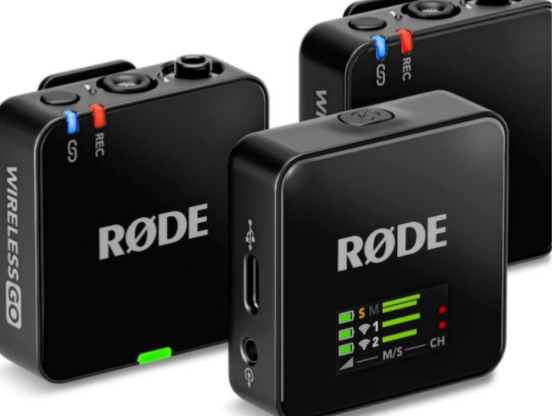
    RODE Wireless GO Mic Set
    RODE Wireless GO Mic Set

    While traditional microphones brand creators’ chests with manufacturer logos, Insta360 gives this space back to creators themselves.

    The Insta360 Mic Pro is a product of “smart addition.” It doesn’t compromise on sound quality, yet creates an entirely new interaction dimension through the E-Ink screen. This screen is not a gimmick, but a profound insight into the creator economy: when everyone is shooting video, the device itself becomes part of the content.

    The 528 yuan single-transmitter starting price makes this innovation accessible. For creators, Mic Pro is not just a microphone, but a small billboard on the chest, a visual tag for post-production alignment, and an extension of brand style.

    The wireless microphone track has crossed the basic competition stage of “good enough sound quality, stable connection,” entering the deep waters of experience differentiation. DJI uses color shells to切入 fashion and emotional value; Insta360 redefines interaction logic with the E-Ink screen. Different paths, same essence — transforming the microphone from a passive recording box into an extension of creators’ active expression.

  • DJI Osmo Pocket 4 : It’s Finally Here After Such A long Wait

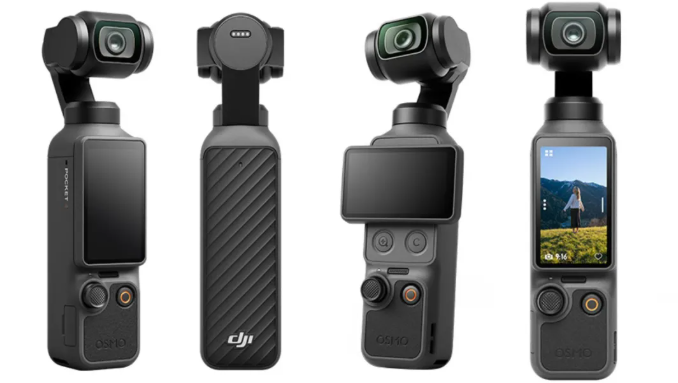
    DJI Osmo Pocket 4 product view
    DJI Osmo Pocket 4 product view

    After a long wait by global consumers, DJI has finally released the Osmo Pocket 4 !

    DJI will officially release the Osmo Pocket 4 at 8:00 PM on April 16, 2026. With the slogan “A myriad of images in an inch, light and shadow on the go,” this pocket gimbal camera, which has been iterated after two and a half years, once again pushes the balance between “portability” and “professionalism” to a new level.

    consumers who are holding off on buying , piling up specifications is not the end goal. The real “decisive moment” lies in how to transform paper data into actual productivity and how to combine accessories to build an efficient workflow .

    aicrunchx will provide you with an objective and practical product preview guide, starting from core performance, storage architecture, control ecosystem, and version differences. Once the product is officially released, we will purchase it and conduct a review as soon as possible .

    I. Image Quality and Optical System: The Synergy Between a 1-inch Sensor and Hardware-Level 2x Zoom

    The most fundamental upgrade in the Pocket 4 is the replacement of the sensor with a 1-inch image sensor. The increased light intake per pixel, combined with 14 stops of dynamic range, significantly improves detail retention in backlit, nighttime, and high-contrast scenes. Optimized shadow clarity and highlight suppression mean that the output images have high commercial delivery potential. For users with post-processing needs, the new 10-bit D-Log color mode (different from the previous generation’s D-Log M) offers wider color gradation latitude, and 1.07 billion color depth makes sky gradients and skin tone transitions smoother, greatly reducing the risk of color banding when applying LUTs or manually adjusting colors.

    On the optical level, the all-new hardware-level 2x lossless zoom is an unmissable highlight. Compared to digital cropping, this feature uses sensor area reading and lens optical axis coordination to magnify the image without sacrificing resolution. Combined with a three-axis mechanical stabilization system (not the previously rumored four-axis magnetic levitation), the gimbal provides more precise smooth compensation during zooming, resulting in images free of breathing or tearing. In everyday composition, 2x zoom allows for quick switching between portrait close-ups and environmental details, reducing the risk of continuity errors caused by frequent movement, making it extremely user-friendly for solo vloggers.

    II. High Frame Rate and Cropping: The Practical Boundaries of 4K/240fps

    Slow-motion performance is doubled to 4K/240fps, stretching dynamic moments nearly 10 times, making it ideal for capturing action, pet interactions, or fluid effects. However, it’s important to note that this mode introduces approximately 1.2 times image cropping. This is not a design compromise, but rather an engineering optimization to ensure sensor data throughput, heat dissipation control, and image stabilization processing power at high frame rates.

    In actual shooting, a 1.2x crop is only equivalent to a slight extension of the focal length. It is recommended to leave about 15% of the ambient space when composing the shot, and then crop it again in post-processing to perfectly restore the original image. If a full wide-angle view is required, 4K/120fps or 4K/60fps modes remain the primary formats, and the image quality is still maintained at 10-bit full sampling level. Treating 240fps as an “emotional embellishment” rather than a daily recording format will maximize its creative value.

    III. Storage Architecture Restructuring: Workflow Transformation with 107GB Built-in Flash Memory

    Eliminating the traditional MicroSD card slot and featuring 107GB of high-speed internal storage as standard is the most revolutionary design of the Pocket 4. Read and write speeds of 800MB/s exponentially improve the efficiency of media export: via USB-C direct connection to a computer or mobile phone, tens of gigabytes of 4K Log footage can be transferred in under a minute, significantly reducing post-production waiting time during outdoor shooting. The card-free design also eliminates memory card compatibility issues and the risk of media loss due to physical damage, resulting in higher system stability.

    New habits need to be established for capacity management. 107GB can support a day’s high-intensity creative work under normal 4K/30fps recording, but if 4K/240fps or 10-bit Log is frequently used, the capacity will be consumed significantly faster. It is recommended to develop a light workflow of “shooting and archiving on the same day” and backing up regularly with a high-speed NVMe external hard drive or NAS. If an official docking station or Pro version is released in the future, the capacity anxiety of heavy users will be further alleviated.

    IV. Tracking, Reception, and Control: The Leap from “Usable” to “Effective”

    At the algorithm level, the intelligent tracking feature has been upgraded to version 7.0, integrating an independent intelligent focus module, which significantly improves the recognition accuracy and focus smoothness for faces, pets, and irregularly moving objects. When the subject is briefly obscured or turns rapidly, the coordinated response of the gimbal and focus system is more decisive, significantly reducing the rate of unusable shots.

    In terms of audio, the four-channel Osmo Audio microphone matrix achieves 360° ambient sound field acquisition, with wind noise suppression algorithms and human voice enhancement frequency bands optimized simultaneously. The physical controls have also been redesigned: a new independent zoom lever and a customizable C button have been added. The probability of accidental touches during two-finger pinch zoom is reduced to zero, and the C button can be used to switch frame rates, activate slow motion, or bind frequently used filters, improving blind operation efficiency. The 1545mAh battery, after power consumption optimization, offers a combined battery life exceeding 200 minutes. The Wi-Fi 6 protocol results in lower latency for mobile app monitoring, stronger anti-interference capabilities for image transmission, and a more stable experience for multi-camera collaboration or remote control.

    The leap from usable to truly usable
    The leap from usable to truly usable

    V. Version Selection and Price Prediction: Standard Edition vs. All-in-One Set

    Based on DJI’s product line pricing logic and imaging market trends, the Pocket 4 is expected to continue with a dual-version strategy:

    • Standard version : Includes the main unit, charging case, and basic adapter. Suitable for existing DJI Mic series microphones and tripods, or for users who simply need a lightweight upgrade. Estimated price: $499–$549 USD .
    • The Creator Combo adds a wireless lavalier microphone, wide-angle/telephoto adapter lenses, a multi-functional carrying case, spare batteries, and a fast-charging cable to the standard version. It allows you to build a complete vlog workflow right out of the box, eliminating the hidden costs of purchasing items separately later. Estimated price: $699–$749 USD .

    If the shooting scenario involves outdoor interviews, long-term follow-up shooting, or has strict requirements for sound recording/protection, the all-in-one kit offers better overall value; if it is only used for daily recording and a mature audio solution is already available, the standard version can still deliver core performance when paired with third-party accessories.

    VI. Purchase Decision Recommendations

    • Highly recommended for : Vloggers, travel photographers, short video creators, and pet/sports enthusiasts. 1-inch screen, 200 minutes of battery life, and four-channel audio recording precisely address the core pain points of mobile video.
    • It’s advisable to wait and see : This is suitable for users who only want to take casual family photos and don’t need post-processing color correction. The performance of the Pocket 4 is somewhat excessive; older models or entry-level mirrorless cameras may offer better value for money.
    • Not suitable for : Professional film and television teams that need to shoot RAW video, use interchangeable lenses, or work in extremely harsh environments. The Pocket series is always positioned as an “efficient portable recording tool,” not a replacement for a main unit.

    Conclusion

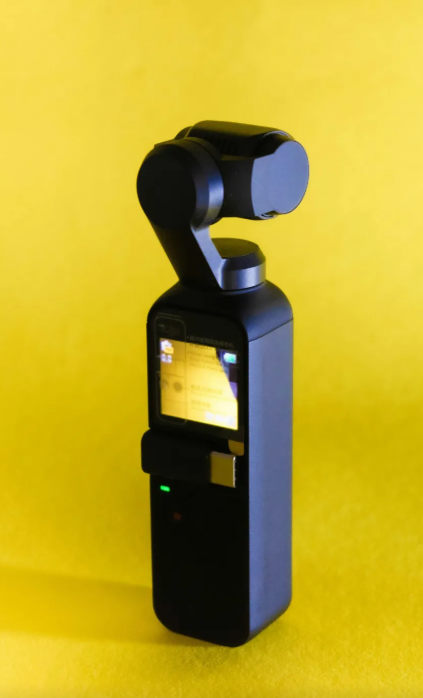
    DJI Pocket 4 Login Instantly
    DJI Pocket 4 Login Instantly

    The Osmo Pocket 4 is not simply an iteration of stacked parameters, but a systematic reconstruction centered around the “on-the-go creation” scenario. From the 1-inch sensor to 107GB high-speed flash memory, from 2x hardware zoom to Smart Follow 7.0, every upgrade directly addresses the pain points in real workflows.

    After its official release on April 16th, aicrunchx will bring you an in-depth review as soon as possible. At that time, readers are welcome to refer to the actual test results to confirm whether the firmware stability and the color calibration of the output meet their personal aesthetics, and then make a choice based on their budget and accessory ecosystem.

    The essence of video creation is capturing moments, and the significance of Pocket 4 is to make every press of the record button easier and more reliable.