Category: AI For Music

AI music agent, also known as AI music maker or music creation assistant, is an integrated intelligent system that uses AI music generation models for customized music creation.

  • Apple Accelerates Six AI Hardware Products, Smart Glasses and HomePad as Strategic Priorities

    Apple:symbolizing the shadow of innovation
    Apple:symbolizing the shadow of innovation

    On April 24, 2026, the tech world received significant news: Apple is accelerating the development of six entirely new hardware categories, including AI-powered AirPods, smart glasses, portable accessories, smart displays, home robots, and security cameras. This announcement quickly sparked industry-wide discussion, marking Apple’s major strategic shift from a single flagship product approach to a comprehensive intelligent ecosystem.

    Six New Products Outline the Future

    These six upcoming products show a clear gradient distribution. AI AirPods are viewed as a natural evolution of the current audio lineup, primarily enhancing AI interaction capabilities on existing hardware—a gradual upgrade. The remaining five products, however, represent Apple’s first entry into previously uncharted territory, carrying far greater strategic significance.

    Industry analysts suggest that smart glasses and smart displays represent the true strategic priorities. The core objective of these two categories is to break free from iPhone’s role as a single entry point, creating next-generation human-computer interaction interfaces and home intelligence hubs. Apple hopes to build a complete ecosystem covering personal wearable, home life, mobile office, and multiple other scenarios through these new products.

    Smart Glasses: A Decade in the Making

    Among the six new products, smart glasses are undoubtedly the most eye-catching. Information disclosed by overseas media reveals that Apple is developing smart glasses codenamed N50, featuring a display-free design with camera and audio components, enabling deep Siri integration.

    Notably, Apple CEO Tim Cook has designated AR glasses as the company’s “highest strategic priority.” Looking back at Apple’s decade-long AR journey, the company began its布局 as early as 2016, launching the premium Vision Pro headset in 2024. However, this product failed to become a mass consumer good due to its high price and bulky form factor.

    True consumer-grade AR glasses are estimated to still be several years away. Apple’s goal is to create lightweight, all-day wearable glasses that seamlessly overlay digital content onto the real world. Achieving this vision requires breakthroughs not only in optical display technology but also in balancing battery life, size, and interaction methods.

    Regarding the timeline, the N50 smart glasses are expected to launch between late 2026 and early 2027, with plans to complete market availability by end of 2027. This means consumers will have to wait until at least 2027 to truly experience Apple’s AR glasses.

    HomePad: A New Chess Piece for Home Scenarios

    Unlike smart glasses’ long development cycle, the HomePad smart display has been scheduled for fall 2026 release. According to reports, this product extends HomePod’s audio heritage while adding touchscreen functionality, aiming to become the intelligent interaction center for home scenarios.

    Industry insiders believe HomePad positions itself between smart speakers and iPad, offering both voice interaction convenience and screen-based operational advantages. With the maturing smart home ecosystem, such a highly integrated control device could become the “sixth screen” in home scenarios.

    However, HomePad faces a not-so-friendly competitive environment. Amazon’s Echo Show, Google’s Nest Hub, and domestic competitors like Xiaomi’s XiaoAI Touch Screen Speaker and Baidu’s Xiaodu Smart Screen have already captured market share. Whether Apple can achieve differentiation through its traditional advantages in ecosystem integration and user experience is worth continued attention.

    Home Robot: The Most Ambitious Exploration

    Among the six new products, the home robot is undoubtedly the most ambitious and uncertain. This represents Apple’s first entry into the home service robot sector, positioned as a premium desktop intelligent assistant.

    Sources indicate this project faces delays due to high technical complexity, with initial plans for 2027 release potentially pushed to 2028. Unlike current market offerings like robotic vacuum cleaners and delivery robots, home robots require more comprehensive capabilities in environmental perception, conversational interaction, and task execution—posing far greater technical challenges.

    Analysis suggests Apple’s decision to begin home robot development at this time reflects its judgment on home scenario intelligence trends. If technical maturity reaches expectations, this product could become Apple’s most disruptive hardware innovation since the iPhone.

    Ecosystem Integration Becomes Key
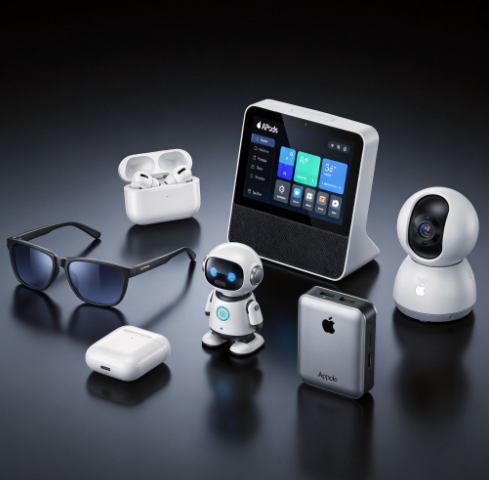
    Apple's vision for integrated AI hardware ecosystem, connecting personal devices with home intelligence.
    Apple’s vision for integrated AI hardware ecosystem, connecting personal devices with home intelligence.

    Overall, Apple’s six new hardware products show clear collaborative characteristics. Whether it’s AI AirPods’ audio interaction with smart glasses or HomePad’s home scenario connectivity with home robots, everything points in one direction: achieving seamless cross-device, cross-scenario experiences through a unified AI technology foundation.

    This ecosystem-oriented approach aligns with Apple’s strategy in software services. The introduction of Apple Intelligence has provided Apple’s hardware lineup with a unified AI capability platform. As the six new products gradually launch, this platform will gain richer hardware carriers, forming a true “AI hardware ecosystem closed loop.”

    Of course, the challenges Apple faces cannot be overlooked. In smart glasses, Meta’s Ray-Ban smart glasses have accumulated millions of users; in the home intelligence control sector, Amazon and Google have deep roots. Whether Apple can catch up and surpass in fierce competition ultimately depends on whether the product experience can truly resonate with consumers.
  • Solving Two Pain Points with One Device

    HUAWEI WATCH Buds 2
    HUAWEI WATCH Buds 2

    Do you often find yourself fumbling through pockets or bags to locate your earbuds when rushing to catch the subway? This fragmented carrying experience is precisely the motivation behind HUAWEI’s WATCH Buds series.

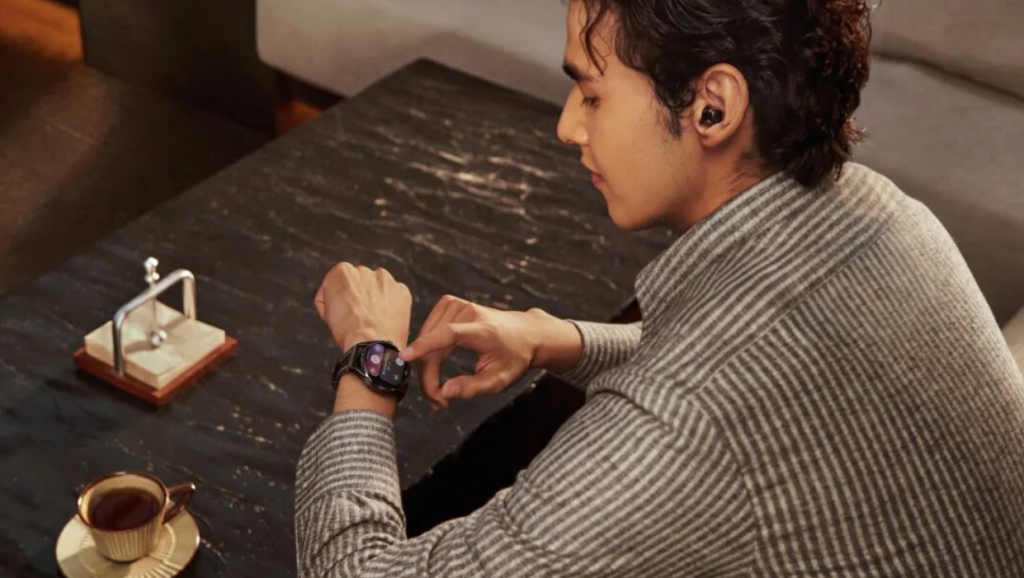
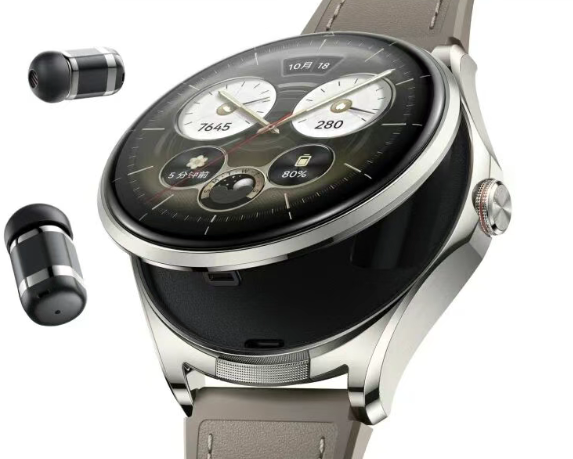
    On April 20, 2026, HUAWEI officially launched the WATCH Buds 2, deeply integrating a smartwatch with true wireless earbuds. This single device meets triple demands for communication, health, and audio. The iterative product represents comprehensive optimization rather than simple hardware stacking. How does it perform? We conducted a week-long in-depth test.

    Design: Lighter and Thinner, Premium Feel Elevated

    The first impression of WATCH Buds 2 is “lightweight.” The entire device weighs approximately 54.5 grams, 12 grams lighter than its predecessor, with thickness controlled at 14.69mm. Extended wearing no longer causes noticeable heaviness.

    The body adopts aerospace-grade titanium alloy combined with ultra-hard nano-coating technology, achieving 200% improvement in wear resistance. This material combination ensures both lightweight portability and durability.

    The earbud design is equally compact. Each earbud weighs approximately 4 grams, with volume reduced by 50% compared to traditional TWS earbuds. The octagonal cylindrical shape conforms to ear canal contours. During testing, three hours of continuous wearing caused no discomfort.

    The watch body and earbud charging case feature a 360° magnetic adsorption design. When returned, they automatically align and dock precisely. This satisfying “click” magnetic placement eliminates the frustration of repeatedly adjusting angles.

    The screen upgrades to a 1.5-inch LTPO flexible display with 36% narrower bezels and 11.6% improved screen-to-body ratio. The 3000-nit peak brightness ensures clear visibility even under bright outdoor light.

    The WATCH Buds 2 offers three color options: Obsidian Black, Amber Brown, and Titanium Silver. The Obsidian Black and Amber Brown versions are priced at 3,488 yuan, while the Titanium Silver version with titanium strap costs 3,988 yuan.

    Smartwatch-Earbuds Combo
    Smartwatch-Earbuds Combo

    Audio: Quality Sound from a Compact Body

    Don’t underestimate the audio quality despite the compact earbud size. The WATCH Buds 2 features a full-range micro-planar driver unit combined with triple sound optimization technology, dynamically compensating for sound differences caused by varying ear canal shapes.

    Call quality is a highlight of this product. Using bone conduction sensors with DNN deep neural network noise reduction algorithms, callers can hear your voice clearly even in noisy subway cars or busy street environments. Testing confirmed significant environmental noise filtering with high voice fidelity.

    The earbuds support hybrid active noise cancellation with two modes: noise cancellation and transparency. Activate transparency mode during commuting to hear both music and surroundings; switch to noise cancellation in the office for focused work.

    Touch controls receive a major upgrade. The expanded touch area covers the auricle and cheek, with double-tap for play/pause and triple-tap to switch noise cancellation modes—discreet and efficient, avoiding the awkwardness of pulling out a phone.

    The unique left-right adaptive recognition makes usage more casual. No need to distinguish left from right; pick up and wear, and the system automatically calibrates channel allocation. Both single or dual earbud use works seamlessly.

    The wrist-controlled earbuds feature is particularly practical. Directly control earbud playback status, volume, and noise cancellation modes through the watch dial. Check remaining earbud battery with a raised wrist—no need to remove the earbuds.

    Health: From Recording to Proactive Management

    The WATCH Buds 2 runs HarmonyOS 6, with health monitoring capabilities rivaling professional smartwatches.

    The health summary feature integrates exercise, heart rate, blood oxygen, sleep, and mood data for comprehensive analysis, automatically generating personalized health reports and improvement suggestions. This one-stop service eliminates the hassle of switching between different functions.

    Heart health monitoring supports pulse wave atrial fibrillation and premature beat detection. Users can participate in the HUAWEI heart health research program, with the system continuously tracking cardiac rhythm changes and alerting abnormalities. This feature proves particularly valuable for those with high-stress work schedules.

    Sleep monitoring adds sleep apnea screening. The system automatically analyzes deep sleep and light sleep stages while identifying sleep apnea risks, providing targeted improvement plans. After one week of continuous wearing, testers reported significantly detailed sleep reports.

    Blood glucose risk assessment represents a key upgrade. After wearing for three or more days, the system analyzes blood glucose trends based on physiological data, providing early risk warnings. It’s important to note this function serves as consumer-grade reference and cannot replace professional medical testing.

    Mood monitoring analyzes user stress and fatigue states in real-time, guiding breathing exercises to relieve tension. Combined with 90+ exercise modes, AI automatically interprets exercise data, covering running, swimming, and fitness comprehensively.

    SmartFeatures:Empowered by HarmonyOS Ecosystem

    Detaching the earbuds, the WATCH Buds 2 itself functions as a fully capable smartwatch.

    Digital car key features enable automatic vehicle unlocking when approaching, supporting mainstream vehicle brands. NFC tap-to-pay covers supermarkets, convenience stores, and other scenarios—complete payments with a raised wrist.

    Multi-device collaboration breaks boundaries between phones, tablets, and computers. Audio playback and message notifications seamlessly switch across devices, enhancing cross-device collaboration in office scenarios.

    Regarding system compatibility, this product perfectly adapts to HarmonyOS, iOS, and Android systems, ensuring both Apple and Android users can purchase with confidence.

    Battery performance proves satisfying. The watch delivers up to 3 days of comprehensive battery life, with earbuds lasting 3 hours in noise cancellation mode or 4 hours with it disabled. Combined with watch charging functionality, all-day usage is essentially covered.

    Comparison with First Generation: Four Core Upgrades

    Upgrade DimensionFirst GenerationWATCH Buds 2
    Weight and MaterialHeavier, noticeable plastic feel54.5g, titanium alloy
    Audio PerformanceBasic driver unitFull-range micro-planar + bone conduction noise cancellation
    Health FeaturesBasic heart rate and sleep monitoringNew blood glucose risk and mood monitoring
    Interaction ExperienceTraditional touch controls360° magnetic adsorption + expanded auricle touch

    Target Users and Purchase Recommendations

    The WATCH Buds 2 isn’t for everyone. Users in the following scenarios should prioritize consideration:

    Commuters and frequent travelers represent the primary target users. The dual-function design significantly reduces burden—one device handles subway calls and café emails. Office professionals benefit from discreet call features, answering meetings with gentle auricle taps and wrist control to avoid frequent phone reaching. Health-conscious individuals gain comprehensive health monitoring data for proactive body management. Tech enthusiasts experience the innovation of the dual-function form factor.

    However, audiophiles seeking ultimate sound quality may be disappointed—limited by earbud volume, sound quality cannot match high-end professional TWS products. Users with slender wrists should also try before buying, as the 47mm case diameter may appear too large.

    Conclusion

    The HUAWEI WATCH Buds 2 represents a new approach in smart wearables—not feature stacking, but scenario deep cultivation. It precisely addresses the user pain point of “too many devices, cumbersome carrying” through innovative form factor design that maximizes value from a single device.

    Lightweight design solves wearing comfort issues. Dual online audio and health capabilities ensure practical value. HarmonyOS ecosystem support enables smoother multi-scenario usage. If you frequently travel for business, pursue efficient office work, and dislike device fragmentation, this product deserves a place in your shopping cart. Available across all channels from April 25, with purchases before May 31 receiving one year of HUAWEI Care+ service.

  • Huawei Unveils First AI Glasses: 35.5g Featherlight Design, Starting at 2,499 Yuan

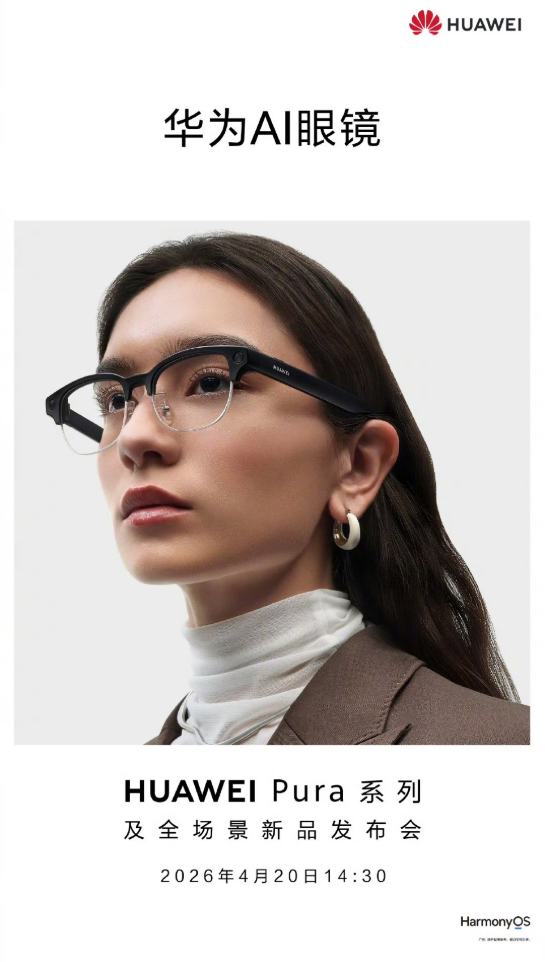
    On April 20, 2026, Huawei officially released its first consumer-grade AI smart glasses. With the core concept of “what you see is what you capture, what you ask is what you get,” the device weighs just 35.5g and is priced starting at 2,499 yuan. This is not only a milestone for Huawei in the smart wearable sector but also marks the official entry of domestic AI glasses into the large-scale implementation stage.

    Huawei AI glasses launch event promotional image, showcasing product integration with fashionable lifestyle
    Huawei AI glasses launch event promotional image, showcasing product integration with fashionable lifestyle

    1. Featherlight Design: Wearing Experience Comparable to Regular Glasses

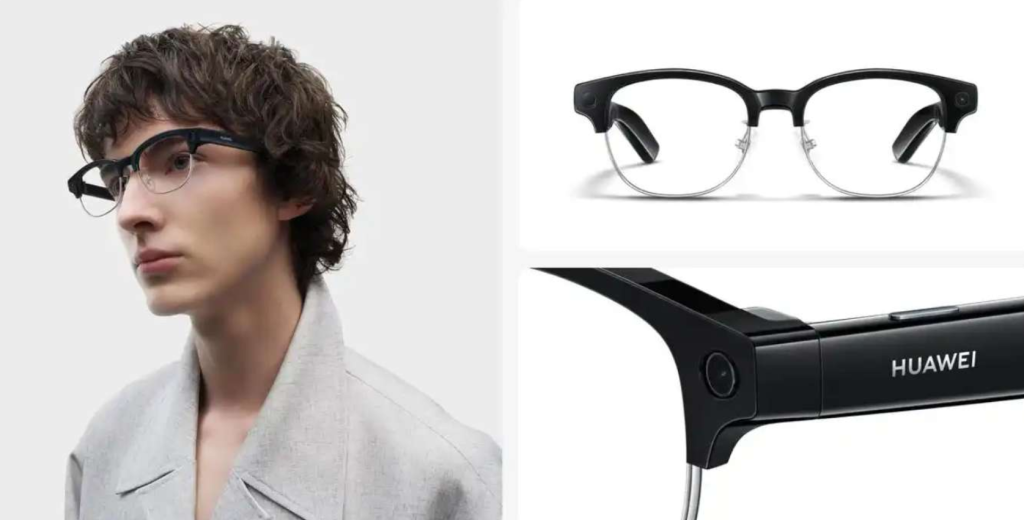
    Whether AI glasses can truly popularize depends largely on lightweight design. The Huawei AI glasses weigh only 35.5g with temple thickness as slim as 6.25mm at the thinnest point, making the wearing experience almost indistinguishable from regular prescription glasses. Huawei developed a “Golden Triangle Balanced Weight Distribution Architecture” based on over 300,000 Asian head shape data, paired with titanium alloy constant force hinges to ensure the glasses stay secure during running, bending, and other movement scenarios. Notably, compared to competitors’ products at 40.6g and 36g, Huawei demonstrates superior weight control.

    In terms of appearance, Huawei offers three color options: Titanium Silver Grey, Flowing Light Silver, and Modern Black. These come in prescription and sunglasses versions, with custom prescription lens options available. Users can find suitable styles for both business occasions and daily commuting. The minimalist and stylish frame design ensures no awkward appearance during daily use.

    2. Kirin-Level AI Computing: Smart Experience Empowered by Self-Developed Chips

    The biggest technical highlight of these AI glasses is their self-developed AI glasses chip, working with HarmonyOS to enable all-scenario intelligent interaction. Users can wake “Xiaoyi” through voice commands to complete payments, Q&A, device control, and more. For instance, saying “Xiaoyi Xiaoyi, help me pay 25 yuan” completes the payment effortlessly, truly freeing up your hands.

    In terms of recognition capabilities, the built-in AI computing unit achieves millisecond-level wake-up with directional recognition accuracy exceeding 90%, covering over 5,000 famous landmarks and daily objects. Simply look up to ask about what you’re seeing and get relevant information. As officially introduced, when users look at an object, the glasses automatically recognize and provide related information, truly enabling “ask anything you see.”

    3. 12MP Ultra-Sensitive Camera: 0.7-Second Snap to Capture Every Moment

    Imaging capability is the core competitive advantage of Huawei AI glasses. The device features a 12-megapixel ultra-sensitive camera (1/2.8-inch sensor), with light intake 26% higher than similar products. It’s also the world’s first consumer-grade AI glasses supporting the HDR Vivid standard. This means in complex lighting environments like backlight and low light, the glasses can still capture clear and natural photos.

    The glasses support 0.7-second AI instant capture, with users able to start photography through three methods: hand raise, button press, or voice command. Whether capturing children’s smiles, travel scenery, or sudden important moments, everything is instantly frozen. Paired with dual EIS electronic image stabilization and horizontal lock systems, videos remain steady even during movement. Additionally, the glasses support 1440P HD video recording, perfect for Vlog creators, with first-person perspective making content more immersive.

    4. All-Scenario Smart Features: More Than Glasses, an AI Assistant

    Huawei AI glasses offer far more than photography. They come with a complete Xiaoyi intelligent agent covering all daily needs: 42-language simultaneous interpretation makes overseas travel and business communication completely barrier-free; AI calorie recognition helps fitness enthusiasts better manage diet; Alipay’s “look to pay” feature enables secure payment through gaze and voice dual verification, balancing convenience and security.

    In terms of battery life, the glasses offer up to 12 hours of comprehensive battery life, with 8 hours of continuous voice calls and 9 hours of continuous music playback, meeting all-day usage needs. The device supports IP54 dust and water resistance, easily handling dust and light water splashes in daily scenarios. Charging uses a magnetic fast-charging solution, fully charging in 1.5 hours, eliminating battery anxiety for daily commuting.

    Huawei AI glasses feature a minimalist design with seamless multi-device connectivity
    Huawei AI glasses feature a minimalist design with seamless multi-device connectivity

    5. Deep HarmonyOS Ecosystem Integration: Opening a New Chapter in Smart Wearables

    Huawei AI glasses require pairing with phones running HarmonyOS 6.0 or higher to unlock full AI capabilities. After deep adaptation, the glasses seamlessly connect with devices like Pura X, Mate series, foldable phones, tablets, and watches, enabling instant message broadcasting and device linkage.

    Particularly noteworthy is the glasses’ first-person video livestreaming feature, supporting immersive streaming on platforms like Douyin and Bilibili, delivering an immersive viewing experience. This gives users entirely new perspectives and methods for sharing their lives. Huawei Consumer BG CEO He Gang stated that this product represents years of Huawei’s layout in smart wearables and will redefine industry standards for AI glasses.

    6. Sales Information and Market Prospects

    Huawei AI glasses pre-sale began at 17:08 on April 20, with official sales starting at 10:08 on April 25. Titanium semi-rim optical frames and classic full-rim optical frames are priced at 2,499 yuan, while classic full-rim sunglasses are priced at 2,899 yuan. Purchasers enjoy complimentary protection benefits worth up to 1,449 yuan, including once-yearly accidental protection and 50% off replacement service. Additionally, Huawei Mall offers a 1-yuan comprehensive glasses fitting service, available on a first-come-first-served basis.

    According to IDC data, China’s smart glasses market shipment is expected to exceed 4.508 million units in 2026, with year-on-year growth of 77.7%. With the continuous efforts of domestic brands like Huawei, Xiaomi, and Rayneo, AI glasses are rapidly transitioning from geek gadgets to mass-market consumer products. The launch of Huawei’s first AI glasses not only demonstrates Huawei’s technological strength in smart wearables but will also drive the entire industry toward lighter and more intelligent development.

    2499 RMB is approximately equivalent to 364 USD

  • The Ambition Behind 40 Grams: How IFlytek’s GlassClaw AI Glasses Are Rewriting Industry Rules

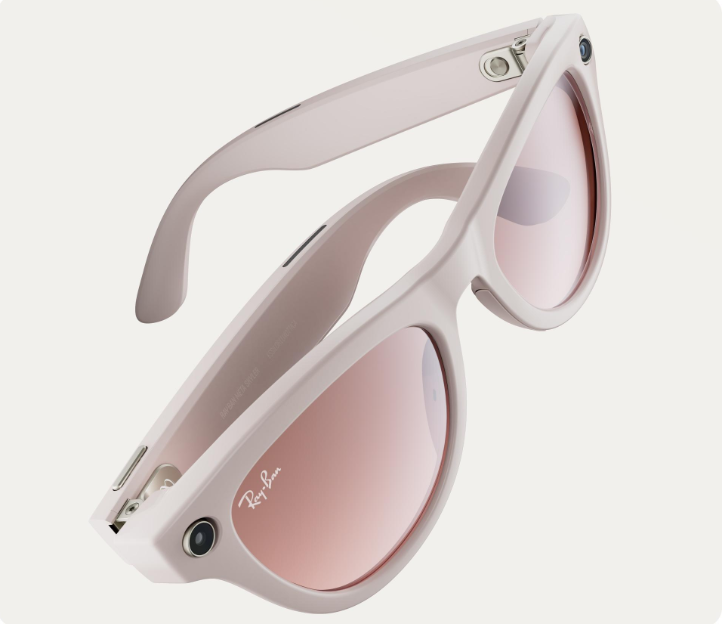
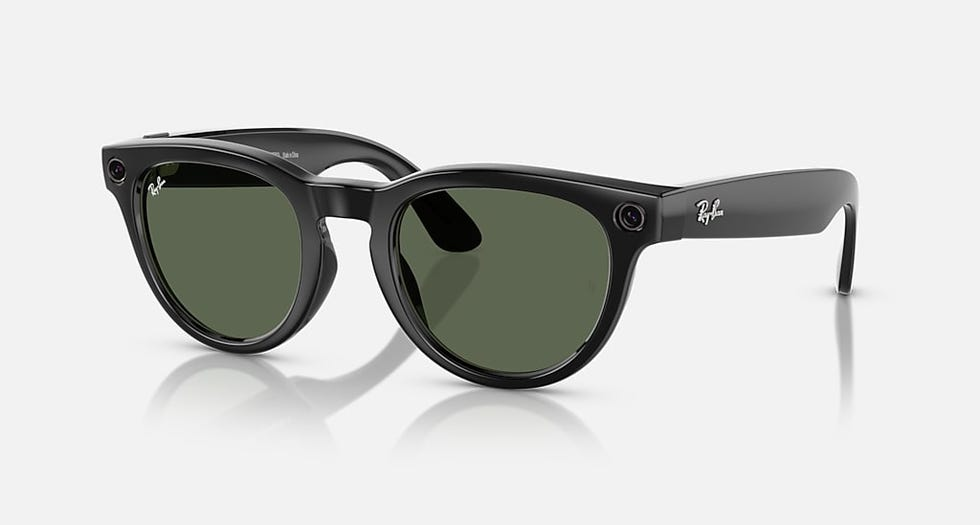
    Meta Ray-Ban smart glasses lead the industry with their lightweight design and AI capabilities, providing users with seamless intelligent experiences
    Meta Ray-Ban smart glasses lead the industry with their lightweight design and AI capabilities, providing users with seamless intelligent experiences

    From Voice Recognition Giant to AI Agent Pioneer

    iFlytek is no longer satisfied with an AI that can only “speak.”

    On April 15, 2025, the company famous for its voice recognition technology officially launched the AstronClaw upgrade, unveiling nine innovative products in one go and presenting for the first time a complete “software-hardware integrated” AI Agent architecture. The most eye-catching product at this launch event was a pair of AI glasses weighing just 40 grams—GlassClaw.

    “Our goal is not to create a conversational assistant, but to become the execution hub of the physical world,” iFlytek stated clearly at the launch event. This strategic shift means that large language model competition has already moved from algorithm benchmarking to a new battlefield of embodied intelligence and multimodal interaction.

    40 Grams: Technical Breakthrough Behind Lightweight Design

    While the industry is still debating the feasibility of AI glasses, GlassClaw has delivered an impressive answer with its 40-gram weight.

    A standard pair of prescription glasses weighs approximately 20 to 30 grams, while GlassClaw adds only 10 to 20 grams on top of that. This means users can virtually achieve all-day comfortable wearing, completely bid farewell to the traditional problem of smart glasses “pressing down on the nose bridge.”

    Supporting this lightweight design is a series of technological innovations. GlassClaw adopts a voice-visual collaborative perception architecture, achieving real-time environmental semantic completion through cloud-end linkage. Technically, GlassClaw has overcome two major challenges faced by AI glasses: lip movement recognition and remote sound capture. Even in high-noise environments, the device can accurately capture user voice commands, significantly improving usability in complex scenarios.

    AI smart glasses are evolving towards lightweight and stylish designs, balancing technological appeal with everyday wearing comfort
    AI smart glasses are evolving towards lightweight and stylish designs, balancing technological appeal with everyday wearing comfort

    Software-Hardware Integration: Redefining the AI Interaction Paradigm

    The release of GlassClaw represents not just a breakthrough in a single product, but also iFlytek’s reconsideration of the AI interaction paradigm.

    Traditional AI assistants are limited to cloud computing and screen-based interaction, where users must proactively initiate requests to receive services. The software-hardware integrated GlassClaw achieves end-cloud collaborative computing, enabling AI to proactively perceive the physical world, understand user intentions, and execute corresponding actions.

    Taking the Canton Fair itinerary planning as an example, the traditional approach requires users to manually search for information, write schedules, and enter them into calendar applications one by one. With GlassClaw, users simply issue a command, and the system automatically integrates local notes, online data, and personalized preferences to generate a complete itinerary and sync it to calendars and to-do lists.

    The transformation from “you ask, it answers” to “you tell, it does”—this shift is redefining the way humans collaborate with machines.

    Industry Landscape: AI Glasses Track Accelerates Restructuring

    GlassClaw’s entry has intensified competition in the AI glasses sector.

    Meta’s Ray-Ban smart glasses, launched in 2023, have sold over a million units cumulatively, becoming a benchmark product in the AI glasses field. Hardware giants like Samsung and Apple are also actively deploying, attempting to secure a position in this emerging track.

    The domestic camp is equally determined. In addition to iFlytek’s GlassClaw, companies like Baidu, Xiaomi, and Huawei are developing their own AI glasses products. Supply chain data shows that global smart glasses shipments increased by over 300% year-over-year in the first half of 2025, with the market scale expanding rapidly.

    Notably, AI glasses are forming a collaborative ecosystem with smart rings, pendants, and other wearable devices. iFlytek’s AstronClaw platform supports multi-device interconnection, allowing users to link GlassClaw glasses with smart rings for richer interactive experiences.

    Strategic Intent Behind Technical Roadmap

    The recruitment positions reveal glimpses of iFlytek’s technical ambitions.

    Recent job postings cover areas including smart location selection (spatial data modeling), global sales forecasting (supply chain operations optimization), Agent Skill development (MCP service architecture design), and multi-agent collaboration (complex business logic architecture). iFlytek aims to build not a laboratory demo, but a truly deployable AI Agent product.

    This strategic intent is clear: whoever masters software-hardware integration capabilities will build an ecosystem moat. In the increasingly intense competition of large language models, the end-cloud collaborative AI Agent ecosystem is expected to become enterprises’ new defensive barrier.

    Outlook: The Next Decade of AI Hardware

    The release of GlassClaw marks China’s entry into the “software-hardware integrated” era of AI Agents.

    With continued technological breakthroughs, AI glasses will become even more feature-rich. From basic voice interaction to complex multimodal perception, from single device control to full-scene intelligent connectivity—AI is moving from screens into reality, becoming a capable assistant in people’s lives.

    GlassClaw weighing 40 grams may just be a beginning. In the future, we can expect even lighter and smarter AI hardware products, fundamentally changing the way humans interact with machines.

    It’s not just an AI that can chat—it’s an AI that can get things done for you. iFlytek is serious this time.