Author: Gavin

  • Sage: AI Healthcare and Smart Hardware Resonate Together

    Sage: AI Healthcare and Smart Hardware Resonate Together

    Caught between an accelerating aging population and a shortage of nursing staff, the elderly care industry is undergoing a silent revolution driven by technology. In March 2026, Sage, a rising star in elderly care technology, announced the completion of a $65 million Series C funding round led by Goldman Sachs, bringing its total funding to over $120 million. Behind this significant capital investment is not simply a collection of traditional management software tools, but rather the deep integration of AI healthcare and wearable smart hardware in complex care scenarios.

    How does Sage reconstruct the profitability logic of institutions through “algorithms + sensor matrix”? What kind of commercialization model can its underlying technology provide for the Internet of Medical Technology (IoMT)? This article will analyze the industry value of this system from the dual perspectives of AI clinical decision-making and hardware architecture.
    Smart Elderly Care
    Smart Elderly Care

    Product Overview: System Reconstruction from “Passive Response” to “Proactive Early Warning”

    Sage 2.0 is an integrated nursing operating system specifically designed for elderly care institutions. Compared to the passive positioning of version 1.0 as a “digital call center,” version 2.0’s core upgrade is “AI prediction engine + multi-terminal hardware matrix + clinical data interoperability.” The system uses environmental sensors and lightweight wearable devices deployed in the home to capture elderly residents’ activity signals in real time; combined with the cloud-based Sage Detect algorithm, it enables proactive risk intervention.

    Simultaneously, the system has achieved bidirectional integration with mainstream electronic health records (EHRs) such as PointClickCare and ALIS, seamlessly connecting hardware alerts, caregiver interventions, and clinical medical records. Real-world testing data shows that the system can reduce fall-related hospitalization rates by 75% and create over $250 in hidden revenue per bed per month for institutions.

    AI in Healthcare: Algorithm-Driven Predictive Care and Value-Based Healthcare Loop

    Traditional elderly care has long been hampered by reactive, reactive approaches. Sage’s technological advantage lies in upgrading AI from a “data dashboard” to “clinical decision support.” Its core Sage Detect engine does not rely on simple action threshold alarms, but rather on long-term time-series data modeling to accurately identify the “deviation” of behavioral patterns.

    For example, a sudden increase in nighttime toilet visits, changes in gait rhythm, or fragmented sleep cycles can be cross-referenced by AI with past medical history and medication records, providing early warnings of potential infections or adverse drug reactions several hours in advance. This predictive care is the core application scenario of AI in elderly chronic disease management.

    More importantly, Sage breaks the “one-way reading” limitation of medical data. Most elderly care SaaS can only capture basic EHR (Employment Health Record) files, while Sage achieves bidirectional writing of structured data: abnormal trajectories captured by sensors and intervention records from caregiver apps are automatically converted into clinical language that complies with medical compliance standards and written back to the EHR.

    This not only builds a tamper-proof, compliant evidence chain but also quantifies the working hours for implicit services such as nighttime comforting and emergency cleaning. AI is no longer a black box replacing human labor but a transparent engine assisting institutions in transitioning from “extensive bundled pricing” to “value-based tiered pricing,” directly boosting net operating income (NOI).

    Wearable Smart Hardware Dimension: A Collaborative Architecture of Seamless Sensing and Edge Computing

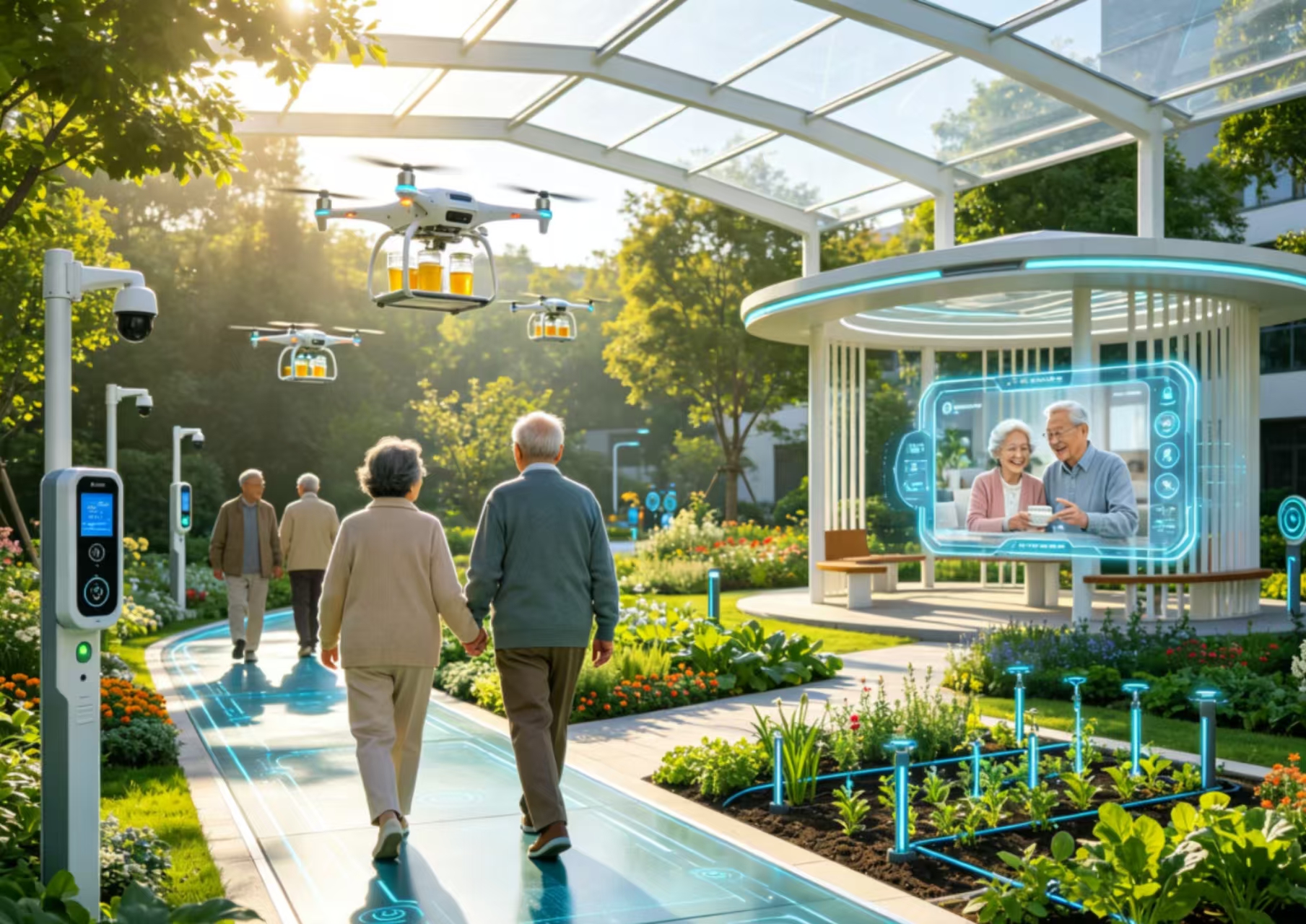
    In the AI ​​healthcare implementation chain, hardware is the “nerve ending” of data. Sage’s hardware strategy abandons the highly invasive traditional wristband solution, shifting to a “privacy-first seamless sensing matrix.” Its core sensor uses a fusion technology of millimeter-wave radar and low-power visual AI, accurately capturing fall risk, wandering patterns, and breathing rhythms while protecting the dignity of the elderly, without requiring continuous direct video recording.

    The device incorporates a lightweight edge computing module, which can perform preliminary data cleaning, feature extraction, and false alarm filtering locally, encrypting and uploading only high-value abnormal signals to the cloud, significantly reducing network latency and privacy leakage risks.

    This “edge AI preprocessing + cloud-based large model inference” architecture perfectly meets the stringent requirements of elderly care institutions for system stability and data compliance. The hardware no longer exists as an isolated device but is deeply embedded in the digital workflow of caregivers.

    When environmental sensors trigger an alert, the system accurately dispatches tasks via mobile devices based on the caregiver’s real-time location and task load heatmap. Frontline staff no longer need to carry walkie-talkies or fill out paper handover forms; task assignment, execution feedback, and work hour recording are all completed in a single click on their mobile phones.

    The core logic of hardware design has shifted completely from “monitoring and assessment” to “process reduction,” directly leading to a 20%-30% decrease in employee turnover in partner communities, validating the product philosophy that “excellent hardware should be invisible within the service.”

    Industry Lesson: The Future Path of AIoT Reshaping Elderly Care Business Models

    Sage’s rise provides a clear commercialization paradigm for the AI ​​medical hardware sector: technology must be directly anchored to financial models and frontline experience, rather than remaining at the level of parameter demonstration. By quantifying hidden costs through AI algorithms and releasing caregiver productivity through seamless hardware, Sage proves that the core competitiveness of elderly care technology lies in the dual-engine drive of “clinical value + operational efficiency.”

    With the maturity of multimodal large-scale models and flexible electronics technology, wearable devices for elderly care are evolving towards “continuous monitoring of multiple physiological parameters + early digital biomarker screening for cognitive impairment.”

    However, aicrunchx believes the industry still needs to overcome three major hurdles: device interoperability, HIPAA/PIPL compliance review, and frontline adoption rates.

    Only by adhering to a caregiver-centric interaction design and building open and interconnected medical data middleware can AI and smart hardware truly leap from being “optional add-ons” for institutions to becoming “digital infrastructure.” For teams deeply involved in AI healthcare and hardware innovation, Sage’s path has pointed the way: a system that is economically viable, readily used by caregivers, and trusted clinically is the ultimate answer to weathering the economic cycle.


  • Xu Rui’s Entry into MSL Marks A New Era for AI-Native Hardware

    Xu Rui’s Entry into MSL Marks A New Era for AI-Native Hardware

    Recently, global tech giant Meta officially announced a key personnel appointment: Xu Rui, a former core executive of Xiaomi and ByteDance’s hardware businesses, will head the newly formed AI hardware team at Meta’s Superintelligence Lab (MSL).

    Previously, Dreamer, an AI hardware startup founded by former Xiaomi Vice President Hugo Barra, was acquired by Meta in March of this year, with Xu Rui joining as a core member. This move not only signifies the completion of a key piece in Meta’s smart hardware strategy but also clearly signals a strategic shift in its R&D focus from “meta-universe infrastructure” to “AI-native devices.”

    Dreamer Team
    Dreamer Team

    As Meta’s newly established strategic engine, MSL is personally led by Alexandr Wang, a leading figure in the field of artificial intelligence infrastructure. The lab was established to address the urgent need for next-generation computing terminals driven by the explosion of generative AI.

    According to industry disclosures, MSL’s AI hardware team has initiated a deep structural restructuring, with a large number of senior engineers and product experts from Reality Labs smoothly transitioning to the new department, achieving full integration of software and hardware resources. Unlike traditional hardware R&D, which follows the logic of “specifications define products,” the MSL team’s core objective focuses on the underlying interaction paradigm of “AI native.”

    The team is dedicated to overcoming the challenge of deeply integrating large-scale model capabilities with physical carriers, exploring new device forms with proactive context awareness, multimodal natural interaction, and local privacy computing. Alexandr Wang previously clearly stated Meta’s long-term vision: to transcend the reliance on a single smartphone screen and build a distributed computing network centered on personalized AI agents. To this end, MSL will focus on optimizing edge AI computing power, low-power sensor arrays, and seamless cross-terminal collaboration protocols, striving to launch an AI hardware product line that truly reshapes the human-machine relationship within the next two to three years, making intelligent services as natural as air.

    Xu Rui, a senior hardware technology expert and serial entrepreneur, has previously worked at Intel, Lenovo, Xiaomi, and ByteDance. During his time at Xiaomi, he spearheaded the globalization of the TV business from zero to profitability. At ByteDance, he also created blockbuster hardware products with over a million units sold, possessing comprehensive industry experience spanning consumer electronics and cutting-edge AI hardware.

    Looking globally, the AI ​​hardware sector is experiencing an unprecedented inflection point. Over the past decade, the mobile internet, with its touchscreens and high-speed networks, has completely reshaped lifestyles. Now, standing at the forefront of the big data era, industry consensus is increasingly clear:

    The next generation of personal computing gateways will inevitably be AI-native. From Silicon Valley tech giants to innovative Chinese companies, the global industry chain is collectively focusing on hardware forms for the “post-smartphone” era.

    Simultaneously, with the continuous decline in the cost of large-scale inference on the edge, the commercialization of new solid-state batteries and flexible materials, and the vigorous evolution of open-source chip architectures, the bottlenecks of computing power, battery life, and cost that once constrained the widespread adoption of AI hardware are being broken down one by one. Future smart terminals will completely shed the label of “application container” and evolve into “digital extensions” with spatial understanding, emotional resonance, and autonomous decision-making capabilities. Z

    Meta’s integration of top talent and its ambitious MSL strategy not only represents a strategic upgrade to its own technology ecosystem but also points the way for the entire consumer electronics industry to evolve from “functional overlay” to “intelligent endogenous” transformation.

    It is foreseeable that the explosive growth of AI hardware will spawn a trillion-dollar incremental market and profoundly reshape the industrial logic of education, healthcare, office work, and entertainment.

    In the wave of technology democratization and open collaboration, hardware innovation is returning to its original “human-centered” focus. As leading global laboratories continue to push the boundaries of interaction, AI devices will deeply integrate into daily life in a lighter, more seamless, and more accessible manner.

    In this historical process of reshaping computing paradigms and productivity patterns, the deep integration of China’s well-developed hardware supply chain and cutting-edge global algorithms will undoubtedly provide a solid foundation for the large-scale deployment of AI hardware. The future is here; AI-native hardware is unstoppable in opening the door to a new era of human-machine symbiosis, creating a more efficient, convenient, and imaginative intelligent life for users worldwide.

  • AI-Powered Learning Machines Reshape Children’s Science Education

    AI-Powered Learning Machines Reshape Children’s Science Education

    KidoAI, a children’s smart hardware brand under Qiduo Intelligent, recently completed its seed round of financing, securing tens of millions of yuan in investment from leading institutions such as Shunwei Capital, Qifu Capital, and Weiguang Venture Capital. This financing not only injects momentum into the brand’s development but also reflects the profound transformation of the AI ​​education hardware sector from “functional competition” to “content ecosystem competition.” JD.com’s deep involvement is accelerating the explosive growth of this niche category.

    KidoAI
    KidoAI

    As a key component of this financing round, KidoAI has entered into a deep strategic partnership with JD.com, with both parties agreeing to a sales target of 40,000 units annually. JD.com has explicitly stated that it will define 2026 as the “Year One of Explosive Growth for AI Learning Machines,” planning to leverage its channel advantages to promote the large-scale penetration of this new type of children’s smart hardware.

    KidoAI’s core product—the “100,000 Whys AI Science Education Learning Machine”—is positioned as a “walking science teaching assistant” for children aged 3-12. Its core competitiveness lies in the deep integration of authoritative content with cutting-edge AI technology. This product is officially licensed from the popular science magazine “100,000 Whys” and leverages the world’s first AI Agent technology platform for publishing to build a dual-mode architecture of “teaching + interaction.” This ensures that all science content is verifiable and traceable, fundamentally addressing parents’ concerns about the “illusion” of generative AI content.

    This camera-shaped device integrates multiple functions, including intelligent dialogue, all-scene recognition shooting, reading and searching, and science audio-visual learning. Through 4G full network connectivity and WiFi dual-mode connection, it achieves an immersive science experience of “what you see is what you learn.” Notably, the device also incorporates GPS positioning and safety fence functions, satisfying children’s exploration needs while ensuring travel safety, precisely addressing the core pain point of parents who “want their children to be exposed to science education but don’t want them to become addicted to mobile phones.”

    The founding team’s background is one of the key reasons for its appeal to investors. Founder Huang Yong has many years of experience in the educational content field, possessing rich experience in content integration and review; the other founder, Ma Xinjie, has extensive experience in the consumer hardware supply chain, ensuring the product’s mass production and quality control. The core goal of their collaboration is to upgrade traditional children’s science reading into an interactive AI experience, propelling AI educational hardware from a “single tool” to a “smart growth partner.” Market feedback shows that the product requires no parental guidance, allowing children to quickly get started, with significantly higher user engagement than similar products, making it a potential standard device for family children’s science education.

    From an industry perspective, the AI ​​educational hardware sector is undergoing a profound paradigm shift. Early products focused on dictionary pens, learning tablets, and similar formats, with core functions concentrated on knowledge retrieval and screen display, resulting in severe homogenization. However, the new generation of products, represented by Smart Pocket, emphasizes “interactive guidance” and “authoritative content,” becoming key to differentiated competition in the sector.

    The adoption of multimodal large-scale model technology provides technological support for this transformation. Currently, high-quality AI educational hardware needs to possess both visual and speech understanding capabilities, accurately recognizing objects, understanding children’s contexts, and providing age-appropriate science explanations. The authority of content is becoming crucial for companies to build core competitive advantages—the integration of authoritative IPs like “100,000 Whys” not only enhances product credibility but also becomes a core selling point attracting parents to pay.

    Lightweight and specialized hardware forms are also important industry trends. Compared to smartphones, camera-based learning devices better protect children’s concentration, avoid interference from entertainment applications, and meet parents’ needs for “pure educational tools.” Industry analysts point out that future competition in the AI ​​education hardware sector will revolve around a triangular system of “AI Agent + authoritative content + secure hardware,” and the support from channel giants like JD.com indicates that the market has entered a mature preparation stage.

    The changing needs of parents are further reshaping the industry landscape. Today, consumers no longer overemphasize hardware specifications but value whether products can truly stimulate children’s curiosity and cognitive abilities, driving educational technology towards personalized companionship. This places higher demands on companies: they not only need integrated hardware and software R&D capabilities but also strong content integration capabilities, while balancing data privacy and personalized services to establish industry trust standards. Furthermore, rapid supply chain responsiveness is crucial for mass production and seizing market opportunities.

    The rise of Smart Pocket is not merely the success of a single product, but a prime example of AI technology empowering traditional publishing and educational hardware, demonstrating the immense commercial potential of “authoritative content + generative AI” in vertical scenarios. Through 4G positioning and a rigorous content review mechanism, this product precisely addresses parents’ core pain points, providing a valuable development path for the industry.

    Looking ahead, with the integration of more subject content, such as English education, these AI-powered learning devices are expected to become standard smart terminals in children’s development, and may even gradually expand into the global market. The essence of AI hardware lies in serving human needs; in the children’s field, this means both stimulating children’s curiosity and safeguarding their sense of security during their growth. Smart Pocket’s exploration shows that building a trustworthy children’s growth partner—using hardware as a carrier, AI as its core, and content as its foundation—will become a key direction for the in-depth development of AI educational hardware.

    This trend marks the official entry of children’s smart hardware into the “cognitive intelligence” era. It not only points out new value growth points for investors and developers, but also has the potential to usher in a new era of children’s exploratory learning, promoting technology to truly serve the growth needs of the next generation and realizing a comprehensive leap from hardware as a tool to one with emotional and intelligent attributes.

  • Screenless Wave Sweeps Across Wearable Devices

    Screenless Wave Sweeps Across Wearable Devices

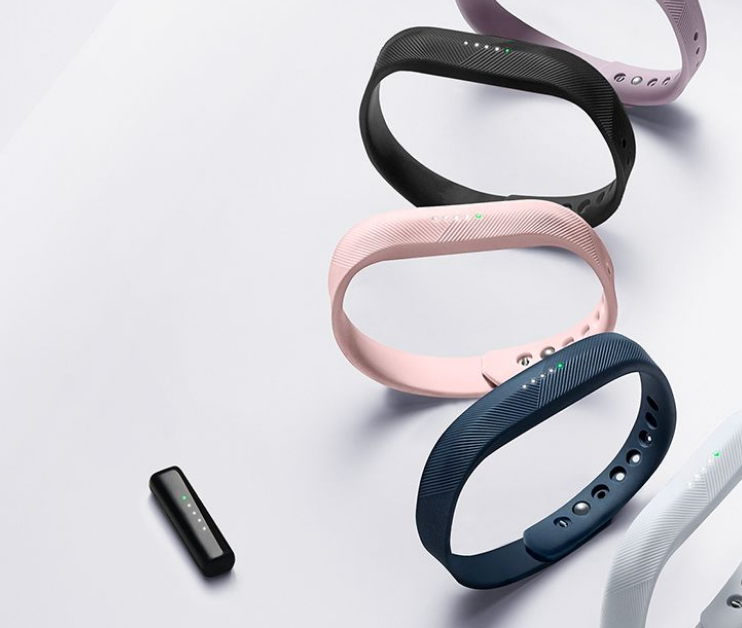
    The wearables industry is undergoing a profound paradigm shift. Whoop, an American sports and health start-up, recently completed a US$575 million Series G round of financing, with its valuation jumping to US$10.1 billion, becoming the latest “unicorn” in the field. At the same time, technology giant Google is using the Fitbit brand to develop screen-free fitness bracelets, and NBA star Stephen Curry has participated in product testing. The actions of the two major players jointly mark that “screen-free” has become a new battlefield in the field of health hardware.

    Fitbit
    Fitbit

    The rise of Whoop confirms the commercial potential of the “hardware free + subscription service” model in the field of health technology. The Boston-based company’s booking revenue in 2025 will reach US$1.1 billion, its global membership will exceed 2.5 million, and its monthly active user ratio will be as high as 83%, far exceeding the industry average. The core of its success lies in positioning the hardware as a pure data collection portal, providing users with in-depth health insights such as sports performance analysis and sleep quality monitoring through a monthly subscription service of US$30.

    Today, Whoop is accelerating its expansion into medical-grade health services. The company has recently added functions such as electrocardiogram monitoring, blood pressure trend insight, and biological age assessment, and integrated blood testing services to build a closed loop of “monitoring-analysis-intervention” health management. The financing was led by Middle East sovereign funds and medical giant Abbott. Top athletes such as football superstar Cristiano Ronaldo also joined as shareholders, which not only brought financial support to the company, but also further enhanced its brand influence.

    The entry of Google has injected the power of technology giants into this screenless wave. According to Bloomberg, citing people familiar with the matter, Google is developing a screen-free fitness bracelet under the Fitbit brand. The product will be deeply linked with the AI ​​personal health manager in the Fitbit app to support functions such as menstrual period analysis, mental health assessment, and nutrition tracking. This large-model-based health assistant has launched public beta in October 2025. Its core advantage is to use Google’s AI technology to conduct in-depth interpretation of continuous biological data collected by the device to provide users with personalized health recommendations.

    Whoop
    Whoop

    “Screenless is not a subtraction of functions, but an addition of value.” Industry analyst Sarah Chen said that compared with screen smartwatches such as Apple Watch, screenless devices eliminate redundant screen interactions and extend battery life to more than 14 days. At the same time, they are insensitive to wear and are more suitable for 7×24 hours of continuous monitoring of core health data such as sleep and heart rate variability. It accurately solves the core pain points of users such as frequent charging and uncomfortable wearing.

    Along with the innovation of business models, the technical architecture is also undergoing profound changes. As a pure data collection terminal, the value of the screenless bracelet no longer depends on the hardware parameters, but on providing high-quality and continuous biological data for the cloud AI model. This “device-side collection + cloud intelligence” architecture is gradually becoming the standard paradigm for the next generation of health wearable devices. It not only significantly reduces local computing power consumption, but also improves the accuracy of AI health services.

    Currently, the screenless wearable device market has formed three differentiated tracks: the subscription-based professional sports monitoring track represented by Whoop, the lightweight monitoring track in the form of smart rings, and the technology giant AI health service track represented by Google. Although the forms are different, the core logic of the three is highly consistent: hardware is just the carrier, and data and AI services are the real core of value.

    This trend marks the return of wearable devices from “notification center” to the nature of “health steward”. In the past, industry competition mostly focused on the accumulation of hardware parameters such as screen size and battery life; now, users pay more attention to the accuracy of data, the depth of services and the comfort of wearing, especially medical-grade precision health insights.

    Regarding the future of the industry, analysts predict that with the continued access to medical-grade functions, screen-less wearable devices are expected to become standard terminals for personal health management, and even expand into medical service fields such as insurance and chronic disease management, forming a cross-border health ecosystem. The exploration of Google and Whoop provides a clear development path for the industry: using hardware as the carrier, AI as the soul, and data as the core to build a trustworthy health service ecosystem.

    Google plans to officially release this screenless Fitbit bracelet later this year, and Whoop is accelerating its global expansion and plans to create more than 600 new positions. The layout of the two major players not only promotes wearable devices to officially enter the era of “cognitive intelligence” – devices can not only record data, but also understand and predict users’ health status, it also points out new value growth points for investors and developers.

    The unfolding of the screenless wave heralds a comprehensive transition of health hardware from tool attributes to service attributes, allowing technology to truly serve the quality of human life and reshape a new model of personalized health management in the future.