Currently, approximately 27% of people worldwide suffer from sleep disorders, with adults averaging only 6.85 hours of sleep per night , far below the healthy sleep data published by the World Health Organization . Meanwhile , smart mattresses, once jokingly referred to as “electrically rocking beds,” are undergoing a transformation thanks to AI big data models and high-precision sensors.
From Eight Sleep , used by Elon Musk and Mark Zuckerberg, to annual sales of $500 million and a valuation of $1.5 billion, to Chinese brands like Siri exceeding $1 billion in valuation within months, smart mattresses have moved from being a “geek’s novelty” to becoming a mainstream consumer product by early 2025 or 2026. So, how can we, as consumers , see through the marketing hype and make rational decisions?
New Form of Smart Mattress
I. Technological Leap: What is a True “AI Smart Mattress”?
Over the past decade, smart beds have mostly relied on mechanical adjustments such as “one-button height adjustment and zero-gravity mode,” which have been criticized by users as “pseudo-smart” and even ridiculed as nursing beds only for the elderly. Today, the core of the new generation of AI mattresses lies in their seamless self-adaptation and active intervention .
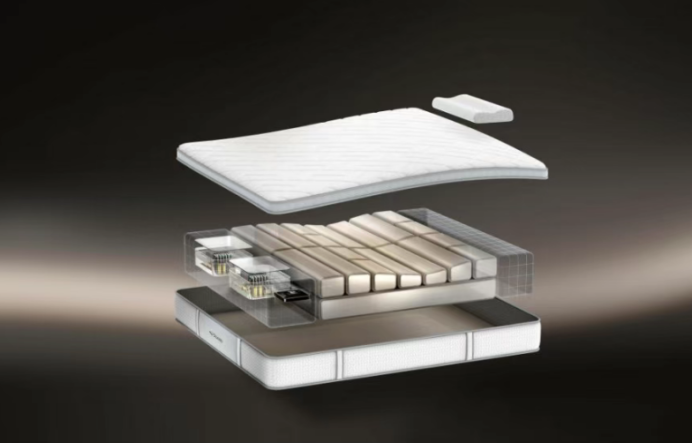
Sensing layer : Built-in high-density pressure matrix sensor to capture weight distribution, sleeping posture changes and micro-breathing movements in real time.
Decision-making level : Relying on local AI chips or cloud-based large models (such as combining DeepSeek and other algorithms), human body data is compared with millions of sleep samples to dynamically adjust the firmness of the zoning or the angle of the bed frame.
Execution layer : High-quality products operate with noise levels controlled at 20-25 decibels (close to a library environment), and the adjustment process is smooth and without any jerks, achieving full-cycle intervention of “relaxation before sleep, stress relief/anti-snoring during sleep, and natural awakening after sleep”.
The primary principle for purchasing intelligence is whether it can intervene without the user’s awareness; this is the only standard for testing true intelligence.
II. Industry Trends 2025-2026Q1: Ecological and Medical Applications
Based on recent market trends, the AI mattress industry is currently experiencing two major turning points:
From individual products to a 24-hour sleep ecosystem : Brands are no longer selling mattresses in isolation, but are instead integrating hardware such as smart rings, temperature-controlled mattress protectors, and sleep-aid ambient lights. Daytime activity/heart rate data is integrated with nighttime mattress algorithms to form a closed loop of “monitoring-intervention-feedback”.
From experience optimization to clinical validation : In 2025, several leading companies collaborated with brain-computer interface companies and top-tier hospitals to conduct research on sleep disorder intervention. In the first quarter of 2026, models with Class II medical device registration certificates or clear clinical data support became the entry threshold for the high-end market. The industry is accelerating its efforts to bridge the gap between “psychological comfort” and “medical assistance.”
III. Consumer Buying Guide: 4 Steps to Make a Rational Decision
Focus on the algorithm, not just the parameters : the core is the AI’s “continuous learning ability.” Confirm whether the system supports OTA upgrades and whether it adapts to personal habits over time. Avoid products that rely solely on preset gear switching.
Focus on the experience, not gimmicks : A minimum of 5 minutes of in-person testing is required. Reputable brands offer rapid matching systems (such as a 5-minute body shape/stress scan) that accurately recommend firmness/softness. Be wary of marketing claims lacking scientific basis, such as “quantum sleep aid” or “direct brainwave connection.”
Check core components and after-sales service : Motors, control boards, and sensors are critical to lifespan. A warranty of ≥3 years for the entire machine and ≥5 years for core motors/sensors is recommended. Confirm whether the manufacturer promises software maintenance for more than 3 years to avoid the machine becoming an “electronic brick.”
Match budgets as needed :
10,000-20,000 yuan : Basic sensing + zoned temperature control + manual/APP adjustment, suitable for those who have difficulty falling asleep.
Priced between 20,000 and 40,000 yuan : AI adaptive adjustment + anti-snoring linkage + ecological hardware access, suitable for people with long-term neck and shoulder strain and snoring.
Priced at 40,000 RMB or more : Medical-grade data monitoring + clinical algorithm certification + whole-house smart hub, suitable for high-net-worth individuals and those with severe sleep disorders.
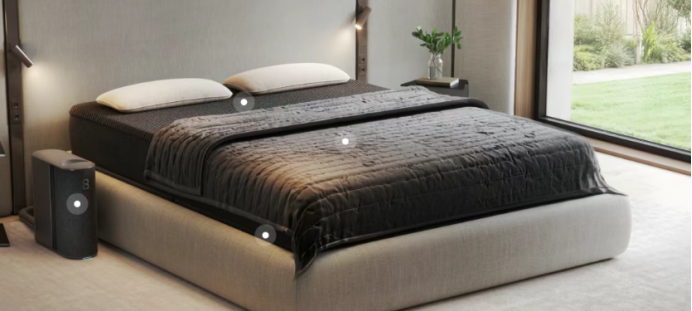
Eight Sleep’s Core Products
Conclusion
Smart mattresses are not simply sleep aids; they are essentially “digital stewards” that comprehensively protect sleep health. Entering 2026 , the industry’s development trend is clearly returning to its “human-centered” essence, abandoning flashy gimmicks and focusing on truly improving users’ sleep quality and overall well-being.
Therefore, it is recommended that consumers prioritize brands with core self-developed algorithm capabilities, well-developed offline experience scenarios, and transparent and reliable after-sales service processes when making their choices.
After all, the highest level of intelligent technology is always subtle and pervasive – you can hardly feel its presence, yet it silently creates the most suitable sleep environment, ultimately leaving you with a deep, peaceful, and restful night’s sleep.
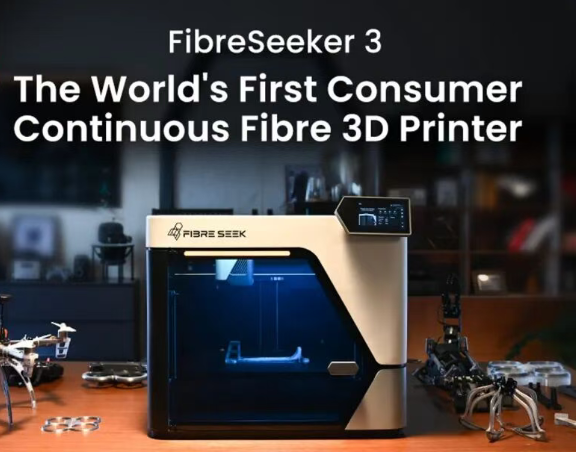
In early 2026, FibreSeek (CarbonSeek Technology)—an emerging brand hailing from Shenzhen, China—soared to the top of crowdfunding charts with its debut product, the FibreSeeker 3. Amassing $4.6988 million in funding and garnering the support of 1,539 backers worldwide, the device achieved a remarkable breakthrough: it lowered the barrier to entry for industrial-grade continuous fiber 3D printing technology—previously priced in the tens of thousands of dollars—to a consumer-friendly threshold of just $2,399 (at the “Super Early Bird” rate). In a “red ocean” market where giants like Bambu Lab and Creality command over 90% of the market share, the FibreSeeker 3 has successfully carved out a distinct niche for itself.
FibreSeeker 3
Within the 3D printing industry, the consumer market has long been dominated by “plastic prototypes,” while high-strength, industrial-grade equipment remained the exclusive domain of a select few enterprises due to prohibitive cost barriers. The advent of the FibreSeeker 3 seeks to bridge this divide—a feat bolstered by the dual advantages of China’s robust supply chain capabilities and precise market positioning. Furthermore, its emergence reflects a deeper, industry-wide trend: a fundamental shift in the global 3D printing sector from mere “proof-of-concept” demonstrations to the delivery of truly “functional applications.”
Technical Breakthrough: A Leap from “Brittle Plastic” to “Aerospace-Grade Strength”
Traditional FDM (Fused Deposition Modeling) 3D printers, relying solely on pure thermoplastic materials, have long suffered from a critical flaw: weak interlayer adhesion. Consequently, the resulting prints are prone to brittleness and cracking, possess poor load-bearing capacity, and are thus relegated to non-functional scenarios such as model display and concept validation. This inherent limitation has long confined consumer-grade 3D printing to the awkward status of a “niche novelty” or “toy,” rendering it difficult to penetrate the realm of genuine engineering applications.
The core competitive advantage of the FibreSeeker 3 lies in its proprietary continuous fiber co-extrusion technology—an industrial-grade process previously reserved for the aerospace and high-end manufacturing sectors, which this Chinese startup has successfully “desktop-ized.” The device features an independent dual-extruder architecture: a primary nozzle handles standard base materials such as PLA, ABS, PC, and PA, while a secondary nozzle is dedicated to feeding continuous carbon fibers. Through a high-precision temperature control system and synchronized pressure technology, bundles of carbon fibers are seamlessly embedded within the molten plastic matrix, thereby creating a “fiber-reinforced composite material.” Data indicates that the printed output from this device achieves a tensile strength of up to 900 MPa—ten times that of standard 3D printing materials. This level of strength approaches that of aerospace-grade aluminum alloys, yet weighs only half as much. Even more practically, users can seamlessly switch between three distinct operating modes to suit their specific needs: a high-speed mode (500 mm/s) ideal for rapidly prototyping plastic models; a high-strength mode that enables the synergistic deposition of fibers along a part’s specific stress paths; and an ultra-strength mode that supports full-fiber output, directly addressing the manufacturing requirements for load-bearing components such as drone frames, robotic joints, and industrial fixtures. This signifies that, for the first time, consumer-level users can—at an affordable price point—print functional parts that are ready for immediate, practical application.
Hardware-Software Synergy: Lowering the “Barrier to Entry” for Industrial Processes
The technical challenges inherent in continuous fiber printing have never been limited solely to the hardware itself; rather, they lie critically in the precision of fiber tension control and path planning. Should tension become unbalanced, the fiber is prone to snapping or deviating—issues that directly result in print failure. The solution implemented in the FibreSeeker 3 is a deep, synergistic integration of hardware and software.
On the hardware front, the device features built-in fiber tension sensors and a real-time filament breakage detection module. Coupled with an adaptive vibration compensation algorithm, these components allow the system to dynamically adjust fiber feeding speed and tension in real time, ensuring that the carbon fiber is deposited without snapping or deviating from its intended path. Furthermore, the device’s generous build volume of 300 × 300 × 245 mm—combined with all-metal linear guide rails—provides robust assurance of dimensional consistency during long-duration print jobs, effectively preventing device vibrations from compromising the precision of the final product.
Regarding software, FibreSeek’s proprietary slicing software, Aura, has completely reimagined the operational logic behind continuous fiber printing. Unlike traditional slicing software, Aura incorporates a built-in topology optimization algorithm that automatically identifies areas of high stress concentration within a 3D model, subsequently generating the necessary anchoring points and infill paths for the continuous fibers. Consequently, users require no specialized engineering expertise; by simply setting a target strength threshold, the software automatically generates the optimal G-code (printing instructions).
Additionally, the device’s 5-inch touchscreen interface and integrated high-definition AI camera further lower the operational barrier. The camera provides real-time monitoring of the printing process; should any anomalies occur—such as a snapped fiber or a clogged nozzle—the system immediately triggers an alert and supports “resume-from-breakpoint” functionality, thereby enabling even non-professional users to effortlessly complete complex, engineering-grade printing tasks. Market Strategy: Steering Clear of the “Red Ocean” to Secure a Niche in High-Value Growth Markets
With a crowdfunding starting price of $2,699—including a “Super Early Bird” tier at $2,399—the launch might appear to be a price war; in reality, however, it represents FibreSeeker’s meticulously crafted strategy to break through market stagnation via differentiation. While industry giants like Bambu Lab and Creality focus on mainstream segments such as “multi-color printing” and “ultra-high-speed printing”—becoming entangled in a spiral of product homogenization—this startup has chosen a more precise path. It targets the core, non-negotiable needs of engineers, R&D teams, and “hardcore” makers: the ability to directly produce load-bearing, testable end-use parts at a low cost.
Underpinning this strategy is the robust support of China’s mature supply chains and large-scale manufacturing capabilities. By leveraging supply chain clusters in hubs such as Shenzhen and Suzhou, FibreSeeker has slashed the device’s BOM (Bill of Materials) costs by nearly 90%. This achievement enabled the breakthrough of delivering “industrial-grade performance at a consumer-level price,” thereby paving the critical path for the downward migration of industrial technology into the consumer desktop market.
Industry data indicates that in 2024, global shipments of consumer-grade 3D printers are expected to surpass 2 million units—a year-over-year increase of 20%—while the market for industrial-grade equipment shows signs of contraction. FibreSeeker keenly identified this trend; rather than blindly following the giants into homogenized competition, the company carved out a high-value growth market through a strategy of “performance-driven premium + reasonable pricing.” For R&D teams, this device significantly reduces the costs associated with prototype validation and small-batch production; for hardcore makers, it unlocks new possibilities for fabricating high-strength, lightweight parts on their own.
A Decade of Accumulation: The Inevitable Result of Localization and Capital Support
The explosive success of the FibreSeeker 3 is not a serendipitous foray into a new field, but rather the inevitable outcome of a decade of technological accumulation and strategic localization. Its core technology is rooted in the patented Continuous Fiber Co-extrusion (CFC) process, pioneered by Anisoprint in 2014. Over the past ten years, this technology has served leading global enterprises—including NASA, Airbus, BMW, and Apple—accumulating a wealth of mature experience in industrial applications. In 2023, Anaiso 3D (FibreSeek’s parent company) completed the comprehensive localization of its technology, patents, and core expertise in Suzhou. This move was swiftly followed by a 30 million RMB angel round investment from Sequoia Capital, as well as a Series A round of nearly 100 million RMB led by GF Xinde. The company’s founder, Liu Rui—a post-95s entrepreneur who is currently still pursuing a Ph.D. in Intelligent Manufacturing at the Hong Kong University of Science and Technology (HKUST)—assembled a core team with backgrounds from institutions such as the University of Science and Technology of China (USTC) and MIT. Together, they decisively executed a strategic pivot “from B2B to B2C,” shifting away from their long-standing reliance on industrial clients to focus instead on the incremental demand within the consumer market.
“Industry was our original calling, but the consumer market is our inevitable destiny.” This statement by FibreSeek’s former CTO encapsulates the core logic behind the company’s transformation. With the addition of former executives from global 3D printing giants—such as Desktop Metal and Markforged—FibreSeek has further solidified its global distribution channels, laying a robust foundation for its products to reach the international market.
Conclusion: Reshaping the Boundaries of Consumer-Grade 3D Printing
The advent of the FibreSeeker 3 represents more than just an innovation in desktop 3D printing hardware; it marks a true milestone for the global consumer-grade 3D printing industry. By—for the first time—introducing industrial-grade continuous fiber technology into the consumer market, it fundamentally shatters the entrenched perception that “consumer-grade” is synonymous with “prototyping.” Instead, it propels the industry forward, shifting the focus from mere “proof of concept” to actual “functional delivery.”
For professional users seeking high-strength, lightweight components, the FibreSeeker 3 offers what is currently the most engineering-value-driven solution available in the consumer market. For the 3D printing industry as a whole, the success of this Chinese startup demonstrates that the combined power of “technological downscaling” and “supply chain advantages” is sufficient to carve out a new niche within a “red ocean” market currently dominated by industry giants.
As FibreSeek continues to iterate upon its materials ecosystem and its “Aura” slicing software, continuous fiber printing is poised to experience a desktop-level boom between 2026 and 2027. By then, consumer-grade 3D printing will no longer be merely a “niche hobby”; it will truly integrate into a wider array of scenarios—including R&D, manufacturing, and the maker community—becoming a vital tool for driving innovation. And in the midst of this industry-wide transformation, Chinese enterprises—leveraging their dual advantages in both technology and supply chains—are seizing the initiative to lead the way.
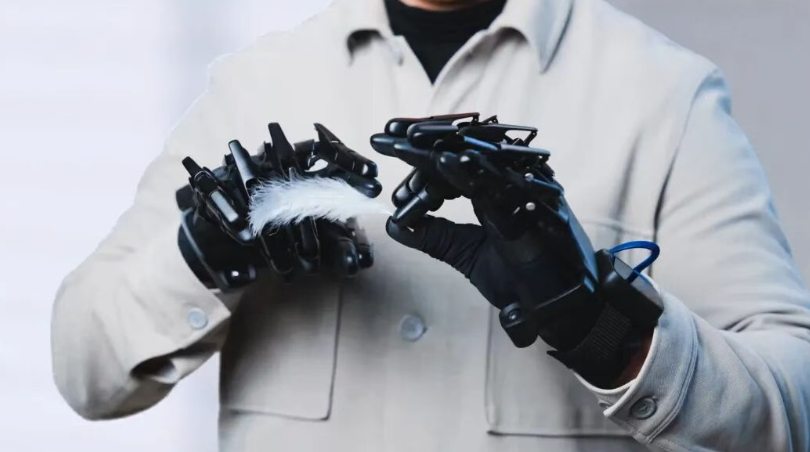
At this critical juncture where embodied intelligence is moving towards the real physical world, data quality has become a core bottleneck restricting model generalization. Gen DAS Dex (hereinafter referred to as Dex), officially released by Jianzhi, takes “head-hand full-modality” as its entry point, attempting to solve the long-standing industry challenge of agile behavior acquisition.
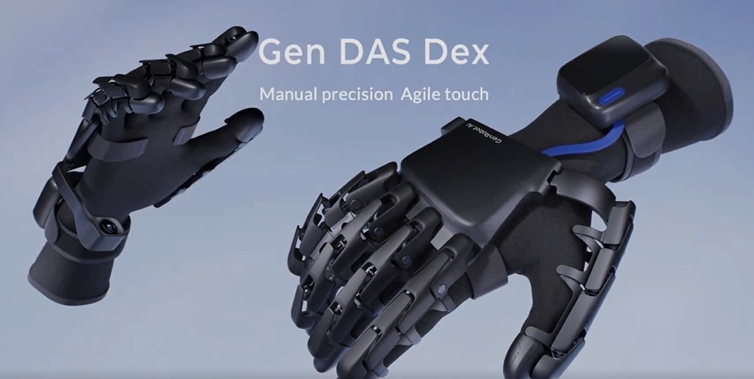
Gen DAS Dex
one of the key AI hardware focuses of aicrunchx , can Dex transform the fine manipulation of human hands into structured data that machines can understand? This article will provide an in-depth analysis from the perspectives of technical parameters and application scenarios.
🔍Core Functionality Analysis: Breaking Down Data Silos in “Head-Hand Collaboration”
In the past, traditional embodied training has long faced a gap of “seeing but not being able to grasp” , but now Dex’s breakthrough lies in achieving full modal closed loop with a single device .
On the hardware level, the self-developed micro magnetic encoder pushes the joint angle detection accuracy to 0.02°. Combined with IMU and infrared vision fusion positioning, the fingertip spatial error is reduced to the millimeter level, and the 23 degrees of freedom fully approach the physiological limits of the human hand.
Multimodal fusion is another highlight: the fingertip is equipped with a 0.05N high-sensitivity tactile sensor and a 1mm spatial resolution module, combined with a 150° ultra-wide-angle camera on the back, to achieve physical interaction restoration of “visual tracking of trajectory and tactile understanding of force”.
To address the industry’s pain point of multi-device synchronization, Dex also uses the SUB-G wireless protocol to connect with the underlying clock of the Ego headset, achieving sub-millisecond alignment at the 1ms level, completely eliminating timing misalignment between vision, motion, and touch.
In terms of weight, the lightweight 210g exoskeleton and adaptive structure make the data collection process seamless, ensuring that the data comes from natural life rather than laboratory performances.
Real Shot of Gen DAS Dex
🌍Consumption and Industrial Application: What real-world problems can Dex solve?
Currently, the value of Dex is rapidly penetrating into the consumer and vertical sectors.
In the field of home service robots, Dex can generate a large number of real housework, cooking and tidying samples at low cost, directly solving the pain points of current home service robots such as “high failure rate of fine grasping and improper force control”.
In XR and spatial computing scenarios, high-precision hand tracking and haptic feedback data will significantly enhance the immersiveness of virtual interaction and lower the development threshold for 3D gesture training; for the medical rehabilitation market, Dex can quantify patients’ hand motor function and provide a trackable, personalized digital therapy platform for people with stroke or peripheral nerve injury.
In vocational education and skills training, experienced workers’ “muscle memory” and operational mechanics can be fully digitized and transformed into standard digital assets that can be reused remotely.
As the threshold for data collection decreases, Dex is driving a paradigm shift in embodied AI from “passively watching videos” to “active physical interaction”.
👥Background of the R&D Team and Future Evolution Path
Gen DAS’s core team has deep expertise in embodied intelligence’s underlying data infrastructure, spanning robot kinematics, micro-sensor hardware, and multimodal algorithms. The launch of Dex marks a strategic upgrade for the team, moving from a single algorithm provider to a “hardware-software integrated data engine.”
Looking to the future, Dex anticipates building a cross-brand robot training ecosystem through open SDKs and standardized data protocols; meanwhile, the mass production iteration of flexible sensors and micro magnetic encoders will drive down equipment costs, gradually opening up to independent developers and the geek market.
If data cooperation can be established with mainstream embodied basic model manufacturers, Dex has the potential to become an industry-level data acquisition standard.
📝Overview : The Inevitable Path from Data Infrastructure to Physical Intelligence
The Gen DAS Dex is not only a high-precision dexterity hand data glove, but also an indispensable “tactile and motion base” for embodied world models.
As AI begins to understand the world based on real-world human physical interactions, the large-scale deployment of dexterous machine operations has the necessary data foundation. Despite challenges in adapting to large models and commercial validation, Dex’s breakthroughs in accuracy, synchronization rate, and lightweight design have set a new benchmark for embodied data collection.
For professionals who are interested in the evolution of AI hardware and robotics, Gen DAS Dex is undoubtedly one of the most promising underlying infrastructures of the year.
Introduction: From Karaoke King to Robot Dog: Changba’s Cross-Industry Bet
Changba, a name absolutely familiar to Chinese people who have experienced the internet boom, is the karaoke app that has been a hit for 14 years and the “Little Giant Egg” microphone that swept the market.
Gogobot D1
However, in 2026, this audio giant made a surprising decision: to cross over into the smart device market, launching its first emotional companion robot dog—Gogobot D1.
This product quickly gained popularity after its debut at CES 2026, and subsequently launched a crowdfunding campaign on Kickstarter in March 2026. As of March 30th, the project had raised over 16 million RMB and received an official recommendation from the platform’s “PROJECT WE LOVE” initiative.
For consumers, is this a worthwhile AI companion robot, or simply a tech giant jumping on the bandwagon?
AICRUNCHX will provide you with a comprehensive Gogobot D1 buying guide from four dimensions: hardware specifications, AI interaction experience, privacy and security, and cost-effectiveness.
I. Hardware Specifications: Designed for Companionship
Unlike robot dogs from Unitree or Boston Dynamics that emphasize “sports performance,” the Gogobot D1’s design logic leans more towards consumer-grade electronic pets.
Appearance and Materials
Main Body Material: Utilizes ABS engineering plastic and silicone composite materials, providing a smooth touch and avoiding the coldness of traditional metal robots, making it more suitable for family interaction.
Display: Features a 2.4-inch TFT display on the front, capable of showing 50+ dynamic expressions. This is the core window for its emotional expression.
Battery Life and Charging
Interface: USB Type-C (mainstream and universally compatible, convenient).
Battery Life: 2-3 hours of runtime on a full charge. For a desktop/floor robot primarily focused on interaction, this battery life is average for the industry. It’s recommended to use it with the charging dock for convenient charging.
Perception System
Audio: Built-in four-microphone array, supporting 360° omnidirectional sound pickup, automatically identifying sound sources and turning towards the speaker.
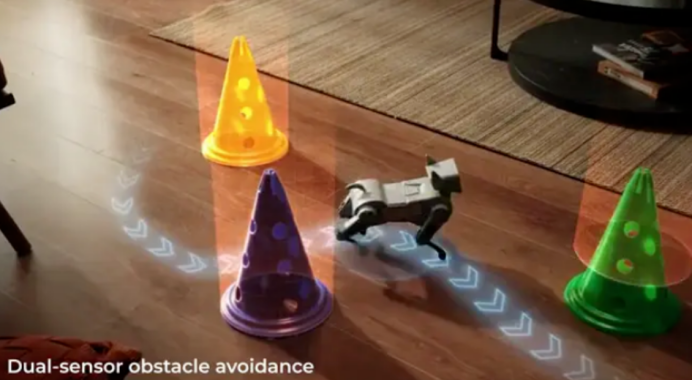
Vision/Obstacle Avoidance: Employs dual ToF laser sensors + front-facing anti-fall detection. The camera-less design is a significant advantage in a market rife with privacy concerns.
II. Core Experience: Is AI Really “Emotional”?
For AI hardware, the hardware is the skeleton, but the AI is the true soul. The biggest selling point of the Gogobot D1 lies in its claimed “emotional companionship” capability.
Multilingual and Interactive Response Supports 15+ mainstream languages including English, French, and Spanish. Thanks to years of audio algorithm accumulation from Changba (a popular karaoke app), its voice recognition rate performs excellently even in noisy environments. It can automatically match facial expressions and body movements based on dialogue content, achieving synchronized “listening, speaking, and moving.”
Long-term Memory System This is key to its differentiation from traditional toys. Gogobot D1 has a built-in long-term memory system that can generate customized responses based on historical interactions.
Example Scenario: If you tell it you’re in a bad mood today, the next day it might proactively ask about your mood instead of mechanically repeating “hello.”
Growth Mechanism: Just like its crowdfunding slogan “Listens, reacts, and grows with you,” it will become more understanding of you as you use it.
Openness and Programming For tech-savvy users, Gogobot D1 supports visual programming and Open Bluetooth APIs.
Advanced Play: After completing advanced programming, you can extend the permissions for actions, connect to third-party AI models, and customize interaction rules. This means its longevity depends not only on official updates but also on the developer community.
III. Privacy and Security: Advantages and Disadvantages of Camera-Free Solutions
Gogobot D1 Vision System
In 2026, data privacy is one of the most sensitive topics for consumers.
Advantages: The Gogobot D1 uses a camera-free ToF sensor solution. This means it won’t photograph your home environment, fundamentally eliminating the risk of visual privacy leaks. This is a core reason to buy for families with children or those who value privacy.
Limitations: Due to the lack of computer vision, it cannot perform advanced tasks such as “object recognition” or “facial recognition.” Its functional scenarios are mainly limited to voice interaction and basic obstacle avoidance.
IV. Brand Endorsement and Cross-Industry Challenges
Changba’s Advantages
Audio Algorithms: 14 years of experience in the karaoke industry gives it a natural advantage in voice recognition and sound effect processing.
Supply Chain Capabilities: The millions of microphones shipped by the Gogobot D1 validate its supply chain bargaining power and quality control experience in consumer hardware.
Business Model: Adopting a buy-to-play model, the core AI dialogue function is permanently free with no mandatory subscriptions, a refreshing approach in the AI hardware market.
Potential Risks
Robotics Technology Accumulation: Compared to manufacturers like Unitree Robotics and Calcium Robotics, which have been deeply involved in quadruped robots for many years, Changba has relatively less experience in dynamic modeling and multi-sensor fusion.
Motion Capabilities: Don’t expect it to run and jump like a professional robot dog. It’s better suited for slow movement on a desktop or flat ground.
V. Conclusion: The “Gentle” Implementation of Embodied Intelligence The emergence of Changba Gogobot D1 marks a shift in embodied intelligence from “showy technology” to “practical companionship.” It doesn’t pursue ultimate motion performance, but instead chooses emotional interaction and privacy security as its entry point.
If you’re looking for an intelligent companion that can be placed on your desktop, chat, doesn’t secretly take pictures, and can grow with you, Gogobot D1 is worth adding to your shopping cart.