Author: Gavin

  • Huawei Unveils First AI Glasses: 35.5g Featherlight Design, Starting at 2,499 Yuan

    On April 20, 2026, Huawei officially released its first consumer-grade AI smart glasses. With the core concept of “what you see is what you capture, what you ask is what you get,” the device weighs just 35.5g and is priced starting at 2,499 yuan. This is not only a milestone for Huawei in the smart wearable sector but also marks the official entry of domestic AI glasses into the large-scale implementation stage.
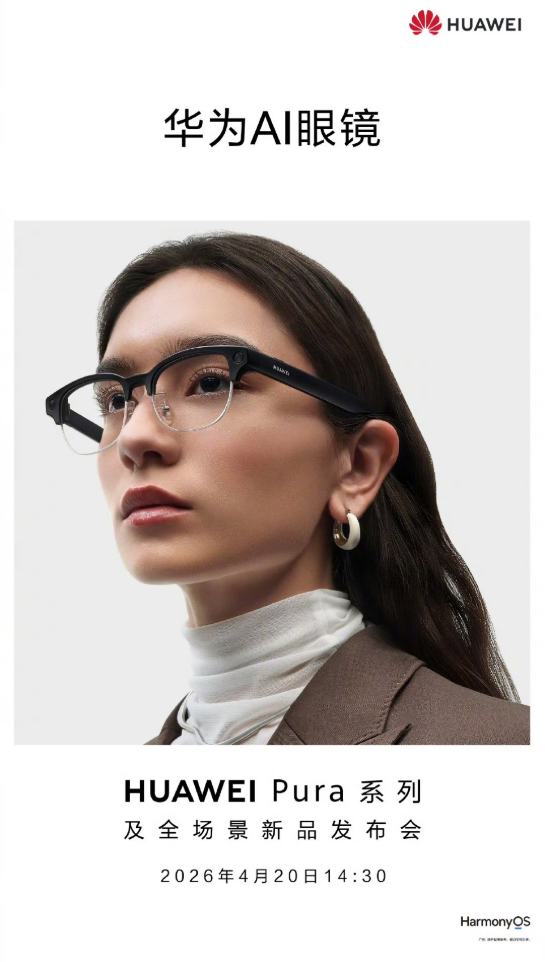
    Huawei AI glasses launch event promotional image, showcasing product integration with fashionable lifestyle
    Huawei AI glasses launch event promotional image, showcasing product integration with fashionable lifestyle

    1. Featherlight Design: Wearing Experience Comparable to Regular Glasses

    Whether AI glasses can truly popularize depends largely on lightweight design. The Huawei AI glasses weigh only 35.5g with temple thickness as slim as 6.25mm at the thinnest point, making the wearing experience almost indistinguishable from regular prescription glasses. Huawei developed a “Golden Triangle Balanced Weight Distribution Architecture” based on over 300,000 Asian head shape data, paired with titanium alloy constant force hinges to ensure the glasses stay secure during running, bending, and other movement scenarios. Notably, compared to competitors’ products at 40.6g and 36g, Huawei demonstrates superior weight control.

    In terms of appearance, Huawei offers three color options: Titanium Silver Grey, Flowing Light Silver, and Modern Black. These come in prescription and sunglasses versions, with custom prescription lens options available. Users can find suitable styles for both business occasions and daily commuting. The minimalist and stylish frame design ensures no awkward appearance during daily use.

    2. Kirin-Level AI Computing: Smart Experience Empowered by Self-Developed Chips

    The biggest technical highlight of these AI glasses is their self-developed AI glasses chip, working with HarmonyOS to enable all-scenario intelligent interaction. Users can wake “Xiaoyi” through voice commands to complete payments, Q&A, device control, and more. For instance, saying “Xiaoyi Xiaoyi, help me pay 25 yuan” completes the payment effortlessly, truly freeing up your hands.

    In terms of recognition capabilities, the built-in AI computing unit achieves millisecond-level wake-up with directional recognition accuracy exceeding 90%, covering over 5,000 famous landmarks and daily objects. Simply look up to ask about what you’re seeing and get relevant information. As officially introduced, when users look at an object, the glasses automatically recognize and provide related information, truly enabling “ask anything you see.”

    3. 12MP Ultra-Sensitive Camera: 0.7-Second Snap to Capture Every Moment

    Imaging capability is the core competitive advantage of Huawei AI glasses. The device features a 12-megapixel ultra-sensitive camera (1/2.8-inch sensor), with light intake 26% higher than similar products. It’s also the world’s first consumer-grade AI glasses supporting the HDR Vivid standard. This means in complex lighting environments like backlight and low light, the glasses can still capture clear and natural photos.

    The glasses support 0.7-second AI instant capture, with users able to start photography through three methods: hand raise, button press, or voice command. Whether capturing children’s smiles, travel scenery, or sudden important moments, everything is instantly frozen. Paired with dual EIS electronic image stabilization and horizontal lock systems, videos remain steady even during movement. Additionally, the glasses support 1440P HD video recording, perfect for Vlog creators, with first-person perspective making content more immersive.

    4. All-Scenario Smart Features: More Than Glasses, an AI Assistant

    Huawei AI glasses offer far more than photography. They come with a complete Xiaoyi intelligent agent covering all daily needs: 42-language simultaneous interpretation makes overseas travel and business communication completely barrier-free; AI calorie recognition helps fitness enthusiasts better manage diet; Alipay’s “look to pay” feature enables secure payment through gaze and voice dual verification, balancing convenience and security.

    In terms of battery life, the glasses offer up to 12 hours of comprehensive battery life, with 8 hours of continuous voice calls and 9 hours of continuous music playback, meeting all-day usage needs. The device supports IP54 dust and water resistance, easily handling dust and light water splashes in daily scenarios. Charging uses a magnetic fast-charging solution, fully charging in 1.5 hours, eliminating battery anxiety for daily commuting.
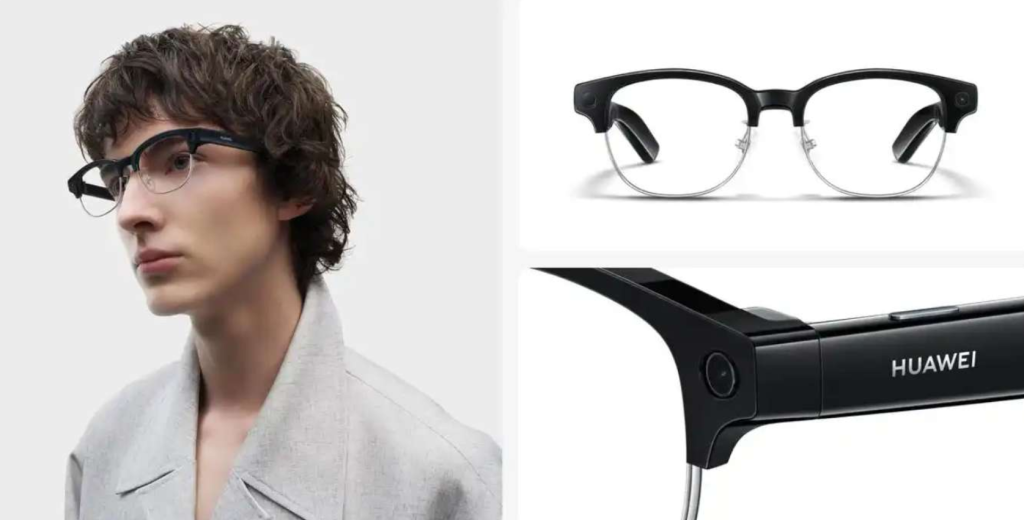
    Huawei AI glasses feature a minimalist design with seamless multi-device connectivity
    Huawei AI glasses feature a minimalist design with seamless multi-device connectivity

    5. Deep HarmonyOS Ecosystem Integration: Opening a New Chapter in Smart Wearables

    Huawei AI glasses require pairing with phones running HarmonyOS 6.0 or higher to unlock full AI capabilities. After deep adaptation, the glasses seamlessly connect with devices like Pura X, Mate series, foldable phones, tablets, and watches, enabling instant message broadcasting and device linkage.

    Particularly noteworthy is the glasses’ first-person video livestreaming feature, supporting immersive streaming on platforms like Douyin and Bilibili, delivering an immersive viewing experience. This gives users entirely new perspectives and methods for sharing their lives. Huawei Consumer BG CEO He Gang stated that this product represents years of Huawei’s layout in smart wearables and will redefine industry standards for AI glasses.

    6. Sales Information and Market Prospects

    Huawei AI glasses pre-sale began at 17:08 on April 20, with official sales starting at 10:08 on April 25. Titanium semi-rim optical frames and classic full-rim optical frames are priced at 2,499 yuan, while classic full-rim sunglasses are priced at 2,899 yuan. Purchasers enjoy complimentary protection benefits worth up to 1,449 yuan, including once-yearly accidental protection and 50% off replacement service. Additionally, Huawei Mall offers a 1-yuan comprehensive glasses fitting service, available on a first-come-first-served basis.

    According to IDC data, China’s smart glasses market shipment is expected to exceed 4.508 million units in 2026, with year-on-year growth of 77.7%. With the continuous efforts of domestic brands like Huawei, Xiaomi, and Rayneo, AI glasses are rapidly transitioning from geek gadgets to mass-market consumer products. The launch of Huawei’s first AI glasses not only demonstrates Huawei’s technological strength in smart wearables but will also drive the entire industry toward lighter and more intelligent development.

    2499 RMB is approximately equivalent to 364 USD

  • Honor’s “Lightning” Robot Claims Victory: Humanoid Robot Marathon Record Shattered

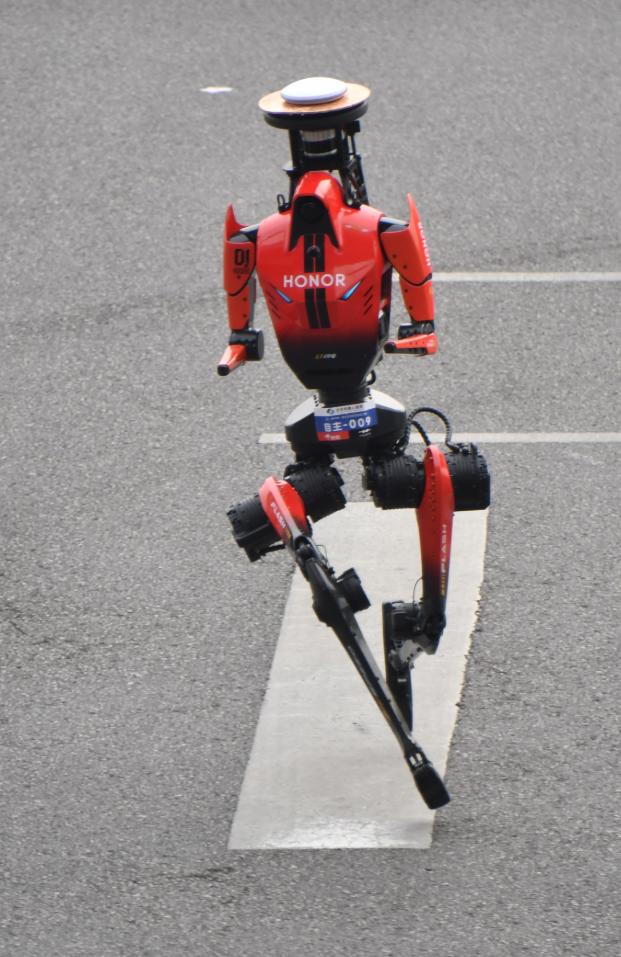
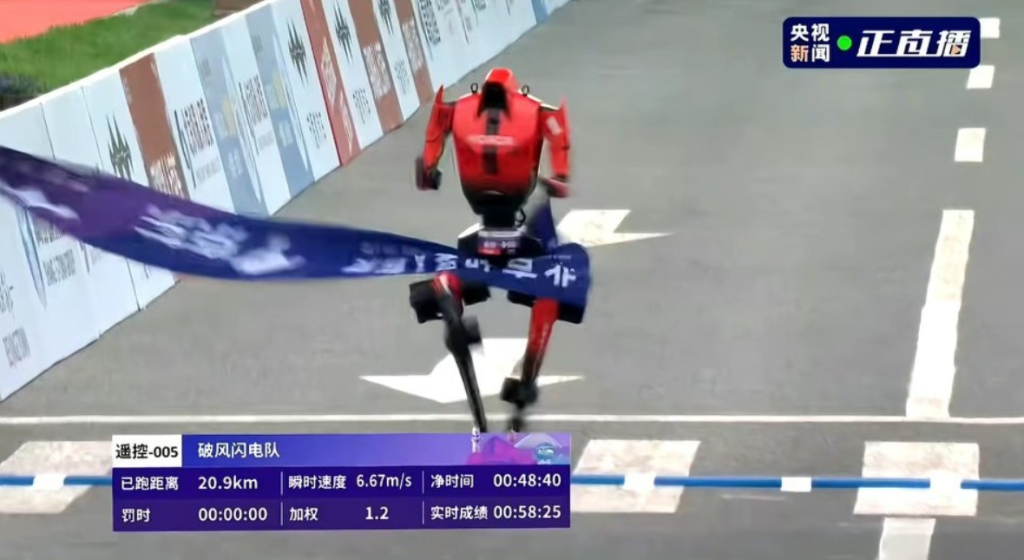
    On April 19, 2026, the Beijing Yizhuang Half Marathon witnessed an epic showdown between technology and speed. In the second edition of the world’s first humanoid robot marathon, Honor Smart Technology Development Co., Ltd.’s “Lightning” robot crossed the finish line first with a net time of 48 minutes and 19 seconds, dramatically surpassing last year’s championship time of 2 hours and 40 minutes. This achievement not only outpaced numerous human runners but also broke the human men’s half marathon world record of 57 minutes and 20 seconds.

    Record-Breaking Participation Scale

    The scale of this year’s event was truly remarkable. Compared to last year when only 6 robots completed the race, this year’s competition attracted over 300 humanoid robots to compete alongside each other. Competing teams included industry leaders such as Beijing Humanoid Robot Innovation Center, Honor, Unitree, and Sunyan Dynamics, as well as research institutions from Tsinghua University, Peking University, and University of Science and Technology of China. The event scale grew nearly fivefold from last year, with 26 mainstream brands participating.

    Notably, 40% of competing robots utilized autonomous navigation, adding technical depth and entertainment value to the competition. According to test data, 90% of participating teams completed the race this year, with 25 teams achieving speeds exceeding 20 km/h, accounting for 40% of all participants. These numbers reflect the rapid advancement of China’s humanoid robot technology over the past year.

    Linkage Intelligent Manufacturing: The Hidden Champion Behind Victory

    The complete structural components and surface treatment services for Honor’s championship robot were all provided by Linkage Intelligent Manufacturing, with related products already in batch production. Beyond core structural component supply, Linkage possesses critical technologies for humanoid robot execution layers, including servo motors, reducers, drivers, and motion controllers. The company can provide customers with head assemblies, dexterous hand assemblies, limb assemblies, as well as high-power charging and thermal solution core hardware support.

    As the core supplier of the “Lightning” robot, Linkage Intelligent Manufacturing’s technical capabilities were fully validated during this competition. From the robot’s “skeleton” to its “joints,” every precision component affects ultimate athletic performance and stability.

    China's Humanoid Robot Industry Accelerates
    China’s Humanoid Robot Industry Accelerates

    As the world’s first consumer electronics giant to deploy a self-developed humanoid robot in competition, Honor demonstrated Chinese technology enterprises’ ambitions in embodied intelligence. Besides “Lightning,” Honor also deployed the “Yuanqizai” robot to compete for the “Best Walking Gait Award.” This robot’s ultra-realistic walking gait attracted significant audience attention.

    Shandong Youbote Intelligent Robot Co., Ltd.’s third-generation “Xingzhe Taishan” also successfully completed the race. Compared to the second-generation product that debuted in 2025, the third-generation “Xingzhe Taishan” saw its maximum movement speed increase to 4 meters per second (approximately 14.4 km/h), climbing step height reach 30 cm, and gradient climbing angle reach 20 degrees. The team specifically designed a new liquid cooling system for motor heat dissipation and installed higher energy density battery packs.

    Xingzhe Taishan
    Xingzhe Taishan

    Additionally, Beijing’s locally developed “Tianyi” traffic police robot made its debut at the event. Wearing distinctive traffic officer fluorescent green attire, it stood in the designated area, continuously making left-turn gestures with voice prompts, demonstrating the application potential of humanoid robots in urban management.

    Technical Breakthroughs: From “Able to Run” to “Running Well”

    A humanoid robot running a marathon sounds simple but presents immense challenges. Heat issues from long-distance running, mechanical fatigue, and adaptation to complex terrain (more than 10 types including slopes and curves) are all challenges that technical teams must overcome.

    To prepare for this competition, Youbote’s team entered “marathon mode” in early March 2026, having robots run a complete half marathon on real roads every day. Engineers rode alongside on bicycles to observe data and modify code on-site. The team collected running posture data from sports enthusiasts and conducted nearly 100 hours of simulation training, helping the robot’s running gait evolve from jerky to smooth, with more natural arm swings and knee bends.

    The Future Is Here

    This year’s Humanoid Robot Half Marathon was not merely a competitive event but a comprehensive review of China’s AI hardware industry. From chips to structural components, from algorithms to materials, countless technical breakthroughs converged and took shape along the 21-kilometer course. As technology continues to iterate, humanoid robots are moving from laboratories to broader application scenarios—industrial manufacturing, medical assistance, home services, urban management…

    When scenes of robots competing alongside humans become commonplace, we may be witnessing the dawn of an entirely new era.

  • The Ambition Behind 40 Grams: How IFlytek’s GlassClaw AI Glasses Are Rewriting Industry Rules

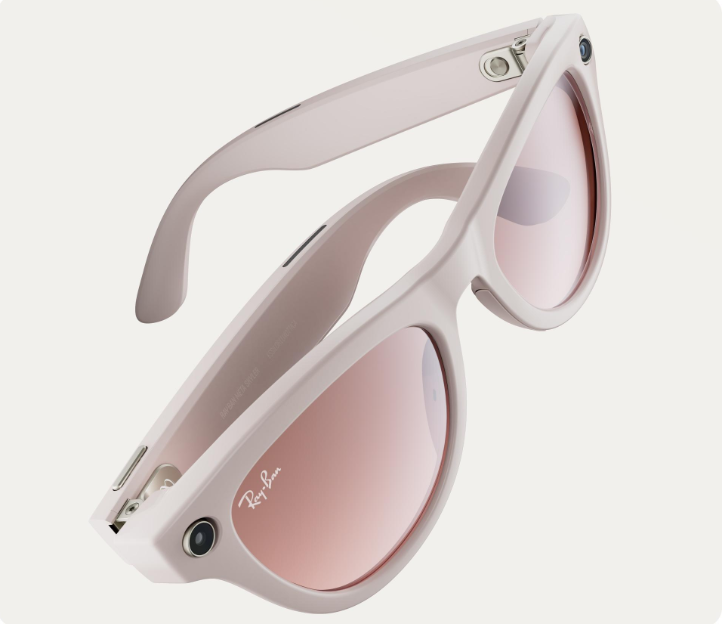
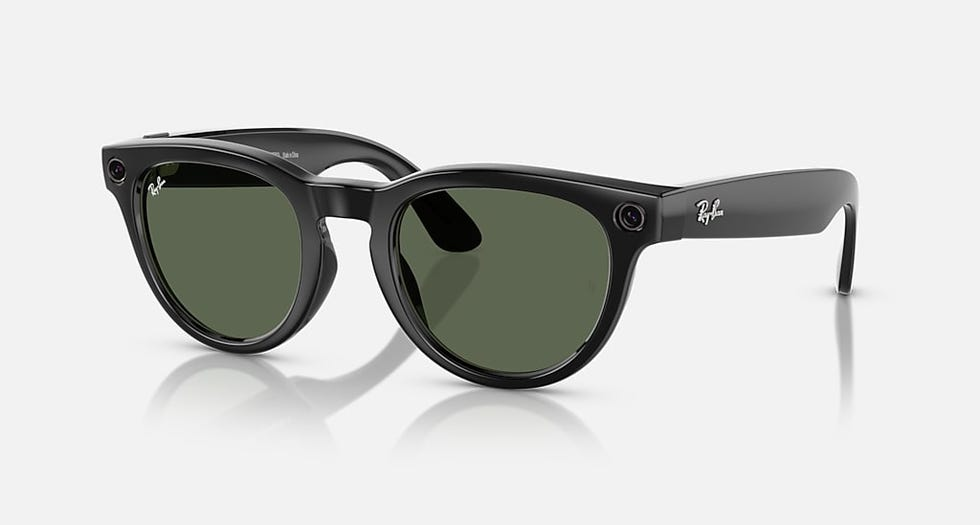
    Meta Ray-Ban smart glasses lead the industry with their lightweight design and AI capabilities, providing users with seamless intelligent experiences
    Meta Ray-Ban smart glasses lead the industry with their lightweight design and AI capabilities, providing users with seamless intelligent experiences

    From Voice Recognition Giant to AI Agent Pioneer

    iFlytek is no longer satisfied with an AI that can only “speak.”

    On April 15, 2025, the company famous for its voice recognition technology officially launched the AstronClaw upgrade, unveiling nine innovative products in one go and presenting for the first time a complete “software-hardware integrated” AI Agent architecture. The most eye-catching product at this launch event was a pair of AI glasses weighing just 40 grams—GlassClaw.

    “Our goal is not to create a conversational assistant, but to become the execution hub of the physical world,” iFlytek stated clearly at the launch event. This strategic shift means that large language model competition has already moved from algorithm benchmarking to a new battlefield of embodied intelligence and multimodal interaction.

    40 Grams: Technical Breakthrough Behind Lightweight Design

    While the industry is still debating the feasibility of AI glasses, GlassClaw has delivered an impressive answer with its 40-gram weight.

    A standard pair of prescription glasses weighs approximately 20 to 30 grams, while GlassClaw adds only 10 to 20 grams on top of that. This means users can virtually achieve all-day comfortable wearing, completely bid farewell to the traditional problem of smart glasses “pressing down on the nose bridge.”

    Supporting this lightweight design is a series of technological innovations. GlassClaw adopts a voice-visual collaborative perception architecture, achieving real-time environmental semantic completion through cloud-end linkage. Technically, GlassClaw has overcome two major challenges faced by AI glasses: lip movement recognition and remote sound capture. Even in high-noise environments, the device can accurately capture user voice commands, significantly improving usability in complex scenarios.

    AI smart glasses are evolving towards lightweight and stylish designs, balancing technological appeal with everyday wearing comfort
    AI smart glasses are evolving towards lightweight and stylish designs, balancing technological appeal with everyday wearing comfort

    Software-Hardware Integration: Redefining the AI Interaction Paradigm

    The release of GlassClaw represents not just a breakthrough in a single product, but also iFlytek’s reconsideration of the AI interaction paradigm.

    Traditional AI assistants are limited to cloud computing and screen-based interaction, where users must proactively initiate requests to receive services. The software-hardware integrated GlassClaw achieves end-cloud collaborative computing, enabling AI to proactively perceive the physical world, understand user intentions, and execute corresponding actions.

    Taking the Canton Fair itinerary planning as an example, the traditional approach requires users to manually search for information, write schedules, and enter them into calendar applications one by one. With GlassClaw, users simply issue a command, and the system automatically integrates local notes, online data, and personalized preferences to generate a complete itinerary and sync it to calendars and to-do lists.

    The transformation from “you ask, it answers” to “you tell, it does”—this shift is redefining the way humans collaborate with machines.

    Industry Landscape: AI Glasses Track Accelerates Restructuring

    GlassClaw’s entry has intensified competition in the AI glasses sector.

    Meta’s Ray-Ban smart glasses, launched in 2023, have sold over a million units cumulatively, becoming a benchmark product in the AI glasses field. Hardware giants like Samsung and Apple are also actively deploying, attempting to secure a position in this emerging track.

    The domestic camp is equally determined. In addition to iFlytek’s GlassClaw, companies like Baidu, Xiaomi, and Huawei are developing their own AI glasses products. Supply chain data shows that global smart glasses shipments increased by over 300% year-over-year in the first half of 2025, with the market scale expanding rapidly.

    Notably, AI glasses are forming a collaborative ecosystem with smart rings, pendants, and other wearable devices. iFlytek’s AstronClaw platform supports multi-device interconnection, allowing users to link GlassClaw glasses with smart rings for richer interactive experiences.

    Strategic Intent Behind Technical Roadmap

    The recruitment positions reveal glimpses of iFlytek’s technical ambitions.

    Recent job postings cover areas including smart location selection (spatial data modeling), global sales forecasting (supply chain operations optimization), Agent Skill development (MCP service architecture design), and multi-agent collaboration (complex business logic architecture). iFlytek aims to build not a laboratory demo, but a truly deployable AI Agent product.

    This strategic intent is clear: whoever masters software-hardware integration capabilities will build an ecosystem moat. In the increasingly intense competition of large language models, the end-cloud collaborative AI Agent ecosystem is expected to become enterprises’ new defensive barrier.

    Outlook: The Next Decade of AI Hardware

    The release of GlassClaw marks China’s entry into the “software-hardware integrated” era of AI Agents.

    With continued technological breakthroughs, AI glasses will become even more feature-rich. From basic voice interaction to complex multimodal perception, from single device control to full-scene intelligent connectivity—AI is moving from screens into reality, becoming a capable assistant in people’s lives.

    GlassClaw weighing 40 grams may just be a beginning. In the future, we can expect even lighter and smarter AI hardware products, fundamentally changing the way humans interact with machines.

    It’s not just an AI that can chat—it’s an AI that can get things done for you. iFlytek is serious this time.

  • A Truly Reliable Fire Safety Solution: Vicon Intelligent Sprinkler System

    A Truly Reliable Fire Safety Solution: Vicon Intelligent Sprinkler System

    Currently, the number of fires worldwide remains consistently high, posing significant safety hazards. Traditional fire rescue systems, considering time constraints and infrastructure limitations, often take 15-45 minutes to arrive at the scene and begin firefighting operations.

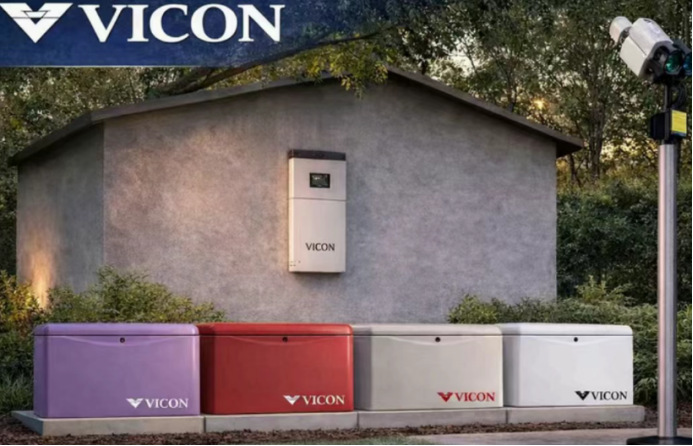
    Vicon Intelligent Sprinkler System
    Vicon Intelligent Sprinkler System

    During this time, ordinary people often can only use basic firefighting equipment or evacuate the scene immediately, helplessly watching their property being relentlessly consumed by flames.

    Addressing this safety gap, the Vicon Home AI Fire Protection System, developed by a team led by Chinese engineer Victor Duan, is breaking through with a “proactive defense” logic. It weakens the fire and reduces losses during the crucial time before firefighters arrive.

    This article, based on aicrunchx test data, breaks down the technical architecture and provides a truly reliable fire safety solution brought by AI fire protection systems.

    🔍 Why have traditional fire prevention equipment reached their limits?

    Data shows that the United States experiences over 380,000 residential fires annually, resulting in direct property losses exceeding $11 billion. Traditional smoke detectors can only provide “after-the-fact warnings” and cannot intervene in the early stages of a fire’s spread.

    Vicon’s core logic is to bring firefighting capabilities down to each household’s yard: through AI multispectral flame and smoke recognition and a thermal sensing array, it triggers an early warning tens of minutes before an open flame contacts the building, and activates a high-pressure water curtain to form a physical barrier.

    Vicon Product Matrix and Core Technical Parameters

    • AI Fire Source Recognition Engine: Equipped with a local edge AI chip, integrating temperature sensing and visual algorithms, it boasts a 99.99% accuracy rate, millisecond-level response, and can operate independently even without a network connection.
    • Adaptive High-Pressure Sprinkler Network: 360° wide-angle sprinklers can quickly cover the building facade, supporting dual-mode switching between solar and mains power, and compatible with residential water storage facilities such as yard swimming pools and rainwater collection tanks.
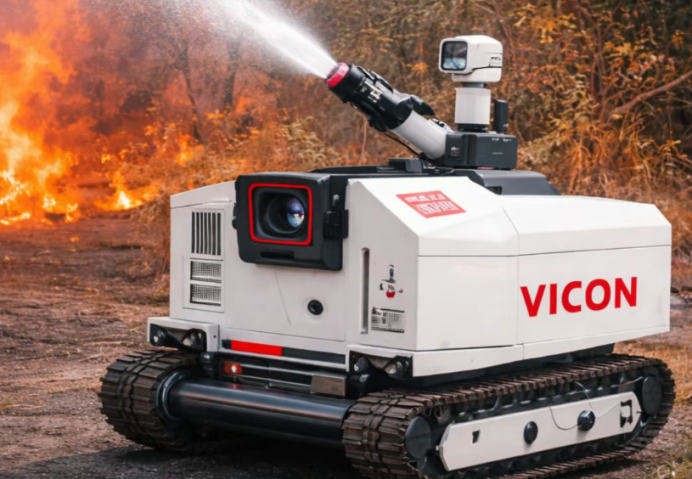
    • Third-Generation Mobile AI Firefighting Robot: Upgraded from “fixed protection” to “autonomous inspection + dynamic decision-making.” Built-in SLAM positioning and a local inference model, it can automatically track heat source trajectories and adjust the spray angle.
    • End-to-End Intelligent Hub: The accompanying APP supports real-time water pressure/power monitoring, seamless switching between automatic and manual modes, meets consumer-grade ready-to-use standards, and requires no structural modifications. Design Team: A Breakthrough in Engineering with a Chinese Team

    Vicon is not just a concept project, but a tangible technology company deeply rooted in hardware implementation. Founder Victor Duan has 20 years of experience in emergency equipment R&D, comes from a four-generation manufacturing family, and leads core structural design and supply chain quality control. Co-founder Janice Jia has 17 years of experience in North American channel operations, responsible for offline regional expansion and ecosystem integration with insurance/construction companies. The R&D team spans sensor algorithms, fluid dynamics engineering, and North American UL/CSA compliance certification, taking less than 5 months from proof of concept to mass production deployment. Currently, Vicon has completed joint testing with over 70 construction companies and 3 leading insurance companies, achieving cumulative revenue of millions of dollars.

    Vicon AI Firefighting Robot
    Vicon AI Firefighting Robot

    Purchase Guide: How to Determine if it’s Right for Your Home?

    • Target Audience and Scenarios: High Fire Risk (WUI) residential areas, timber/light steel villas, detached houses with independent water tanks, and homeowners seeking home insurance discounts.
    • Budget Reference (USD): The starting price for the first-generation fixed smart sprinkler system is approximately $2,499–$4,999 (fluctuating based on house size and sprinkler head number); the initial price for the third-generation mobile AI fire-fighting robot is approximately $12,500. Some partner insurance companies offer a $3,000/year premium credit or 0% interest installment plans.
    • Deployment and Compliance Recommendations: Before purchasing, confirm the roof drainage slope, exterior wall material, and water supply access distance; prioritize officially certified channels offering a 3-year hardware warranty + lifetime OTA firmware upgrades; it is recommended to register with the local fire department.

    Conclusion

    As AI moves from the cloud to the yard, home security is undergoing a generational leap from “passive alarm” to “active suppression.”

    Vicon, with its Chinese-made engineering efficiency and algorithmic precision, accurately fills the hardware gap in North American wildfire protection. For homeowners in high-fire-risk areas, this is not just a consumer-grade smart hardware device, but also an insurance-grade asset to withstand extreme weather. Stay tuned to aicrunchx for more AI hardware reviews, where we’ll guide you through understanding and using AI in the AI ​​era.