Introduction: When Glasses Become a Linux Computer
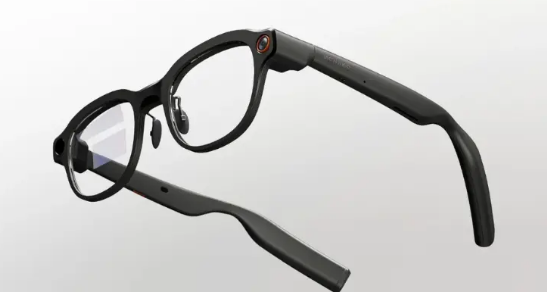
On June 3, an obscure Chinese startup named Monako dropped a bombshell: Monako Glass, the world’s first wearable Linux computer in glasses form. Not an AI assistant hanging on your glasses—the glasses themselves are a complete computer. MonoOS system, Lua application layer, Claude Code and OpenAI Codex running locally. Forty-eight grams, $399, $19 reservation.
Founder Candy Yue said something striking in the launch video: “I used to grind at the keyboard, but nowadays I just tell the computer what I want, and the AI builds it for me.” This sentence precisely captures Monako Glass’s ambition—not letting you operate a computer with glasses, but making the glasses themselves your AI coding workstation.
Product Overview: A Niche Geek’s Crazy Experiment
Monako is a Chinese startup with unclear team background, but its product vision is crystal clear: jump out of the homogeneous AI glasses track of “camera + music + voice assistant” and directly target developers and researchers. Candy Yue’s demo video on X shows users generating applications, executing research tasks, creating presentations, and even converting handwritten formulas to LaTeX code in real-time through voice commands.
This positioning is extremely niche yet extremely precise. In the era when AI agents evolve from “code completion” to “autonomous debugging, code review, and automated workflows,” developers do need a more lightweight way to supervise AI completing tasks. Monako Glass wants to move this “supervision desk” from the desktop to your nose bridge.
Specifications: How Much Crazy Fits in 48 Grams
| Spec | Details |
|---|---|
| Operating System | MonoOS (custom Linux) |
| Application Layer | Lua (200-500KB memory footprint) |
| Weight | 48g |
| Display | Waveguide display |
| Camera | HD camera |
| Speaker | Built-in speaker |
| Microphone | Bone-conduction (nasal vibration capture) |
| Gesture Interaction | Vision Engine (0.5 TOPS NPU) |
| AI Support | Claude Code, OpenAI Codex |
| Interaction | Voice commands + gestures + heads-up display |
| Price | $399 ($19 reservation) |
| Estimated Shipping | July-August 2026 |
Data source: Monako official launch materials, Digital Trends, Times of AI
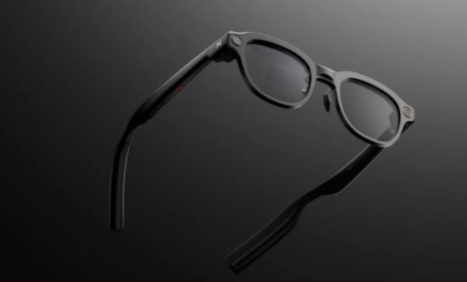
MonoOS is Monako’s self-developed Linux distribution, with a core feature of being lightweight—the Lua application layer uses only 200-500KB of memory. This means applications can still run smoothly on resource-constrained embedded devices. In comparison, a typical Android app consumes dozens of MB of memory, making MonoOS’s lightweight design enable running complex AI agents on glasses.
The bone-conduction microphone design is clever: placed near the nose rather than the ear, capturing voice through vibrations of bones near the nasal cavity. This design effectively separates user voice from background noise in noisy environments like coffee shops and offices, more precise than traditional microphone arrays.
The Vision Engine gesture system relies on a 0.5 TOPS NPU, supporting operations like raising hand to summon menus, tapping to select apps, and sliding to adjust volume. Half a TOPS is not powerful, but sufficient for simple gesture recognition, and the power consumption is low enough—crucial for battery-sensitive glasses devices.
Deep Analysis: Can It Actually Write Code?
Monako Glass’s core selling point is “AI agent running 24/7.” The official demo shows several enticing scenarios:
Voice-Driven Development: Say “create a to-do app,” and the AI agent generates code, debugs, and builds in the background, notifying you via vibration or voice prompt when done. You can check progress on the heads-up display and intervene via voice when necessary. This workflow eliminates the need to sit in front of a computer screen, suitable for “asynchronous programming” during commutes, waiting in lines, or even walking.
Handwritten Formula to LaTeX: Researchers write formulas with pen and paper; the glasses camera captures and converts them to LaTeX code in real-time. For math, physics, and engineering researchers, this saves significant manual input time.
Cross-Device Collaboration: Monako Glass is not an isolated device. It can serve as a “front end” for Mac or PC, with agents running on cloud or local servers while the glasses only handle input, output, and status display. This “light front-end + heavy back-end” architecture solves the glasses’ computing power limitation.
But problems are equally obvious:
Battery Life Unannounced: The 48-gram weight suggests an extremely limited battery. If AI agents run 24/7, battery life might be only 1-2 hours. The fact that official battery specs remain unannounced is a red flag.
Chip and Storage Unknown: Processor model, memory size, and storage capacity are all unannounced. Running Linux plus AI agents requires at least 4GB memory and a mid-range Arm chip—whether the 48-gram body can fit these hardware components is questionable.
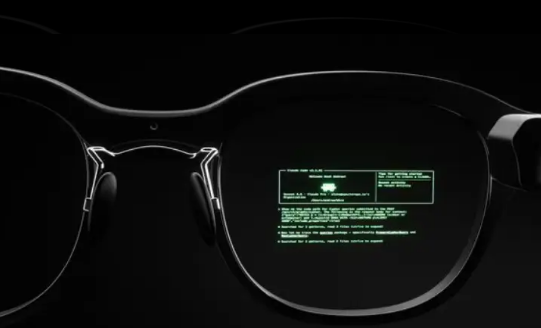
Display Quality Uncertain: A waveguide display in a 48-gram body likely has limited resolution and brightness. Will reading code for long periods cause eye fatigue? Is it readable in bright outdoor light? All unknown.
Privacy Paradox: Monako emphasizes “privacy first” because AI agents run locally without data leaving the device. But the camera on the glasses always exists. Wearing a Linux computer with a camera in public spaces raises social acceptance issues. Monako has not yet clarified whether the camera has physical遮挡 or LED indicators.
Comparison: Monako Glass vs Meta Orion vs Apple Vision Pro
| Feature | Monako Glass | Meta Orion AR | Apple Vision Pro |
|---|---|---|---|
| Weight | 48g | 100g (prototype) | 600-650g |
| Price | $399 | Unannounced (premium expected) | $3,499 |
| Positioning | AI coding workstation | Social + AR display | Spatial computing platform |
| OS | MonoOS (Linux) | Custom Android | visionOS |
| AI Capability | Claude Code/Codex local | Cloud AI | Cloud + local hybrid |
| Display | Waveguide | 70°FOV transparent | 4K Micro-OLED |
| Camera | Yes (privacy policy unclear) | Yes | Yes |
| Target Users | Developers, researchers | General consumers | Professional users + early adopters |
Monako Glass takes a completely different path. Meta and Apple are building “next-generation general computing platforms,” while Monako is building “specialized tools for specific scenarios.” At $399—one-ninth the price of Vision Pro and one-thirteenth the weight—but functionality is also much narrower. It doesn’t do AR games, spatial video, just one thing: letting developers supervise AI agents writing code anytime, anywhere.
This strategy is smart. In the AI agent era, “human-computer interaction” is shifting from “humans operating software” to “humans supervising AI completing tasks.” Monako Glass bets that: in the future, not everyone needs a high-performance computer, but every developer needs a lightweight “agent supervision terminal.”
Pros and Cons
| Pros | Cons |
|---|---|
| World’s first glasses-form Linux computer, concept ahead of its time | Core specs like battery, chip, storage unannounced |
| 48g relatively lightweight for extended wear | Waveguide display quality uncertain, code reading experience unknown |
| Local AI agent execution, good privacy protection | Camera privacy issues not clearly addressed |
| Bone-conduction microphone, clear voice in noisy environments | $399 pricing relatively high for a startup brand |
| Voice + gesture interaction, hands-free | Extremely weak ecosystem, nearly zero third-party apps |
| Precise targeting of developer pain points | Shipping July-August, actual experience to be verified |
Who Should Buy
Recommended for:
- Developers who frequently need “asynchronous programming” (advancing projects during commutes or waiting)
- Researchers needing to capture inspiration and convert formulas anytime
- Early AI agent adopters willing to try new interaction forms
- Privacy-sensitive users who don’t want code data on the cloud
Not recommended for:
- Professional developers needing long immersive coding sessions (screen too small)
- Users demanding brand stability and after-sales service (startup risk)
- Budget-constrained users—$399 can buy a decent laptop
- Socially sensitive users unwilling to wear camera-equipped glasses
FAQ
Q: Can Monako Glass replace my laptop?
A: No. It is better suited as an “agent supervision terminal” rather than a “primary workstation.” Complex debugging, large-screen code review, and multi-window operations still require returning to a desktop environment.
Q: Can MonoOS install regular Linux software?
A: Official compatibility is unclear. MonoOS is based on the Linux kernel, but the Lua application layer means regular Linux applications need porting or redevelopment.
Q: Is the $19 reservation a deposit or full payment?
A: The $19 is a reservation fee, not full payment. Specific final payment timing and refund policies need to be confirmed with official channels.
Q: Does it support prescription lenses?
A: Official information has not been announced. The 48-gram body has limited space, and custom lenses may add weight and thickness.
Conclusion
Monako Glass is a device where “concept exceeds product.” It raises a highly forward-looking question: when AI agents can autonomously complete most coding tasks, what hardware do developers need to “supervise” this process? The answer may not be bigger screens or stronger CPUs, but a lightweight pair of glasses that keeps you connected to your agent in any scenario.
But a forward-looking concept doesn’t mean a mature product. Battery, display, ecosystem, privacy—these fundamental questions remain unanswered by Monako. At $399, the pricing carries no small risk for a first-generation product from a startup.
If you are a developer willing to pay for future interaction forms, Monako Glass is worth a try. But if you need a reliable “works right now” productivity tool, I recommend waiting for first-batch user feedback in July-August before deciding.
Leave a Reply