Introduction: Do People Who Made Kids’ Watches Understand What Elders Need?
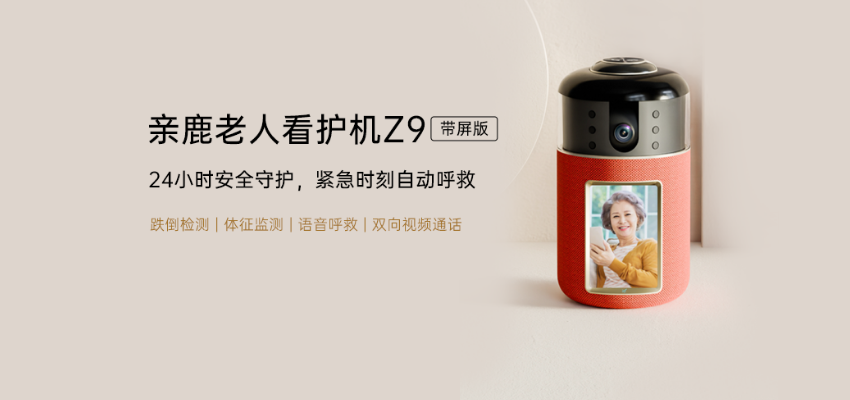
Recently an interesting player emerged in the eldercare track: YuanSheng Intelligence. Founder Deng Longsheng previously led Xiaotiancui learning tablet products; co-founder Fang Shaojie worked on Xiaotiancui phone watches and Huohuotu; marketing lead Li Ge comes from rehabilitation robotics. This team just secured over 10 million yuan in Pre-A funding, generates nearly one million yuan monthly revenue, and exports products overseas.
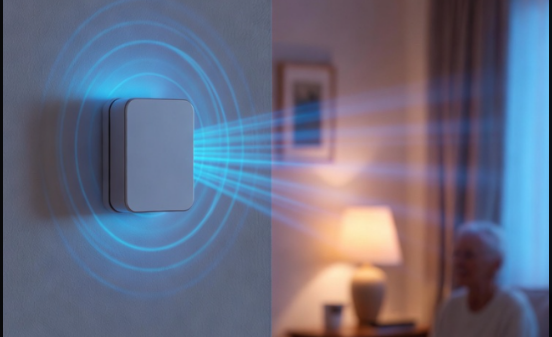
Their Qinlu elderly care monitor’s core selling point is “wear-free, disturbance-free” fall detection. Not cameras constantly recording, but millimeter-wave radar fused with vision-based large model solutions—monitoring through air whether seniors have fallen, whether heart rates are normal, whether breathing is stable. With over 280 million people aged 60+ in China and a massive base of empty-nest seniors living alone, this market is certainly large enough. But the question remains: can a team experienced in children’s products replicate that success in eldercare scenarios?
Product Overview: Switching Tracks from Kids to Silver Economy
Qinlu currently has two product lines: the Z9 series and D series. The first Z9 launched in early 2025; in 2026 the fall detection model was upgraded, introducing the D series and refreshed Z9E. Core functions center on three scenarios: fall detection, heart rate and respiration monitoring, and remote care.
YuanSheng’s supply chain cost control approaches major manufacturer levels, thanks to hardware manufacturing and channel resources accumulated during the Xiaotiancui era. Pricing strategy targets the mid-range—cheaper than professional medical-grade equipment, more expensive than traditional camera solutions, occupying the gray zone between “consumer electronics” and “medical devices.”
Specifications: Millimeter-Wave Radar Plus Vision Fusion, Achieving Privacy Without Invasion
| Spec | Details |
|---|---|
| Detection Technology | Millimeter-wave radar + vision fusion large model |
| Fall Detection | Hybrid large model fusion technology |
| Heart Rate | Millimeter-wave radar remote detection |
| Respiration | Millimeter-wave radar real-time monitoring |
| Alert Method | Automatic family member APP notification |
| Target Users | Empty-nest/solo seniors aged 65+ |
| Installation | Non-wearable, fixed placement |
| Network | Wi-Fi/4G |
Data source: YuanSheng Intelligence official materials
Millimeter-wave radar’s advantage lies in “perception-free” operation: no devices for seniors to wear, no cameras recording 24/7. Radar waves penetrate clothing to detect body posture changes, with visual modules providing auxiliary confirmation; both feed into large models to determine actual falls. This approach protects privacy better than pure cameras and offers more convenience than wearables—seniors need not remember charging or wearing devices.
But millimeter-wave radar has limitations: accuracy suffers environmental interference (metal furniture, pet activity), and slow sliding falls are harder to detect than sudden tumbles. YuanSheng’s solution is “hybrid large model fusion,” feeding radar data, visual data, and historical behavior data together into the model to improve recognition accuracy in complex scenarios.
Deep Analysis: Where Is the Real Demand in Elderly Consumer Electronics
China’s population aged 60+ exceeds 280 million, with empty-nest and solo seniors comprising an increasing share. Traditional eldercare solutions fall into two categories: professional eldercare institutions (high cost, bed shortages) and remote family monitoring (children cannot stare at phones 24/7). Qinlu targets precisely the middle ground—real-time safety monitoring for home-based eldercare.
Fall Detection Pain Point: Falls are the leading cause of accidental injury death among seniors over 65. Existing solutions either rely on cameras (privacy invasion, senior resistance) or wearables (forgetting to wear, forgetting to charge). Qinlu’s non-wearable solution addresses both pain points.
Heart Rate and Respiration Value: Millimeter-wave radar can remotely detect heart rate and breathing frequency, automatically alerting when rates are too low or high. This suits seniors better than smartwatches—no operation needed, no screen to read, with family phones receiving notifications directly when anomalies occur.
Remote Care Boundaries: Qinlu provides remote viewing, but core logic is “notify only on anomalies” rather than “peek anytime.” This design balances safety needs with privacy respect, making seniors more likely to accept.
Comparison: Qinlu vs Professional Medical Devices vs Consumer Cameras
| Feature | Qinlu Z9/D Series | Professional Medical Monitors | Consumer Smart Cameras |
|---|---|---|---|
| Detection | Millimeter-wave radar + vision | Professional sensors + doctor review | Pure visual AI |
| Privacy | High (radar-primary) | Medium (requires contact) | Low (continuous recording) |
| Ease of Use | Low (non-wearable) | High (requires professional operation) | Low (plug and play) |
| Price | Mid-range | High (thousands of yuan) | Low (hundreds of yuan) |
| Alert Speed | Real-time automatic | Requires human intervention | Cloud-dependent delay |
| Medical Certification | None | Has medical device qualification | None |
Qinlu’s positioning is clear: more accurate and private than camera solutions, cheaper and easier than medical devices. It is not medical equipment but “consumer electronics-grade safety guardianship.”
Pros and Cons
| Pros | Cons |
|---|---|
| Non-wearable design, high senior acceptance | Millimeter-wave radar affected by environment |
| Radar + vision fusion, relatively accurate detection | Slow fall recognition remains challenging |
| Privacy-friendly, no continuous recording | No medical device certification, cannot replace professional diagnosis |
| Strong team supply chain, good cost control | Low brand recognition, channel expansion needs time |
| Automatic family alerts, timely response | Requires home network environment support |
Who Should Buy
Recommended for:
- Families with solo/empty-nest seniors aged 65+
- Children working remotely needing remote care capabilities
- Families with privacy concerns about camera monitoring
- Middle-class families with limited budgets seeking improved senior home safety
Not recommended for:
- Chronic patients requiring medical-grade precision monitoring
- Complex living environments (multiple pets, extensive metal furniture)
- Families where seniors are extremely resistant to new technology
FAQ
Q: How accurate is Qinlu’s fall detection? A: Official specific accuracy data has not been published, but the millimeter-wave radar + vision fusion + large model approach is theoretically more reliable than single-sensor solutions. Recommend testing in your specific home environment before evaluating.
Q: Can heart rate and respiration data serve as medical reference? A: No. Qinlu is a consumer electronics product, not a medical device. Monitoring data is for reference only and cannot replace professional medical diagnosis.
Q: What if seniors resist being “monitored”? A: Qinlu is designed with “notify only on anomalies” mode, without continuous recording or daily push notifications, reducing seniors’ sense of surveillance. Recommend thorough communication with seniors before installation.
Conclusion
YuanSheng Qinlu’s value lies not in cutting-edge technology but in precisely targeting an overlooked刚需: the “golden rescue window” after elderly falls. The Xiaotiancui team’s experience—understanding user psychology, controlling supply chain costs, building channel networks—unexpectedly translates to eldercare scenarios.
But eldercare consumer electronics challenges exceed children’s products: senior acceptance of new technology, the disconnect between purchasing children and actual users, and medical compliance boundaries are all hurdles YuanSheng must tackle one by one. The market of 280 million elderly is large enough, but who can truly create products seniors want to use and families feel confident buying remains to be verified by time.
Leave a Reply