Introduction: 200 AI Features with Under 6% Usage Rate, RayNeo Claims They Found the Right Answer
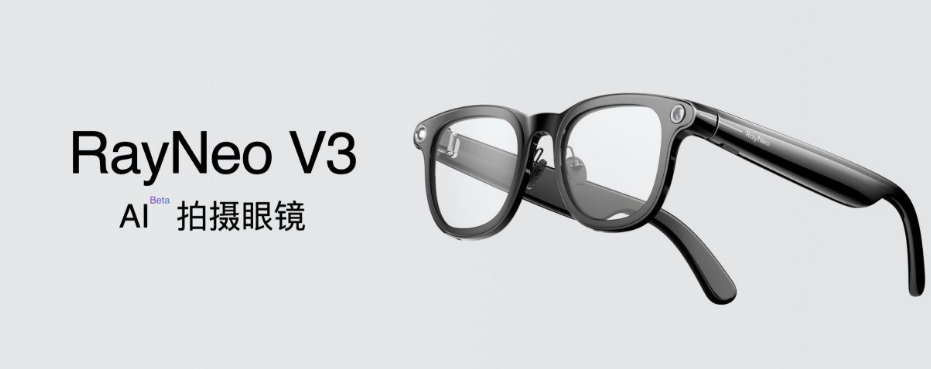
Seeing the number “200 AI features,” my first reaction was: they must be counting every filter separately, right? But after getting hands-on with the RayNeo V3, I discovered it takes a completely different path from the Vidda G11—while Vidda subtracts, RayNeo adds. Launch price 1799 yuan, now dropped to 973 yuan, packing Sony IMX681 and Snapdragon AR1. This configuration would have cost at least 2500 yuan six months ago. The question is: do more features equal better usability? Let’s unbox and test.
Product Overview: TCL-Backed Brand’s AI Glasses Ambition
RayNeo Innovation is an AR/AI glasses brand incubated by TCL, previously focused on AR headsets. This pivot to lightweight AI glasses clearly aims to capture the entry-level market in the “Hundred Glasses Battle.” The V3’s positioning is clear: young people’s first AI glasses, bundling photography + AI recognition + voice interaction, skipping complex AR displays to drive the price down.
The design follows the classic black frame route, looking little different from ordinary glasses except for slightly thicker temples (needed to fit battery, motherboard, and camera). Weight stays within reasonable limits, with no obvious pressure during extended wear.
Specifications: Sony + Qualcomm, No Cutting Corners
| Spec | Details |
|---|---|
| Sensor | Sony IMX681 |
| Platform | First-generation Snapdragon AR1 |
| Camera | Single camera, photo/video support |
| AI Features | 200+ scenario-based functions |
| Audio | Open-ear directional speakers |
| Interaction | Voice + touch |
| Weight | ~39g |
| Battery | ~4-6 hours continuous use |
| Connectivity | Bluetooth + WiFi |
| Storage | Local + cloud |
Data source: RayNeo Innovation official specs
The Sony IMX681 is a mature smartphone-grade sensor; putting it on glasses means photo quality far exceeds “acceptable” levels. The Snapdragon AR1 is Qualcomm’s platform specifically designed for lightweight AI glasses, with core advantages in power consumption control—after all, glasses batteries are tiny.
Performance Analysis: 200 AI Features, Which Ones Actually Matter
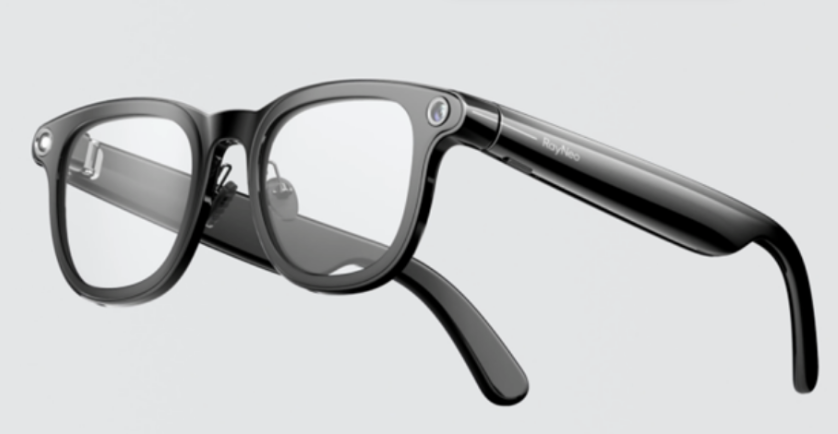
The V3’s AI functions fall into several categories:
Photo Recognition: See an unfamiliar flower, car, or product? Snap a photo and AI automatically identifies it with information. Tested recognition accuracy is solid, but response speed depends heavily on network conditions. In museums viewing exhibits or malls checking product labels, this is indeed more convenient than pulling out your phone.
Real-Time Translation: Looking at foreign menus or street signs? AI translates in real-time and displays through the mobile app. Valuable for international travel, but translation quality lags behind dedicated translation apps.
Voice Assistant: Check weather, set reminders, play music—basically overlapping with smartphone voice assistants. Advantage: no need to pull out your phone. Disadvantage: recognition accuracy affected by ambient noise.
Social Sharing: Snap and directly share to social platforms. This workflow is faster than phone photo-select-send, but image quality and editing features trail smartphones.
Honestly, among 200 functions, probably fewer than 20 see regular use. But RayNeo’s smart move is handing choice to users—you pick which scenarios you want, rather than forcing everything on you. This “scenario-based AI” approach fits actual usage habits better than “all-purpose AI.”
Comparison: RayNeo V3 vs Meta Ray-Ban vs Vidda G11
| Feature | RayNeo V3 | Meta Ray-Ban | Vidda G11 |
|---|---|---|---|
| Price | 973 yuan (after drop) | ~$299 | 1104 yuan (after subsidy) |
| Camera | Yes (Sony IMX681) | Yes | No |
| AI Features | 200+ scenario-based | Social + basic AI | Office-focused |
| Audio | Open-ear | Open-ear | Directional + Vifa tuned |
| Weight | ~39g | ~49g | 26.5g |
| Positioning | Entry AI photography | Social entertainment | Mobile office |
Three glasses, three paths: Meta for social, Vidda for office, RayNeo for exploration. The V3’s advantage is extreme cost-performance—973 yuan for glasses with a Sony camera and 200 AI functions, what more could you want? But if you already know exactly what you need, Vidda (office) or Meta (social) might be more specialized.
Pros and Cons
| Pros | Cons |
|---|---|
| Extremely low price, 973 yuan barrier-friendly | Many features lack depth |
| Sony sensor, photo quality is solid | 4-6 hour battery life is short |
| 200 AI scenarios, highly exploratory | Some AI functions depend on network |
| Open-ear audio, good environmental awareness | Thicker temples, average aesthetics |
| Snapdragon AR1 platform, good power control | Lower brand recognition |
Who Should Buy
Recommended for:
- Students/young people wanting to try AI glasses on a budget
- Tech enthusiasts who love exploring new features
- Frequent travelers/exhibition visitors needing photo recognition
- Vlog creators wanting first-person perspective shots
Not recommended for:
- Business professionals seeking professional office functions
- Heavy users with high battery life demands
- Consumers valuing brand premium and social status
FAQ
Q: Are the 200 AI features free? A: Basic functions are free; some advanced AI features may require subscription or per-use fees, subject to official policy.
Q: How does photo quality compare to smartphones? A: The Sony IMX681 is capable, but limited by glasses form factor and optical design. Overall quality matches mid-range phone main cameras, with noticeable gaps in low-light conditions.
Q: Does it support prescription lenses? A: Yes, prescription customization is available, but adds weight and thickness.
Conclusion
The RayNeo V3 is a pair of AI glasses that lets you “get on board first.” With extreme cost-performance at 973 yuan, it lowers the AI glasses entry barrier below 1000 yuan, letting more people experience the futuristic feeling of “wearing glasses to photograph, recognize, and interact.” While most of the 200 AI features see low usage frequency, this “scenario-based AI” exploration direction is correct—letting users discover what they truly need rather than being led by AI.
If you’ve always been curious what AI glasses can do but don’t want to spend 2000 yuan to find out, the V3 may be the most cost-effective ticket available. But if you already know whether you need office assistance or social sharing, the Vidda G11 or Meta Ray-Ban would be more precise choices.
Leave a Reply