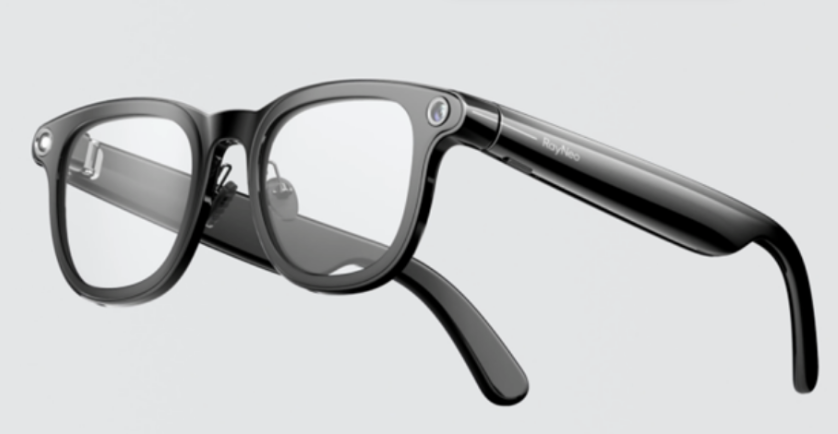
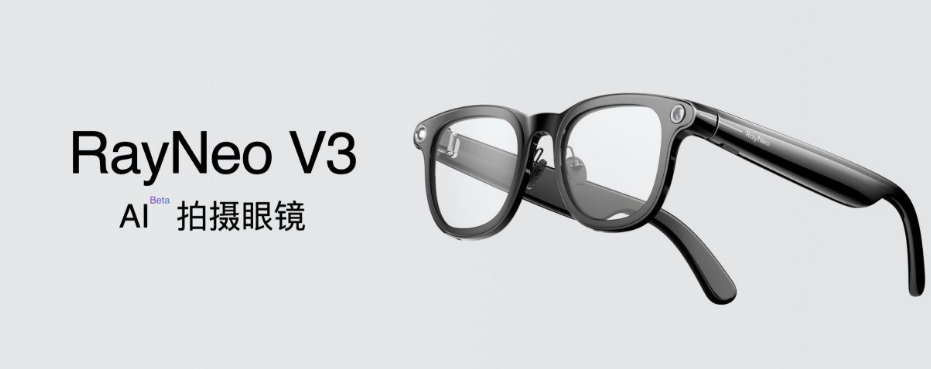
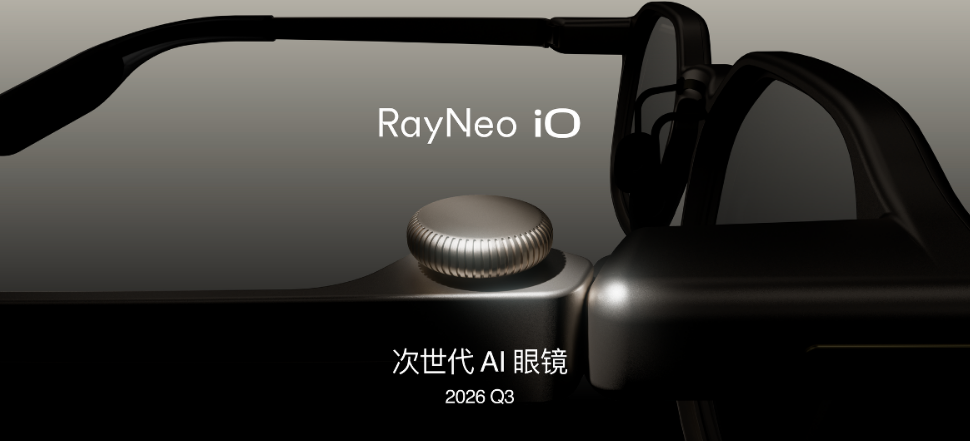
The AI eyewear sector has long faced a dilemma: prioritizing photography and visual recognition results in bulky frames and significant privacy concerns, whereas focusing on a lightweight, everyday design often means drastically reduced AI capabilities. On August 21, RayNeo launched the RayNeo iO All-Day Active AI Glasses, offering a novel solution: by eliminating the camera and external speakers, the device allocates all available hardware space and power resources to binocular waveguide displays, high-quality audio pickup, and on-device AI processing. Positioned as “AI glasses for human augmentation,” the product focuses on all-day memory assistance, aiming to be a smart wearable that is truly suitable for all-day outdoor use.
Design and Wearability: A Lightweight 34g Build Closely Resembling Standard Optical Glasses
Weighing in at just 34 grams, the device’s lightweight nature is a standout hardware feature. It sports a polygonal “Crown Panto” frame design, featuring a magnesium-aluminum alloy front and dual-layer titanium alloy temples. With a minimum frame thickness of only 1.15mm, it comes in two versatile, professional colorways—Midnight Black and Dune Light Gray—making it suitable for both casual and office settings.
The weight distribution is balanced between the front and back; the motherboard and battery are positioned at the rear of the temples, preventing the front-heavy imbalance common in traditional AR glasses that often causes uncomfortable pressure on the bridge of the nose during prolonged wear. The product officially supports integrated prescription lens customization (0–1000 degrees), maintaining a sleek, lightweight profile without the need for bulky clip-on attachments, thereby offering a more seamless and unified aesthetic. The optical system features the proprietary Blue Lake (Lanhu) optical waveguide—a three-layer micro-nano optical structure. It achieves 93% light transmittance in the grating display area and over 98% in non-display areas; the display grating inside the lens is virtually invisible when viewed head-on, significantly reducing the jarring, overly “tech-heavy” look typical of traditional waveguide glasses. Paired with the Firefly (Yinghuo) Nano light engine—which has a volume of just 0.085cc (smaller than an adzuki bean)—it delivers binocular display capabilities. This creates an equivalent 33-inch virtual screen with an eye-facing brightness of up to 1800 nits, ensuring text remains clearly readable even in bright outdoor light.
Regarding optical quality, it boasts a Delta E color difference index of 2.52 and effectively minimizes rainbow artifacts, color shifts, and light leakage. It meets the EU EN ISO 12312-1 safety standard for lenses and holds TÜV SÜD certifications for flicker-free performance and low blue light emission, reducing eye strain during prolonged reading. It also supports full-range DC dimming for customizable brightness control.
The interaction design balances “blind” operation with natural interaction: the right temple features a Smart Crown that supports rotation, pressing, double-clicking, and long-pressing, allowing for menu navigation and confirmation with one hand. It also supports head-gesture recognition—nodding to confirm and shaking the head to cancel—which, combined with voice commands, enables hands-free operation and minimizes the need to raise one’s arm.
Core AI Capability: RayNeo All-Day Memory Engine – A Portable Assistant for Professionals
A key selling point of the RayNeo iO is its proactive, all-day AI. Powered by the RayNeo Memory Engine, it natively integrates two major large language models—DeepSeek V4 Pro and Tongyi Qianwen 3.7 Max—with plans to support Kimi K3 in the future. Unlike passive voice assistants, it continuously captures conversational data and structures long-term personal memories, going beyond the limitations of isolated Q&A sessions. Key Feature Breakdown:
- All-Day Smart Recording (Meeting Minutes): Features a 4-microphone array combined with bone conduction audio pickup; capable of distinguishing between multiple speakers and tagging them individually. Supports up to 18 hours of continuous recording and transcription, with AI automatically distilling key conversation points, generating structured minutes, and extracting action items and deadlines—eliminating the need for manual post-meeting transcription. Ideal for business meetings, interviews, and lectures.
- Real-Time Translation & AI Teleprompter: Supports real-time translation across 55 languages and 109 accents, with a translation mode lasting 6.2 hours. Built-in teleprompter functionality projects text directly onto the optical waveguide display—discreet and unobtrusive—making it perfect for interviews, speeches, and external business communications.
- Lightweight Information Dashboard: Displays a customizable dashboard floating within the field of view, showing schedules, to-do lists, weather, world clocks, stock updates, and mobile notifications. Glance up briefly to preview information without constantly reaching for your phone, thereby reducing distractions and boosting focus.
Battery Performance: Offers up to two days of battery life with standard daily use, freeing users from the daily charging routine typical of traditional smart glasses. Optional accessories include a dedicated charging clip and a 2000mAh portable charging case (capable of five full recharges), making it an excellent choice for users on extended business trips or fieldwork.
Privacy & Security: Camera-free design eliminates concerns regarding covert recording
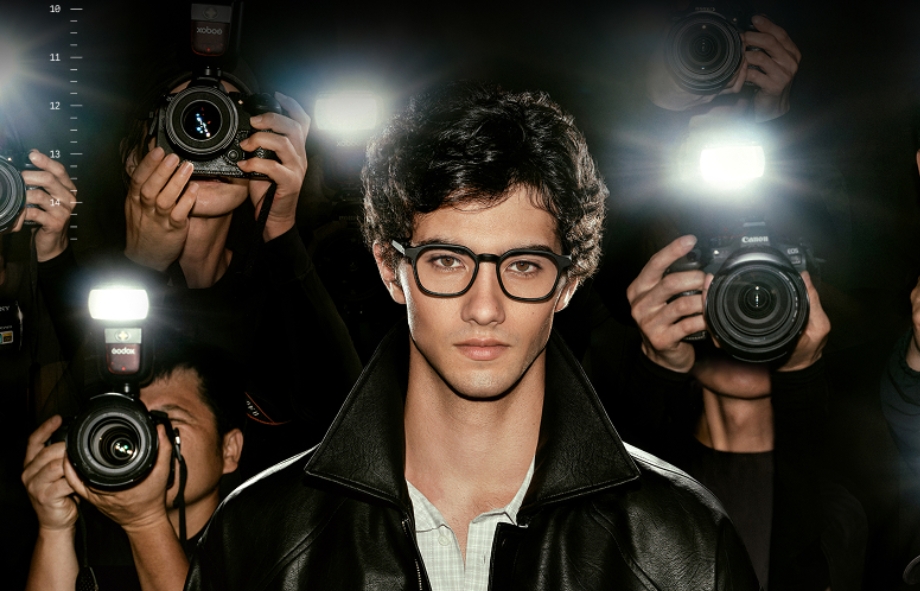
This is the key differentiator for the RayNeo iO: the device completely omits the camera and lacks first-person recording capabilities. By eliminating the hardware responsible for covert recording, it removes privacy concerns in public spaces, allowing users to wear the device with greater peace of mind—whether commuting, in a café, or in a meeting room.
Supported by multi-layered privacy protections: a hardware indicator light remains on during recording to clearly alert those nearby; raw conversation data undergoes on-device anonymization and local encryption; users can view or delete local records at any time, and data can be remotely locked if the device is lost. The device has passed multiple domestic and international security compliance certifications, ensuring users retain full control over their data. ## Limitations and Trade-offs: Streamlined Functionality and Clear Positioning—Not an All-Rounder AR Glass
An objective review requires acknowledging the product’s trade-offs; the RayNeo iO is a specialized AI wearable designed for productivity, not a general-purpose AR device:
- No Camera or Built-in Speakers: It does not support first-person POV recording, image recognition, or video capture. Audio responses are displayed as text on the lenses, requiring users to pair their own headphones to hear voice replies.
- Monochromatic Green Display: It only supports displaying text and card-based information in a single color; it cannot play color videos or images and is not designed for multimedia entertainment.
- Inherent Waveguide Limitations: Faint grating reflections may still be visible under strong side lighting, and slight rainbow artifacts (a common characteristic of diffractive optical waveguides) may appear in environments with point light sources at night.
- Prescription Lens Requirements: Custom prescription inserts must be ordered at the time of purchase; lenses cannot be swapped at standard optical shops, resulting in a longer fulfillment time.
Pricing and Purchasing Advice
The official price is 2,349 RMB (limited-time launch offer), with a starting price of 1,996 RMB after applying government subsidies. The charging case is sold separately for 349 RMB, while the bundle starts at 2,250 RMB after subsidies; sales are available simultaneously via online e-commerce platforms and offline optical retail channels.
✅ Target Audience: White-collar professionals, consultants/interviewers, frequent attendees of meetings and training sessions, those needing on-the-go note-taking and cross-language communication, and users prioritizing lightweight, unobtrusive AI wearables and data privacy.
❌ Not Suitable For: Consumers seeking first-person vlog recording, multimedia viewing, image recognition, or all-around AR entertainment features; such needs are better met by the RayNeo V4 camera glasses series.
Summary
The RayNeo iO redefines the development trajectory of consumer AI glasses: moving away from piling on imaging and entertainment features, it returns to the fundamental nature of glasses as “everyday eyewear.” By combining a lightweight 34g frame, high-transparency “Blue Lake” optical waveguides, and an all-day AI memory engine, it creates a portable memory assistant designed for workplace productivity. The camera-free hardware design resolves the privacy concerns that have long plagued the industry, while the two-day battery life makes all-day usage a reality.
It is not an all-powerful AR device straight out of a sci-fi movie, but rather a practical piece of wearable hardware designed for productivity. If your primary needs are meeting transcription, real-time translation, and schedule management—and you want a pair of AI glasses that are unobtrusive enough for daily wear—the RayNeo iO is a highly competitive choice; however, if you are looking for multimedia capabilities like photography or video viewing, you will need to weigh the trade-offs.