Within the landscape of Silicon Valley health tech, Eight Sleep has long occupied a unique niche: it positions itself not merely as a mattress company, but rather as the architect of a “sleep operating system.” With the launch of its latest flagship product—the Pod 5 Core—the startup has once again directed consumer attention toward a primal yet often-overlooked human need: temperature regulation.
However, the product’s steep price tag—clocking in at $2,999—coupled with a mandatory bundled monthly subscription service, has sparked heated debate within the market. Is this a truly revolutionary investment in personal health, or merely another “subscription-model” experiment by tech giants probing the limits of consumers’ wallets?
The Logic of Water: Microclimate Management Beyond Air Conditioning
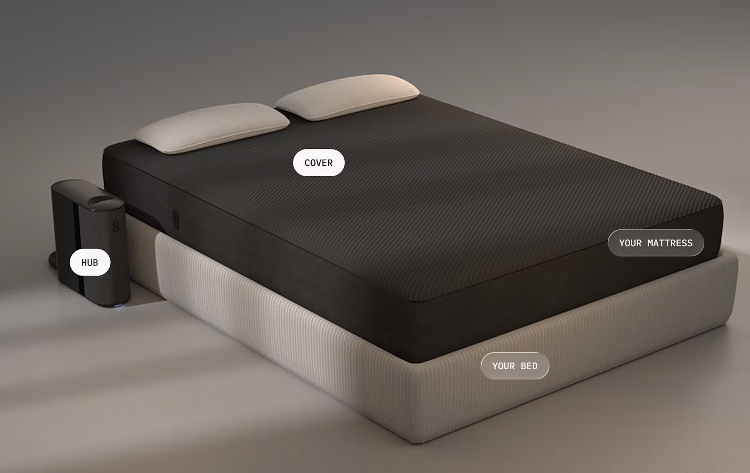
The Pod 5 Core’s core competitive advantage lies in its departure from traditional air-based climate control logic, opting instead for a dynamic water-circulation system. By weaving ultra-fine water tubes directly into the bedding—connected to a “Hub” unit situated beside the bed—the system can precisely extract or deliver thermal energy with an efficiency far exceeding that of air.
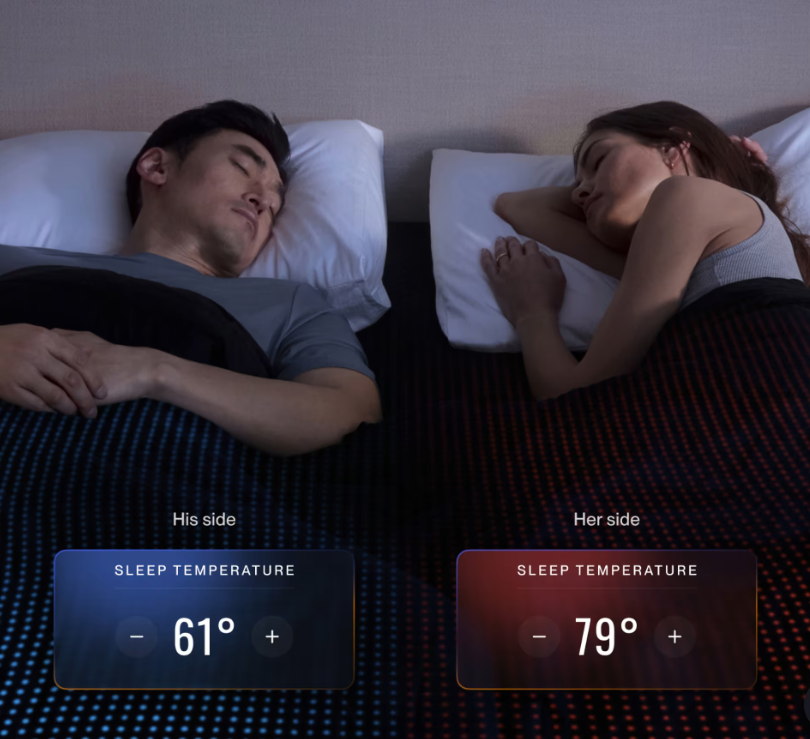
The benefits of this technological approach become particularly evident in real-world testing. Traditional air conditioning systems often struggle to resolve the classic domestic conflict where “one partner runs cold while the other runs hot”; the Pod 5 Core’s Dual-Zone control feature, however, allows the left and right sides of the bed to maintain entirely distinct temperatures. Even more crucial is the “seamless” nature of its algorithmic intervention: during the sleep onset phase, the system automatically lowers the temperature to approximately 13°C (55°F), leveraging the physiological signal of a dropping core body temperature to accelerate the transition into sleep; conversely, during the deep sleep phase, it makes subtle temperature adjustments to prevent the sleeper from getting too cold. This proactive management of the sleep microclimate represents a capability currently beyond the reach of any passive bedding product—or even high-end air conditioning systems.
The Data Moat: From “Sleeping” to “Biohacking”
If temperature control serves as the Pod 5 Core’s hardware foundation, then data tracking constitutes its software soul. Without requiring the user to wear any wristbands or rings, the device employs high-sensitivity sensors to monitor heart rate, heart rate variability (HRV), respiratory rate, and distinct sleep stages.
For the burgeoning community of “biohackers”—individuals dedicated to optimizing their physical and cognitive performance through data-driven self-experimentation—this form of unobtrusive, “invisible” monitoring holds immense appeal. Thanks to its large contact area, the device offers data stability superior to that of wearable devices, providing an intuitive reflection of how alcohol and caffeine intake impact sleep quality. Furthermore, its “Smart Wake” feature—which rouses users during the light sleep phase using subtle vibrations rather than jarring alarms—significantly reduces “sleep inertia” and has emerged as one of the features garnering the highest user satisfaction.
However, hardware limitations do persist. Due to the absence of optical sensors, the Pod 5 Core is unable to monitor blood oxygen levels (SpO2)—a potential shortcoming in certain health monitoring scenarios.
The “Trojan Horse”: Hidden Costs of the Subscription Model
While the hardware capabilities are impressive, Eight Sleep’s business model stands as the epicenter of the controversy. The $2,999 price tag serves merely as an “admission ticket.” To unlock core features—such as automatic temperature control, detailed health data analytics, and the smart alarm—users are required to subscribe to the Eight Sleep Membership, priced at approximately $49 per month or $399 per year.
Without a subscription, this expensive device effectively degrades into a standard water-cooled mattress requiring manual temperature adjustments. Consequently, a user’s Total Cost of Ownership (TCO) over a three-year period can easily exceed $4,000. While this “hardware-plus-continuous-service” model is commonplace within the software industry, it continues to make many consumers uneasy within the realm of durable consumer goods—particularly in a traditional product category like bedding.
In contrast, competitors such as ChiliSleep’s Ooler series—though lacking deep data-tracking capabilities—offer a more cost-effective alternative for users who require only temperature control, with a one-time purchase price ranging from $1,000 to $1,500.
Real-World Friction: Noise and Maintenance
Beyond the glossy technical specifications, the actual user experience reveals certain physical-level frictions. The water pump and fan housed within the “Hub” unit can still generate perceptible noise during the quiet stillness of the late night; sensitive users may find it necessary to position the unit at least a meter away from the head of the bed. Furthermore, the requirements for periodic distilled water refills, semi-annual tubing cleanings, and the mattress’s relatively thick profile collectively increase the user’s maintenance burden and the demands placed on bedroom cable management.
| characteristic | Eight Sleep Pod 5 Core | ChiliSleep / Ooler | Traditional smart mattresses (such as Sleep Number) |
| price | $2999 + subscription fee | $1000 – $1500 (No subscription) | $2000 – $5000+ |
| Temperature control technology | Water circulation (active heating/cooling) | Water circulation (primarily for cooling) | Airbag/Hybrid |
| Data tracking | Extremely high (no need to wear) | None or base | medium |
| Subscription | Force (core functionality) | none | Some features require a subscription. |
| Suitable for | Data enthusiasts, geeks, and those who dislike heat | Those who only need cooling and have a limited budget | Those who need to adjust the firmness |
Conclusion: Future Sleep—But For Whom?
The Eight Sleep Pod 5 Core undoubtedly represents the pinnacle of current consumer-grade sleep technology. It successfully transforms sleep from a passive process of rest into an active management system that is both quantifiable and optimizable.
For “early adopters”—those plagued by overheating at night, obsessed with quantifying health data, and possessing a generous budget—the experiential upgrade delivered by the Pod 5 Core is revolutionary, and more than sufficient to justify its steep price tag. In particular, its dual-zone temperature control feature stands as arguably the ultimate solution currently available for resolving temperature-related conflicts between sleeping partners.
However, for average consumers who dislike subscription models, are highly sensitive to noise, or simply require the ability to adjust mattress firmness, this product’s high barrier to entry and complex maintenance requirements may render it an unnecessary luxury. In the long-distance race of sleep technology, Eight Sleep has already proven the technological superiority of its offerings; yet, whether it can successfully persuade the general public to embrace its “subscription-based sleep” philosophy will be the critical factor determining its ability to transcend the niche realm of tech enthusiasts and break into the mainstream market.
After all, within the bedroom—that most private of spaces—the honest, visceral sensations of the body will always matter more than the perfect data displayed within an app.
Leave a Reply