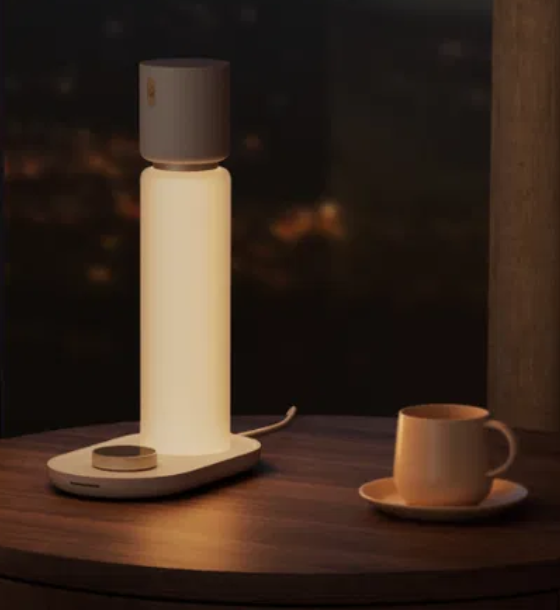
Foreword: The “Paradox” of Sleep Monitoring
Do you also have this problem: in order to understand your sleep quality, you have to wear a smart bracelet or sleep ring? But the feeling of a foreign object on your wrist, the anxiety of charging, and even the pressure from the device itself make you sleep less soundly.
This is the long-standing pain point of the sleep monitoring industry: “Disrupting sleep in order to monitor sleep.”
made a bold statement with Sleepal, a consumer brand under Gewu Technology that he founded : it claims that it can completely get rid of wearable devices and can actively intervene in sleep like a personal doctor.
After a 14-day intensive testing period , we will conduct an in-depth analysis of the Sleepal AI Sleep Lamp from three dimensions: core monitoring technology, AI accuracy, and actual sleep aid effect .
I. Core Experience: Can it really be “unnoticeable”?
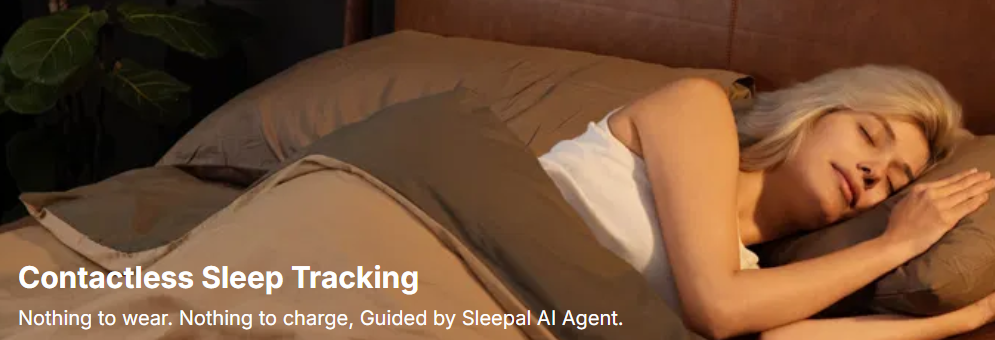
Sleepal’s biggest selling point is its non-contact monitoring.
Traditional method: requires close contact with the skin, using photoelectric sensors to guess your heartbeat.
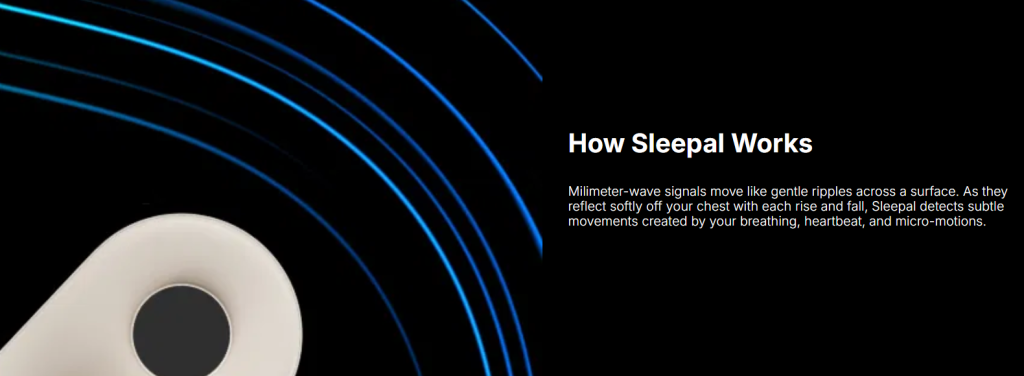
Sleepal incorporates a 60GHz millimeter-wave radar , similar to a bat’s echolocation or ripples on the water’s surface. Sleepal emits tiny, invisible signals that cover your body’s surface. When you breathe, the subtle rise and fall of your chest and abdomen, the vibrations of your heartbeat, and even the movement of turning over all alter the reflection of these signals.
You simply need to place it on your bedside table; no wearing of any device is required. It can accurately identify whether you are in light sleep, deep sleep, or dreaming (REM stage), and can even monitor snoring and whether you have left the bed.
If you are extremely averse to the feeling of a foreign object while sleeping, or if you have sensitive skin and cannot wear the device, this one reason is enough to make you buy it.
II. Data accuracy: Is it “guessing” or “calculating”?
Many non-wearable devices are criticized for being “inaccurate,” so how does Sleepal address this issue?
1. Medical-grade “brain”
Sleepal’s algorithm wasn’t something engineers came up with on a whim in an office; it was something they “graduated” from after “going to school.”
Data Accumulation: Its AI model has learned from over 2,000 clinical polysomnography (PSG) data. PSG is the gold standard for diagnosing sleep disorders in hospitals. Ordinary sleep lamps are like “guessing” whether you’re asleep or not, while Sleepal is like an “old doctor” who has reviewed thousands of real medical records, knowing what true deep sleep and light sleep signals look like.
Accuracy performance: In respiratory rate monitoring, its error is extremely small (RMSE < 2), which means that its accuracy is comparable to top-of-the-line medical-grade wearable devices.
2. Proactive intervention, not just recording.
Most devices only tell you “didn’t sleep well last night,” which only increases your anxiety. Sleepal’s core competitiveness lies in its ability to “get things done.”
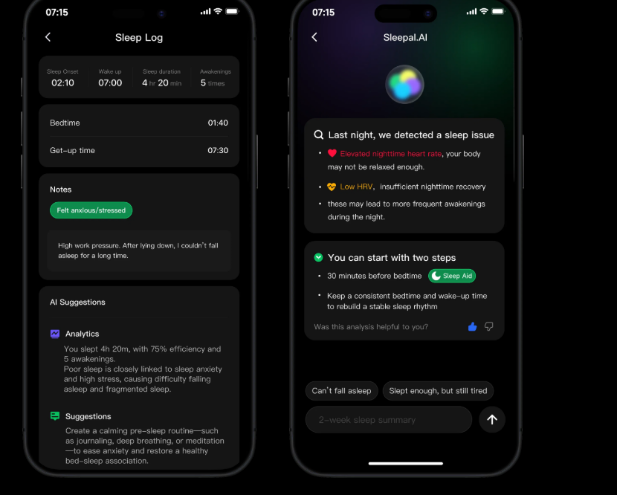
When having trouble falling asleep: When the AI detects that you are tossing and turning and can’t sleep, it will automatically activate the sleep aid mode. The lights will gradually dim like breathing, while playing white noise or meditative soundscapes to guide your breathing. Once it detects that the user has fallen asleep, the sound and lights will automatically fade out and turn off.
III. Intelligent Interconnection: It is a lamp, and also a smart home manager.
Sleepal’s ambitions extend beyond lighting; it aims to become the “spatial intelligence hub” of the bedroom.
1. An alarm clock that understands you
Morning wake-up: It won’t startle you with a jarring sound. The system captures moments when you’re in light sleep and simulates the gradual brightening of sunlight to naturally awaken your brain.
Night mode: When you get out of bed in the middle of the night, the light will turn on at a very low brightness, which is enough to see the way but will not be too bright and wake you up completely.
2. Connect the entire bedroom
This is Sleepal’s most hardcore feature. It supports Apple HomeKit and Home Assistant.
Example scenarios: When Sleepal detects that you have entered a deep sleep, it can automatically raise the air conditioner by 1 degree (to prevent you from getting cold in the middle of the night); when it detects that you are awake in the morning, it can drive the electric curtains to open slowly.
Value: Transforming the bedroom from a “passive dwelling” into an ecosystem of “active service”.
IV. Buying Guide: Who is the best fit to buy this?
✅ Highly recommended for:
- People with sleep sensitivity: Those who cannot tolerate the pressure of bracelets and rings and pursue the ultimate feeling of being impervious.
- People who have difficulty falling asleep: those who need light and sound assistance and want the device to turn off automatically.
- Smart home enthusiasts: Geeks who already have HomeKit or smart air conditioners/curtains at home and want to create automated sleep scenarios.
- Those who focus on health data: Users who want near-medical-grade accuracy data for long-term health management.
❌ Not recommended for the following groups:
- For mobile monitors: This product is primarily for monitoring bedridden status. If you need to monitor daytime naps or sleep while traveling, wearable devices offer greater flexibility.
- For those with limited budgets: As a high-end device with medical-grade algorithms and radar hardware, its cost is destined to be prohibitively high.
V. Price and Summary
The Sleepal Unobtrusive AI Sleep Lamp is more than just a lamp; it’s one of the few sleep terminals on the market that truly addresses the pain point of “wearing interference” and possesses proactive intervention capabilities. It encapsulates complex radar technology and clinical AI models into a simple bedside device.
If you’re looking for a “burden-free, high-precision, and interactive” sleep solution, Sleepal is currently a flagship option worth investing in. It truly integrates technology into your life, leaving only comfort and no burden.
Leave a Reply