One-Sentence Verdict
If you want a brain-computer interface that fits in your pocket and delivers real-time neurofeedback during your commute, the NAOYUN EEG Earphones are the most ambitious consumer BCI wearable to watch in 2026.
Introduction: From Medical Labs to Daily Commutes
Brain-computer interfaces have long been trapped in laboratories. Neuralink’s invasive chips require cranial surgery, while traditional EEG devices involve electrode arrays, cables, and conductive gel. Shanghai Naoyun Technology wants to change that—they packed professional-grade EEG detection into a 6-gram TWS earbud.
Launched in March 2026, the NAOYUN EEG Earphones are the world’s first consumer product to integrate clinical-grade EEG brainwave detection with Hi-Fi audio. Founder Wang Chaoyang leads a team from Bosch Siemens, Haier, and Viomi, and the company has secured angel funding led by Viomi Technology. Their mission: bring brain health monitoring into daily life, from commuting to office work, from studying to relaxation.
This is not a concept. NAOYUN has completed small-batch prototype production and plans to showcase at CES 2026 before launching on Kickstarter.
Product Overview: A 6-Gram Brain Lab
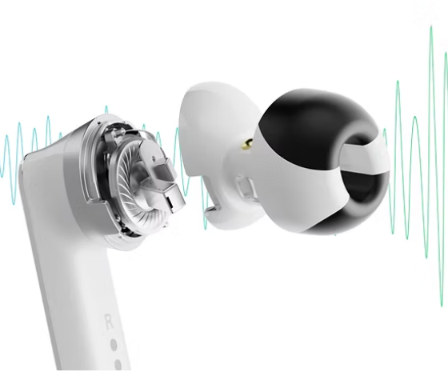
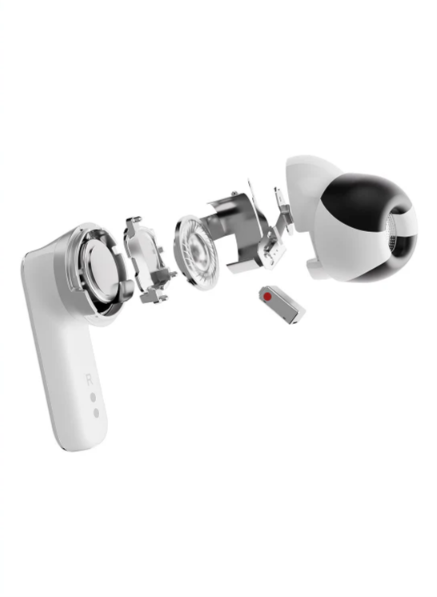
The core breakthrough of the NAOYUN EEG Earphones lies in “invisibility” and “lightness.” Each earbud weighs just 6 grams, virtually indistinguishable from standard premium TWS earbuds, eliminating the “medical device” feel of traditional EEG equipment. The key innovation is the built-in patented flower-shaped dry electrodes—no conductive gel required, users simply wear the earbuds to start EEG acquisition, with setup completed in approximately ten seconds.
According to crowdfunding user feedback, the in-ear design effectively solves electrode-skin contact stability, avoiding defects common in traditional EEG headbands such as displacement and signal interruption. For users who value privacy and want to use the device in public scenarios, this “invisible” design is a core competitive advantage.
Technical Analysis: A Goldmine of Signals in Your Ear
NAOYUN’s technical architecture centers on “in-ear brain-computer” technology. Founder Wang Chaoyang explains: “The biological signals from the ear are a rich goldmine, containing not only EEG but also EMG and ECG signals. Moreover, the ear is inherently a sound sensor, allowing integration with speech and semantics.”
Key technical specifications:
| Parameter | Specification |
| Weight | 6g per earbud |
| Electrode Type | Patented flower-shaped dry electrodes + metal sensors |
| EEG Accuracy | >95% (Cohen Kappa ≈ 0.8) |
| Brainwave Bands | Theta, Alpha, Beta, Gamma |
| Setup Time | ~10 seconds |
| Audio | 24-bit/192kHz Hi-Res |
| ANC | 35dB |
| Battery Life | 5 hours per charge, 40 hours with case |
| EMG Control | Facial muscle gesture recognition |
Compared to traditional EEG devices requiring one hour of preparation, NAOYUN’s ten-second setup represents an order-of-magnitude improvement. Signal acquisition inside the ear canal is unaffected by skull bone or scalp potentials, providing stronger and more stable readings.
AI Algorithms and Training Modes: Beyond Monitoring, Real Training
NAOYUN’s AI algorithms do more than visualize brainwaves—they provide closed-loop training. The companion app includes four core training modes:
Neurofeedback cognitive training combines n-back and go/no-go tasks with live EEG feedback to regulate prefrontal cortex activity and build sustained attention.
Guided breathing with binaural beats uses music to facilitate resonant breathing at 0.1Hz frequency, with binaural beats tailored to the user’s real-time brain state.
Guided meditation with EEG feedback detects mind-wandering states via default mode network activity and delivers audio cues to redirect attention when the mind drifts.
Brainwave feedback games reinforce sensorimotor rhythm through operant conditioning, using interactive gameplay that responds directly to the user’s brainwave output to strengthen focus over time.
The app analyzes Theta, Alpha, Beta, and Gamma brainwave patterns and produces personalized reports that visualize brain state, meditation progress, and focus levels.
EMG Gesture Control: Hands-Free Operation
NAOYUN also incorporates EMG electromyography detection, reading tiny electrical signals produced by facial muscle movement near the ear. This enables hands-free control—for example, answering calls by clenching teeth, no voice commands or buttons required. The system also supports play/pause, smart home control, and gaming interactions.
This feature is revolutionary for interaction in motion scenarios or when both hands are busy. Combined with tiny muscle signals, it already enables specific “thought commands.”
Competitive Comparison
| Feature | NAOYUN EEG Earphones | Neurable MW75 | Emotiv MN8 | Muse S |
| Form Factor | TWS in-ear | Over-ear headphones | In-ear earbuds | Headband |
| Weight | 6g per bud | ~300g | ~50g | ~60g |
| Electrodes | Flower-shaped dry | Embedded sensors | Conductive elastomer | Dry electrodes |
| EEG Channels | Multi-channel | Limited | 2 + 4 reference | Multi-channel |
| Audio | Hi-Res 24-bit/192kHz | High-quality | Basic audio | None |
| ANC | 35dB | Yes | No | No |
| EMG Control | Yes | No | No | No |
| Training Modes | 4 modes | Basic | Basic | Meditation |
| Price Range | TBD (crowdfunding) | $499 | $300-500 | $249-399 |
| Brand Origin | Chinese Brand | US Brand | US Brand | US Brand |
NAOYUN’s core advantage: it is the only product integrating multi-channel EEG, Hi-Res audio, ANC, and EMG gesture control into a 6-gram TWS form factor. The Neurable MW75 weighs fifty times more; the Emotiv MN8 leans toward professional use with weak audio; and the Muse S is a headband unsuitable for public settings.
Pros and Cons
Pros:
- World’s first in-ear EEG TWS earphones, leading in form factor innovation
- 6-gram weight enables all-day imperceptible wear
- Ten-second setup versus one-hour traditional preparation, dramatically lowering barriers
- Ear canal signal stability superior to scalp-based EEG
- Four-mode closed-loop training, not just monitoring but real training
- EMG gesture control expands interaction dimensions
- Hi-Res audio plus 35dB ANC without compromising sound quality
Cons:
- EEG accuracy during movement still requires validation
- Long-term durability of in-ear electrodes remains unconfirmed
- As a Chinese Brand, low brand recognition in overseas markets
- Crowdfunding stage, with production quality and delivery risks
- AI algorithm personalization requires data accumulation
- Five-hour battery life slightly insufficient for all-day monitoring
Conclusion
The NAOYUN EEG Earphones are not a perfect product—signal stability during movement, long-term durability, and brand recognition all have room for improvement. However, they precisely address an industry pain point: how to bring brain-computer interfaces from laboratories into daily life.
For the past decade, the wearable market has been dominated by smartwatches and fitness trackers that “only quantify the body, not interpret the mind.” As information overload intensifies, managing focus and mental stress is becoming increasingly important. The consumerization of BCI technology is the core track for wearable devices in the next decade. NAOYUN represents the first large-scale attempt in this trend.
From a hardware innovation perspective, compressing medical-grade brain-computer technology into a 6-gram TWS earphone is an engineering achievement worthy of respect. From a commercial perspective, China’s nearly 500 million sleep disorder sufferers, tens of millions of meditation practitioners, and vast high-pressure workforce constitute a substantial market foundation.
If you have been waiting for a consumer-grade device that can “read” your brain state, the NAOYUN EEG Earphones deserve a spot on your 2026 shopping list. They may not be the ultimate form of brain-computer interfaces, but they are likely a crucial step toward bringing BCI into mainstream daily life.
Leave a Reply