One-sentence verdict: If the ultimate form of AI glasses is “looking like regular glasses,” the LOHO×NIMO partnership may be the closest answer in 2026—and at 2,499 RMB including lenses, it qualifies for mainstream consumer consideration.
Breaking News
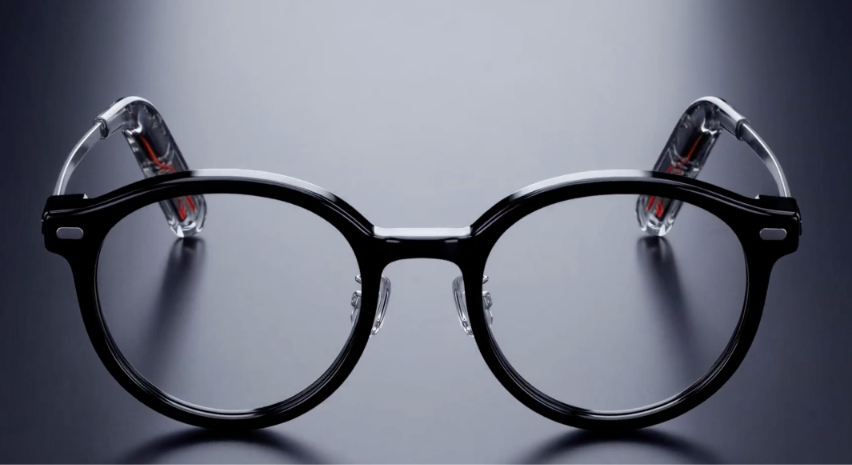
On June 16, 2026, at 7:00 PM, LOHO Eyewear Group and NIMO (Bit Phantom) jointly launched holographic AI glasses. Weighing only 29 grams, the device features binocular volume holographic waveguide technology with 98% light transmittance and 1500 nits eye brightness.
Core functions include navigation, real-time translation, and smart teleprompting. A camera-free design protects privacy, with 16-hour standby battery. Key breakthrough: supports offline optometry and prescription lens fitting, priced at 2,499 RMB including lenses, shipping 15 days after order. Simultaneously announced: 720 Glasses Festival celebrity endorsement and 100+ new product launches.
Full Story
LOHO’s approach to AI glasses diverges completely from tech manufacturers. This traditional eyewear retailer with a nationwide offline store network treats AI glasses not as “digital accessories” but as “next-generation eyewear.”
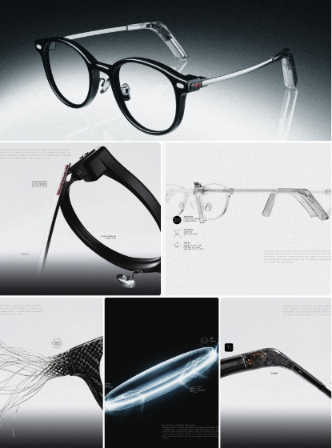
The 29-gram weight is a critical number. For reference, regular optical glasses typically weigh 20-40 grams, while mainstream AI glasses (Ray-Ban Meta at ~49g, Huawei Smart Glasses at ~40g, iFLYTEK AI Glasses at ~40g) generally run heavier. LOHO×NIMO achieving 29 grams means it is the first to realize “lighter than most regular glasses”—not a spec victory, but a fundamental shift in wearing experience. Users no longer need to choose between “seeing clearly” and “wearing comfortably.”
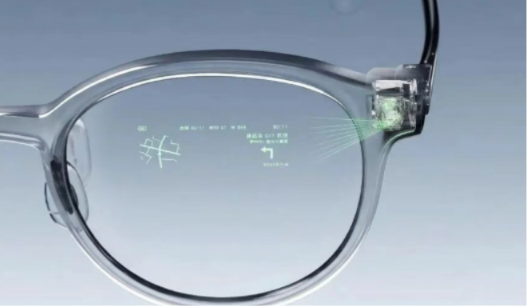
The optical solution employs binocular volume holographic waveguides. This technology’s core advantages are high light transmittance (98%) and slim volume. When users look through the lenses at the outside world, they barely perceive brightness loss; digital information overlays holographically in the field of view, unlike Birdbath solutions that partially obstruct sight. The 1500 nits eye brightness ensures outdoor readability under strong sunlight.
Functionally, navigation, real-time translation, and smart teleprompting cover high-frequency commuting and office scenarios. Navigation information overlays directly in forward vision, eliminating the need to look down at phones; translated text displays on lenses in real time, suitable for cross-border meetings and travel; teleprompting targets presentations, live streaming, and recording scenarios. This feature selection is restrained, avoiding marginal-utility features like “AI Q&A” or “photo recognition” that dilute core value.
Analysis
Prescription Lenses: The Leap from “Accessory” to “Essential”
The AI glasses industry has long faced an awkward reality: most products do not support optometry and lens fitting, or require users to seek third-party optical shops. This means myopic users either wear contact lenses beneath AI glasses, or endure blurry vision. Both scenarios severely limit use cases.
LOHO×NIMO’s solution is direct: leverage LOHO’s nationwide offline store network to provide one-stop optometry, lens fitting, and adjustment services. At 2,499 RMB including lenses, the product effectively bundles “AI functions” with “vision correction.” For myopic users, this is not “buying an extra tech toy” but “upgrading existing glasses”—a psychological account shift that significantly impacts purchase decisions.
Channel Advantage: Scenario Conversion at Physical Stores
LOHO operates hundreds of offline stores nationwide, an asset pure internet brands cannot replicate. Users walk in, try on, get eye exams, experience functions, then place orders—a path with conversion rates exponentially higher than “browse specs online → hesitate → abandon.”
The 720 Glasses Festival IP linkage is equally clever. Embedding AI glasses into an existing annual promotional rhythm, leveraging celebrity endorsements and 100+ new product launches, creates a “browse the glasses festival and discover AI glasses” traffic entry. This is not market education, but market.
Differentiated Positioning Against Competitors
| Feature | LOHO×NIMO | Huawei AI Glasses | iFLYTEK AI Glasses | Ray-Ban Meta |
|---|---|---|---|---|
| Weight | 29g | ~40g | ~40g | ~49g |
| Optics | Holographic waveguide | Waveguide | Waveguide | No AR display |
| Transmittance | 98% | ~85% | ~85% | N/A |
| Prescription | Native optometry support | Partial support | Partial support | Not supported |
| Camera | None | Yes | Yes | Yes |
| Price | 2,499 RMB with lenses | 2,499 RMB | 4,299 RMB | $299 |
| Channel | Offline stores + online | Primarily online | Primarily online | Primarily online |
LOHO×NIMO’s competitive advantage lies not in individual technical specs but in combined positioning: lightest, most glasses-like, only native prescription support, only camera-free. These “mosts” and “onlys” point toward a single user value: burden-free daily wear.
Industry Impact
The LOHO×NIMO launch may accelerate AI glasses’ transition from “tech enthusiast toys” to “mainstream consumer products.”
Market impact: The 2,499 RMB pricing including lenses shifts AI glasses’ decision threshold from “additional purchase” to “normal glasses replacement budget.” China has over 600 million myopic people; if 1% consider AI functions during lens replacement, that represents a 6-million-unit potential market.
Consumer impact: Myopic users no longer need to sacrifice visual comfort for AI glasses, while non-myopic users gain a lighter, more privacy-friendly option. The camera-free design may trigger industry follow-up, forming a dual-line格局 of “camera-equipped” and “camera-free” versions.
Industry impact: Traditional eyewear retailers’ entry changes AI glasses’ competitive dimensions. Competition on pure technical specs is shifting toward “technology + channels + service”综合 competition. LOHO’s offline network proves that selling AI glasses, like selling regular glasses, may require optometrists and try-on experiences.
What’s Next
- End of June 2026: First-batch user feedback, focusing on wearing comfort, actual battery performance, and prescription lens fitting quality
- July 2026: 720 Glasses Festival sales data, validating offline channel conversion efficiency
- Q3 2026: Whether competitors follow the lightweight + prescription lens direction
- Q4 2026: Whether camera-free design becomes a new privacy selling point
Leave a Reply