One-sentence verdict: If offline translation and visual translation deliver as promised, these glasses could land on every business traveler’s 2026 packing list—especially at the subsidized $470 price point.

Quick Summary
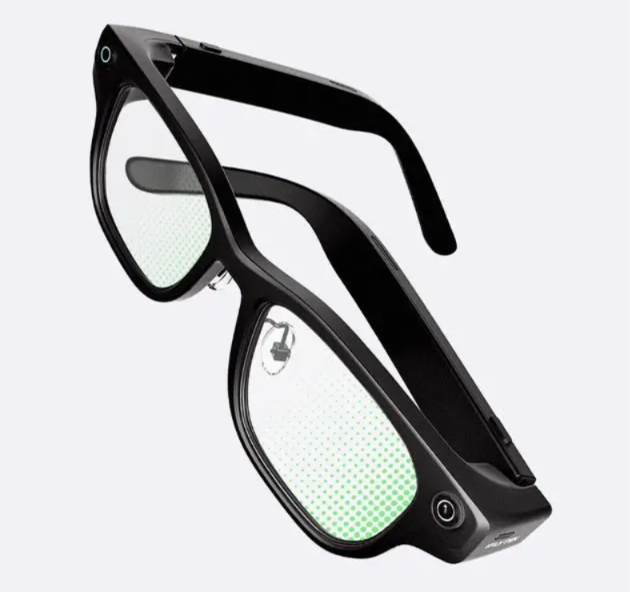
On June 15, 2026, iFLYTEK launched its AI Glasses for pre-order on JD.com. Weighing just 40 grams, the glasses feature an end-to-end voice interpretation large model supporting real-time translation across 122 languages (including dialects and accents), covering six translation scenarios with 18 languages available offline. Priced at 4,299 RMB ($595), select regions with national subsidies drop the price to 3,369 RMB ($470). The built-in GlassClaw AI assistant supports one-sentence complex task delegation and automatic meeting summary generation.
What Happened
iFLYTEK’s timing for the AI glasses launch is strategically interesting. Huawei’s AI Glasses had previously captured consumer attention at 2,499 RMB ($345), while iFLYTEK’s product clearly targets professional scenarios—translation capability is its core differentiator.
At 40 grams, the weight sits in the lightweight tier for AI glasses. For reference, Ray-Ban Meta Gen 2 weighs approximately 49 grams, while Huawei Smart Glasses 2nd gen comes in at around 40 grams. iFLYTEK matches competitors on weight while packing 122-language translation and 18-language offline models.
The breadth of translation scenarios deserves attention. Six scenarios are covered: call translation (real-time interpretation during phone/video calls), online simultaneous interpretation (remote meeting sync translation), live speech interpretation (real-time output during presentations), face-to-face translation (bidirectional dialogue relay), visual translation (look-and-translate, camera recognizes text/menus/street signs with overlaid translations), and audio/video translation (real-time subtitles for foreign language content). This granularity indicates deep understanding of business travel pain points.
Offline translation supporting 18 languages addresses a critical privacy concern for overseas use. Many business professionals are reluctant to upload sensitive conversations to the cloud; local models eliminate this worry. Offline capability also means functionality remains available in flights, basements, and other network-dead zones.
The GlassClaw AI assistant is positioned for “one-sentence complex task delegation.” For example, a user might say “compile last week’s meeting highlights and email the team,” and the AI automatically completes information retrieval, summary generation, and email composition. The meeting minutes function targets a common cross-border need—automatically distinguishing speakers and generating multilingual summaries.
Why It Matters
The AI glasses market entered a “functional differentiation” phase in 2026. Huawei drives volume through ecosystem integration and aggressive pricing, Meta leverages social content and brand partnerships, while iFLYTEK chose a more vertical path: slicing the business demographic through translation capabilities.
This choice is strategically sound because translation is a hard need, not a nice-to-have. A cross-border worker won’t buy glasses for their camera, but might seriously consider them if it means eliminating the need for a personal translator. The 122-language coverage (including dialects and accents) theoretically means one pair of glasses suffices from Tokyo streets to Nigerian factories.
The subsidized pricing at 3,369 RMB ($470) is equally noteworthy. This sits close to Huawei’s 2,499 RMB ($345) while offering professional translation capabilities the latter lacks. For budget-conscious business users, “spend $125 more for 122 languages” is an easy calculation.
Impact Analysis
Market impact: The iFLYTEK AI Glasses launch could accelerate AI glasses’ transition from “tech toys” to “productivity tools.” If translation accuracy reaches usable levels, it will cannibalize traditional translation device markets (including iFLYTEK’s own translation hardware lineup) while squeezing demand for entry-level human interpretation services.
Consumer impact: Business professionals and students may see significantly reduced overseas communication costs. Cross-border meetings previously required advance translation arrangements or rented simultaneous interpretation equipment; now one pair of glasses handles it. Visual translation also adds value for travel scenarios—reading menus, street signs, and product descriptions without pulling out phones and opening translation apps.
Industry impact: Offline translation capability may become standard for AI glasses. iFLYTEK’s feat of packing 18-language offline models into 40-gram frames demonstrates the feasibility of on-device AI on wearables. This pressures competitors to evolve toward an “offline-first” direction.

What’s Next
The iFLYTEK AI Glasses’ success hinges on three critical variables:
First, translation accuracy. One hundred twenty-two languages sounds impressive, but real-world performance for low-resource languages needs validation. Dialect and accent recognition are particularly prone to failure.
Second, battery endurance. Real-time translation and visual recognition are both power-hungry operations. The battery capacity fitting into a 40-gram frame determines effective single-use duration.
Third, wearing comfort. Forty grams is a paper spec; nose pad design, temple pressure distribution, and long-term wearing fatigue only reveal themselves through large-scale user feedback.
Pre-order data will serve as an important bellwether. If business demographics show higher-than-expected adoption, iFLYTEK may rapidly iterate an international version, further disrupting the global AI glasses market.
Leave a Reply