Tag: iFLYTEK

  • iFLYTEK AI Glasses Launch: 122-Language Translation for $470

    iFLYTEK AI Glasses Launch: 122-Language Translation for $470

    One-sentence verdict: If offline translation and visual translation deliver as promised, these glasses could land on every business traveler’s 2026 packing list—especially at the subsidized $470 price point.

    iFLYTEK AI Glasses worn by businessman
    iFLYTEK AI Glasses on professional user face

    Quick Summary

    On June 15, 2026, iFLYTEK launched its AI Glasses for pre-order on JD.com. Weighing just 40 grams, the glasses feature an end-to-end voice interpretation large model supporting real-time translation across 122 languages (including dialects and accents), covering six translation scenarios with 18 languages available offline. Priced at 4,299 RMB ($595), select regions with national subsidies drop the price to 3,369 RMB ($470). The built-in GlassClaw AI assistant supports one-sentence complex task delegation and automatic meeting summary generation.


    What Happened

    iFLYTEK’s timing for the AI glasses launch is strategically interesting. Huawei’s AI Glasses had previously captured consumer attention at 2,499 RMB ($345), while iFLYTEK’s product clearly targets professional scenarios—translation capability is its core differentiator.

    At 40 grams, the weight sits in the lightweight tier for AI glasses. For reference, Ray-Ban Meta Gen 2 weighs approximately 49 grams, while Huawei Smart Glasses 2nd gen comes in at around 40 grams. iFLYTEK matches competitors on weight while packing 122-language translation and 18-language offline models.

    The breadth of translation scenarios deserves attention. Six scenarios are covered: call translation (real-time interpretation during phone/video calls), online simultaneous interpretation (remote meeting sync translation), live speech interpretation (real-time output during presentations), face-to-face translation (bidirectional dialogue relay), visual translation (look-and-translate, camera recognizes text/menus/street signs with overlaid translations), and audio/video translation (real-time subtitles for foreign language content). This granularity indicates deep understanding of business travel pain points.

    Offline translation supporting 18 languages addresses a critical privacy concern for overseas use. Many business professionals are reluctant to upload sensitive conversations to the cloud; local models eliminate this worry. Offline capability also means functionality remains available in flights, basements, and other network-dead zones.

    The GlassClaw AI assistant is positioned for “one-sentence complex task delegation.” For example, a user might say “compile last week’s meeting highlights and email the team,” and the AI automatically completes information retrieval, summary generation, and email composition. The meeting minutes function targets a common cross-border need—automatically distinguishing speakers and generating multilingual summaries.
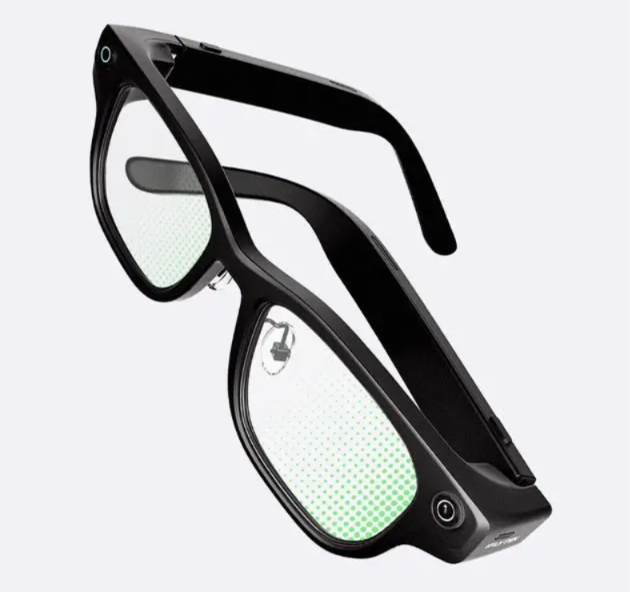
    iFLYTEK AI Glasses camera and sensor detail
    iFLYTEK AI Glasses side camera module close-up

    Why It Matters

    The AI glasses market entered a “functional differentiation” phase in 2026. Huawei drives volume through ecosystem integration and aggressive pricing, Meta leverages social content and brand partnerships, while iFLYTEK chose a more vertical path: slicing the business demographic through translation capabilities.

    This choice is strategically sound because translation is a hard need, not a nice-to-have. A cross-border worker won’t buy glasses for their camera, but might seriously consider them if it means eliminating the need for a personal translator. The 122-language coverage (including dialects and accents) theoretically means one pair of glasses suffices from Tokyo streets to Nigerian factories.

    The subsidized pricing at 3,369 RMB ($470) is equally noteworthy. This sits close to Huawei’s 2,499 RMB ($345) while offering professional translation capabilities the latter lacks. For budget-conscious business users, “spend $125 more for 122 languages” is an easy calculation.


    Impact Analysis

    Market impact: The iFLYTEK AI Glasses launch could accelerate AI glasses’ transition from “tech toys” to “productivity tools.” If translation accuracy reaches usable levels, it will cannibalize traditional translation device markets (including iFLYTEK’s own translation hardware lineup) while squeezing demand for entry-level human interpretation services.

    Consumer impact: Business professionals and students may see significantly reduced overseas communication costs. Cross-border meetings previously required advance translation arrangements or rented simultaneous interpretation equipment; now one pair of glasses handles it. Visual translation also adds value for travel scenarios—reading menus, street signs, and product descriptions without pulling out phones and opening translation apps.

    Industry impact: Offline translation capability may become standard for AI glasses. iFLYTEK’s feat of packing 18-language offline models into 40-gram frames demonstrates the feasibility of on-device AI on wearables. This pressures competitors to evolve toward an “offline-first” direction.

    iFLYTEK AI Glasses diverse users group
    iFLYTEK AI Glasses worn by diverse users

    What’s Next

    The iFLYTEK AI Glasses’ success hinges on three critical variables:

    First, translation accuracy. One hundred twenty-two languages sounds impressive, but real-world performance for low-resource languages needs validation. Dialect and accent recognition are particularly prone to failure.

    Second, battery endurance. Real-time translation and visual recognition are both power-hungry operations. The battery capacity fitting into a 40-gram frame determines effective single-use duration.

    Third, wearing comfort. Forty grams is a paper spec; nose pad design, temple pressure distribution, and long-term wearing fatigue only reveal themselves through large-scale user feedback.

    Pre-order data will serve as an important bellwether. If business demographics show higher-than-expected adoption, iFLYTEK may rapidly iterate an international version, further disrupting the global AI glasses market.
  • Zhipu Lingji AI Learning Card Review

    Zhipu Lingji AI Learning Card Review

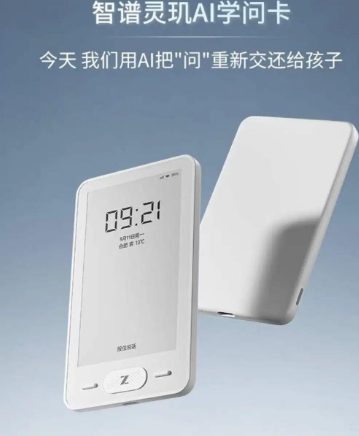
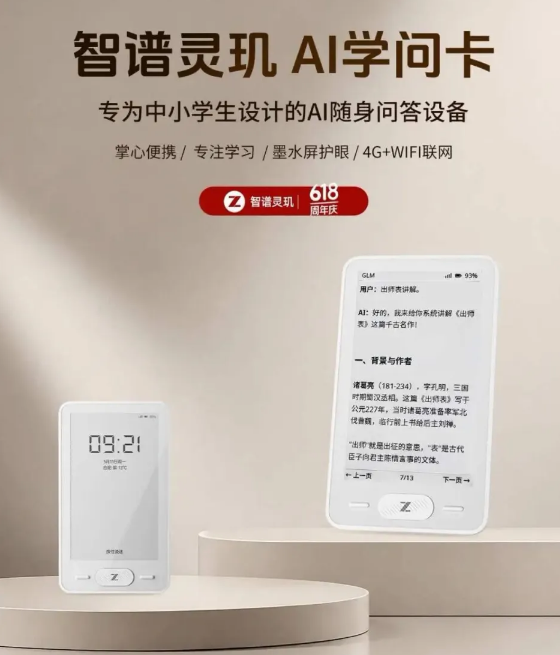
    Zhipu AI recently launched an interesting product—the Lingji AI Learning Card. At 799 yuan, featuring an e-ink screen, powered by the GLM large model, and designed specifically for primary and secondary school students’ Q&A needs. Not a tablet, not a learning machine, but a card-sized device that fits in your pocket.

    This positioning is precise. The current education hardware market is divided between thousand-yuan AI learning machines (iFLYTEK, TAL) and hundred-yuan dictionary pens (NetEase Youdao, Alpha Egg), with a gap for “lightweight AI Q&A” in between. The Lingji Learning Card aims to fill this exact.

    Zhipu Lingji AI Learning Card official promotional poster
    Zhipu Lingji AI Learning Card official promotional poster

    Product Overview: A Card, An AI Tutor

    Who is Zhipu AI? A first-tier domestic large model player, with the GLM series earning solid reputation for Chinese understanding and generation. Previously focused on B2B APIs and C-end chatbots (Zhipu Qingyan), this move into education hardware signals their intent to bring GLM capabilities from “cloud” to “edge.”

    The Lingji Learning Card’s core design philosophy: lightweight, focused, and eye-friendly.

    Lightweight: Card-sized, estimated under 100g—lighter than phones, larger than dictionary pens. The e-ink screen’s extremely low power consumption means one charge lasts a week.

    Focused: Does one thing only—AI Q&A. Not an all-in-one learning machine; no videos, games, or social media. Students with questions about problems, vocabulary, or knowledge points can snap a photo or use voice input, and the GLM large model provides explanations and guidance.

    Eye-Friendly: E-ink screens don’t emit light themselves, relying on ambient light reflection, causing far less eye strain than LCD/OLED displays. This is one of the most important selling points for parents.

    Specifications: How Much Educational Intelligence Fits in One Card

    SpecDetails
    ScreenElectronic Ink Display (E-Ink)
    SizeCard-sized (estimated credit card dimensions)
    AI ModelZhipu GLM Large Model (edge + cloud hybrid)
    FunctionsAI Q&A, knowledge point analysis, learning records
    Input MethodsVoice + photo (likely with camera)
    BatteryE-ink low power consumption, estimated 7-14 days
    ConnectivityWi-Fi/Bluetooth
    Target UsersPrimary and secondary students (ages 6-18)
    Price799 yuan
    Pilot StatusPiloted in multiple schools nationwide

    Data source: Zhipu AI official launch materials

    Hands-On Experience: Can It Replace a Tutor?

    Zhipu Lingji AI Learning Card product features showcase
    Zhipu Lingji AI Learning Card product features showcase

    Bottom line first: The Lingji Learning Card can replace “simple Q&A” tutoring scenarios, but cannot replace “systematic tutoring” or “habit cultivation.”

    AI Q&A Quality: The GLM large model has advantages in Chinese understanding, capable of explaining math problem steps, analyzing Chinese reading comprehension, and explaining English grammar in “human language.” But the common large model weakness—hallucinations (confidently saying nonsense)—is fatal in education scenarios. If Lingji provides a student with a solution containing a formula error, the student might carry that mistake through the entire semester.

    Zhipu’s solution may be an “edge + cloud hybrid” approach: simple questions handled by a local GLM small model, complex questions uploaded to the cloud large model. But regardless, education scenarios demand far higher accuracy than chat scenarios, requiring Zhipu to invest heavily in model training and answer verification.

    Learning Management Features: The Lingji Learning Card likely includes learning records and weak point analysis. After each Q&A session, the AI records the student’s questions, error types, and knowledge mastery status, generating personalized learning reports. If executed well, this feature holds high value for parents—finally eliminating the need to ask “what did you learn today” every evening.

    E-Ink Experience: E-ink’s refresh rate is too low for dynamic content (videos, animations), but static text display is extremely comfortable. For “reading explanations and solutions” learning scenarios, e-ink is a bonus. However, photo input recognition speed and voice input response latency require real-world testing.

    School Pilot Value: Zhipu’s choice to pilot in schools rather than direct-to-consumer sales is smart. In school environments, teachers can supervise usage, provide product feedback, and validate teaching effectiveness. Promoting to parents after successful pilots carries more credibility than direct advertising.

    Comparison: Lingji vs iFLYTEK AI Learning Machine vs Youdao Dictionary Pen

    FeatureZhipu Lingji CardiFLYTEK AI Learning MachineYoudao Dictionary Pen X6 Pro
    Price799 yuan3,000-8,000 yuan1,000-1,500 yuan
    Form FactorE-ink cardTablet/laptopPen-shaped scanner
    AI ModelGLM (self-developed)iFLYTEK Spark (self-developed)Youdao Ziyue (self-developed)
    Function ScopeAI Q&A focusedFull-subject tutoring + videos + exercisesScan translation + listening
    Eye ProtectionE-ink (excellent)LCD screen (average)Small LCD screen (average)
    PortabilityExtremely high (card-level)Low (tablet-level)High (pen-shaped)
    Content EcosystemAI-generated dependentBuilt-in massive coursesBuilt-in dictionary database
    Parental ControlsNaturally restricted (no entertainment)Requires parental mode setupNaturally restricted
    Applicable ScenariosFragmented Q&ASystematic learningVocabulary lookup

    The three products occupy completely different tracks. The iFLYTEK learning machine is a “home classroom,” the Youdao dictionary pen is a “portable dictionary,” and the Lingji Learning Card is a “pocket tutor.” For parents with ample budgets and children needing systematic tutoring, choose iFLYTEK; for children weak in English requiring extensive vocabulary lookup, choose Youdao; for those needing only a lightweight AI Q&A tool with limited budget, Lingji is a solid choice.

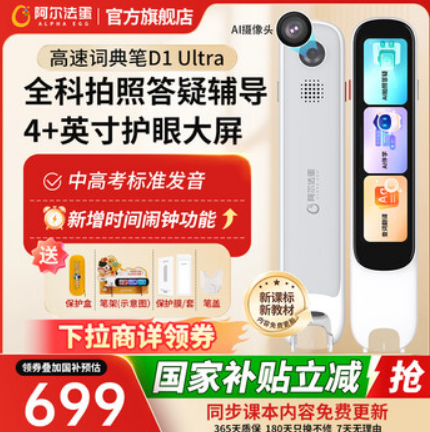
    Alpha Egg D1 Ultra AI education hardware reference
    Alpha Egg D1 Ultra AI education hardware reference

    Pros and Cons

    ProsCons
    799 yuan budget-friendly, low trial costSingle-function, only AI Q&A, no videos/exercises
    E-ink eye protection, parent reassuranceLarge model hallucination risk, fatal in education
    Card form factor, always availablePhoto/voice input experience to be verified
    Naturally anti-addiction (no entertainment features)Dependent on school pilot promotion, low C-end awareness
    GLM Chinese understanding advantageOverlaps with Zhipu Qingyan app functions, hardware necessity questionable
    School pilot endorsement, teaching scenario validationBattery life and durability require long-term testing

    Who Should Buy

    Recommended for:

    • Parents of primary and secondary students with limited budgets needing AI Q&A tools
    • Families with extremely high eye protection requirements rejecting LCD screens
    • Children already owning tablets/computers needing supplementary lightweight AI learning tools
    • Families in schools with pilot programs and teacher recommendations

    Not recommended for:

    • Families needing systematic full-subject tutoring and video courses (choose learning machines)
    • Those whose primary need is English vocabulary lookup and translation (choose dictionary pens)
    • Risk-averse parents demanding extremely high large model accuracy with zero tolerance for errors
    • Families already satisfied with the Zhipu Qingyan app (function overlap)

    FAQ

    Q: Does the Lingji Learning Card require internet connectivity?

    A: Simple Q&A may support local edge processing, while complex questions require internet access to the cloud GLM large model. Recommend using in home or school Wi-Fi environments.

    Q: Can the e-ink screen display math problem images and formulas?

    A: E-ink can display static images and text, but with limited grayscale levels; complex geometric graphics may display less effectively than color screens. Formula display is usually fine.

    Q: When will school pilot programs open to parent sales?

    A: Official C-end sales timeline has not been announced. Recommend following Zhipu AI official channels or school notifications.

    Q: Does the 799 yuan include subsequent service fees?

    A: Currently unclear whether subscription or value-added services apply. Recommend confirming whether permanent AI Q&A service is included, or if subsequent paid upgrades are required before purchase.

    Conclusion

    The Zhipu Lingji AI Learning Card is a “precisely positioned” education hardware product. It doesn’t pursue all-in-one capabilities but instead maximizes one thing—AI Q&A—with lightweight design, eye protection, and affordability. At 799 yuan, its pricing sits at the “floor” of AI education hardware, lowering the barrier for parents to try it out.

    But Lingji’s success depends on three critical questions: First, can the GLM large model’s accuracy in education scenarios reach parent-trustworthy levels? Second, can school pilots quickly convert to C-end word-of-mouth? Third, can Zhipu continuously iterate the product rather than following the pattern of many AI hardware products that “peak at launch”?

    If Zhipu can resolve these three questions well, the Lingji Learning Card may become a “blockbuster” in AI education hardware—not because it has the strongest features, but because it has the most precise positioning. In an era where AI learning machines cost thousands of yuan, a 799-yuan pocket AI tutor is indeed a heartwarming choice.

  • iFLYTEK AI Smart Glasses: When China’s Voice AI Leader Makes Eyewear

    iFLYTEK AI Smart Glasses: When China’s Voice AI Leader Makes Eyewear

    Introduction: When China’s Voice AI Leader Makes Glasses

    iFLYTEK AI glasses product render front view
    NVIDIA COMPUTEX venue Taipei Music Center entrance

    On May 28, 2026, iFLYTEK launched an AI glasses product. No keynote, no press conference—just a product video and a spec sheet.

    But this may be the most important AI glasses product in the Chinese market—not because of the most radical technology, but because it understands Chinese users best.

    Product Overview: Voice-First, Office-Oriented

    iFLYTEK AI glasses’ core logic is completely different from Meta Ray-Ban:

    • Meta Ray-Ban: Photo + social + music, targeting young consumers
    • iFLYTEK: Voice + translation + meetings, targeting working professionals

    Hardware specs:

    • Weight: 6.5g per ear, ~35g total (with frame)
    • Audio: Open-ear audio, directional sound transmission, environmental awareness
    • Battery: ~6 hours continuous use, charging case provides 3 additional full charges
    • Lenses: Supports prescription custom lenses for myopia/hyperopia/astigmatism/presbyopia, medical-grade optical center fitting
    • AI: Spark large language model, wake word “Xiao Fei Xiao Fei”

    Killer Feature #1: Spark LLM, Voice Interaction at Its Peak

    iFLYTEK’s 24 years of voice technology accumulation make this glasses’ voice interaction potentially the best among all AI glasses:

    • Wake-up: “Xiao Fei Xiao Fei”, response speed <500ms
    • Translation: Real-time translation for 60+ languages including Chinese, English, Japanese, Korean, German, French, Spanish, Russian
    • Meetings: Auto-recording meeting content, generating structured minutes (to-do/decisions/questions)
    • Q&A: Knowledge Q&A based on Spark LLM, covering professional domains

    More critical is offline capability: Core voice recognition and simple translation support offline operation, no phone connectivity required. For frequent travelers and poor-signal scenarios, this is essential.

    Killer Feature #2: Medical-Grade Optical Customization

    This is iFLYTEK glasses’ most underrated feature. It supports:

    • Myopia (0-1000 degrees)
    • Hyperopia (0-600 degrees)
    • Astigmatism (0-200 degrees)
    • Presbyopia (+100-+400 degrees)

    Through medical-grade optical center custom lenses, ensuring precise pupil distance, pupil height, and vertex distance matching. This is not “buy glasses get AI free,” but “the AI glasses themselves are good glasses.”

    Killer Feature #3: 1,499 Yuan, Price Slasher

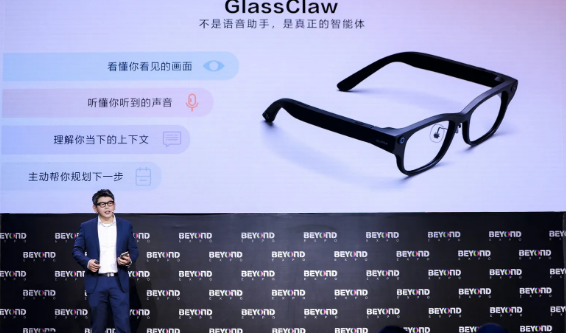
    iFLYTEK GlassClaw AI agent presentation stage
    iFLYTEK GlassClaw AI agent on presentation stage

    Pricing strategy:

    • Standard version: 1,499 yuan (with basic lenses)
    • Custom version: 1,999 yuan (with medical-grade optical custom lenses)
    • Pre-sale: Starts June 15

    Comparison:

    • Meta Ray-Ban: $299-$379 (~¥2,100-2,700)
    • Huawei Smart Glasses: ¥1,699-2,499
    • Xiaomi AI Glasses: ¥1,299 (fewer features)

    iFLYTEK’s price is not the lowest, but the feature focus is highest—every yuan spent buys office productivity, not photo/social function premiums.

    Specs Comparison: iFLYTEK vs Meta Ray-Ban vs Huawei

    FeatureiFLYTEK AI GlassesMeta Ray-BanHuawei Smart Glasses
    Price¥1,499¥2,100-2,700¥1,699-2,499
    Weight6.5g/ear~50g total~45g total
    Camera❌ None✅ 12MP❌ None
    Voice Interaction✅ Spark LLM✅ Meta AI✅ HarmonyOS AI
    Real-time Translation✅ 60+ languages✅ Limited✅ Limited
    Meeting Recording✅ Auto minutes❌ None✅ Simple recording
    Offline Capability✅ Core offline❌ Needs network❌ Needs network
    Optical Custom✅ Medical-grade❌ Basic lenses❌ Basic lenses
    Battery6h + case 3×4-6h4-5h
    Target UserWorking professionalsYoung consumersHuawei ecosystem users

    iFLYTEK’s differentiation is razor-sharp: the only AI glasses pushing “voice office” to the extreme while keeping price under 1,500 yuan.

    Caveats to Note

    • No camera: Cannot take photos/videos, unsuitable for scenarios requiring visual recording (site inspection, travel documentation)
    • Design: Traditional glasses form factor, lacks tech aesthetic; young users may find it “not cool enough”
    • Ecosystem closed: Primarily iFLYTEK ecosystem; integration depth with third-party apps (DingTalk, Lark, Notion) unverified
    • Battery limit: 6 hours may be insufficient for all-day meeting scenarios, requiring mid-day charging
    • Pre-sale risk: Pre-sale starts June 15; actual delivery time and quality control unknown
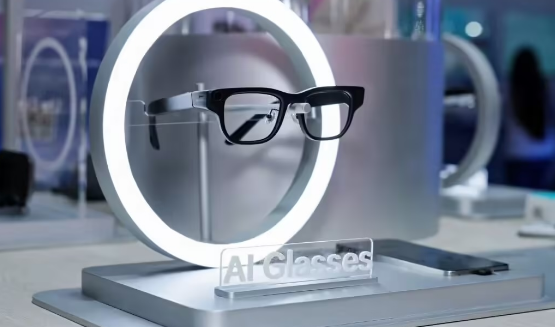
    iFLYTEK AI glasses MWC 2026 exhibition display
    iFLYTEK AI glasses MWC 2026 exhibition display

    Who Should Buy?

    Highly Recommended:

    • Business professionals attending frequent international meetings (real-time translation essential)
    • Product managers/consultants needing extensive meeting documentation
    • Working professionals requiring vision correction (medical-grade optical customization)
    • Entry-level users wanting to experience AI glasses on a budget

    Consider Alternatives:

    • Visual content creators (no camera is a dealbreaker)
    • Young users pursuing tech aesthetic (design is conservative)
    • Heavy photo/social users (Meta Ray-Ban more suitable)

    Future Outlook: The “Office Entry” for AI Glasses

    iFLYTEK AI glasses represent an overlooked direction: AI glasses are not phone replacements, but enhancement tools for specific scenarios.

    In office scenarios, its value is:

    • Check information, translate, record without pulling out your phone
    • Listen to meetings, take calls without wearing headphones
    • Generate meeting minutes without carrying a laptop

    If iFLYTEK can iterate quickly (adding camera, extending battery, deepening third-party integration), it could become the “office entry” for AI glasses in the Chinese market—just as iFLYTEK Input Method became the “voice entry” years ago.


    Rating: 8.5/10 (Value Pick)

    Bottom Line: The best voice-focused AI glasses for office scenarios at this price point. For Chinese working professionals, this is the most practical AI wearable of 2026.