Tag: Xiaomi

Xiaomi is a smart hardware and artificial intelligence service brand under Xiaomi Technology Co., Ltd., focusing on smartphones, smart home and IoT platforms. Its products cover smartphones, smart cars, home appliances and AIoT platforms.

  • Xiaomi smart camera C701 Pro in-depth review

    Xiaomi smart camera C701 Pro in-depth review

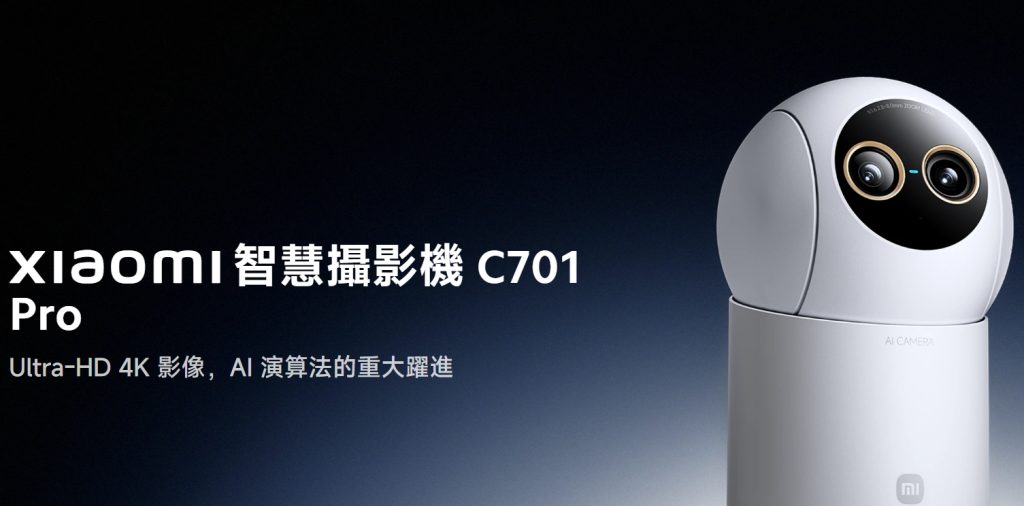
    In July 2026, Xiaomi launched a new pet whole-house AI suite. As the core monitoring terminal of the entire set of hardware, C701 Pro breaks the limitations of traditional single-camera home cameras and adopts an 8MP wide-angle + 5MP telephoto dual-lens hardware solution, paired with local end-side AI algorithms. It focuses on pet-specific identification and tracking and whole-house smart home linkage. This actual measurement is based on a cat + dog dual pet family scenario, and a full-dimensional actual measurement from appearance and image quality, AI pet function, night vision gimbal, Mijia ecology, advantages and disadvantages, to provide a complete reference for pet owners.

    Smart Camera C701 Pro
    Smart Camera C701 Pro

    Double shot close-up

    1. Appearance, workmanship and installation: simple and versatile, with privacy design in mind
      The overall size of the machine is 78×72×127mm, with a pure white matte PC body and a spherical pan-tilt shape. It will not ruin the home decoration style when placed on TV cabinets, shelves, or pet areas. The Xiaomi Logo is printed on the bottom, making it lightweight and does not take up space.
      Core design highlights
      Physical Privacy Cover
      The lens area is equipped with a manually pushable hood, which can be completely closed to cut off the picture when not in use. It is more secure than electronic closing. It can protect privacy with one click when you are alone at home or when visitors come to visit. It is a must-have configuration for home cameras.
      Hidden cable management + dual installation solution
      There is a cable trough reserved at the bottom of the fuselage, and the power cord can be hidden and stored; the package comes with a full set of wall-mounted accessories, which can be placed flat on the desktop or flipped up on the ceiling. It is suitable for fixed-point monitoring of pet activity areas on balconies and cat climbing frames.
      Dual-band Wi-Fi 6 + Bluetooth 5.4
      Supports 2.4G/5G dual-band networking, can be placed on large apartment partition walls or pet rooms at long distances, and the image delay is controlled within 0.3s; Bluetooth can be quickly configured to connect to the same series of feeders and pet air purifiers.
    2. Actual measurement of imaging hardware: dual-camera collaboration, no shortcomings in far and near details
      The biggest differentiating advantage of C701 Pro is the dual-lens hybrid optical architecture. It is different from competing products on the market that have single-camera digital magnification blur. The two independent imaging systems have a clear division of labor:
      8-megapixel ultra-wide-angle lens: f/1.6 large aperture, 127° wide angle, 5 optical lenses, responsible for the panoramic picture of the whole house, covering the entire living area;
      5 million telephoto lens: 8mm focal length 6P lens, specially responsible for close-up magnification, up to 9x hybrid zoom.


    Daytime panorama
    4K ultra-clear output, excellent HDR dynamic range, details of strong light by the window and indoor shadows are retained at the same time, the layers of cat hair and the texture of dog toys are clear, without overexposure or blackening.
    9x telephoto close-up (pet core scene)
    Remotely zoom in to observe the amount of food bowl, pet foot pads, vomit, and cat scratches in the corner without turning the pan/tilt to zoom in; it automatically switches to the telephoto lens for imaging, and there is no serious noise on the edges after zooming in. It is very useful for catching cats, tearing apart homes, and stealing snacks.
    Xiaomi Smart Camera C701 Pro
    Xiaomi Smart Camera C701 Pro


    Matte full color night vision
    Equipped with a non-red exposure infrared fill light, it will not emit dazzling red dots to disturb pets at night; it automatically switches to low-light full-color mode in dark light environments, allowing you to observe cats running at night in the early morning. The color screen can distinguish the outlines of cats and dogs. Ordinary single-camera cameras generally blur black and white at night, and the contrast advantage is obvious.

    1. Actual measurement of core AI pet functions (core competitiveness of product)
      The whole machine is equipped with a local end-side AI chip. All recognition operations are completed locally without uploading to the cloud. The recognition speed is faster and the privacy is stronger. The pet-specific algorithm has been specially optimized to only recognize cats and dogs and filter out invalid false alarms such as curtains flapping and fans.
    2. AI automatic pet tracking (the most practical function)
      When turned on, the gimbal automatically follows running cats and dogs, with a large rotation range of 360° horizontally and 180° vertically, and an upgraded high-speed silent motor. Cats can sprint quickly and dogs can run back and forth without losing track;
      Actual measurement: The cat ran from the sofa to the cat climbing frame and shuttled through various rooms. The gimbal followed smoothly without frequent lags or jitters. The tracking screen automatically cropped and zoomed in. The APP pushed short videos in real time to record the pet’s movements.

    AI recognition cat pop-up window push

    1. Real-time alarm for pets’ abnormal movements
      Distinguish three categories of pet-specific reminders:
      Pets are left alone for long periods of time and are frequently restless;
      Abnormal noise identification: cats knocking over water cups, dogs chewing plastic, and scratching furniture;
      Long-term immobility warning: suitable for young pets and elderly sick pets. It will push reminders for long-term immobility to detect health problems in a timely manner.
      The alarm comes with a 10-second short video clip. There is no need to manually review the video, and you can quickly grasp the status of your furry child during work breaks.
    2. Two-way voice remote interaction
      Built-in high-fidelity noise reduction microphone + high-power speaker, long-distance shouting without noise and extremely low delay;
      It has been tested that the dog’s name can be called remotely at work. The pet can clearly hear the sound and look at the camera, which can remotely comfort pets with separation anxiety. It also supports gesture calls. You can make an OK gesture in front of the camera and make a direct video call on your mobile phone without opening the APP.
    3. Additional AI multi-scene recognition
      In addition to pet recognition, it simultaneously supports humanoid detection, baby cry recognition, and abnormal sound alarms. One machine can take care of pet care, baby care, and home security. Families with multiple pets and members do not need to purchase multiple additional cameras.
    4. Mijia smart home linkage: a complete pet ecological closed loop
      As the hub of Xiaomi’s pet AI suite, C701 Pro can be fully automatically linked with the same series of hardware to form a complete smart pet-raising scene. It is also an exclusive capability that ordinary home cameras do not have:
      Linked AI Feeder 2nd Generation
      The camera recognizes that the pet is close to the food bowl, automatically records the duration and frequency of eating, and synchronizes the data to the Mijia APP; it will push health reminders after not eating for a long time, and capture and save the eating scene.
      Linked pet circulating water dispenser
      Detects the pet’s drinking movement and automatically records the amount of water consumed; when the water dispenser is out of water, the camera will pop-up simultaneously to remind the owner.
      Linked pet-specific air purifier
      AI recognizes pets that shed a lot of hair and scratch frequently (judged by motion algorithms), and automatically increases the purifier level to purify hair odors.
      Whole house lighting and air conditioning scene linkage
      Detect pet activity at night and automatically turn on the low-brightness night light; identify pets lying on the ground panting during high temperature periods and automatically turn on the living room air conditioner.
    5. Storage and APP usage experience
      Flexible storage solutions
      Supports 16G-256G Micro SD card local loop recording, free 24-hour event playback; optional Mijia cloud storage, 7-day/30-day loop cloud backup, local + cloud dual guarantee, video encoding uses H.265, 4K video takes up less storage space.
      Mijia APP is simple to operate
      The independent “Pet Care” section on the homepage aggregates pet capture clips, eating and drinking records, and alarm logs; it supports multiple people sharing the device, and family members can remotely view the pet’s screen at the same time, with screen splitting, zooming, and one-click voice operations.
    6. Summary of actual measured advantages and disadvantages
      Advantages
      The dual-camera 9x hybrid zoom takes into account both distance and distance, and the clarity of observing pets’ details is far superior to that of a single-camera gimbal camera at the same price;
      Exclusive AI recognition and tracking of cats and dogs, filtering invalid and false positives, and local computing to protect privacy;
      Red-exposure-free night vision + 360° global pan/tilt, 24 hours a day care without blind spots;
      Complete Xiaomi pet intelligent ecological linkage, automatic collaboration of feeders, purifiers, and water fountains;
      Physical lens blocking, dual-band Wi-Fi, wall-mounted flat dual installation, full of details and practicality;
      One machine has multiple functions, taking into account pet care, baby monitoring, and home security, with outstanding cost performance.
      Insufficient
      The machine will become slightly hot when it is powered on for a long time. It is recommended to place it in a ventilated place and do not place it in an airtight cabinet.
      Cloud storage value-added services require additional payment, and long-term complete playback requires your own large-capacity memory card;
      There is no built-in battery and it will stop working when the power is cut off. If there is a need for backup monitoring, it needs to be equipped with a smart socket UPS.
    7. Suitable groups and purchasing suggestions
      Recommended people to start with
      Office workers and cat/dog families who often travel for business need remote real-time care;
      Multi-pet families want to uniformly monitor the activities and eating status of multiple pets;
      Young pets and elderly sick pets need to monitor their activities, drinking water and food, and detect health abnormalities in a timely manner;
      I already have Mijia pet smart hardware and want to open up the whole-house pet automation scenario.
      Not suitable for the crowd
      Users who only have short-term temporary monitoring, no Mijia ecological equipment, pursue the ultimate low price, and do not need the zoom close-up function.
      Conclusion
      Xiaomi smart pet camera C701 Pro breaks away from the traditional positioning of “simple video recording” for home surveillance. With its three core capabilities of pet AI algorithm + dual-camera zoom + whole-house ecological linkage, it has become a segmented AI hardware specially created for pet owners. Compared with general PTZ cameras, it has been deeply customized in cat and dog recognition, detailed close-ups, and pet device linkage. If you are a Mijia user and have pets at home, this product is the best choice for home pet monitoring.
  • Chen Long, Head of VLA at Xiaomi Auto, Set to Leave

    Chen Long, Head of VLA at Xiaomi Auto, Set to Leave

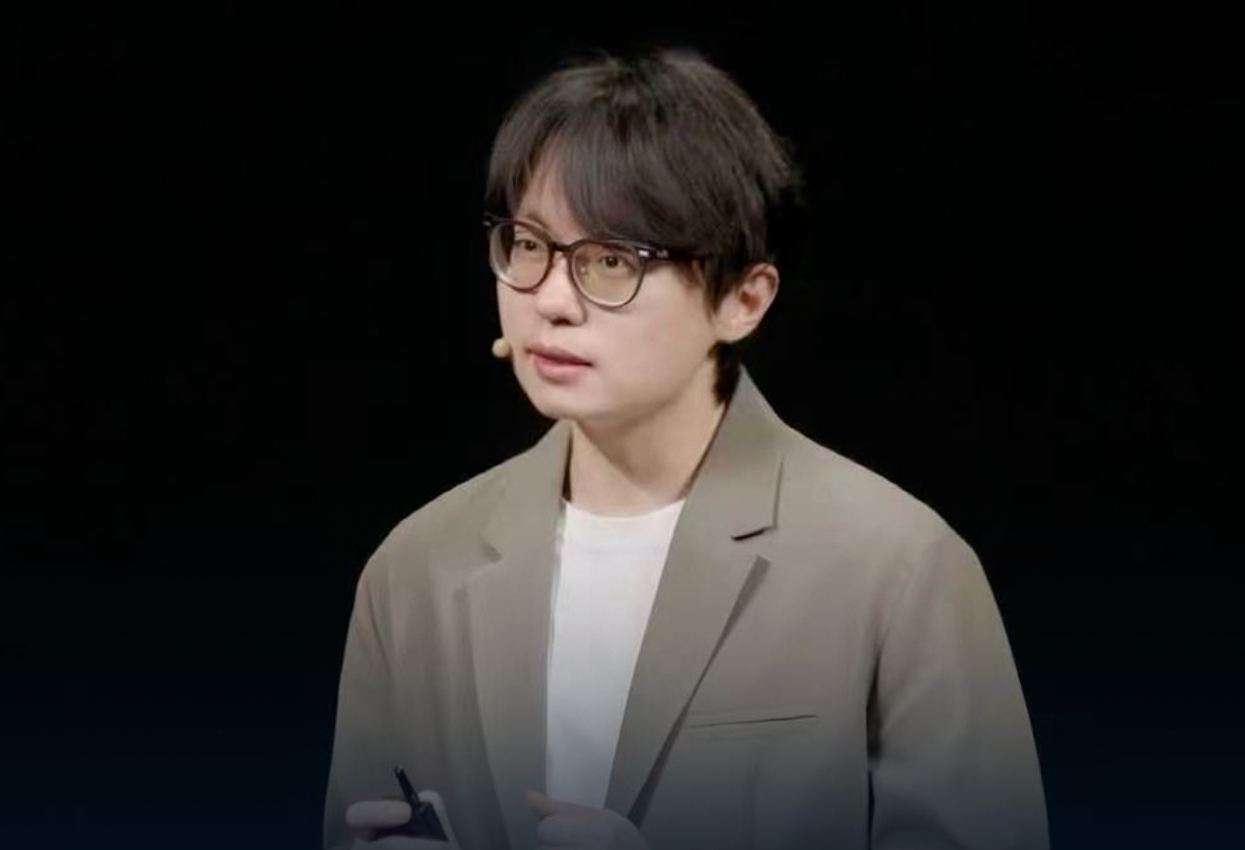
    It is reported that Chen Long, the head of the VLA (Vision-Language-Action) team within Xiaomi Auto’s in-house intelligent driving division, is set to leave the company; his next career move may be in the field of embodied AI.

    XIAOMI AUTO
    XIAOMI AUTO

    A highly accomplished returnee talent, Chen is well-known for his work in the R&D of cutting-edge intelligent driving technologies. Following the industry’s shift toward end-to-end systems, Xiaomi Auto strategically recruited him—with Lei Jun personally involved in the hiring process—to spearhead this technological direction.

    After joining Xiaomi Auto, Chen led the team responsible for VLA development; within just over a year, he successfully developed the VLA model and brought it to mass production in vehicles. While this initially appeared to be an ideal match for both parties, all good things must eventually come to an end.

    A trend has emerged in the intelligent driving industry: as major players advance from end-to-end systems to cutting-edge technologies like VLAs and world models, they frequently overhaul their teams with each technological iteration. The completion of a new technology project often marks a cycle where veteran team members depart and new talent arrives to tackle the next technological roadmap.


    For leaders who have successfully delivered cutting-edge technology projects, there is no shortage of opportunities; they can join embodied AI startups as co-founders or launch their own ventures.

    Chen Long previously served as a Staff Scientist at Wayve. He joined Xiaomi Auto in March 2025 as the Technical Lead for Intelligent Driving VLA, reporting to Ye Hangjun, the head of Xiaomi Auto’s intelligent driving business. He was primarily responsible for the R&D and deployment of Xiaomi Auto’s intelligent driving VLA large model (XLA), driving the evolution of Xiaomi’s driver-assistance systems from “data-driven” to “cognition-driven.”

  • Xiaomi CyberOne Gen 2 Review

    Xiaomi CyberOne Gen 2 Review

    Introduction: Lei Jun’s Humanoid Robot Dream Finally Beyond PowerPoint

    Xiaomi CyberOne 2026 version standing render
    Xiaomi CyberOne 2026 version standing render

    On June 8, Xiaomi did something big—the official release of CyberOne Gen 2. Standing 170cm tall, walking at 3km/h, powered by the self-developed MiMo embodied large model, breaking through 40% success rate as the only competitor at CVPR 2026 real-machine manipulation track, securing dual championships at ICRA 2026 full-body control track. The live demo even showed it holding a Xiaomi 17T Pro to take photos—not staged, but real-machine operation.

    More critically: it has already started working at Xiaomi’s automotive factory. This is not a concept machine, not a laboratory toy, but a genuine “worker” that can tighten screws, move parts, and take quality inspection photos.

    Xiaomi’s journey in humanoid robotics, counting from the 2022 debut of CyberOne Gen 1 “Tie Da,” has spanned four years. Gen 1 was technology validation; Gen 2 is scenario deployment. Lei Jun says humanoid robots are the final piece of Xiaomi’s “human-car-home full ecosystem” puzzle—phones manage people, cars manage mobility, robots manage the home. Now, this piece is finally starting to fit.

    Product Overview: Evolution from “Tie Da” to “Worker”

    The core upgrade of CyberOne Gen 2 is not height or weight, but the “brain”—the MiMo embodied large model.

    What is MiMo? Xiaomi’s self-developed embodied intelligence large model. In February 2026, Xiaomi open-sourced the first-generation VLA large model Xiaomi-Robotics-0 (4.7 billion parameters, “brain + cerebellum” hybrid architecture), followed by the MiMo-V2.5 series in March. MiMo’s core capability bridges “language understanding” and “physical operation”: when you say “tighten that screw to the specified torque,” MiMo can decompose this into a physical action chain of “locate screw → grab tool → align with hole → rotate → detect torque → stop.”

    The Weight of CVPR 2026 Dual Championships: CVPR is the top conference in computer vision. The real-machine manipulation track requires robots to complete grasping, placing, and tool usage tasks in real environments. CyberOne Gen 2 was the only competitor to break through 40% success rate—meaning in complex, dynamic, unstructured real environments, it can stably complete nearly half of the operation tasks. By comparison, the 2025 champion’s success rate was still around 25%.

    ICRA 2026 Full-Body Control Dual Championships: ICRA is the top conference in robotics. The full-body control track tests a robot’s ability to walk, balance, and avoid obstacles while simultaneously performing upper-body operations. CyberOne Gen 2 can tighten screws while walking, carry boxes while avoiding obstacles—this “multi-task parallel” capability is the core requirement of industrial scenarios.

    Live Demo of Holding Phone for Photography: This action seems simple but is actually extremely difficult. Phones are smooth, fragile, irregular objects; grip strength requires precise control (too light and it drops, too heavy and it breaks), and photography requires stable posture. CyberOne Gen 2’s ability to complete this action demonstrates that its tactile perception and force control precision have reached commercial levels.

    Specifications: How Much Technology Fits in a 170cm Body

    SpecDetails
    Height170cm
    Walking Speed3km/h
    Drive ModelMiMo embodied large model
    AI ArchitectureVLA (Vision-Language-Action)
    Open-Source ModelXiaomi-Robotics-0 (4.7 billion parameters)
    Vision SystemMi-Sense 3.0 (3D spatial perception)
    Upper Body DoF21+
    HandDexterous hand (tactile sensors)
    Lower BodyBipedal walking
    BatteryUnannounced (Gen 1 reference ~3 hours)
    Weight~52kg (Gen 1 reference)
    Application ScenariosFactory assembly,quality inspection
    Deployment StatusAlready working at Xiaomi automotive factory

    Data source: Xiaomi official launch event, CVPR/ICRA 2026 papers, IT Home

    CyberOne Gen 2’s hardware platform continues the first generation’s design framework but with key upgrades:

    Upper Body Dexterous Hand: Gen 1’s hand was a simple gripper; Gen 2 upgrades to a multi-DoF dexterous hand with independent finger control and palm covered with tactile sensor arrays. This enables it to hold phones, tighten screws, and plug in interfaces—actions requiring “perceive → adjust → execute” closed loops rather than simple “open → close.”

    Mi-Sense 3.0 Vision System: Supports real-time 3D environment reconstruction with 10x precision improvement over Gen 1. In factory environments, it can identify part positions, poses, types, and even detect surface defects (scratches, stains, deformations).

    Whole-Body Control Algorithm: Based on MiMo large model’s hybrid training of reinforcement learning + imitation learning. First trained millions of times in simulation environments, then fine-tuned in real environments. The ICRA dual championships prove that this algorithm reaches internationally top-tier levels in dynamic balance and multi-task coordination.

    Deep Analysis: What Can Factory Deployment Actually Do?

    CyberOne Gen 2’s specific work content at Xiaomi’s automotive factory includes:

    Stud Insertion / Screw Tightening: At the die-casting workshop stud insertion station, continuously operating autonomously for 3 hours with bilateral simultaneous installation success rate reaching 90.2%, meeting the fastest 76-second production line cycle requirement. This data comes from March 2026 factory testing, harder-core than launch event demos.

    Part: Cooperating with AGVs (Automated Guided Vehicles), grabbing part boxes from shelves, to assembly stations, and placing them at designated positions. During, it needs to avoid workers and other equipment with dynamic path planning.

    Quality Inspection Photography: Holding a phone (or dedicated camera) to photograph assembled components, with the AI vision system detecting whether they are qualified. Unqualified products are automatically marked, notifying manual re-inspection.

    Simple Assembly: Aligning two parts, inserting them, and securing them. Such tasks require force control precision (preventing over-tightening or under-tightening) and visual guidance (aligning with holes).

    But these tasks share a common characteristic: structured, repetitive, with clear standards. CyberOne Gen 2 currently cannot handle unstructured tasks (such as “organize those messy parts”) or respond to emergencies (such as dropped parts, broken tools). Lei Jun himself admits that humanoid robots currently belong to the “apprentice” status, not yet truly becoming “formal workers.”

    Comparison: CyberOne Gen 2 vs Tesla Optimus vs Unitree G1 vs UBTECH Walker

    FeatureXiaomi CyberOne Gen 2Tesla Optimus Gen 2Unitree G1UBTECH Walker S1
    Height170cm173cm127cm172cm
    Weight~52kg~73kg35kg~76kg
    Walking Speed3km/h5km/h2m/s3.5km/h
    DoF21+22+4341
    AI ModelMiMo (self-developed)Tesla self-developedOpen-source/self-developedROSA 2.0
    Dexterous HandYes (tactile)Yes (11 DoF)OptionalYes (force control)
    Factory DeploymentAlready working (Xiaomi)Testing phaseResearch/educationAlready working (BYD, etc.)
    PriceUnannounced (target < $30,000)Unannounced (estimated $20,000-30,000)99,000 yuanUnannounced
    Open SourcePartial (VLA model)NoPartialNo
    PositioningIndustrial + ecosystemIndustrial + generalResearch + educationIndustrial + service

    CyberOne Gen 2’s differentiation is clear: ecosystem integration. It is not the strongest (Optimus), not the most flexible (G1), not the most mature (Walker), but it is the only humanoid robot destined from birth to become part of the “human-car-home ecosystem.”

    Imagine this scenario: you leave home in the morning, your Xiaomi phone automatically syncs your schedule to CyberOne; after you get in the car, navigation data syncs to CyberOne, which turns on the home AC in advance; before you get off work, CyberOne receives the car’s location and starts preparing dinner (simple operations); when you arrive home, CyberOne reports today’s household completion status and syncs inspection photos to your phone album.

    This “cross-device collaboration” capability is unique to Xiaomi’s ecosystem. Other manufacturers’ humanoid robots, no matter how powerful, are “islands.”

    Pros and Cons

    ProsCons
    MiMo large model driven, internationally top-tier AI capability (CVPR + ICRA dual championships)Factory tasks currently limited to structured, repetitive work
    Already genuinely deployed, not a laboratory conceptWeak handling of unstructured tasks and emergencies
    Human-car-home ecosystem integration, vast scenario imagination spaceBattery life and stability require long-term validation
    Dexterous hand + tactile sensors, strong delicate operation capabilityPrice unannounced, expected high initial cost
    Open-source VLA model, developer-friendly ecosystemDeeply bound to Xiaomi ecosystem, limited value for non-Xiaomi users
    Full-size 170cm, more natural human-robot collaboration52kg weight, fall safety risks require attention

    Who Should Buy

    Recommended for:

    • Deep Xiaomi ecosystem users expecting full-scenario “human-car-home” linkage
    • Industrial manufacturing enterprises needing structured assembly/quality inspection automation
    • Tech enthusiasts following humanoid robot technology frontiers
    • Investors/researchers focusing on embodied intelligence and VLA model development

    Not recommended for:

    • Ordinary household users (currently no consumer version, and functions not suitable for home use)
    • Non-Xiaomi ecosystem users (ecosystem integration advantages cannot be leveraged)
    • Users needing unstructured task processing (such as organizing clutter, caring for elderly)
    • Small businesses with limited budgets (expected high initial procurement costs)

    FAQ

    Q: Can I buy CyberOne Gen 2 for home use? A: Currently only面向 industrial scenarios and enterprise clients, with no consumer sales plans. Xiaomi’s long-term goal is to launch home service models priced at 20,000-30,000 yuan, but the timeline is unannounced.

    Q: Is the MiMo large model open-source? A: In February 2026, the first-generation VLA large model Xiaomi-Robotics-0 (4.7 billion parameters) was open-sourced, but whether the complete MiMo model running on CyberOne Gen 2 is open-source has not been officially clarified.

    Q: Is factory deployment propaganda or reality? A: According to March 2026 testing data, CyberOne operated continuously for 3 hours at Xiaomi’s automotive factory die-casting workshop, achieving 90.2% bilateral nut installation success rate, meeting the 76-second cycle. This is real deployment, but scale may still be limited (hundreds of units).

    Q: Who is stronger, CyberOne or Tesla Optimus? A: Each has advantages. Optimus leads in hardware performance (speed, strength), but CyberOne leads in AI models (CVPR/ICRA results) and ecosystem integration. Both are currently in industrial pilot phases, not yet mass-produced.

    Q: What is the battery life? A: Official Gen 2 battery data has not been announced. Referencing Gen 1’s approximately 3 hours, Gen 2 may improve through battery optimization and energy management, but industrial scenarios typically require battery swap or charging solutions.

    Conclusion

    The release of Xiaomi CyberOne Gen 2 marks the Chinese humanoid robot industry’s formal transition from “laboratory showmanship” to “factory.” The CVPR and ICRA dual championships are not the endpoint but the starting point—they prove MiMo large model’s reliability in real physical environments, but the 90.2% success rate also means the remaining 9.8% of errors need to be conquered.

    CyberOne Gen 2’s greatest value lies not in what it can do now, but in what it represents: the final piece of Xiaomi’s “human-car-home full ecosystem” puzzle. When phones, cars, and robots share the same AI brain (MiMo), the same data flow, and the same user profile, “intelligent living” transforms from marketing rhetoric into real experience.

    But this road is still long. Large-scale engineering application of humanoid robots faces prominent challenges including poor process stability, high hardware costs, and limited workstation quantities. Lei Jun promises that within 5 years humanoid robots will be deployed in Xiaomi factories—whether this promise is fulfilled depends on MiMo model iteration speed, supply chain cost decline curves, and most importantly: whether users are willing to pay for “a walking AI assistant.”