From Voice Recognition Giant to AI Agent Pioneer
iFlytek is no longer satisfied with an AI that can only “speak.”
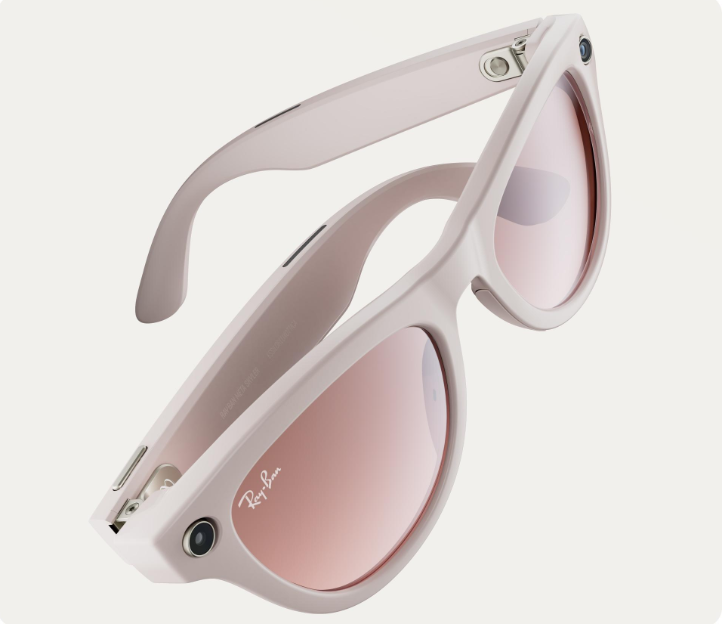
On April 15, 2025, the company famous for its voice recognition technology officially launched the AstronClaw upgrade, unveiling nine innovative products in one go and presenting for the first time a complete “software-hardware integrated” AI Agent architecture. The most eye-catching product at this launch event was a pair of AI glasses weighing just 40 grams—GlassClaw.
“Our goal is not to create a conversational assistant, but to become the execution hub of the physical world,” iFlytek stated clearly at the launch event. This strategic shift means that large language model competition has already moved from algorithm benchmarking to a new battlefield of embodied intelligence and multimodal interaction.
40 Grams: Technical Breakthrough Behind Lightweight Design
While the industry is still debating the feasibility of AI glasses, GlassClaw has delivered an impressive answer with its 40-gram weight.
A standard pair of prescription glasses weighs approximately 20 to 30 grams, while GlassClaw adds only 10 to 20 grams on top of that. This means users can virtually achieve all-day comfortable wearing, completely bid farewell to the traditional problem of smart glasses “pressing down on the nose bridge.”
Supporting this lightweight design is a series of technological innovations. GlassClaw adopts a voice-visual collaborative perception architecture, achieving real-time environmental semantic completion through cloud-end linkage. Technically, GlassClaw has overcome two major challenges faced by AI glasses: lip movement recognition and remote sound capture. Even in high-noise environments, the device can accurately capture user voice commands, significantly improving usability in complex scenarios.
Software-Hardware Integration: Redefining the AI Interaction Paradigm
The release of GlassClaw represents not just a breakthrough in a single product, but also iFlytek’s reconsideration of the AI interaction paradigm.
Traditional AI assistants are limited to cloud computing and screen-based interaction, where users must proactively initiate requests to receive services. The software-hardware integrated GlassClaw achieves end-cloud collaborative computing, enabling AI to proactively perceive the physical world, understand user intentions, and execute corresponding actions.
Taking the Canton Fair itinerary planning as an example, the traditional approach requires users to manually search for information, write schedules, and enter them into calendar applications one by one. With GlassClaw, users simply issue a command, and the system automatically integrates local notes, online data, and personalized preferences to generate a complete itinerary and sync it to calendars and to-do lists.
The transformation from “you ask, it answers” to “you tell, it does”—this shift is redefining the way humans collaborate with machines.
Industry Landscape: AI Glasses Track Accelerates Restructuring
GlassClaw’s entry has intensified competition in the AI glasses sector.
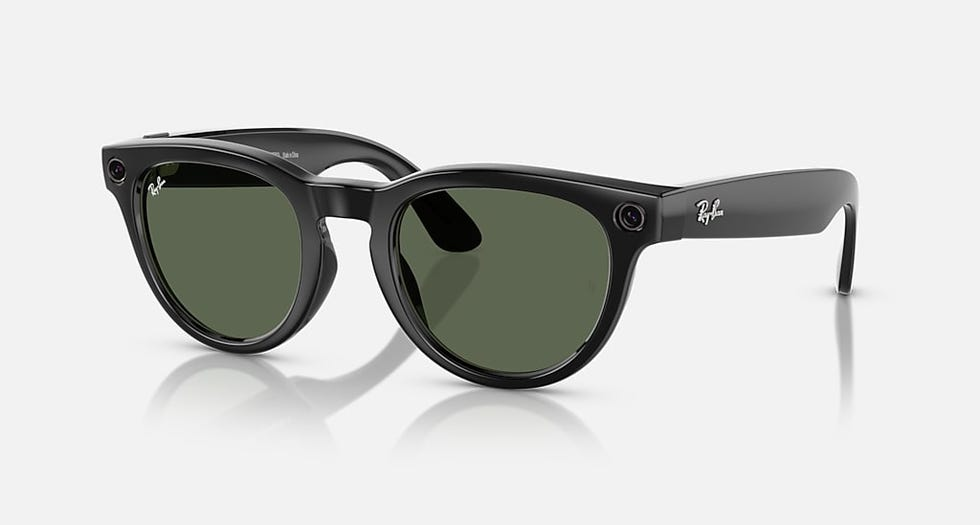
Meta’s Ray-Ban smart glasses, launched in 2023, have sold over a million units cumulatively, becoming a benchmark product in the AI glasses field. Hardware giants like Samsung and Apple are also actively deploying, attempting to secure a position in this emerging track.
The domestic camp is equally determined. In addition to iFlytek’s GlassClaw, companies like Baidu, Xiaomi, and Huawei are developing their own AI glasses products. Supply chain data shows that global smart glasses shipments increased by over 300% year-over-year in the first half of 2025, with the market scale expanding rapidly.
Notably, AI glasses are forming a collaborative ecosystem with smart rings, pendants, and other wearable devices. iFlytek’s AstronClaw platform supports multi-device interconnection, allowing users to link GlassClaw glasses with smart rings for richer interactive experiences.
Strategic Intent Behind Technical Roadmap
The recruitment positions reveal glimpses of iFlytek’s technical ambitions.
Recent job postings cover areas including smart location selection (spatial data modeling), global sales forecasting (supply chain operations optimization), Agent Skill development (MCP service architecture design), and multi-agent collaboration (complex business logic architecture). iFlytek aims to build not a laboratory demo, but a truly deployable AI Agent product.
This strategic intent is clear: whoever masters software-hardware integration capabilities will build an ecosystem moat. In the increasingly intense competition of large language models, the end-cloud collaborative AI Agent ecosystem is expected to become enterprises’ new defensive barrier.
Outlook: The Next Decade of AI Hardware
The release of GlassClaw marks China’s entry into the “software-hardware integrated” era of AI Agents.
With continued technological breakthroughs, AI glasses will become even more feature-rich. From basic voice interaction to complex multimodal perception, from single device control to full-scene intelligent connectivity—AI is moving from screens into reality, becoming a capable assistant in people’s lives.
GlassClaw weighing 40 grams may just be a beginning. In the future, we can expect even lighter and smarter AI hardware products, fundamentally changing the way humans interact with machines.
It’s not just an AI that can chat—it’s an AI that can get things done for you. iFlytek is serious this time.