When pet owners travel, they no longer leave their beloved dogs alone at home, anxious. They simply take out their phones, dial the device on their pet’s collar, and whisper into the microphone. “That warm notification lets it know I’m here,” she says. “It’s not just a tracker; it’s our lifeline.”
This pet owner is using the GlocalMe PetPhone, hailed by its manufacturer, GlocalMe (a brand of UCloudLink Group (NASDAQ: UCL),) as the world’s first “pet smartphone.” As the $320 billion global pet market shifts from basic care to emotional companionship, PetPhone aims to address a long-standing pain point: most pet wearables employ a one-way monitoring model, allowing owners to track their pets’ location but not to communicate with them. While this device opens up new possibilities for human-pet interaction, it also faces challenges that may limit its appeal to mainstream pet owners.
A New Model: Two-Way Communication
Unlike traditional pet GPS trackers or smart cameras (which only provide one-way monitoring), PetPhone’s core innovation lies in two-way voice communication. Owners can call their pets at any time via a mobile app, hearing their barks, meows, or even the softest breathing sounds. With simple training, pets can also initiate calls by performing specific actions (such as jumping or raising a paw), sending distress signals to their owners and expressing their anxiety or loneliness.
This feature aligns with a key shift in pet ownership: more and more consumers see their pets as “furry babies” rather than just companions, driving demand for products that foster emotional bonds. Data from Global Market Insights shows that the pet technology market is projected to surge from $156 billion in 2025 to $529 billion in 2035, with wearable devices leading the growth. PetPhone pioneers this emotional shift by transforming passive monitoring into proactive communication.
An industry analyst specializing in pet technology stated, “For years, the pet industry has remained at the level of ‘observing’ pets. PetPhone shifts this focus to ‘listening’ and ‘responding’—fundamentally changing the way we interact with our pets.”
Features and Hardware: Beyond Communication
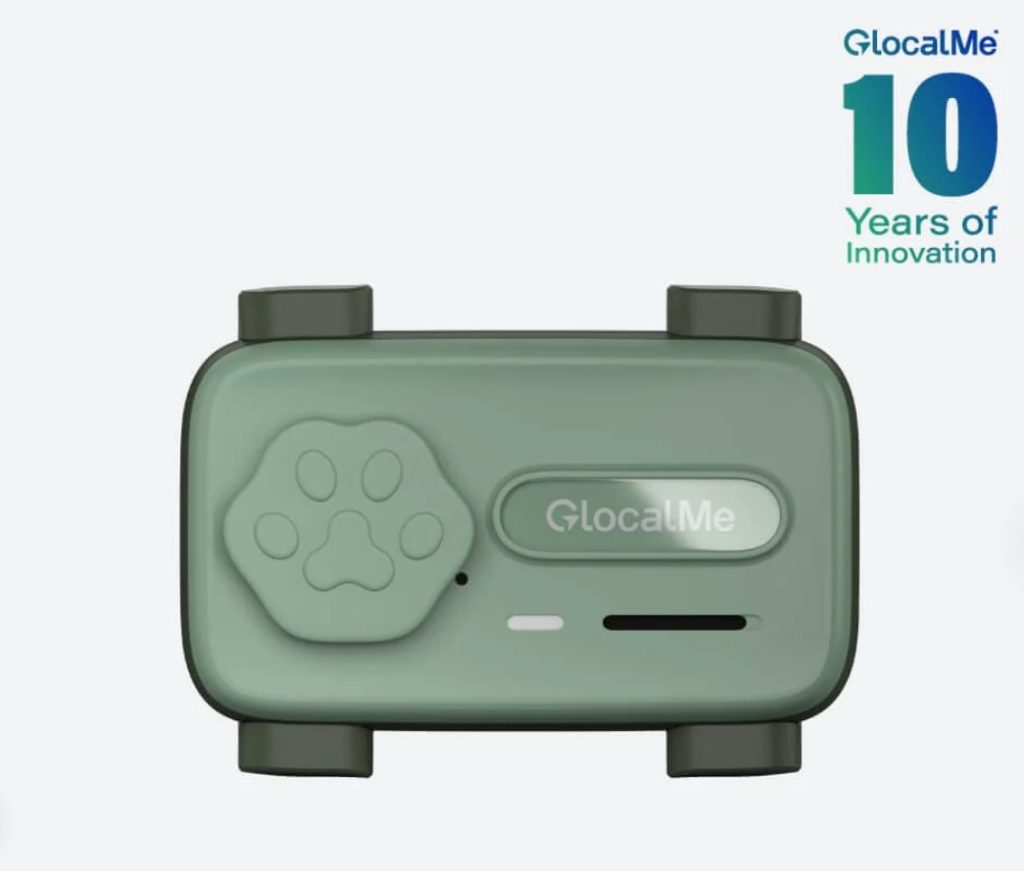
PetPhone integrates multiple high-end features into a lightweight design, weighing only 37 grams, making it comfortable for most cats and dogs weighing over 3.5 kg. Its IP67 water and dust resistance ensures durability during everyday pet activities, easily handling walks in the rain or water play.
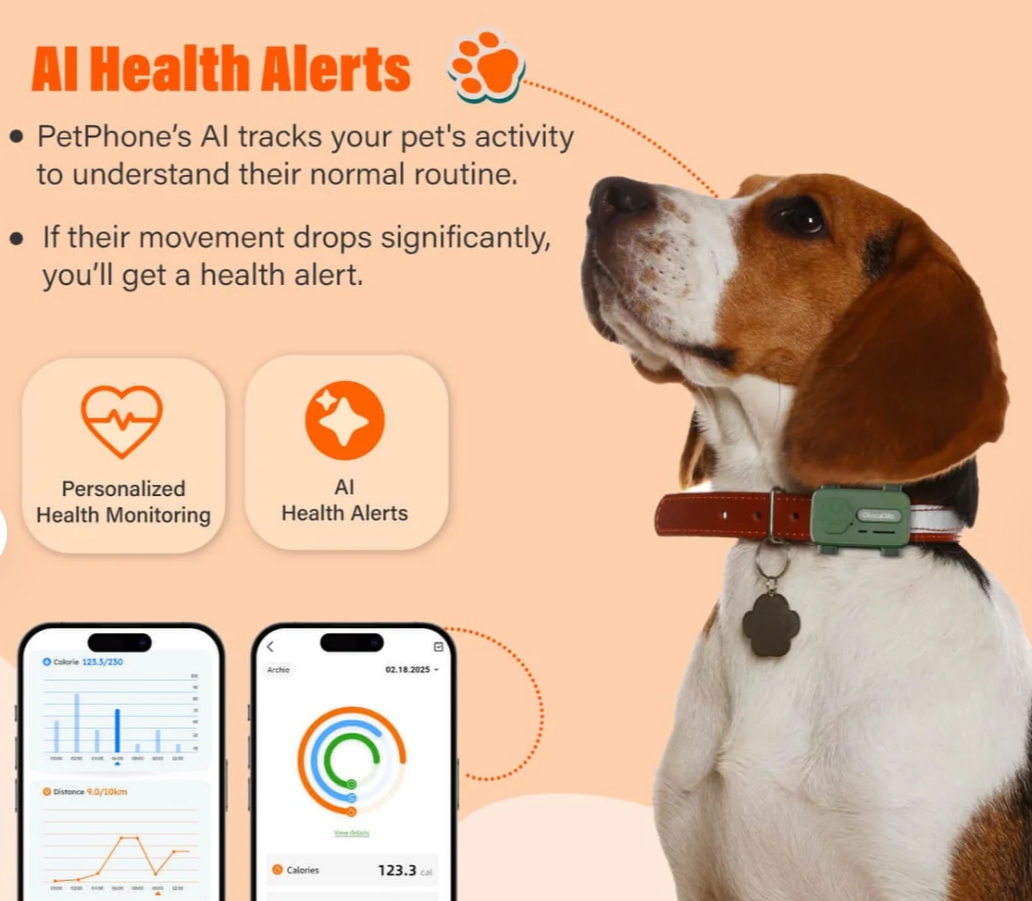
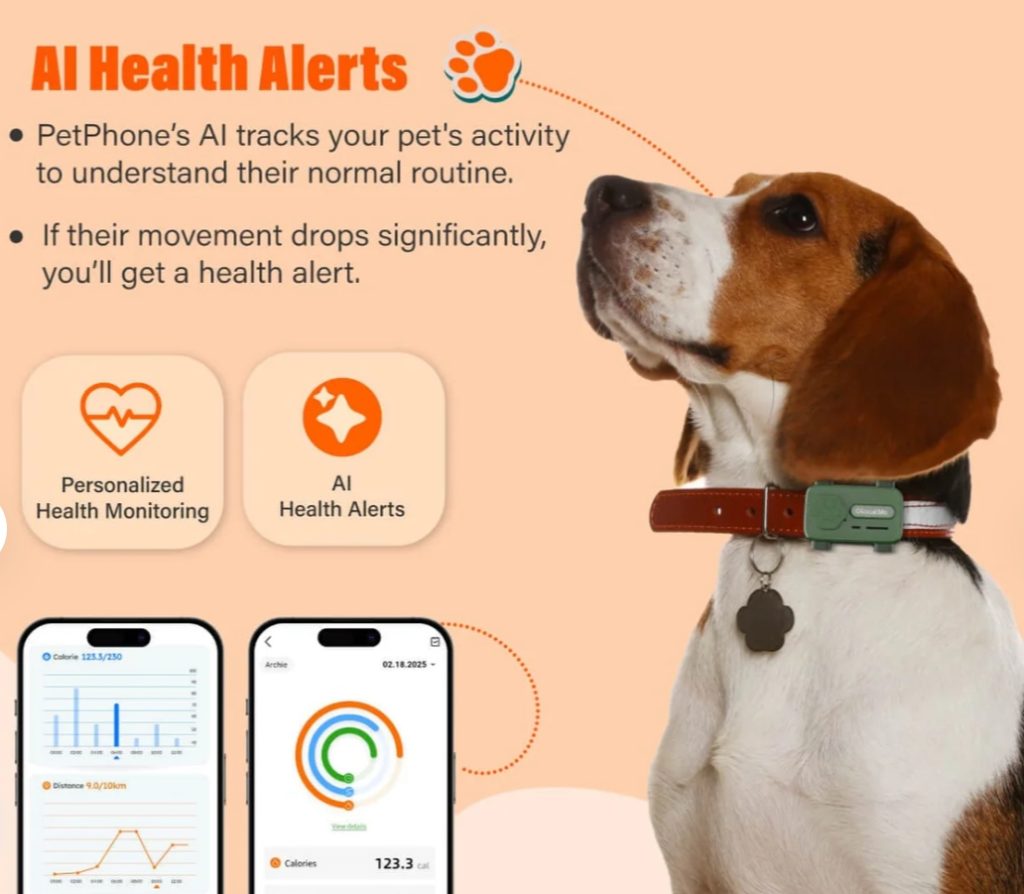
Key specifications include six layers of positioning technology (GPS, AGPS, LBS, Wi-Fi, Bluetooth, and active radar), achieving positioning accuracy within 3 meters, even in densely populated urban areas or remote mountainous regions. The electronic fence function alerts when the pet crosses a preset boundary, addressing another major problem: pets getting lost. This device also includes AI-powered health monitoring, tracking your pet’s activity levels, sleep patterns, and even detecting subtle behavioral changes that may indicate health risks, sending alerts to the owner’s app.
A major highlight is its global connectivity, thanks to GlocalMe’s CloudSIM technology. Without a physical SIM card, PetPhone can be used in over 200 countries and regions, connecting to more than 390 carriers worldwide—a significant benefit for frequent travelers or those traveling abroad with their pets. Battery life has always been a challenge for pet wearables, but PetPhone boasts up to 7 days of battery life under typical use, far exceeding the industry average of 2-3 days.
Strengths, Weaknesses, and Market Positioning
PetPhone’s biggest advantage lies in its differentiated design. Compared to competitors, its advantages are obvious: traditional GPS trackers focus solely on location information, while smart cameras provide only visual monitoring. PetPhone integrates communication, location tracking, health monitoring, and even a pet social network (where owners can share their pets’ activity data and communicate with other pet owners).
“This is a one-stop solution tailored for the modern pet owner,” said a spokesperson for GlocalMe. “We’re selling more than just a gadget; we’re selling peace of mind.”
However, the device also has some significant drawbacks. The pet-initiated calling function requires training, which some owners may find time-consuming or ineffective with more stubborn pets. Its core functions—including communication and GPS—rely on a subscription service, adding long-term costs beyond the initial hardware purchase. Furthermore, the device’s size may not be suitable for very small pets (such as teacup dogs) or large breeds, limiting its target user group.
Compared to competitors like the Whistle GO Explore or the Fi Smart Dog Collar, PetPhone excels in emotional interaction but is more expensive and requires ongoing subscription fees. This positions it as a premium product, targeting middle- to high-income pet owners who prioritize emotional connection over price.
Industry Impact and Future Outlook
The launch of PetPhone marks a broader trend in pet technology: a shift from functional devices to emotionally engaging devices. With advancements in artificial intelligence, the Internet of Things, and biometrics, the industry is moving towards products that not only monitor pets but also understand their needs—from detecting anxiety to predicting health problems.
GlocalMe has built an ecosystem around PetPhone, integrating it with the PetCam smart camera to create a “see, hear, and speak” experience for pet owners. This integration reflects the industry-wide shift towards a “hardware + software + services” model, where a single device becomes part of a broader pet care ecosystem, connecting with veterinary clinics, food delivery, and insurance services.
To achieve long-term success, PetPhone must address its shortcomings. Simplifying the training process, offering flexible subscription plans, and providing expanded size options will help attract a wider user base. Furthermore, it faces competition from emerging players, particularly in Asia, the world’s fastest-growing pet technology market, where local brands are launching similarly functional and more affordable alternatives.
“Pet phones are a bold move in the human-pet technology space,” an industry analyst said. “They demonstrate the need for tools for emotional connection, but they are not a panacea. Success depends on a balance between innovation and practicality, and the ability to keep pace with the rapidly evolving market, given our ever-growing love for our pets.”