

Release date: March 2, 2026
Product reviewed: LEGO Star Wars Smart Brick Series
Reference Price: Starting at approximately $100 per set, complete set at approximately $250
Recommended age: 9 years and up
Keywords: Internet of Things, speech synthesis, NFC interaction, immersive experience
Introduction: The Leap from “Assembly” to “Symbiosis”
At the 2026 Consumer Electronics Show (CES), LEGO showcased a groundbreaking new product—a smart brick with a microcomputer, speakers, and sensors. Months later, this product, hailed as “LEGO’s most important evolution in half a century,” finally opened its doors to consumers worldwide on the 1st of this month.
This initial launch focuses on the Star Wars IP, encompassing several classic designs including the Millennium Falcon. This is more than just a simple packaging upgrade; LEGO is attempting to transform the traditional building experience into a “living” game with digital interactivity. So, is this little “smart brick” truly worth the price?
I. Technical Architecture: The Beginning of an Ecosystem
Unlike previous systems that relied solely on electric power, the new intelligent system is built on a more complex three-layer architecture, designed to enable perception and feedback between objects:
- SMART Brick: The “brain” of the system. This is a specially modified classic 2×4 block that integrates the main control chip, battery, and audio unit. It is responsible for processing commands and outputting visual and auditory feedback.
- Smart Tag: Equivalent to an “information carrier.” This is a special NFC patch that is attached to the surface of a building or vehicle to define the object’s attributes (such as “airplane” or “house”).
- SMART Minifigure: A character with a unique ID. When a minifigure with a built-in chip approaches a specific area, it can be recognized by the intelligent core and trigger a preset storyline.
It is worth noting that all three are indispensable to achieve maximum effectiveness, but Lego ‘s current sales strategy does not seem to be very friendly.
II. Interactive Experience: A Coexistence of Surprises and Compromises
In actual use, we focused on testing two dimensions: character interaction and physical feedback.
1. Story-driven voice feedback
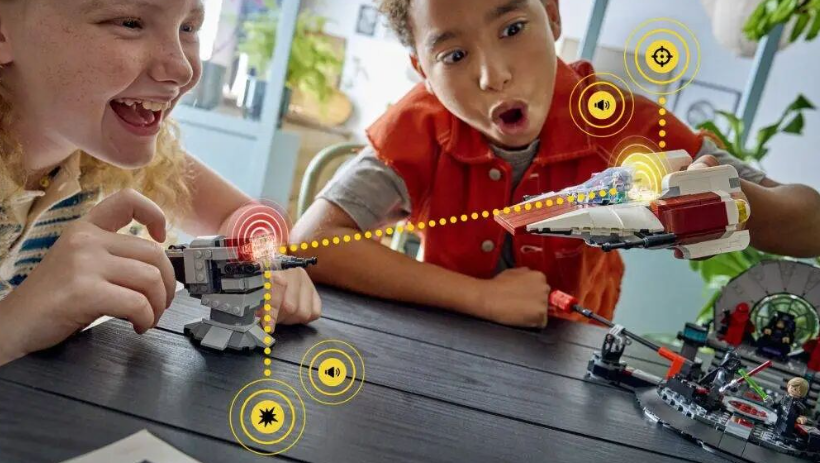
The most intuitive function is the characters’ “dialogue.” For example, placing Han Solo’s AI character in the Mos Eisley tavern scene will automatically play the sound effects of the two confronting each other. However, the technology here does not directly play back the pre-recorded movie soundtrack, but rather uses text-synthesized electronic voices.
The advantage of this technology is its high flexibility, theoretically allowing for an unlimited generation of new lines; the disadvantage is that the timbre is somewhat stiff and the texture is rather mechanical. Some players jokingly describe the sound as “like someone talking on the phone while using a vacuum cleaner,” which vividly expresses the roughness of the sound but also reflects the limitations of current synthesis technology in emotional expression. For fans who pursue highly realistic sound, this may be an unacceptable disappointment.
2. Physical sensor linkage
The smart building blocks are more than just a player; they also retain the attribute of being a “sensor.” On a Red Five X-Wing fighter jet model, we discovered an ingenious detail: a physical spring structure is connected to a red switch on the fuselage. When the player presses this button, the physical displacement is captured by the internal sensor, triggering the sound effect of the fighter jet firing.
This method of combining mechanical structures with digital signals is more tangible than simple NFC sensing, and it brings “playing with building blocks” back to the hands-on operation itself, rather than just staring at the screen.
III. Cost Analysis: The Consumption Barriers Caused by Fragmentation
Despite the product’s innovative nature, its initial marketing strategy sparked considerable controversy.
Of the eight launch sets currently released on the official website, only some are equipped with the core “Smart Blocks.” This means that if players want to experience the full Star Wars universe crossover, they cannot simply rely on purchasing individual large items (such as the expensive Millennium Falcon); they will also need to supplement with specific basic sets.
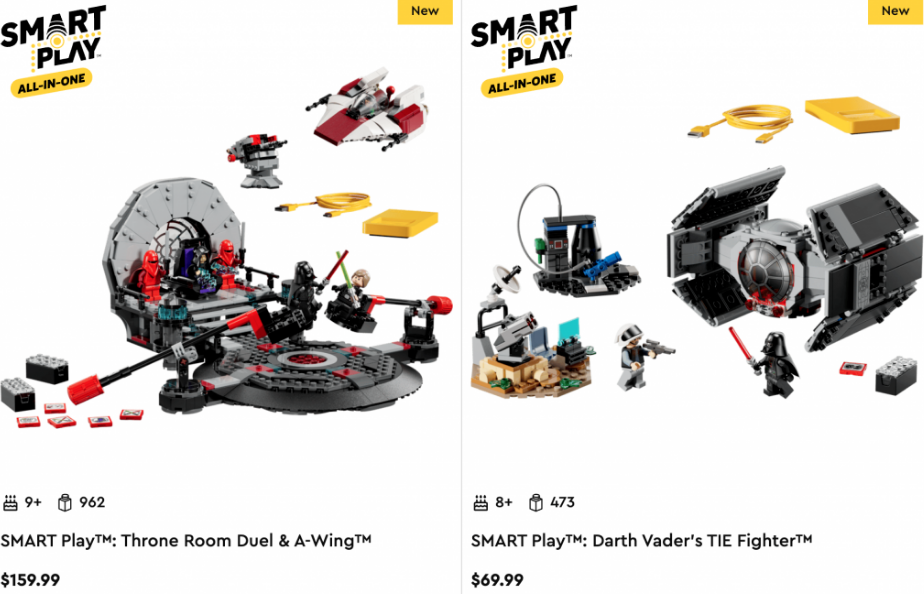
Taking the creation of a small, dynamic scene comprising “spaceship + scene + key characters” as an example, consumers often need to hold the following three products simultaneously:
- Vehicles equipped with smart building blocks (such as the X-Wing or TIE fighter jets)
- Scene packages that include smart tags (such as Yoda’s Hut)
- The main character figure equipped with an NFC chip (usually included in other sets).
Roughly calculated, to obtain the full interactive capabilities of the three components mentioned above, the total expenditure for users could reach $250. Considering that the smart blocks cannot be sold individually and there is no option to repurchase from existing inventory, this bundled sales strategy significantly raises the entry barrier for ordinary users. For users who only want to try a small portion of the features, the cost-effectiveness appears low.
IV. Summary of Advantages and Disadvantages
✅ Points to be commended:
- The ecosystem has enormous potential: once the hardware becomes widespread, players will be able to freely combine storylines like building blocks, making it possible to recreate the grand scenes of an entire movie.
- Innovative Interaction Logic: The hybrid interaction method combining physical buttons and NFC increases the fun of exploration.
- Compatibility preserved: You can still create using regular LEGO pieces; the smart features are just overlays and do not completely enclose the creative space.
❌ Existing shortcomings:
- Low voice fidelity: The synthesized voice has poor quality and lacks the emotional color of a realistic performance.
- Difficulty in obtaining spare parts: Uneven distribution of core components, forcing decentralized purchases, leads to a surge in total costs.
- Lack of standalone sales: Currently, it is not possible to purchase “smart building blocks” separately to replace the old model, which hinders the upgrade path for existing users.
V. Purchase Recommendations
Recommended purchase:
If you’re a die-hard Star Wars fan with a generous budget and want to be among the first to experience LEGO’s future interactive direction, this set offers a unique perspective. It makes you feel like the model in your hands is no longer static, but has come to life.
We recommend waiting and observing:
If you value the pure experience of building the set, or have high expectations for the sound quality of children’s toys (especially if you have a child at home who is sensitive to sound), the current version may not meet your expectations. Furthermore, the high cost of exchanging parts is a significant consideration if you plan to collect the entire set.
Conclusion
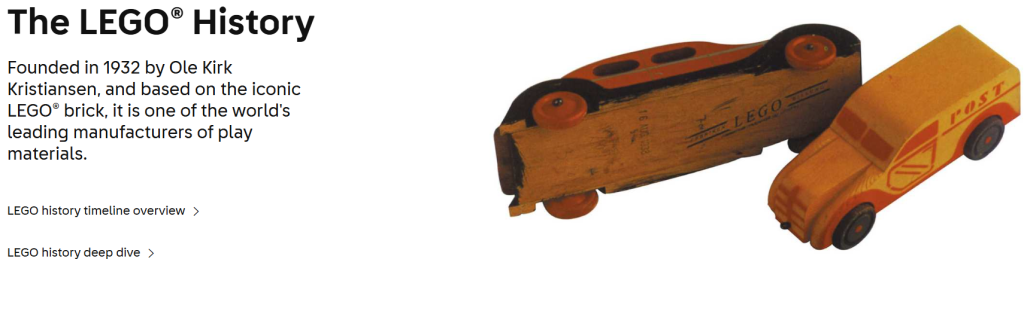
From its first wooden toy car in 1932 to this intelligent building block set launched in March 2026, LEGO has always adhered to its “play well” brand philosophy, providing high-quality play experiences for users around the world.
The SMART Brick series is undoubtedly a solid step forward for LEGO in its digital transformation. It technically proves the possibility of combining physical bricks with digital content, but there is still room for optimization in its commercial application.
With the launch of more non-IP-based smart kits and the possibility of independent supply of core components, this system may become more accessible. But for now, it’s more like an expensive and fascinating technological experiment .