As AI training datasets expand exponentially, traditional storage solutions face unprecedented pressure. The capacity density and latency bottlenecks of hard disk drives (HDDs), combined with the per-drive capacity limits of traditional enterprise solid-state drives (SSDs), have become the “Achilles’ heel” constraining AI infrastructure expansion. Against this backdrop, Micron Technology’s 245TB 6600 ION SSD, launched in May 2026 with the world’s highest commercial capacity, directly targets this pain point.

I. Capacity Revolution: From Terabyte to “Near-Petabyte” Scale
For AI data lakes needing to store hundreds of petabytes of training data, storage density is the primary consideration. The Micron 6600 ION SSD achieves a staggering 245TB per drive through its proprietary G9 276-layer 3D QLC NAND flash technology. What does this number mean in practical terms?
The EDSFF E3.L form factor version can deploy up to 176.9PB of storage capacity in a standard 36U rack, saving 82% of rack space compared to equivalent-capacity HDD deployments. In other words, storage capacity that originally required nearly 6 racks can now be achieved with just 1 rack, directly alleviating data center space constraints.
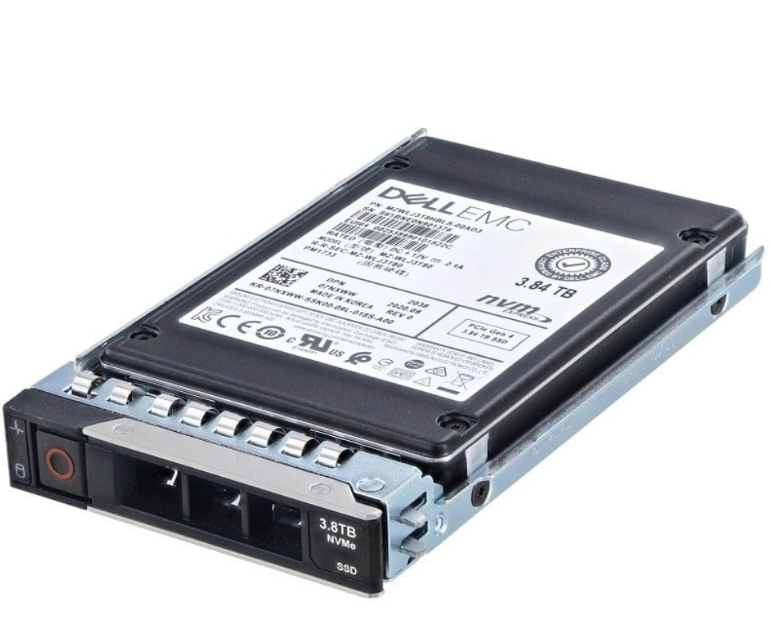
Compared with current mainstream enterprise SSDs, Micron’s advantage is even more pronounced. Currently available mainstream enterprise SSDs generally top out at 30TB to 80TB capacities. Even flagship products like the Samsung PM1733 require several times more drive positions than the Micron solution when building hyperscale AI data lakes, leading to increased rack occupancy and cabling complexity.
II. Performance Analysis: Tailored for AI Workloads
AI training and inference are typically read-intensive workloads requiring storage systems with extremely high sequential read bandwidth and random read IOPS to feed data to GPUs quickly. The Micron 6600 ION SSD delivers impressive performance in this regard:
- Sequential Read Bandwidth: Up to 13.7GB/s
- Random Read IOPS: Reaching 1.78 million
- Sequential Write Speed: 3GB/s (QLC characteristic, read-optimized positioning)
- Random Write IOPS: 42,000
Micron lab test data shows that in AI data preprocessing scenarios, its speed is 8.6 times faster than HDD systems, with latency reduced to 1/29th of HDDs. This means data preparation time before model training can be significantly shortened, and expensive GPU computing power no longer sits idle waiting for data.
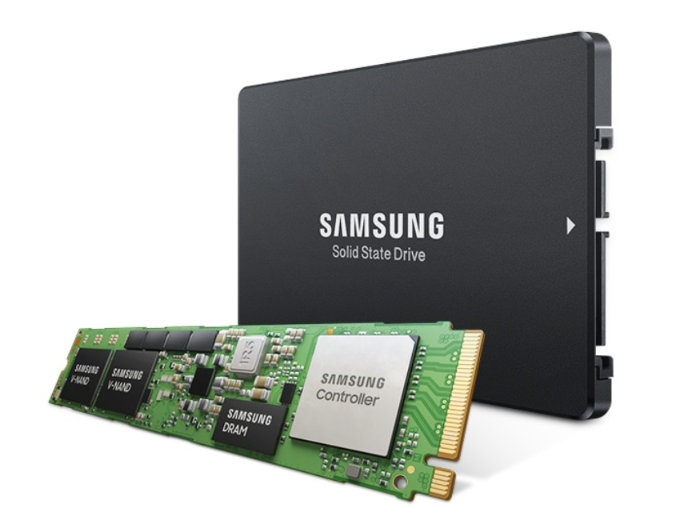
In object storage scenarios, the Micron 6600 ION SSD’s advantages are equally significant. Throughput per watt reaches 435 times that of HDD solutions, time-to-first-byte response improves 96 times, and overall throughput increases 58 times. These numbers represent a qualitative leap in retrieval and loading efficiency for AI training datasets.
III. Energy Efficiency Revolution: Long-Term Value from a Power Consumption Perspective
As AI data center scales expand, power consumption has become a core operational cost and expansion bottleneck. Storage device energy efficiency is critically important. The Micron 6600 ION SSD’s peak power consumption is only 30W, translating to approximately 0.12W per TB.
Compared with HDD solutions, this advantage is even more significant. One 245TB Micron SSD equals approximately eight 32TB HDDs in capacity, but the latter’s total power consumption would far exceed 30W. More importantly, the multi-drive parallelism and additional controllers required by HDDs to achieve comparable throughput performance would further push up overall system power consumption.
At 1EB deployment scale, HDD solutions require 1.9 times more energy than Micron SSD solutions. This energy efficiency advantage translates into measurable sustainability benefits:
- Annual Energy Savings: 921 MWh
- Annual Carbon Reduction: 438 metric tons (equivalent to the annual absorption of over 9,000 mature trees)
- HVAC Cooling Savings: Over 3.14 billion BTU per year
IV. Technical Core: Breakthrough of 276-Layer QLC NAND
The Micron 6600 ION SSD is built on G9 276-layer 3D QLC NAND, technology that is at least one generation ahead of competing QLC used in data center SSDs. Sumit Sadana, Micron Executive Vice President and Chief Business Officer, noted that Micron has now led the industry for three consecutive generations in introducing innovative, leading NAND technology.
While QLC (4-bit/cell) flash memory does not match TLC in write performance, Micron’s controller and firmware optimization, combined with the 16KB Indirection Unit (IU) design, successfully balances capacity and performance. Larger IUs mean fewer DRAM mapping entries are required for a given capacity. While this may introduce some write amplification, this trade-off is perfectly appropriate for read-intensive AI workloads.
Micron’s vertical integration strategy also deserves attention—from NAND flash and DRAM to controllers and firmware, all developed in-house. This end-to-end control ensures product consistency and optimization headroom, representing a core advantage that competitors find difficult to replicate.
V. TCO Analysis: More Than Just Purchase Price
Total Cost of Ownership (TCO) includes procurement costs, electricity costs, space leasing costs, and operational expenses. In this comprehensive dimension, the Micron 6600 ION SSD demonstrates unique value:
Initial Procurement Cost: While the per-drive purchase price of QLC SSDs exceeds that of HDDs, considering the 245TB per drive capacity, its $/TB is actually competitive. More importantly, one drive replacing multiple drives means fewer controllers, cables, and switch ports—hidden cost savings that are often overlooked.
Operational Cost Advantages:
- Electricity Costs: Peak power consumption is only 50% of equivalent-capacity HDD solutions
- Space Costs: 82% rack space savings directly reduce data center leasing expenses
- Operational Costs: Fewer drive positions mean lower failure rates and maintenance complexity
- Cooling Costs: Lower power consumption directly translates to reduced air conditioning loads
Jeff Janukowicz, Research Vice President at IDC, points out: “Rapidly growing AI datasets are shifting storage economics from per-drive efficiency to rack-level efficiency. Operators need more usable capacity per rack while staying within strict power and cooling constraints. Micron’s 245TB drives deliver the density required to scale AI data pipelines without increasing data center footprints.”
VI. Application Scenarios: Who Needs This Product Most?
The Micron 6600 ION SSD’s precise positioning gives it irreplaceable value in the following scenarios:
1. AI Data Lakes and Training Dataset Storage
For organizations training trillion-parameter models, such as OpenAI and Google DeepMind, data loading speed directly determines training cycles. 8.6x faster data preprocessing means significantly shorter training times.
2. Hyperscale Cloud Service Providers
Cloud providers like AWS, Azure, and GCP face triple pressures of capacity, performance, and cost when building object storage services. The Micron 6600 ION’s rack-level density advantage makes it a strong candidate for replacing HDDs at warm and cold storage tiers.
3. Content Delivery Networks (CDNs)
CDN nodes need to respond quickly to user requests while storing massive media content. The 13.7GB/s sequential reads and 96x faster time-to-first-byte response perfectly align with CDN requirements.
4. Enterprise Backup and Archiving
As data volumes explode, enterprise backup and archiving systems are migrating from tape to disk. The 245TB per drive capacity significantly shortens backup windows and dramatically improves recovery speeds.
VII. Market Background and Competitive Landscape
The 2026 storage market is experiencing a rare supply-demand dynamic—both HDD and SSD markets face supply constraints simultaneously. On the HDD side, high supplier concentration (Seagate, Western Digital, Toshiba) limits capacity expansion, while demand for nearline HDDs for AI training datasets continues to push $/TB prices higher.
On the SSD side, NAND supply is tight while the transition to higher-layer 3D NAND is underway. QLC NAND has moved from a cost-optimization tier to a strategic enabler for AI data lakes. The three major suppliers—Micron, Samsung, and SK hynix—all face strong demand for AI-optimized storage.
Notably, Micron exited the consumer DRAM market in 2025 (closing the Crucial RAM business), focusing almost all production capacity on serving hyperscale customers and AI companies. This strategic transformation is fully embodied in the 6600 ION SSD.
VIII. Challenges and Limitations
Despite its clear advantages, the Micron 6600 ION SSD still faces some challenges:
QLC Write Endurance: Pure 128KB sequential write endurance is 1.0 Drive Writes Per Day (DWPD), random write endurance is 0.3 DWPD at 16KB granularity and 0.075 DWPD at 4KB granularity. This means the product is better suited for read-intensive workloads and not ideal for high-write scenarios.
Write Performance Compromise: The 3GB/s sequential writes and 42,000 random write IOPS lag compared to high-end TLC SSDs. But this is precisely the product’s positioning—designed specifically for read-optimized scenarios.
Ecosystem Maturity: While the EDSFF E3.L form factor represents the future direction, server and storage system support still requires time to gain widespread adoption, with the U.2 form factor playing an important role during the transition period.
IX. Conclusion: A New Foundation for AI Infrastructure
Jeremy Werner, Micron Senior Vice President and General Manager of the Core Data Center Business Unit, summarizes the product’s significance precisely: “AI workloads are driving massive growth in shared data, continuing the shift of data center storage share from HDDs toward SSDs. With 245TB in a single SSD, the Micron 6600 ION makes solid state storage the clear choice for modern data centers.”
The 245TB capacity breakthrough is more than just a numerical record—it represents a paradigm shift in storage architecture. It proves that high-capacity SSDs are no longer exclusive to high-end performance scenarios but can penetrate warm and even cold storage tiers, engaging in genuine economic competition with HDDs.
For enterprises building next-generation AI infrastructure, the Micron 6600 ION SSD provides an opportunity to rethink storage architecture—shifting from “stacking more hardware” to “intelligently optimizing value per rack.” In an era where power and space have become scarce resources, this mindset shift may be more important than pure technological breakthroughs.
As Travis Vigil, Dell Technologies Senior Vice President, puts it: “When you can fit significantly more storage into every rack, the math changes: less power, less floor space, less operational overhead.” This is the new storage math of the 245TB era.