Plaud has launched Embedded, a developer platform that transforms the company from a consumer AI recorder maker into a voice infrastructure provider. Released in May 2026, this platform lets vertical software companies integrate Plaud’s recording hardware and AI speech models into their own products through APIs. Moreover, it targets healthcare, sales, AI coaching, and other professional scenarios where conversational data holds critical value.
What Plaud Embedded Offers
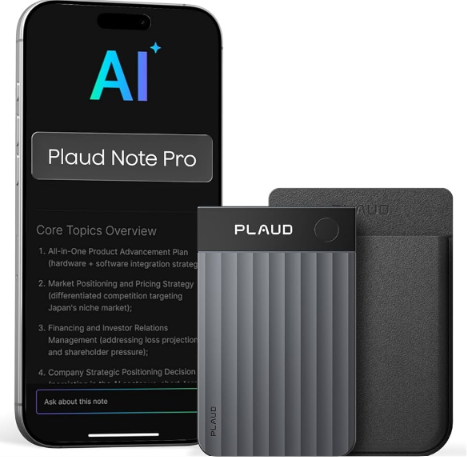
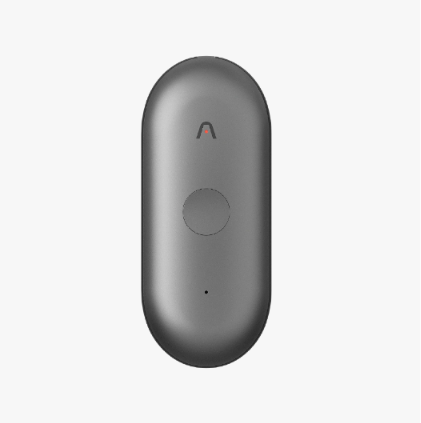
The platform operates on a two-layer architecture. The hardware layer provides purpose-built recording devices: Note Pro for meetings and phone calls, and NotePin for wearable mobile capture. These devices feature 30+ hour battery life, high-quality microphone arrays with 6-7.6 meter effective pickup range, 64GB of locally encrypted storage, and lightweight designs at just 30 grams for Note and 18 grams for NotePin.
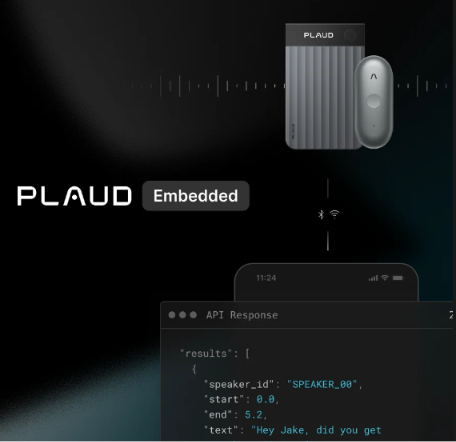
The API layer enables developers to pipe audio data into their own AI systems. The platform delivers structured outputs including speaker_id, timestamps, and transcribed text, plus text-to-speech models for additional interaction scenarios. Consequently, development teams can add enterprise-grade voice capture without building hardware from scratch.
Plaud’s official use cases include healthtech platforms automating clinical documentation from physician-patient conversations, AI coaching products using captured dialogue as agent context, and sales platforms recording offline meetings for analysis.
Why Vertical Software Needs Dedicated Hardware
Many developers ask: why not just use a smartphone? Plaud’s answer is straightforward—phones are not designed for conversation capture.
Battery life presents the first problem. Recording drains phone power rapidly, while Plaud Note Pro sustains 30 hours of continuous capture and NotePin delivers 30 hours standby plus 12.7 hours active recording. Audio quality creates the second issue. Plaud devices use dual MEMS microphones plus a VPU microphone, supporting Focus Mode for distant single voices and Wide-Stereo Mode for conference rooms. Effective pickup reaches 6-7.6 meters, far exceeding typical smartphone performance in noisy or distant scenarios.
Privacy and compliance matter most for regulated industries. Plaud devices store audio locally with encryption, uploading only when users authorize. The platform carries HIPAA, GDPR, SOC 2, and ISO/IEC 27001 certifications. Therefore, vertical software handling sensitive conversations can meet regulatory requirements without building compliance infrastructure independently.
How Embedded Compares to Alternatives
The table below positions Plaud Embedded against competing approaches:
| Feature | Plaud Embedded | Custom Hardware | Software-Only APIs |
| Hardware Cost | Zero (Plaud provides) | High (design, tooling, production) | Zero (software only) |
| Development Time | Weeks (API integration) | Months to a year | Weeks |
| Audio Optimization | Purpose-built for dialogue | Depends on internal design | Depends on user device quality |
| Privacy Compliance | HIPAA/GDPR/SOC 2 certified | Must self-certify | Must self-assess |
| Offline Capability | Local storage + later sync | Customizable | Usually cloud-dependent |
| Customization | Moderate (API parameters) | High (full control) | High (API flexibility) |
| Best For | Rapid validation, small teams | Large-scale deployment | Existing hardware ecosystems |
Plaud Embedded’s core value is rapid startup. For vertical software companies wanting to validate voice scenarios without hardware development costs, it offers a low-barrier entry point. However, teams with deep customization needs or large-scale deployment plans may find custom hardware more cost-effective long-term.
Who Should Use Plaud Embedded
Plaud Embedded suits healthtech companies needing automated clinical documentation from doctor-patient conversations. Likewise, sales SaaS platforms benefit from capturing offline meetings and extracting key information. AI coaching and consulting products can use dialogue context as input for agent systems. Legal tech firms requiring compliant recording and transcription for court proceedings or consultations should also evaluate this platform.
However, companies with mature hardware ecosystems may not need additional third-party dependencies. Similarly, institutions with extreme data sovereignty requirements must carefully assess Plaud’s data processing boundaries. Budget-constrained startups should calculate the combined hardware-plus-API costs before committing.
Final Verdict
Plaud Embedded represents a new business model for AI hardware companies: shifting from selling devices to selling infrastructure. This is not unique to Plaud—NVIDIA evolved from GPUs to AI platforms, Apple from iPhones to service ecosystems—but Plaud pursues this path in the voice vertical with unusual determination.
For developers, the value proposition is clear: replace months of hardware development with weeks of API integration, while gaining enterprise-grade privacy compliance and conversation optimization. For Plaud itself, this is the critical leap from “selling recorders” to “collecting platform taxes.”
Of course, challenges still lie ahead. Building a developer ecosystem requires long-term investment, while API stability and feature depth call for continuous refinement. The Chinese brand identity brings both opportunities and obstacles in overseas B2B markets. Nevertheless, Plaud has proven one point:In the AI voice track, infrastructure unlocks far more imagination than tools.
If you are building a vertical software product that needs voice capabilities, Plaud Embedded deserves a spot on your technology evaluation list. It may not be the final answer, but it is likely the best starting point for rapid validation.