Tag: PettiChat

PettiChat is the world’s first AI-powered real-time pet translation hardware, with its core function being collaboration between edge computing and large models.

  • Auren AI Pet Wearable: Can a 50g Camera Really Decode Your Dog’s Soul?

    Auren AI Pet Wearable: Can a 50g Camera Really Decode Your Dog’s Soul?

    If you still think pet smart hardware means automatic feeders and GPS collars, you have probably missed the hottest track of 2026.

    Traini’s cognitive smart collar just secured backing from executives at NVIDIA, Google, and Meta. PettiChat blew past 770% of its Kickstarter goal. MOVA Pets closed a Series A round and now clears millions in monthly GMV. Meanwhile, domestic players like PurrPurr, SATELLAI, and Loona have all raised fresh capital this year. Investors are voting with their wallets faster than a dog can wag its tail.
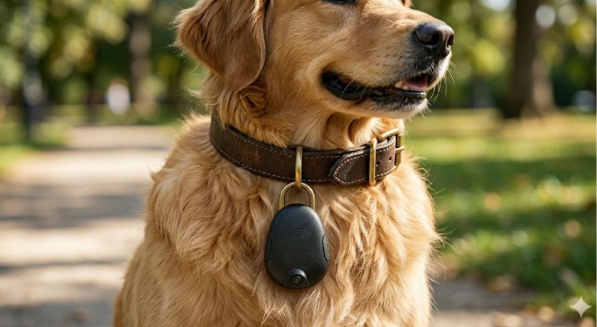
    Auren AI pet wearable device attached to golden retriever collar front view
    Auren AI wearable captures pet life from first-person view

    The global pet tech market is projected to hit $14.1–20 billion in 2026, yet AI penetration sits at just 8–12%. Translation? This is a massively under-tapped growth market, and AI is the key.

    But here is the catch: most AI pet products on the market today are stuck in “incremental upgrade” mode—slapping behavior recognition onto GPS, adding cameras to feeders, or bolting heart-rate monitors onto collars. These features are useful, but they are not exciting. They solve labor-replacement needs like monitoring and feeding, not the harder question: what is my pet actually thinking?

    Auren shows up with a fundamentally different answer.

    Auren’s Play: Do Not Translate, Just Record

    Auren’s first product is a 50g AI-native wearable. Its core innovation is not translating barks into human language. Instead, it records the world from the pet’s first-person perspective.

    The scenes your pet sees, the sounds it hears, the routes it runs—all captured 24/7. Then AI steps in, sifting through the ocean of data to curate the “top 1% highlight moments” and behavioral anomalies into a “digital life archive” that owners can read, share, and revisit.

    This logic is completely different from Traini’s “emotion translation.” Traini tries to decode pet “language”—analyzing vocalizations, expressions, and behaviors to output “your dog is anxious right now.” Auren chooses a dumber but perhaps more honest path: do not guess emotions, just present facts. It lets owners see “what my dog saw, heard, and visited today,” then leaves the emotional connection to them.
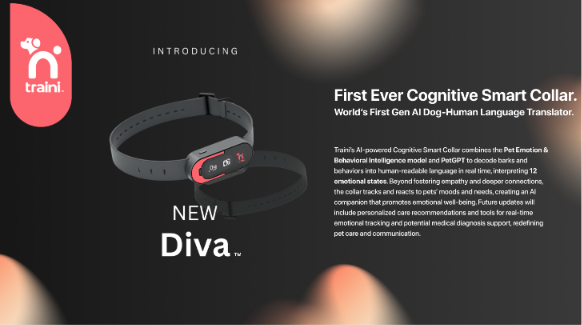
    Traini cognitive smart collar for AI dog emotion translation
    Traini cognitive collar translates dog emotions in real time

    It is basically a GoPro meets a diary, except the protagonist is your pet.

    Why “Recording” Might Be More Reliable Than “Translation”

    Traini’s PEBI system claims 94% emotion-translation accuracy across nearly 120 dog breeds, with models trained on over 900 research papers and behavioral data from 2 million dogs. The numbers look great, but there is a fundamental problem: can an algorithm really translate pet emotions accurately?

    A wagging tail does not always mean happiness. A cat rubbing against your leg does not always mean affection. Animal behavior is inherently uncertain, and feeding that behavioral data into an AI to output “your pet is currently at anxiety level 3” is a translation whose reliability remains questionable.

    Auren’s strategy is clever—it sidesteps this minefield entirely. No emotion translation, just factual recording. Owners see the world from their pet’s perspective and judge for themselves: “my dog looked pretty happy today” or “it seemed nervous about that sound.” AI here plays curator, not translator.

    This design also carries a hidden advantage: privacy. Traini’s collar continuously uploads audio, heart rate, and temperature data to the cloud for analysis. Auren’s first-person video raises privacy concerns too, but at least it does not perform “emotion diagnosis” or make conclusions on the owner’s behalf. The data-use boundary is relatively clearer.

    The Competitive Landscape: Two Routes Colliding

    The AI pet hardware track has split into two distinct camps.

    Camp One: Incremental Upgrades. MOVA Pets’ LB10 Prime smart litter box (monitoring bathroom frequency and weight changes) and SureTrack Pro tracking collar (two-way voice plus multi-layer positioning) fall here. They add AI to mature categories, solving “how to take care of pets more conveniently.”

    Camp Two: Category Creation. Traini (emotion translation), PettiChat (two-way dialogue translation), and Auren (first-person life archive) belong here. They attempt to invent entirely new product categories, solving “how to understand my pet better.”

    Neither route is inherently superior, but the category-creation camp carries both higher risk and higher upside. Traini must prove its 94% accuracy is not just a lab number. PettiChat must prove two-way translation is not a pseudo-demand. Auren must prove owners will actually spend ten minutes a day watching their pet’s “vlog.”
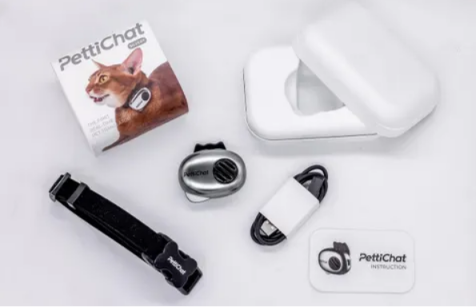
    PettiChat two-way pet translator device unboxing with collar and charger
    PettiChat two-way translator device for cats and dogs

    Commercialization Challenges: From Cool to Essential

    Auren’s “digital life archive” concept is romantic, but commercial reality is brutal.

    First, hardware cost. A 50g device running 24/7 video recording, audio capture, GPS tracking, and on-device AI filtering faces a brutal trade-off between battery life and compute power. If it needs daily charging, user compliance will crater.

    Second, content value. Will AI-curated “top 1% highlight moments” actually move owners? If the curated clips are mostly “my dog sniffed a fire hydrant,” how long does novelty last? This is fundamentally a content-recommendation algorithm problem, and “surprise factor” is the hardest metric to quantify.

    Third, pricing. PettiChat’s crowdfunding starts around $120, and Traini’s collar targets a similar range. If Auren lands in the $150–$200 bracket, it faces a market of “people who own pets” rather than “people who spend heavily on pets.” The latter group is much smaller.

    Conclusion: The Battle for Emotional Premium in AI Pet Tech

    Auren, Traini, and PettiChat are all fundamentally doing the same thing: redefining pets from “property” to “family members,” then charging an emotional premium for that new definition.

    This logic has been validated countless times in the pet economy—from natural pet food to pet insurance, from pet funeral services to pet psychological counseling. “Anthropomorphization” is the most valuable narrative in this industry. AI simply pushes that narrative into the technical layer.

    Can Auren’s 50g camera truly understand pets? Probably not. But it at least offers a new possibility: letting owners “see” the world through their pet’s eyes, instead of forever guessing what they think from a human perspective.

    In that sense, Auren is not selling hardware. It is selling an “empathy illusion”—and in the pet economy, that illusion may be worth more than any technology.


    This analysis is based on publicly available product information and industry data. AICrunchX will continue tracking developments in the AI pet tech sector.
  • PettiChat AI Pet Translator Review

    Here is the deal. A startup founded in January 2026 just dropped a 27g device that clips onto your pet’s collar, claims to translate barks and meows into human language within 1.2 seconds, and says it hits 94.6% accuracy on emotion recognition. Price tag: $118. Pre-orders: over 10,000 units. Reviews: half calling it “the greatest invention ever,” half calling buyers “suckers.”

    So what exactly is this thing? Let us break it down.

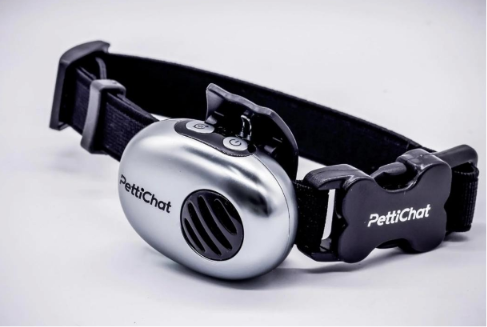
    PettiChat AI pet translator collar clip device on white background
    PettiChat 27g AI translator clips onto pet collar

    Product Overview: What You Actually Get

    PettiChat comes from Hangzhou Mengxiaoyi Technology, a company literally four months old at launch. The founding team carries serious credentials—core members graduated from Zhejiang University and the Singapore University of Technology and Design. In April 2026, they closed a $1 million seed round from Zhejiang University alumni funds.

    The hardware itself is dead simple. A 27-gram clip-on device with a microphone, gyroscope, and accelerometer. Your pet makes a sound, the device analyzes it, and the companion app spits out a text translation. You can also talk into the app, and the device plays back pet-like vocalizations. Two-way translation, supposedly.

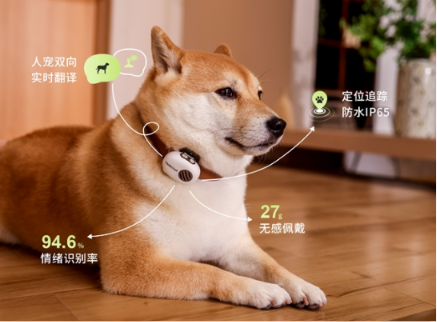
    The headline numbers: 94.6% accuracy, 20+ recognizable emotions, 1.2-second translation speed. The company also claims 5 million-plus pet vocalization samples in its training data, with 1.5 million expert-annotated.

    The Tech Reality: How That 94.6% Actually Works

    PettiChat’s pipeline runs in three stages.

    Stage one: acoustic analysis. The built-in microphone captures vocalizations and extracts frequency, duration, and pitch features. Different emotions do produce different acoustic signatures, so this part is grounded in real science.

    Stage two: behavioral context. The gyroscope and accelerometer track posture and movement—whether the pet is lying down, standing, approaching, or retreating.

    Stage three: LLM interpretation. Alibaba Cloud’s Tongyi Qwen model maps the acoustic and motion data onto emotion labels like “hungry,” “anxious,” or “seeking attention.”

    But here is the critical distinction: that 94.6% figure measures “situation classification” accuracy, not “translation” accuracy. In plain terms, the system correctly categorizes a vocalization into predefined emotion buckets. It does not actually tell you what your pet is thinking in any granular sense.

    A Huxiu investigative report put it bluntly: the accuracy reflects classification into labels like “aggression/hostility” or “separation anxiety,” not the conversational translation users imagine. Independent research suggests acoustic-only pet emotion recognition tops out around 57.3%, while multimodal approaches (audio plus video plus posture) can reach up to 89%. PettiChat’s 94.6% was achieved in controlled lab conditions with expert-annotated samples—not real-world chaos.

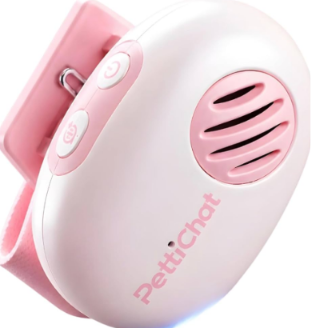
    PettiChat pink pet translator device with clip and speaker grille
    PettiChat device features built-in speaker and microphone

    What it can actually do:

    • Identify 20+ basic emotional intents in cats and dogs
    • Perform reasonably well in quiet environments
    • Adapt to individual pets after about a week of use

    What it cannot do:

    • Translate complex needs with precision
    • Maintain accuracy in noisy environments (TV on, kids running around)
    • Make your pet genuinely “understand” what you are saying

    Why Some Users Love It and Others Feel Ripped Off

    This divide comes down to two completely different buyer profiles.

    The believers are buying emotional value. They do not necessarily expect perfect translation. They want the ritual of “finally understanding what my cat is saying.” PettiChat’s app delivers heavily anthropomorphized output—translations full of cute particles like “meow~” and “hey there~” The “cuteness” is literally part of the product.

    The skeptics are buying functional value. They expected a reliable translation tool and found accuracy far below the marketed 94.6%, especially in noisy settings. One Xiaohongshu user reported: “Based on my knowledge of my own cat, real accuracy is maybe 30–50%.” Another complained: “Cats that are not used to collars keep scratching at it. They will not even wear the thing.”

    The return policy adds salt to the wound. Customer service explicitly states: “Non-quality-related returns—including but not limited to discomfort with use or unmet translation expectations—do not qualify for full refunds.” Translation: you think it is inaccurate? Too bad, that is not a defect.

    Competitive Landscape: PettiChat vs. The Field

    DimensionPettiChatTrainiWeChat Mini-Program Translators
    Price$118Higher (estimated)Free / cheap
    Form Factor27g collar clipCollar-stylePure software
    Tech ApproachVoice + motion + LLMPEBI + PetGPTSimple AI analysis
    Accuracy Claim94.6%94%None
    Two-Way TranslationYesOne-way (human to dog)No
    Dataset Scale5M+ vocalizations2M dogs behavioral dataUnknown
    Edge ComputingYes (40ms latency)UnclearNo

    Traini takes the “emotion translation” route with its PEBI system and PetGPT, backed by investments from NVIDIA, Google, and Meta executives. Its tech credentials are stronger, but the product is pricier and currently one-way only.

    WeChat mini-program translators are explicitly entertainment-only, with disclaimers like “for fun only, do not take seriously.”

    PettiChat sits in the awkward middle: more serious than entertainment toys, cheaper than Traini, but less technically credible than the Silicon Valley-backed competitor.

    PettiChat AI translator collar on Shiba Inu dog showing 94.6% accuracy badge
    PettiChat collar on dog claims 94.6% emotion accuracy

    Business Model: Hardware Plus Subscription. Does It Work?

    PettiChat runs a “hardware plus subscription” model. You buy the device for $118, then potentially pay for in-app premium services like detailed emotion reports or health monitoring.

    This playbook is not new in pet tech. MOVA Pets’ smart litter box uses the same hardware-plus-consumables approach. But where is the ongoing subscription value in a translator? Why would users keep paying?

    Two possible answers:

    First, data value. As the device accumulates more data on an individual pet, translation accuracy theoretically improves. The “it gets to know your pet better over time” pitch could justify recurring revenue.

    Second, B-side expansion. The team has hinted at extending the animal behavior world model into livestock farming and wildlife conservation. If the model actually works, the B-side opportunity dwarfs the consumer market.

    But those are future bets. Right now, PettiChat needs to answer one question: how do you keep those first 10,000 buyers from regretting their purchase?

    Conclusion: It Reads the Owner, Not the Pet

    Let us be honest. PettiChat’s 94.6% accuracy figure is more marketing craft than rigorous engineering metric.

    That does not mean it is worthless. Its real value lies elsewhere: it satisfies a deep psychological need among pet owners—the desire to know what their pets are thinking.

    From Takara’s BowLingual in 2002 (which won an Ig Nobel Prize, by the way) to today’s PettiChat, humanity’s obsession with talking to animals has never faded. Every incremental tech advance amplifies that obsession.

    PettiChat is neither the first nor the last attempt. It may not be “black tech,” but it is not necessarily a scam either. It is essentially an emotional-value product—$118 buys you the illusion that you and your pet are closer.

    In that illusion, your cat says “hey, look at me, I am a little worried” instead of just “meow.” That anthropomorphized romance is probably PettiChat’s actual core product.

    As for whether it truly translates pet language? That barely matters. What matters is whether you are willing to pay for the feeling of being understood.


    This review is based on publicly available product specifications, user reviews, and technical analysis. Actual user experience may vary. AICrunchX will continue tracking developments in the AI pet tech sector.