Introduction: The Third Pole of PC Industry Is Coming
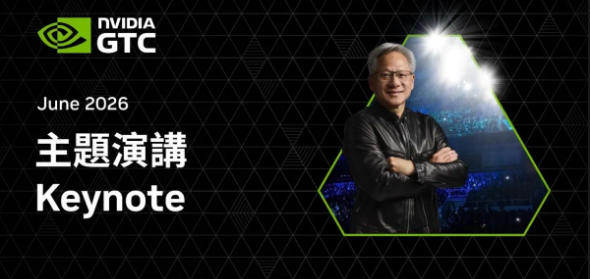
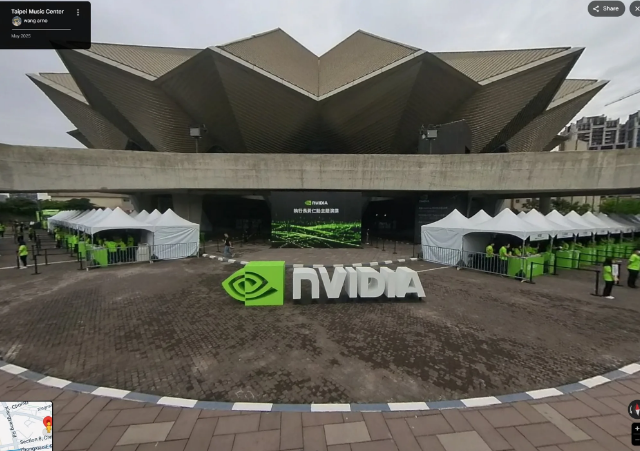
On June 1, 2026, at the Taipei Music Center, NVIDIA CEO Jensen Huang will deliver the COMPUTEX keynote. The topic is not graphics cards, not data centers—but NVIDIA’s first Arm PC processor: N1/N1X.
This is not NVIDIA’s first CPU attempt. Project Denver failed in 2011. Grace server chips succeeded in 2021. The 2026 N1 marks NVIDIA’s third assault on the consumer CPU market—this time with MediaTek building the CPU, Microsoft handling the OS, and Lenovo/Dell/ASUS manufacturing the devices.
Product Overview: A 3nm+Blackwell Heterogeneous Monster
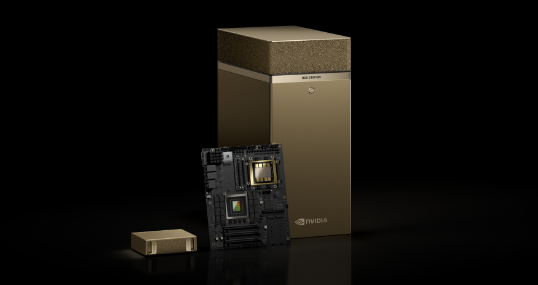
The N1 series is a NVIDIA-MediaTek co-development using TSMC 3nm process:
N1X (Flagship):
- CPU: 10 Cortex-X925 + 10 Cortex-A725 (20 cores)
- GPU: 48SM (6,144 CUDA), Blackwell architecture
- Memory: 256-bit LPDDR5X, up to 128GB
- AI Compute: ~1 PFLOPS at FP4 precision
- TDP: 45-80W
- Positioning: Premium thin-and-light/workstation, discrete-GPU-free RTX 5070-class gaming
N1 (Mainstream):
- CPU: 8+4 cores (high-end) / 7+3 cores (low-end)
- GPU: 20SM (2,560 CUDA) / 16SM
- Memory: 128-bit LPDDR5X
- TDP: 18-45W
- Positioning: Mainstream AI-accelerated notebooks
Killer Feature #1: 1 PFLOPS Local AI Compute
N1X’s most terrifying number is nearly 1 PFLOPS FP4 precision AI compute. What does this mean?
- Apple M4 Ultra: ~38 TOPS (INT8)
- Qualcomm Snapdragon X Elite: ~45 TOPS (INT8)
- Intel Lunar Lake: ~48 TOPS (INT8)
- NVIDIA N1X: ~1 PFLOPS (FP4) = ~2,000 TOPS
While FP4 and INT8 are not directly comparable, this order-of-magnitude gap means N1X can locally run 70B-parameter large language models, generate 4K video in real-time, and perform complex 3D rendering—while competitors only handle simple AI acceleration.
Killer Feature #2: Blackwell GPU, Gaming Laptop Killer?
N1X’s integrated GPU scales match GeForce RTX 5070 (6,144 CUDA). This means:
- Thin-and-light laptops without discrete GPUs can achieve mid-range gaming laptop performance
- Lenovo Legion handheld may use N1X, becoming the “most powerful Windows handheld”
- Creative professionals can complete 4K video editing, 3D modeling, and AI generation on ultrabooks
If NVIDIA solves drivers and compatibility, N1X could end the stereotype that “thin laptops cannot game.”
Killer Feature #3: The “Savior” of Windows on Arm
The Windows on Arm ecosystem has been lukewarm. Qualcomm’s Snapdragon X Elite spent two years with limited market share. Core issues: poor software compatibility, insufficient performance release.
NVIDIA’s solution:
- Hardware level: Use Blackwell GPU’s compatibility advantage (mature CUDA ecosystem) to compensate for Arm CPU’s software shortcomings
- Software level: Deep Microsoft collaboration, potentially becoming the “officially endorsed” Windows on Arm platform
- Ecosystem level: Dell, Lenovo, ASUS, and Microsoft Surface already preparing N1/N1X devices
Specs Comparison: N1X vs Apple M4 vs Qualcomm X Elite vs Intel Lunar Lake
| Feature | NVIDIA N1X | Apple M4 Ultra | Qualcomm Snapdragon X Elite | Intel Lunar Lake |
|---|---|---|---|---|
| Process | TSMC 3nm | TSMC 3nm | TSMC 4nm | TSMC 3nm |
| CPU Arch | Arm (20 cores) | Arm (32 cores) | Arm (12 cores) | x86 (8 cores) |
| GPU Arch | Blackwell | Apple Silicon | Adreno | Xe2 |
| CUDA Cores | 6,144 | Not disclosed | None | None |
| AI Compute | ~1 PFLOPS (FP4) | ~38 TOPS | ~45 TOPS | ~48 TOPS |
| Memory | 128GB LPDDR5X | 128GB unified | 64GB LPDDR5X | 32GB LPDDR5X |
| Power | 45-80W | 30-60W | 23W | 17-30W |
| Target | Premium AI PC/gaming | Pro creation/dev | Thin office | Thin office |
N1X’s differentiation is razor-sharp: it is the only chip putting “gaming-grade GPU” and “AI-grade compute” simultaneously into a thin-and-light laptop.
Caveats to Note
- Software compatibility: Arm architecture running Windows x86 apps still requires emulation, with performance overhead and bug risks
- Release timeline: June 1 debut, but mass production may not arrive until late 2026, long wait
- Price unknown: Premium positioning means premium pricing, likely $1,500+ starting
- Thermal challenges: 45-80W TDP in thin laptops creates pressure, sustained performance release unverified
- MediaTek role: Despite co-development, MediaTek cancelled its COMPUTEX keynote, raising collaboration depth concerns
Who Should Wait for N1X?
Highly Recommended to Wait:
- AI developers (local 70B model inference capability)
- Gamers (3A gaming on thin laptops)
- Creative professionals (4K video editing + AI generation)
- Windows ecosystem users (wanting to switch from Mac but software)
Consider Alternatives:
- Budget-sensitive buyers (waiting for price announcement)
- Pure office users (N1 suffices, no need for N1X)
- Deep Apple ecosystem users (M4 series already sufficient)
Future Outlook: The “NVIDIA Moment” for AI PCs
If N1/N1X succeeds, NVIDIA gains:
- CPU market entry ticket: Expanding from GPU dominance to full-stack computing
- AI PC definition rights: Redefining “AI PC” standards with 1 PFLOPS compute
- Windows on Arm leadership: Replacing Qualcomm as the preferred Arm Windows platform
For consumers, this means late 2026 may see a wave of “all-capable thin laptops”—thin, long-battery, gaming-capable, AI-capable, creation-capable. This is one of the PC industry’s most significant architectural shifts in a decade.
Rating: 8.5/10 (Pre-Production Preview)
Bottom Line: The most technically ambitious Arm PC chip ever designed. Whether it succeeds depends on software compatibility and thermal management—not just raw specs.