
Aicrunchx has learned that this week, Nike’s Technology Innovation Lab (NSRL) officially launched a new type of compression sock called “Recovery Sleep-Sock”.
The “Recovery Sleep-Sock” is not a traditional sports accessory, but a set of “smart hardware” that incorporates flexible sensing, gradient compression algorithms, and IoT connectivity.
In today’s era of rapid advancements in AIoT and biosensing, Nike is attempting to enter the AI sleep race with a pair of socks.
But can the “Recovery Sleep-Sock” truly help Nike reap the rewards of the AI sleep market?
Figure 1: As long as you have a body, you are an athlete.
Aicrunchx believes that the breakthrough in hardware architecture is the core barrier to entry for this product.
Unlike the single physical restraint of daytime compression gear, NSRL employs “gradient microcirculation knitting technology.”
Based on extensive biomechanical modeling of athletes, the “Recovery Sleep-Sock” socks deliver differentiated pressure gradients (approximately 8-15 mmHg) to the arch, Achilles tendon, and calf muscles.
During the body’s resting phase, it simulates the venous pump effect, significantly improving blood return efficiency and accelerating the clearance of lactic acid and inflammatory factors.
Even more noteworthy is its sensor solution: a flexible thin-film temperature sensor and a micro-impedance monitoring module are embedded within the sock, using medical-grade silicone encapsulation and a seamless weaving process.
Combined with a low-power MCU and a miniature antenna, it achieves zero-feel-of-absence wear throughout the night and millisecond-level vital sign data acquisition, marking a leap forward in sports textiles towards the form of “wearable electronic terminals.”
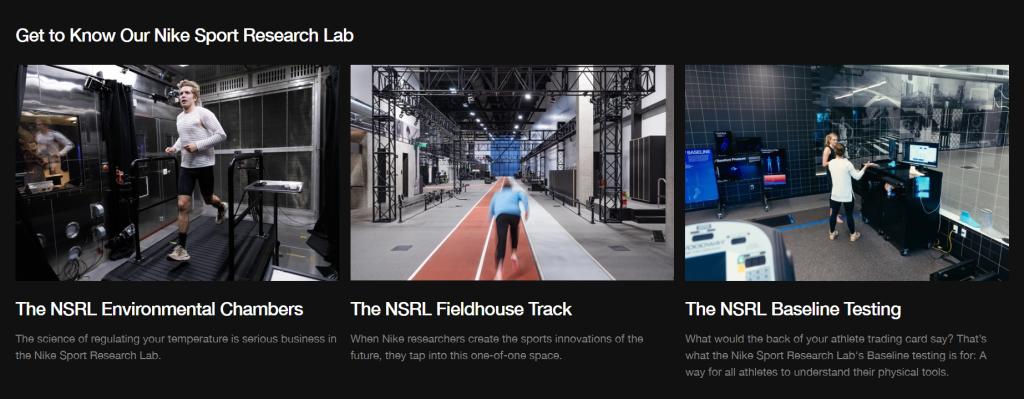
Figure 2: Nike’s National Science and Technology Innovation Lab (NSRL)
Hardware is merely the carrier; the edge AI of smart hardware and its interconnected ecosystem are the key to success. Medical data shows that a natural drop of 0.5℃-1℃ in core body temperature is the physiological switch that triggers deep sleep.
The edge computing chip of “Recovery Sleep-Sock” can analyze foot microclimate fluctuations in real time and communicate bidirectionally with the smart home hub (temperature control air conditioner, smart mattress) through open protocols to dynamically build a “micro-environment for easy deep sleep”.
All anonymized data will be seamlessly integrated into the Nike Run Club ecosystem. Leveraging machine learning models, the system can not only generate recovery reports that include sleep cycles and HRV variability, but also combine daytime training load to output “dynamic bedtime suggestions” and “next day training intensity warnings.” From passive recording to proactive intervention, Nike is building a “data-driven recovery loop.”
Behind this is the strategic positioning of the sports technology industry as it moves towards the “Elite Sleep” track, a blue ocean market that capital is eagerly seeking.
When daytime athletic performance approaches physiological limits, the quality of nighttime recovery becomes a new variable for breaking through bottlenecks.
For marathon runners and CrossFit enthusiasts, it is a “bio-accelerator” to reduce delayed onset muscle soreness; for people who sit or stand for long periods, it is a “nighttime therapy device” to improve lower limb microcirculation and combat venous stasis; and for tech elites who pursue ultimate efficiency, it transforms 8 hours of sleep into quantifiable and iterative “productivity assets.”
Nike’s recovery socks mark a significant step for smart wearables, moving beyond the “data collection era” and into the “algorithm intervention and biological optimization era.”In the second half of the integration of flexible electronics and AI big data models, whoever can accurately decode the black box of sleep will hold the ticket to the next generation of health hardware.