Tag: Multimodal interaction

Integrating multiple input methods such as vision, voice, gesture and touch, and using AI to collaboratively analyze multi-source information to achieve natural and efficient human-computer communication, it is the core interaction paradigm of smart terminals

  • The Ambition Behind 40 Grams: How IFlytek’s GlassClaw AI Glasses Are Rewriting Industry Rules

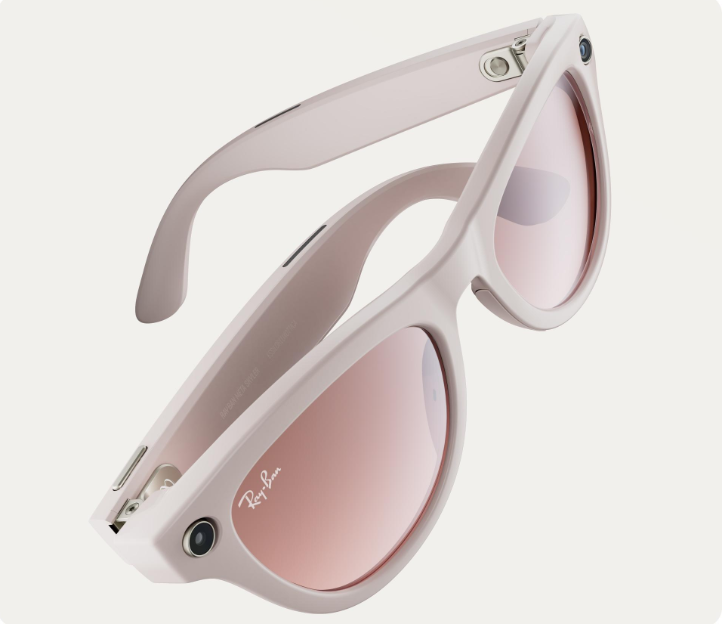
    Meta Ray-Ban smart glasses lead the industry with their lightweight design and AI capabilities, providing users with seamless intelligent experiences
    Meta Ray-Ban smart glasses lead the industry with their lightweight design and AI capabilities, providing users with seamless intelligent experiences

    From Voice Recognition Giant to AI Agent Pioneer

    iFlytek is no longer satisfied with an AI that can only “speak.”

    On April 15, 2025, the company famous for its voice recognition technology officially launched the AstronClaw upgrade, unveiling nine innovative products in one go and presenting for the first time a complete “software-hardware integrated” AI Agent architecture. The most eye-catching product at this launch event was a pair of AI glasses weighing just 40 grams—GlassClaw.

    “Our goal is not to create a conversational assistant, but to become the execution hub of the physical world,” iFlytek stated clearly at the launch event. This strategic shift means that large language model competition has already moved from algorithm benchmarking to a new battlefield of embodied intelligence and multimodal interaction.

    40 Grams: Technical Breakthrough Behind Lightweight Design

    While the industry is still debating the feasibility of AI glasses, GlassClaw has delivered an impressive answer with its 40-gram weight.

    A standard pair of prescription glasses weighs approximately 20 to 30 grams, while GlassClaw adds only 10 to 20 grams on top of that. This means users can virtually achieve all-day comfortable wearing, completely bid farewell to the traditional problem of smart glasses “pressing down on the nose bridge.”

    Supporting this lightweight design is a series of technological innovations. GlassClaw adopts a voice-visual collaborative perception architecture, achieving real-time environmental semantic completion through cloud-end linkage. Technically, GlassClaw has overcome two major challenges faced by AI glasses: lip movement recognition and remote sound capture. Even in high-noise environments, the device can accurately capture user voice commands, significantly improving usability in complex scenarios.
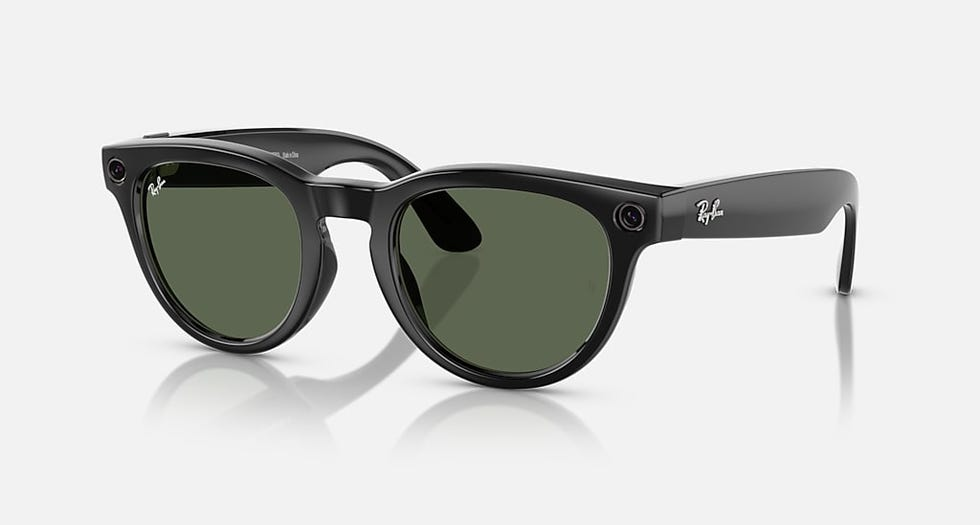
    AI smart glasses are evolving towards lightweight and stylish designs, balancing technological appeal with everyday wearing comfort
    AI smart glasses are evolving towards lightweight and stylish designs, balancing technological appeal with everyday wearing comfort

    Software-Hardware Integration: Redefining the AI Interaction Paradigm

    The release of GlassClaw represents not just a breakthrough in a single product, but also iFlytek’s reconsideration of the AI interaction paradigm.

    Traditional AI assistants are limited to cloud computing and screen-based interaction, where users must proactively initiate requests to receive services. The software-hardware integrated GlassClaw achieves end-cloud collaborative computing, enabling AI to proactively perceive the physical world, understand user intentions, and execute corresponding actions.

    Taking the Canton Fair itinerary planning as an example, the traditional approach requires users to manually search for information, write schedules, and enter them into calendar applications one by one. With GlassClaw, users simply issue a command, and the system automatically integrates local notes, online data, and personalized preferences to generate a complete itinerary and sync it to calendars and to-do lists.

    The transformation from “you ask, it answers” to “you tell, it does”—this shift is redefining the way humans collaborate with machines.

    Industry Landscape: AI Glasses Track Accelerates Restructuring

    GlassClaw’s entry has intensified competition in the AI glasses sector.

    Meta’s Ray-Ban smart glasses, launched in 2023, have sold over a million units cumulatively, becoming a benchmark product in the AI glasses field. Hardware giants like Samsung and Apple are also actively deploying, attempting to secure a position in this emerging track.

    The domestic camp is equally determined. In addition to iFlytek’s GlassClaw, companies like Baidu, Xiaomi, and Huawei are developing their own AI glasses products. Supply chain data shows that global smart glasses shipments increased by over 300% year-over-year in the first half of 2025, with the market scale expanding rapidly.

    Notably, AI glasses are forming a collaborative ecosystem with smart rings, pendants, and other wearable devices. iFlytek’s AstronClaw platform supports multi-device interconnection, allowing users to link GlassClaw glasses with smart rings for richer interactive experiences.

    Strategic Intent Behind Technical Roadmap

    The recruitment positions reveal glimpses of iFlytek’s technical ambitions.

    Recent job postings cover areas including smart location selection (spatial data modeling), global sales forecasting (supply chain operations optimization), Agent Skill development (MCP service architecture design), and multi-agent collaboration (complex business logic architecture). iFlytek aims to build not a laboratory demo, but a truly deployable AI Agent product.

    This strategic intent is clear: whoever masters software-hardware integration capabilities will build an ecosystem moat. In the increasingly intense competition of large language models, the end-cloud collaborative AI Agent ecosystem is expected to become enterprises’ new defensive barrier.

    Outlook: The Next Decade of AI Hardware

    The release of GlassClaw marks China’s entry into the “software-hardware integrated” era of AI Agents.

    With continued technological breakthroughs, AI glasses will become even more feature-rich. From basic voice interaction to complex multimodal perception, from single device control to full-scene intelligent connectivity—AI is moving from screens into reality, becoming a capable assistant in people’s lives.

    GlassClaw weighing 40 grams may just be a beginning. In the future, we can expect even lighter and smarter AI hardware products, fundamentally changing the way humans interact with machines.

    It’s not just an AI that can chat—it’s an AI that can get things done for you. iFlytek is serious this time.

  • Alibaba’s S1 AI Glasses: Multimodal Interaction Reshapes the Wearable Experience

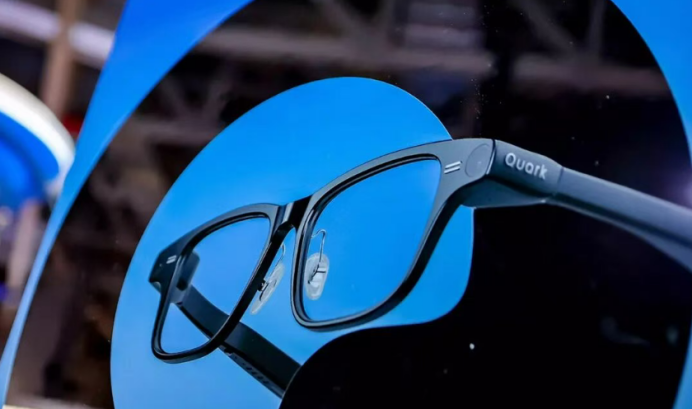
    Alibaba's Qianwen S1 AI Glasses will be available for immediate purchase on April 15th.
    Alibaba’s Qianwen S1 AI Glasses will be available for immediate purchase on April 15th.

    Alibaba’s Qianwen S1 AI Glasses will be available for immediate purchase on April 15th.

    On April 10, 2026, Alibaba’s Qianwen officially released its second AI glasses, the S1.

    As an iterative product of the deep integration of large-scale models and wearable hardware, the S1 not only debuts with the Qualcomm Snapdragon AR1 platform, but also achieves breakthroughs in binocular spatial display, hot-swappable battery replacement, and multimodal interaction logic. Priced at approximately $485 USD , it will be available for immediate purchase on April 15th. Does this pair of glasses have the capability for frequent daily use? We’ll break it down step by step through practical testing.

    Hardware Foundation: The Synergistic Evolution of Snapdragon AR1 and Optical Solutions

    The S1’s computing power comes from the Qualcomm Snapdragon AR1 chip. This SoC, specifically designed for low-power XR scenarios, adopts a heterogeneous computing architecture and can smoothly handle large-scale on-device inference in independent operation. Combined with a dual-lens Micro-OLED display module, the S1 achieves true stereoscopic depth rendering. In actual testing, the occlusion relationship between the virtual UI and the real environment is handled naturally, the motion-to-display latency is consistently within 20ms, and the dizziness is significantly lower than the previous generation. Even more noteworthy is the “front-facing light-leakage technology”: by superimposing a microprism guiding light and a polarizing filter layer, it completely solves the pain point of side light leakage and privacy exposure in traditional AR devices, ensuring clear contrast even in strong outdoor light, balancing practicality and social decorum.

    Interaction and Imaging: Multimodal Fusion and Full-Scene Voice Loop

    The essence of AI glasses lies in seamless interaction. The S1 abandons single touch control, shifting to a multimodal architecture of “voice wake-up + visual understanding + micro-gestures.” A 5-microphone circular array, combined with AI noise reduction algorithms, can accurately separate human voices even during subway commutes or in open-plan office spaces; dual voice coil speakers provide a wide sound field, ensuring excellent clarity for calls and media playback. In terms of imaging, the 12-megapixel main camera supports 3K 30fps video recording. Combined with real-time visual analysis from Alibaba’s Qianwen big data model, it can achieve functions such as “gaze translation,” “object recognition,” and “scene note-taking.” For example, when the gaze rests on a foreign language road sign, semantic prompts immediately appear at the edge of the field of vision, compressing the interaction to the level of a single blink, truly achieving “what you see is what you get.”

    Wearability and Battery Life: Lightweight Design Optimized for Asian Face Shapes

    Wearability of wearable devices is determined by comfort. The S1 features aerospace-grade titanium alloy temples and memory silicone nose pads, weighing only 78 grams. Based on 3D data modeling of millions of Asian facial features, the frame curvature and center of gravity distribution have been recalibrated to ensure comfortable wear for extended periods without pressure on the bridge of the nose or slipping. A highlight of the design is the hot-swappable dual battery compartment: each battery provides approximately 4 hours of continuous use, supporting seamless switching via blind insertion. Combined use can cover all-day commutes, meeting recording, and light navigation, completely eliminating battery anxiety. Magnetic contacts and waterproof sealing rings ensure both durability and outdoor adaptability.

    Price and Positioning: Can $485 Break Through in the Red Ocean Market?

    With a price tag of approximately $485, the S1 positions itself in the “high-end practical” market. Compared to overseas competitors in the same price range, the S1 boasts a significant advantage in large-scale model response speed, optical privacy protection, and Asian face adaptation. The fact that it was available for immediate purchase on April 15th demonstrates Alibaba’s confidence in its supply chain ramp-up and yield control. If your needs are for efficiency improvements, cross-language assistance, and a native AI experience, rather than hardcore 3D gaming, the S1’s hardware is more than adequate for the early adopter phase and possesses the attributes of a primary tool.

    In conclusion, the inflection point for the practical application of AI wearables has arrived.

    Alibaba Qianwen S1 AI Glasses
    Alibaba Qianwen S1 AI Glasses

    The Alibaba Qianwen S1 is not a concept phone piled up with specifications, but rather a productivity extension focused on real-world scenarios. Its core competitiveness lies in the energy efficiency of the Snapdragon AR1 processor, the smoothness of multimodal interaction, and engineering solutions to pain points such as light leakage, battery life, and wearing comfort. Current shortcomings include the fact that the third-party ecosystem is still in its incubation period, and high-end AR content needs to be developed. Suitable for: cross-language workers, efficiency-oriented office workers, and tech-savvy users. Priced at $485, you’re not just buying optical and computing hardware, but also the first ticket to bringing large-scale AR models to everyday use.

    (Note: 485 USD is the discounted price for mainland China. Please refer to the official website for the actual global price.)