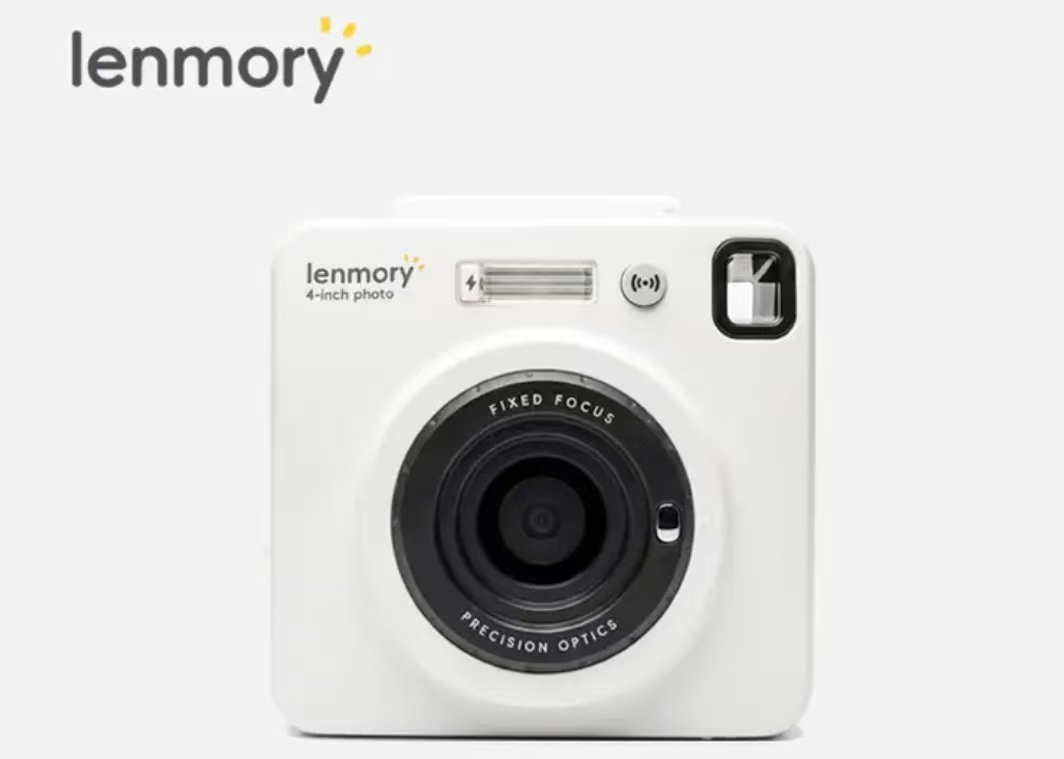
Yantu Smart LENMORY M1 Review
The biggest charm of instant cameras is that ritualistic wait after you press the shutter. But that ritual comes with a brutal cost: ruined shots are gone forever.
Blinks, shaky hands, bad composition—in the world of traditional instant photography, any mistake means one sheet of film goes straight to the trash. Shoot 200 photos a year with a Fujifilm Instax Mini, and you are burning through $100–$160 in film alone. That does not even count the moments you hesitate to press the shutter because you are terrified of wasting another sheet.
Now a Chinese startup called Yantu Smart says: AI and E-ink can fix this.
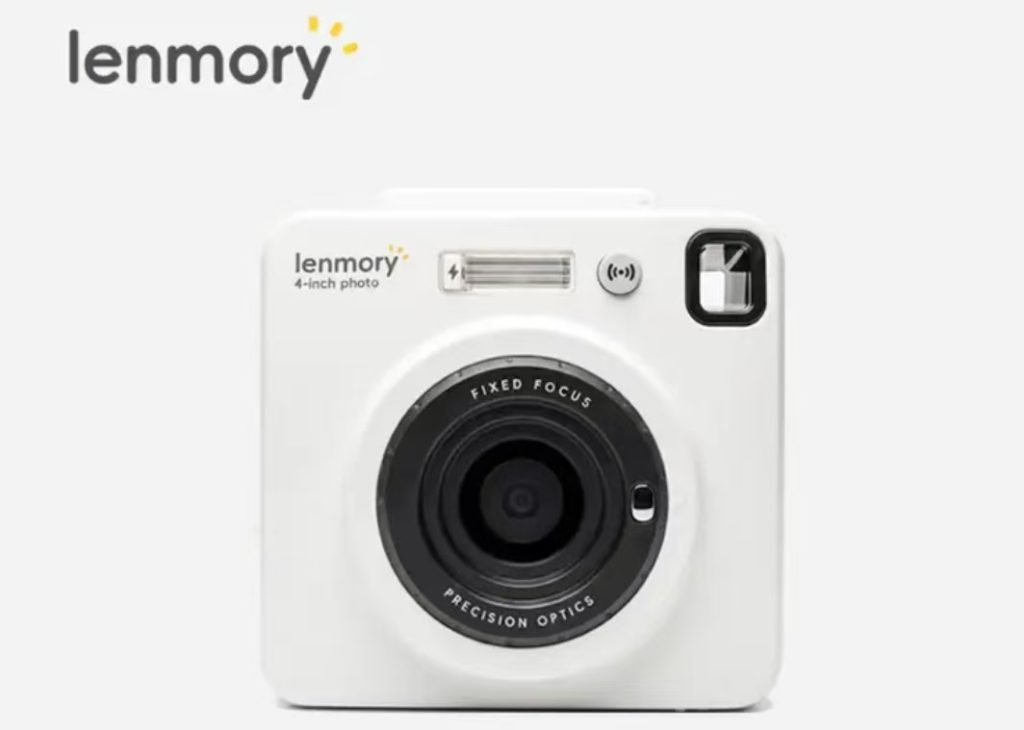
Their new LENMORY M1 instant camera boils the pitch down to three words: reusable paper, AI assistance, zero waste. It sounds like a perfect tech marriage. But here is the real question—does it actually work?
From NAS to AI Imaging: This Is Not a Pivot, It Is a Deepening
Yantu Smart, based in Xiamen, was founded in May 2022. Its founder, Xie Fayan, has spent 16 years in the hardware industry. If you have never heard of Yantu, you have probably heard of his earlier hit: the Meow Machine , the product that basically created the “error-printer” category for students.
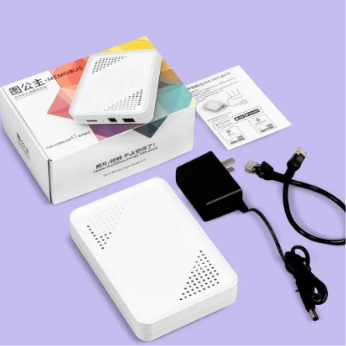
Yantu’s first product, “Princess Tu”, was a NAS device targeting women aged 21–39, especially mothers who needed to store and manage family photos. NAS is a mature but slow-growing market with high user-education costs and non-trivial technical barriers. When the AI imaging boom exploded in 2025–2026, Yantu made a sharp turn: from storage to creation, from backend to frontend, from a stagnant market to a growing one.

In 2025, the company raised funding from Wenzheng Asset and Hillhouse Venture Capital. More recently, Alpha Startups joined the cap table. When investors keep writing checks, it usually means the direction is at least defensible.
Tech Breakdown: What E-ink Plus AI Actually Changes
The M1’s headline feature is straightforward: it replaces traditional chemical instant film with next-generation E-ink display paper. This swap creates three immediate differences:
| Dimension | Traditional Instant Camera | M1 (E-ink Solution) |
|---|---|---|
| Consumable Type | Single-use chemical film, irreversible | Reusable, erasable, rewritable |
| Error Recovery | None—ruined shots are permanent | Retake and redraw if you are not happy |
| Digital Backup | None—only the physical print exists | Transfers to mobile app, keeps digital negative |
But here is the catch: E-ink technology still lags behind chemical film in refresh rate, color accuracy, and contrast. Yantu calls the M1’s panel “next-generation E-ink,” yet the exact specs remain undisclosed. That spec sheet is the single variable that will make or break this product.
On the AI side, the M1 packs several smart features: automatic blur and blink detection, AI-powered stabilization, real-time filters, and intelligent crop preview. These tools lower the barrier to entry and boost your keeper rate. In traditional instant photography, the “one-shot” nature magnifies the cost of failure. AI steps in as a computational safety net against physical limitations.
Market Context: Instant Photography Is Growing Backward
Instant photography looks retro, but the market is growing. Global instant photography revenue is projected to expand at 8–12% CAGR between 2023 and 2028. Gen Z’s nostalgia for physical objects, the “tangible social media” trend, and steady gift-market demand are all pushing the category forward.
Yet the pain points are just as obvious: expensive film, irreversible mistakes, no digital backups. These gaps create room for innovators.
Yantu is not alone here. Pai Island Tech, founded by former DJI Ronin product lead Su Tie, is chasing the same AI instant camera opportunity. When ex-big-tech founders swarm a niche, it signals both technical feasibility and commercial potential. It also means competition will heat up fast.

The core tension in this category is brutal: users are highly price-sensitive, but innovation demands expensive components. Entry-level instant cameras typically sell for $70–$110, with film as the profit engine. The M1, however, needs E-ink panels, AI chips, and wireless modules—none of which come cheap.
Yantu’s answer seems to be a hybrid hardware-plus-services model. Reusable E-ink cuts long-term consumable costs. AI features justify a higher upfront price. And the ecosystem—combining the camera, NAS photo box, “super film,” and a creator community—locks in user stickiness. The company brands it as “the world’s first AI-driven zero-waste instant imaging ecosystem.”
The Verdict: Big Vision, Real Challenges
The upside is genuine. If the M1 succeeds, it redefines the instant camera cost model from “sell film” to “sell hardware plus services,” which is a healthier business. The AI-plus-E-ink combo is extensible into education, office work, and creative tools. And Xie Fayan’s track record proves he knows how to create new categories from scratch.
But the challenges are equally real:
First, E-ink maturity. Can refresh rates, color fidelity, and panel lifespan meet the expectations of “instant” photography? If the display looks noticeably worse than chemical film, will users trade image quality for the ability to retake?
Second, user psychology. Will instant camera fans pay a premium for “undo”? Part of the magic of instant photography is precisely that one-shot irreversibility—the sense that this moment is unique. Remove that, and you might remove the emotional hook.
Third, ecosystem execution. Is the NAS-plus-community-plus-camera integration actually smooth, or is it feature bloat masquerading as strategy? Getting listed on JD.com and Taobao is one thing. Delivering at scale is another.
Fourth, supply chain risk. E-ink supply stability, cost control, and mass-production yield are all unproven at this price point.
Conclusion: An Experiment in Redefining “Instant”
At its core, the Yantu Smart LENMORY M1 is not trying to build a better instant camera. It is trying to redefine what “instant imaging” means as a product category.
The question it poses is simple: in an age of AI and reusable displays, does instant photography still need single-use consumables?
If the answer is no, the M1 could become an inflection point for the entire category. If the answer is “not yet—the tech still has gaps,” then it is simply a fascinating experiment in a crowded AI hardware race.
Either way, this is a space worth watching. Because any technology that can make dead film walk again is, by definition, worth paying attention to.
This review is based on publicly available information and product specifications. Actual user experience may vary. AICrunchX will continue tracking developments in the AI imaging hardware space.