Tag: Intelligent Driving

Intelligent driving uses sensors, AI algorithms and vehicle chips to assist or replace human driving. It covers ADAS and autonomous driving, realizing automatic cruise, lane keeping and automatic parking. Connected with cloud and road data, it optimizes safety and traffic efficiency. It is widely equipped on new energy passenger vehicles and commercial transport fleets.

  • Mercedes-Benz China Undergoes Second Round of Layoffs

    Mercedes-Benz China Undergoes Second Round of Layoffs

    According to reports, Mercedes-Benz China is implementing a new round of structural layoffs, aiming to reduce the number of employees at Beijing Mercedes-Benz Sales and Service Co., Ltd. from approximately 900 to less than 600. This is the second large-scale personnel reduction by Mercedes-Benz China in less than a year and a half, following the first round of layoffs in February last year.

    Mercedes-Benz
    Mercedes-Benz

    Multiple sources familiar with the matter have revealed that this round of adjustments is not limited to the sales and service company. Since 2025, personnel adjustments within Mercedes-Benz’s China system have been occurring across various departments, including automotive finance, sales, IT, and R&D and manufacturing. These adjustments are distributed across different business entities and employment relationships, and the compensation standards are not uniform. The R&D system is one of the key departments targeted for staff reduction. Public information shows that Mercedes-Benz’s R&D centers in China are mainly located in Beijing and Shanghai, with approximately 2,000 R&D personnel covering multiple areas such as local model development, intelligent technology, electrification, software, and in-vehicle systems.

    However, this round of layoffs failed to stem the company’s continued decline, forcing it to initiate two more rounds of layoffs this year: one currently underway with a 10% reduction, and the other to begin at the end of the year. The goal is to reduce the number of employees at Mercedes-Benz Sales Company from over 900 to just over 600 after these two rounds.

    Besides layoffs, Mercedes-Benz China is also experiencing a deep organizational upheaval. On May 25th, the head of Mercedes-Benz Sales Company’s North China region resigned after a company-wide meeting, and the following day, a company-wide email announced that he would no longer serve as the general manager of the North China region.

    It is understood that Mercedes-Benz’s R&D system is expected to lay off 10% of its staff this year. This figure has not yet been officially confirmed by Mercedes-Benz China.

    Two months ago, the vice president in charge of after-sales service also suddenly resigned. Even earlier, Duan Jianjun, Mercedes-Benz China’s first Chinese CEO, resigned in March of this year, and was succeeded by Li Desi, the executive vice president of sales. Within just a few months, there has been a flurry of changes in the core management team, from CEO to regional heads to vice presidents.
  • SenseAuto to Lay Off 50% of Staff

    SenseAuto to Lay Off 50% of Staff

    Sources familiar with the matter revealed that SenseAuto expects to lay off more than 200 employees, bringing the company’s total workforce to over 400. The layoffs will affect departments including algorithm engineering and software.

    SENSEAUTO
    SENSEAUTO

    This restructuring by SenseTime’s SenseAuto division is a microcosm of the increasingly competitive landscape of intelligent driving. Following the layoffs, the workload for remaining employees will increase significantly, posing a considerable challenge to ensuring mass production and delivery of projects to automotive clients.

    Over the past two to three years, SenseTime’s SenseAuto has aligned its intelligent driving solutions and technologies with industry changes.

    In terms of solutions, SenseTime SenseAuto has launched three solutions: AD Pro, based on the Horizon J6E with 80T computing power; AD Max, based on the Horizon J6M with 128T computing power; and AD Ultra, based on Orin/Thor with 200T+ computing power. These three solutions represent the most mainstream demands from automotive companies over the past two years and represent the largest volume of demand in the industry.

    Technically, SenseTime’s SenseAuto platform released a world model back in November 2024, placing it among the earlier companies in the intelligent driving industry to release cutting-edge technology.

    Whether in terms of intelligent driving solutions or technology, SenseTime’s SenseAuto demonstrates strong foresight and strategic planning. However, compared to leading companies, it has secured relatively few targeted projects, the reasons for which are complex.

    It is understood that SenseTime’s SenseAuto is in talks with Dongfeng Motor for strategic investment, which presents a good opportunity for the company. Strategic investment from automakers not only means money but also targeted projects and deep collaboration.

    Informed sources revealed that this investment may be cancelled or significantly reduced.

    However, at a crucial juncture in the 2025 intelligent driving competition, SenseTime’s SenseAuto Chairman Wang Xiaogang co-founded Daxiao Robotics with Academician Tao Dacheng of the Australian Academy of Science in the second half of 2025.

    Both highly competitive sectors require core operators to go all in. For Wang Xiaogang, as the core operator, managing both the highly competitive intelligent driving sector and embodied robotics effectively is a significant challenge.

  • Chen Long, Head of VLA at Xiaomi Auto, Set to Leave

    Chen Long, Head of VLA at Xiaomi Auto, Set to Leave

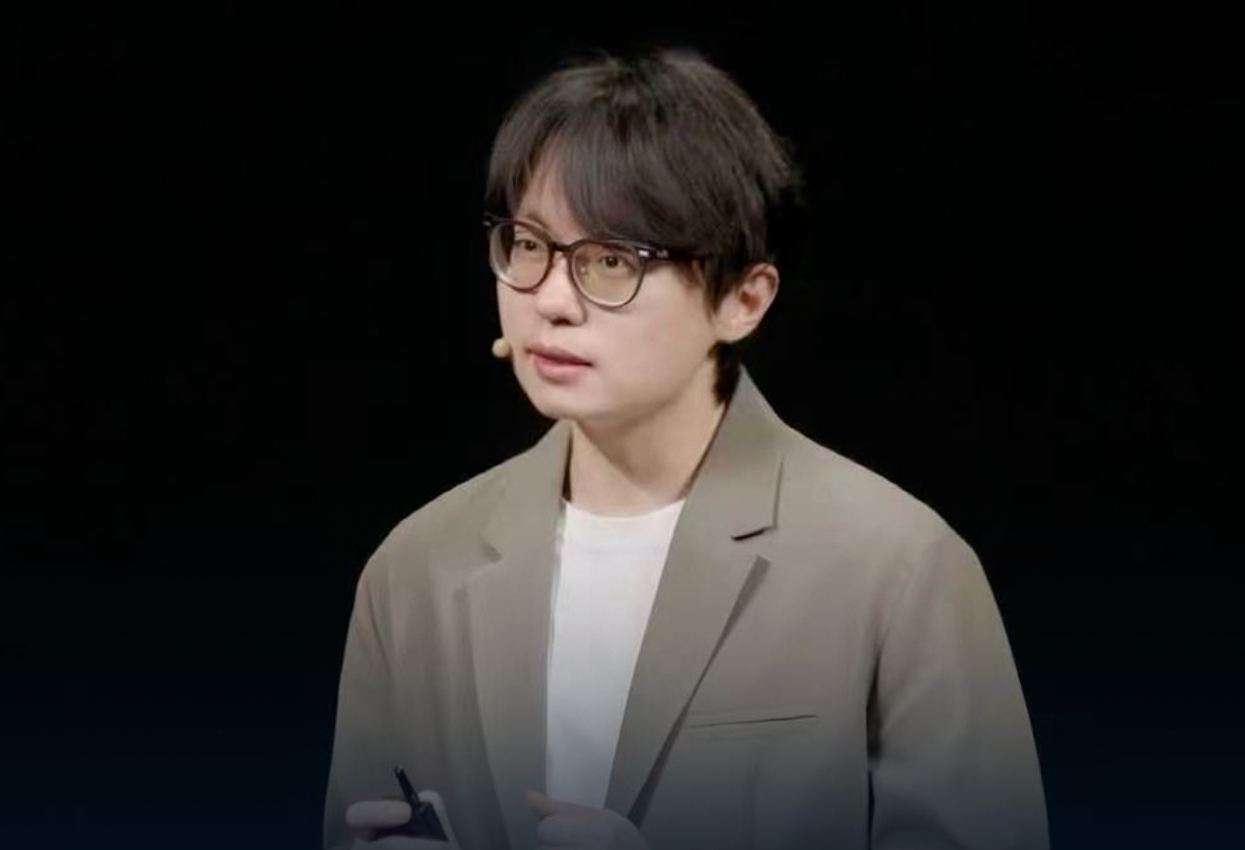
    It is reported that Chen Long, the head of the VLA (Vision-Language-Action) team within Xiaomi Auto’s in-house intelligent driving division, is set to leave the company; his next career move may be in the field of embodied AI.

    XIAOMI AUTO
    XIAOMI AUTO

    A highly accomplished returnee talent, Chen is well-known for his work in the R&D of cutting-edge intelligent driving technologies. Following the industry’s shift toward end-to-end systems, Xiaomi Auto strategically recruited him—with Lei Jun personally involved in the hiring process—to spearhead this technological direction.

    After joining Xiaomi Auto, Chen led the team responsible for VLA development; within just over a year, he successfully developed the VLA model and brought it to mass production in vehicles. While this initially appeared to be an ideal match for both parties, all good things must eventually come to an end.

    A trend has emerged in the intelligent driving industry: as major players advance from end-to-end systems to cutting-edge technologies like VLAs and world models, they frequently overhaul their teams with each technological iteration. The completion of a new technology project often marks a cycle where veteran team members depart and new talent arrives to tackle the next technological roadmap.


    For leaders who have successfully delivered cutting-edge technology projects, there is no shortage of opportunities; they can join embodied AI startups as co-founders or launch their own ventures.

    Chen Long previously served as a Staff Scientist at Wayve. He joined Xiaomi Auto in March 2025 as the Technical Lead for Intelligent Driving VLA, reporting to Ye Hangjun, the head of Xiaomi Auto’s intelligent driving business. He was primarily responsible for the R&D and deployment of Xiaomi Auto’s intelligent driving VLA large model (XLA), driving the evolution of Xiaomi’s driver-assistance systems from “data-driven” to “cognition-driven.”