On August 12, 2026, Insta360 officially launched the X6, its flagship 360-degree camera marking the company’s tenth anniversary, with a starting price of 3,999 RMB. Featuring a next-generation hardware architecture—powered by a 4nm triple-chip AI system and dual custom 1/1.1-inch large Sony sensors—the X6 moves beyond the traditional 360-degree camera limitation of focusing solely on capture while neglecting post-production. By utilizing the proprietary PanoMind AI model, it integrates the entire workflow—shooting, subject tracking, editing, and 3D spatial reconstruction—enabling a “three-in-one” device experience, seamless recording, and automated AI video generation. This hands-on review covers various scenarios, including outdoor travel, cycling, underwater diving, and daily vlogging, providing a comprehensive analysis of the flagship AI camera’s hardware, imaging capabilities, intelligent features, and real-world limitations.
Outdoor Hands-on: Camera Body
I. Design and Hardware Overhaul: Compact Body, Enhanced Usability
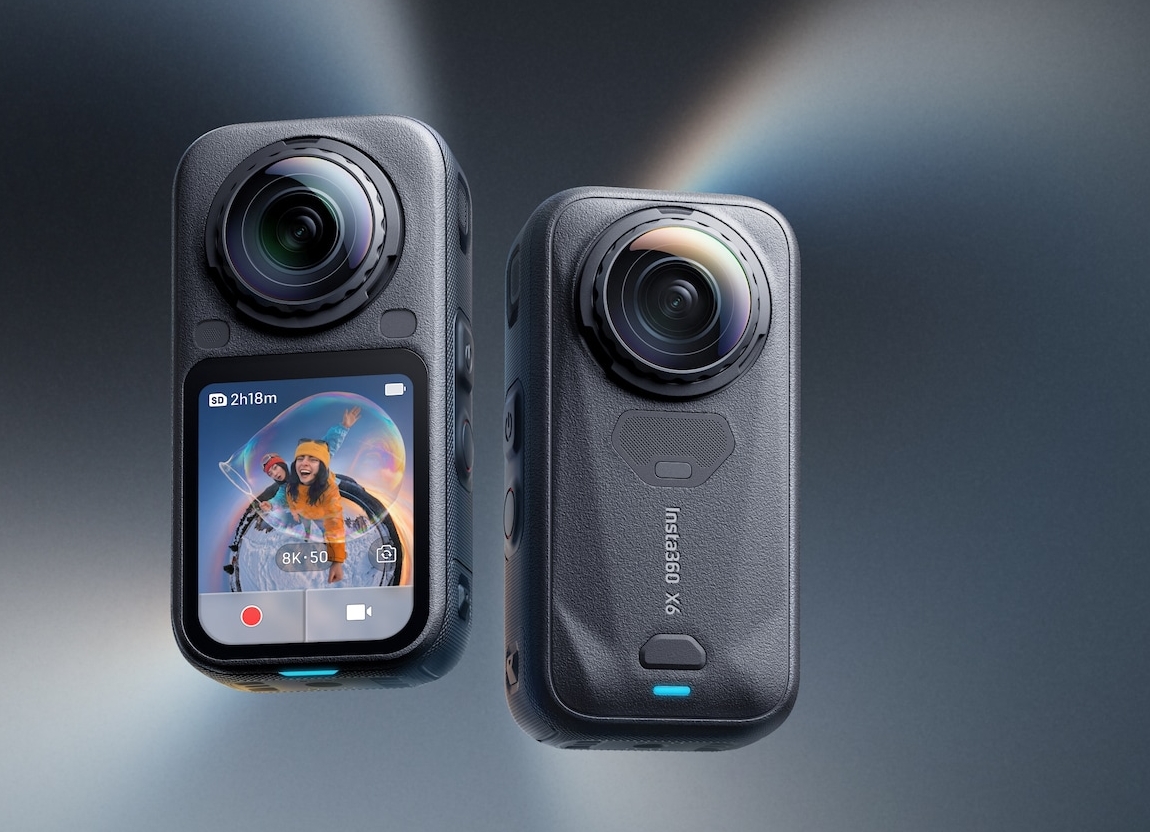
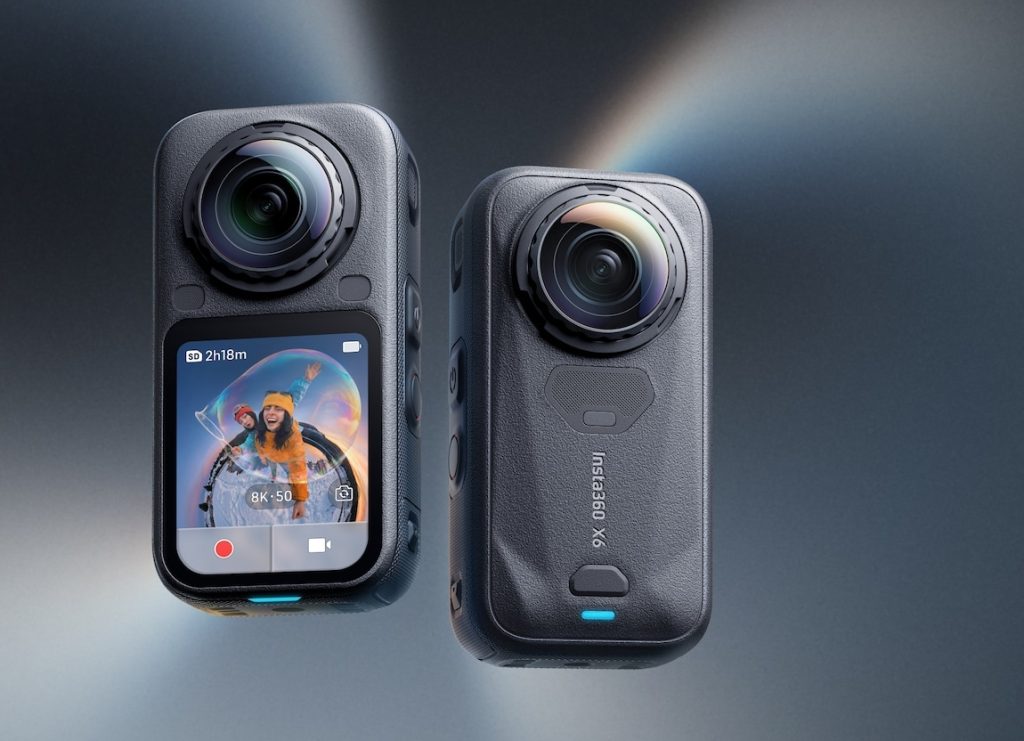
Among all X-series models, the X6 features the most significant design changes. It abandons the traditional elongated “stick” shape in favor of a compact, short rectangular form factor. Measuring 10 × 5 × 4 cm and weighing 195g, it is lighter and more compact than the X5, offering vastly improved compatibility with various mounting positions.
Build Quality and Controls
The camera features a non-slip, matte finish that is resistant to dirt and wear, with precision-engineered seams. Dual 360-degree lenses are symmetrically arranged on the front, while the back houses a high-brightness 2.32-inch OLED touchscreen with significantly improved sunlight visibility. A new always-on display mode allows users to check battery levels and recording status without waking the screen, thereby reducing power consumption. A customizable shortcut button has been added, enabling one-touch switching between 360, flat (standard), and gimbal modes, making one-handed operation effortless.
Removable Lens System 2.0
The lens replacement mechanism has been upgraded to a snap-on design, allowing for lens removal and installation in just 20 seconds. Replacement costs are 60% lower than the previous generation, and lens durability has been tripled. Affordable replacements following impacts during outdoor cycling or diving address the long-standing issue of 360-degree camera lenses being prone to scratches. Protection and Transmission
The camera body itself is IP68 waterproof, rated for depths up to 20 meters (extendable to 60 meters with a dedicated diving case), eliminating the need for extra waterproof housing for snorkeling or freediving. It features a built-in 2600mAh battery, offering 140 minutes of runtime for 8K 30fps panoramic video and 79 minutes for 8K 50fps high-frame-rate mode—sufficient for a full day of outdoor shooting. Equipped with Wi-Fi 6 and USB 3.0 for high-speed data transfer, it achieves peak wireless transfer speeds of 100MB/s, allowing tens of minutes of high-definition footage to be exported in just a few minutes.
II. Core Imaging Hardware: Dual Large Sensors + 8K High Frame Rate – Setting a New Benchmark for Panoramic Image Quality
The X6’s core hardware upgrades focus on three key areas—light sensitivity, dynamic range, and video specifications—marking a massive leap in image quality for consumer-grade panoramic cameras:
Dual Custom 1/1.1-inch Square CMOS Sensors
Developed exclusively in partnership with Sony, these square sensors offer a 33% increase in light-sensitive area compared to the X5. The square architecture is perfectly suited for spherical panoramic imaging, eliminating edge pixel waste and significantly increasing light intake. It outputs panoramic photos up to 120 megapixels and supports 42-megapixel resolution in single-lens flat mode; details remain crisp even after cropping, resolving the blurriness issues found in previous generations.
Top-Tier Video Specifications
Panoramic Mode: Supports 8K 50fps, 6K 60fps, and 4K 100fps, delivering silky-smooth, blur-free footage during high-speed action—ideal for dynamic activities like cycling, skiing, and skydiving;
Single-Lens Flat Mode: Up to 5.7K 60fps and 4K 120fps (slow motion), with a 170° ultra-wide-angle field of view equivalent to traditional action cameras;
Professional Color: Supports 10-bit color depth, native Dolby Vision, and I-Log format across all modes. With 14.5 stops of dynamic range, it prevents highlight clipping and crushed blacks in challenging lighting—such as backlit scenes, night shots, and high-contrast indoor environments—while the PureVideo low-light mode significantly suppresses noise in night footage. Three-in-One Shooting Modes
Panoramic Mode: Captures a full 360° view with no blind spots, allowing for free perspective adjustment during post-production.
Gimbal Mode 2.0: Features a built-in AI electronic gimbal that outputs stable, flat 4K video directly—eliminating the need for post-crop stabilization while balancing image steadiness with efficient production.
Single-Lens Flat Mode: Functions like a standard action camera, offering a lightweight option for casual daily vlogging.
Real-World Night Scene Comparison: In identical low-light conditions, the X6 delivers far superior image clarity compared to the X5. City lights show no severe halos, facial noise is well-controlled, and the image quality boost from the larger sensor is clearly visible to the naked eye.
III. Core Highlight: PanoMind Panoramic AI – Solving the Pain Points of Panoramic Editing
For a long time, the biggest barrier to panoramic cameras hasn’t been the shooting itself, but the massive workload involved in editing, framing, and selecting spherical footage; many users abandon their devices due to the tedious editing process. The X6 is powered by the proprietary PanoMind multi-modal panoramic AI model. Trained on over 30 outdoor scenarios and 10,000 hours of real-world footage, it establishes a three-layer AI creation system—spanning from on-device hardware to the mobile app—to achieve a truly “zero-edit” experience.
AI Video Generation Interface
- AI Director (On-Device Automatic Editing)
A unique hardware-level AI feature: while the X6 is charging or on standby, its onboard chip automatically analyzes the day’s footage. It identifies key moments involving people, action shots, and scenic views, then automatically generates camera movements, matches music, and adds transitions, pushing the finished video directly to the mobile app.
In tests, 30 minutes of cycling footage could be turned into a finished video after just one hour of charging—no manual clip selection required. It is ideal for casual users who want to capture moments easily without the hassle of editing. - One-Tap Video 2.0
Users select their own footage and trigger AI processing with a single tap. The system handles intelligent framing, dynamic virtual camera movements, beat-synced music, and color grading/filters. It supports custom clip durations, balancing automation with creative control and boosting short-video production efficiency several times over. 3. Highlights Pro: Natural Language Editing
This newly launched advanced AI feature allows users to issue editing commands using natural language (text or voice)—such as “Generate a short video of cycling scenery with a slow-paced, cinematic vibe.” The AI automatically selects relevant footage, applies stylized color grading and background music, and processes everything via cloud-based collaboration, significantly lowering the learning curve for video editing. - AI Smart Tracking System Upgrade
Powered by PanoMind recognition capabilities, tracking is no longer limited to human subjects; it now supports locking onto and tracking objects such as pets, vehicles, and cycling gear. When paired with a head-tracking accessory, the camera automatically adjusts its shooting angle to follow the user’s line of sight. “All-Scenario AI Stabilization 2.0” ensures smooth footage even on bumpy mountain roads or during high-speed rides, with further improvements to electronic gimbal correction. - 3D Time Capsule (3D Gaussian Splatting / 3DGS Reconstruction)
This marks the industry’s first implementation of spatial reconstruction technology in a consumer-grade 360° camera. Captured footage can be instantly transformed into a navigable 3D spatial model, allowing users to freely drag their viewpoint and move through the scene. Whether for travel, weddings, or home life, users can permanently preserve immersive, three-dimensional moments—breaking the limitations of traditional 2D video recording. This is an exclusive AI feature that sets the product apart from all competitors.
IV. Real-World Scenario Testing
Scenario 1: Cycling / Motorcycle Touring
The 8K 50fps high frame rate is perfect for high-speed riding. AI object locking continuously tracks the vehicle, while “Gimbal Mode” outputs stable, flat-perspective video directly—eliminating the need for post-production cropping. The camera is waterproof up to 20 meters without a case, handling rainy rides with ease. The “AI Director” feature automatically selects highlights—such as mountain curves and sunset scenery—from the massive amount of footage generated during long rides, saving users from manual sorting.
Scenario 2: Outdoor Diving and Water Activities
The 20-meter waterproof rating (without a case) meets snorkeling needs, while an optional dive case allows for deep-sea diving. The large-format sensor ensures natural color reproduction in low-light underwater environments, avoiding the blue-tint distortion common in such settings. Panoramic mode captures the full underwater view—including coral reefs and schools of fish—allowing users to freely select the best viewing angles during post-processing. Scenario 3: Daily Vlogs & Family Moments
Lightweight shooting in standard mode with AI portrait lighting optimization to brighten faces; automatic pet tracking captures lively moments, while automatic charging triggers the creation of a “day-in-the-life” highlight reel—ready for instant social media sharing.
Scenario 4: Landscape & Travel Photography
120MP panoramic photos preserve exquisite detail, and 10-bit Dolby Vision delivers cinematic quality straight from the camera; 3D Time-Capsule mode reconstructs the full spatial environment of scenic spots to generate immersive walkthrough videos—offering a unique experience beyond the flat footage captured by standard smartphones or action cameras.
V. Drawbacks and Limitations
High power consumption at 8K high frame rates
Battery life in 8K/50fps mode is only 79 minutes; extended outdoor shoots require spare batteries, making the extra battery in the “All-Purpose Kit” essential.
“Moments Pro” cloud AI relies on network connectivity
Natural language-based video creation requires an internet connection for processing; without a network, only basic local “one-tap” editing is available, and advanced AI features are inaccessible.
3D spatial reconstruction consumes significant storage
Reconstructing a 3D model from a 5-minute panoramic video takes up approximately 2–3GB of space, requiring a high-capacity memory card.
High price point
The Standard Edition is priced at 3,999 RMB and the All-Purpose Kit at 4,899 RMB—a significant price hike compared to the previous X5 model; value-for-money is average for casual users who only need simple, everyday recording.
VI. Competitor Comparison (DJI Osmo 360 II / Insta360 X5)
Comparison with DJI Osmo 360 II
DJI benefits from a strong handheld stabilization ecosystem, but its sensor size and 8K high-frame-rate specifications lag behind the X6; it lacks 3D spatial reconstruction and local AI-driven auto-editing (AI Director), resulting in a noticeable gap in AI creative capabilities.
Comparison with the previous-generation Insta360 X5
Comprehensive upgrades across the board—including sensor size, 8K/50fps recording, 120MP photos, 20m waterproofing, and a full suite of AI creative tools—along with vastly superior low-light image quality and editing efficiency; an ideal upgrade for power users focused on sports and travel photography. For casual users who only need simple daily recording, the X5 offers better value for money. VII. Buying Recommendations
Who Should Buy It
Outdoor enthusiasts (cycling, skiing, diving, etc.) who need high frame rates, robust waterproofing, and automatic tracking capabilities;
Vloggers and travel creators who want to avoid manual editing of massive amounts of footage and rely on AI to generate finished videos efficiently;
Imaging enthusiasts who love immersive panoramic recording, seek to capture 3D spatial depth, and require professional-grade 10-bit color grading;
Families looking to document their lives and automatically generate short videos, simplifying the post-production process.
Who Should Skip It
Those who only take the occasional snapshot, rarely shoot video, and have a limited budget;
Those who only need a basic action camera and have absolutely no use for panoramic or AI editing features.
Conclusion
The Insta360 X6 represents more than just an iterative hardware upgrade; it is a revolutionary leap for the smart panoramic camera category. Dual large 1/1.1-inch sensors address the long-standing image quality limitations of panoramic cameras, while the 4nm AI triple-chip architecture and PanoMind model resolve the industry’s biggest pain point: editing panoramic footage. Three exclusive features—AI Director, Highlights Pro, and 3D Time Capsule—redefine the concept of “effortless recording.”
For outdoor creators and casual enthusiasts seeking an all-in-one shooting and smart creation experience, the X6 is currently the most capable panoramic AI camera on the market. If you are constantly overwhelmed by the task of editing vast amounts of footage and want a portable device that delivers ready-to-share videos immediately after shooting, this “Decade Flagship” is the perfect choice.