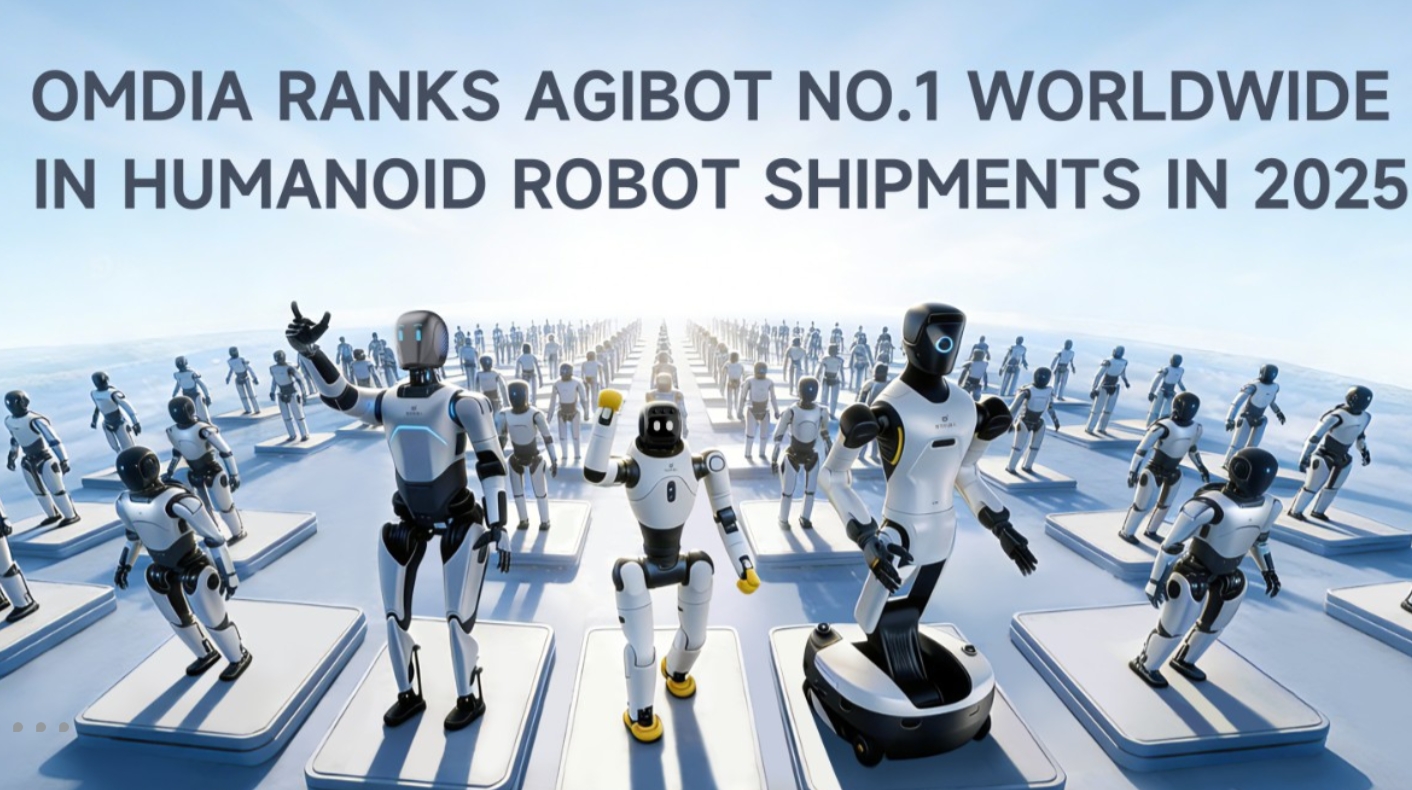
Humanoid robots are intelligent hardware with human-like form and locomotion capabilities, able to perform diverse tasks in home and office environments. They represent the pinnacle of robotics technology and serve as key carriers for embodied AI. Since 2026, with improved AI large model capabilities, humanoid robots are rapidly transitioning from industrial to consumer markets.
Sources familiar with the matter revealed that Luo Jianlan, Chief Scientist of AGIBOT, is planning to leave the company to start his own business. He is currently in contact with industry investors, and his startup will focus on embodied intelligence.
AGIBOT
To delve deeper into the core field of robotic intelligent control, Luo Jianlan pursued advanced studies abroad, attending the University of California, Berkeley, where he earned a Master’s degree in Computer Science and a PhD in Robotics Control. He studied under renowned robotics scholar Pieter Abbeel, solidifying his theoretical foundation in robot learning and intelligent control. After graduating with his PhD, he did not stop at academic research but instead devoted himself to the forefront of global technology industry, working at Google X and Google DeepMind as a research scientist. He was deeply involved in exploring the industrial applications of reinforcement learning, experiencing firsthand the entire process of artificial intelligence technology from algorithm iteration to practical application, accumulating invaluable practical experience in both academia and industry.
At a critical juncture where the global humanoid robot industry is accelerating its competition and domestically produced AI robots urgently need to overcome core technological bottlenecks, Luo Jianlan chose to return to China and officially join AGIBOT as Chief Scientist, Senior Vice President, and Partner, taking the lead in the research and development of AGIBOT’s embodied intelligence core technologies.
Luo Jianlan’s core work involves building a systematic R&D system, leading the establishment of the AGIBOT Embodied Intelligence Research Center, and comprehensively guiding the development of cutting-edge robot algorithms, technological innovation, and engineering implementation. He predicts that in the next 3-5 years, embodied intelligence will move beyond the laboratory demonstration stage and enter a critical period of large-scale deployment. The industry’s core competitiveness will shift from competing on algorithm parameters to a comprehensive competition based on real-world data accumulation, hardware and software synergy, and engineering implementation efficiency. Only teams that adhere to “real-world deployment and closed-loop iteration” can achieve continuous technological breakthroughs.
Sources familiar with the matter revealed that Zhao Xing, co-founder of Galaxea AI, will be leaving to start his own business. As co-founder and chief scientist of Galaxea AI, Zhao was primarily responsible for Galaxea AI’s humanoid robot technology. In early 2026, Xu Huazhe, co-founder and chief scientist of Xinghaitu, also left to start his own company, which will focus on the embodied intelligence consumer application market.
Galaxea AI
Currently, Galaxea AI is preparing for its Hong Kong IPO. Zhao Xing’s departure will significantly impact its IPO process. Furthermore, Galaxea AI’s second-largest customer has also started developing its own humanoid robots. This not only means losing a major client’s revenue but also further consolidation in the humanoid robot market, with players in the 3C consumer electronics sector entering the fray.
Galaxea AI’s second-largest customer is a leading mobile phone manufacturer. Leveraging its hardware capabilities accumulated in 3C consumer electronics, the manufacturer not only developed its own humanoid robot but also won a championship in a robot marathon. Mobile phone manufacturers possess stronger hardware capabilities; for example, in addressing the industry-wide headache of heat dissipation, this leading mobile phone manufacturer, with its accumulated heat dissipation technology in 3C products, has solved the heat dissipation problem much better than embodied robot companies. It’s safe to say that the avatar industry will be incredibly competitive this year, as players with significantly stronger hardware capabilities have entered the fray.
As is well known, the avatar industry has undergone three major data transformations in 2025, from Yamato to Umi to Ego. In terms of models, it has evolved from the initial VLA to VLA and world models operating in parallel, and the emergence of native multimodal large models, among others.
While avatars are still in their early stages, primarily showcasing technological demos, new technologies emerge in data and models every few months. This requires industry players to maintain a keen sense of opportunity, quickly recognizing and adapting to new technologies to avoid falling behind.
However, this leading avatar company failed to react quickly enough and kept pace with industry changes. In early 2026, while other players were heavily investing in Umi or Ego data, this leading avatar company was still betting on Yamato. This bet was based on its desire to launch an IPO, which requires substantial revenue, currently achieved through selling more avatar robots. Galaxea AI lacks the performance scenario capabilities of companies like Unitree and Calcium Cloud, which require product and distribution capabilities. For Galaxea AI, its primary sales scenario is data acquisition, specifically digital data acquisition for mobile devices. Therefore, in its pursuit of an IPO and increased revenue, it’s betting heavily on mobile devices.
However, although lagging behind the leading companies in terms of pace, this hasn’t affected Galaxea AI’s fundraising. This year’s fundraising has been like a flood, with investors flocking to players large and small. Having secured a leading position early on, the company successfully completed a multi-billion yuan funding round.
Introduction: From Factory to Living Room, the Humanoid Robot’s “Dimension Reduction” Journey
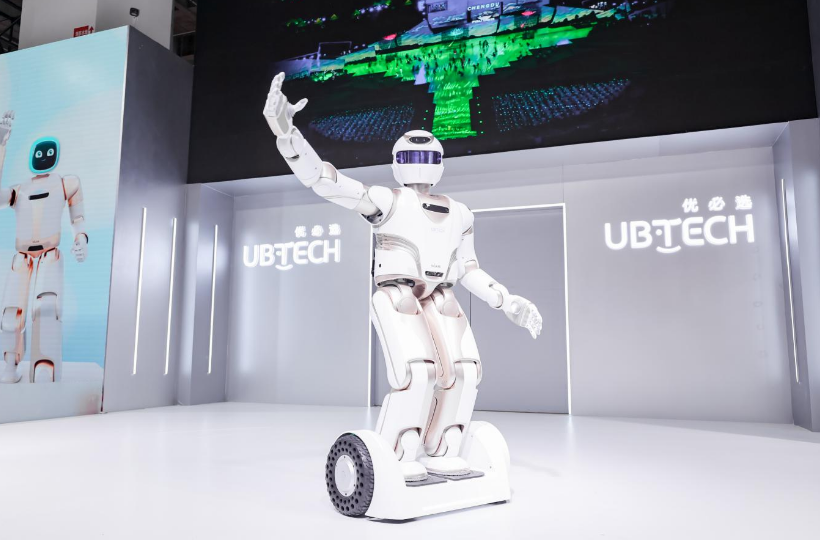
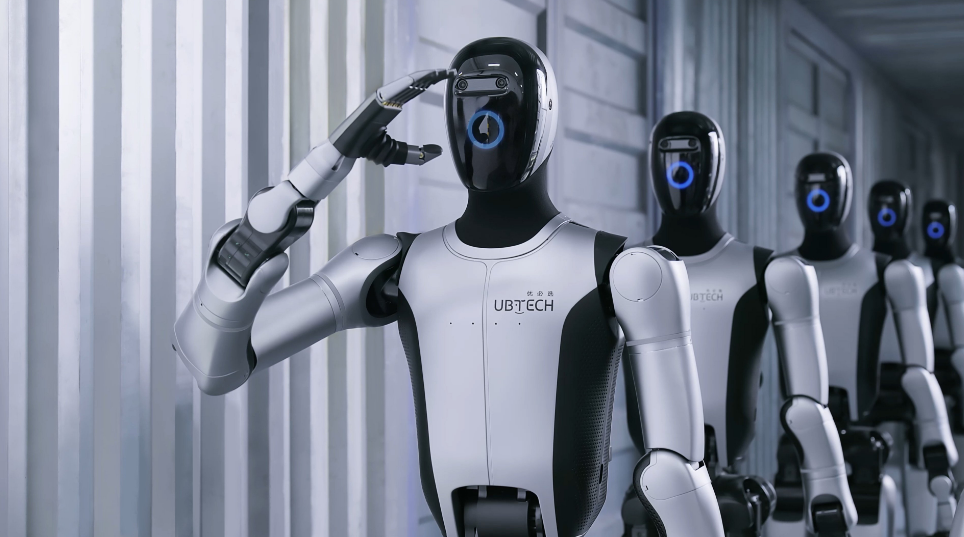
UBTECH Walker humanoid robot exhibition display
On June 6, UBTECH did something big—released its first consumer-grade full-size ultra-bionic humanoid robot, the U1 Series. Standing approximately 1.7 meters tall, with 41 high-performance servo joints, ROSA 2.0 operating system, multi-modal perception system, capable of chatting, dancing, accompanying children in learning, and caring for the elderly. Priced at 299,000 yuan.
What does 299,000 yuan mean? The price of a Tesla Model 3, a down payment on a small apartment in a second-tier city, or three years’ salary for a senior nanny. UBTECH dares to set this price because they position the U1 not as a “toy” but as a “family member.”
But the question is: can AI technology in 2026 truly make a 1.7-meter robot a qualified family member?
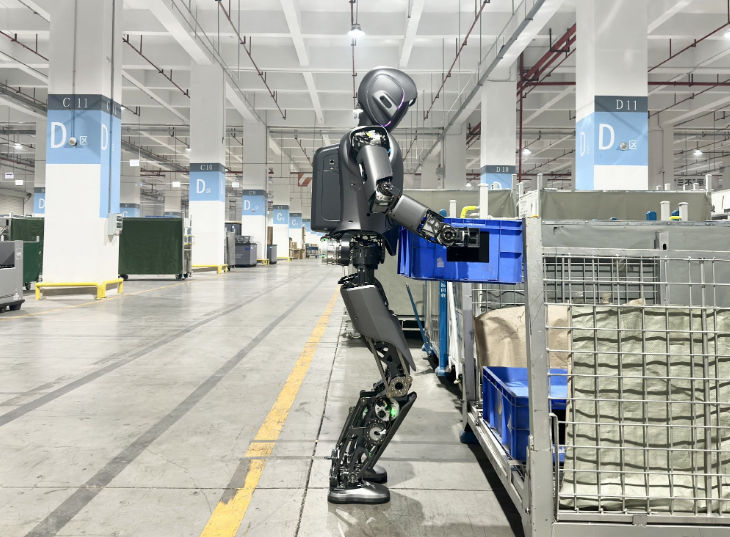
UBTECH Walker S1 industrial robot factory training
Product Overview: UBTECH’s Consumer “UWORLD”
Who is UBTECH? China’s humanoid robot first stock (09880.HK), founded in 2012, with Walker series industrial humanoid robots already undergoing training in BYD, Dongfeng Liuzhou, and FAW-Volkswagen automotive factories. On May 20, 2026, UBTECH launched its consumer brand “UWORLD,” with the U1 as the brand’s first product.
U1’s core specifications:
Height and Structure: Approximately 1.7 meters, close to average adult male height, with 41 high-performance servo joints (excluding dexterous hands), paired with multi-dimensional force sensing, multi-eye stereo vision, omnidirectional hearing, and inertial ranging perception systems. This joint count is top-tier among consumer-grade humanoid robots—Unitree G1 has 43 degrees of freedom but only stands 1.27 meters tall; Zhiyuan A Series has approximately 30 degrees of freedom.
Operating System: ROSA 2.0, UBTECH’s self-developed robot operating system. Compared to version 1.0, 2.0 shows significant improvements in task planning, multi-modal fusion, and emotional computing. The U1 features a lightweight embodied large model, optimizing human-robot interaction experience for home unstructured scenarios.
Interaction Capabilities: Voice dialogue, facial expression recognition, gesture understanding, and tactile feedback. The U1 can recognize family members’ emotional states and provide empathetic responses through voice, expressions, and movements. For example, when detecting a child’s low mood, it proactively tells stories and dances to cheer them up; when detecting an elderly person’s prolonged inactivity, it reminds them to get up and move around.
Motion Capabilities: Bipedal walking, stair climbing, bending to pick up objects, pushing and pulling furniture. UBTECH’s motion control algorithms accumulated on the industrial Walker series have been transferred to the U1. But consumer scenarios have far higher safety requirements than factories—the U1’s joint torque control is gentler, and collision detection sensitivity is higher, avoiding injuries to people or damage to furniture in home environments.
Battery and Charging: Official battery life data has not been announced, but referencing the industrial Walker S2’s 3-minute autonomous battery swap technology, the U1 may adopt similar swap or fast-charging solutions. In home scenarios, the U1 is expected to require charging 1-2 times daily.
Specifications: The Confidence of Full-Stack Self-Development
Bipedal walking, stair climbing, bending to pick up
Scenarios
Emotional companionship, education and entertainment, home services
Price
299,000 yuan
Brand
UWORLD (UBTECH consumer brand)
Data source: UBTECH official launch materials, Caixin, IT Home
UBTECH 2026 humanoid robot production line
Deep Analysis: What Does 299,000 Yuan for the U1 Actually Buy?
The U1’s 299,000 yuan pricing sits in the “high-end entry” range among consumer-grade humanoid robots. Compared to competitors: Unitree G1 at 99,000 yuan (1.27m height, 35kg), Zhiyuan A Series at approximately 150,000-200,000 yuan, Songyan Dynamics Bumi at under 10,000 yuan (0.94m height, 12kg). The U1’s pricing is significantly higher than these “miniaturized” competitors, but the U1’s full-size (1.7m) and ultra-bionic design also provide completely different experience dimensions.
Emotional Companionship Value: The U1’s core selling point is not “doing chores” but “companionship.” Its 1.7-meter height allows it to communicate with children at eye level and walk alongside elderly people shoulder-to-shoulder—this “equal posture” is something small robots cannot provide. The ultra-bionic design—realistic facial expressions, natural body movements, warm voice tones—makes the U1 more like a “person” than a “machine,” reducing users’ psychological distance.
Education and Entertainment Value: The U1 can accompany children with homework, tell stories, practice English speaking, and learn programming. ROSA 2.0’s education module supports personalized learning path planning, adjusting content based on children’s age, interests, and learning progress. But a key question here is: can the U1’s educational content quality compete with professional educational robots (such as iFLYTEK AI learning machines) or online education platforms (such as Yuanfudao)?
Home Service Value: The U1 can execute simple home service tasks—handing over objects, switching lights on/off, medication reminders, and companionship walks. But do not expect it to cook, clean, or do laundry—these complex operations require more advanced dexterous hands and stronger environmental understanding capabilities, which current technology levels cannot achieve. The U1’s home service value is more “auxiliary” than “replacement.”
Social Prestige Value: The 299,000 yuan pricing itself carries “luxury” attributes. Owning a U1 is, to some extent, a symbol of technological strength and consumption capability. This social value cannot be ignored among high-end consumer groups—just like the first batch of people who bought Tesla Model S, they bought not only a car but also a “sense of the future.”
But the U1 also faces severe challenges:
Technology Maturity: Humanoid robots’ autonomous operation capabilities in home environments are currently at the “demonstration level” rather than the “practical level.” The U1 can walk, talk, and recognize emotions, but its robustness in complex home environments (cluttered floors, narrow spaces, unexpected situations) requires extensive real-world usage validation. Whether UBTECH’s experience accumulated in industrial scenarios can smoothly migrate to home scenarios is unknown.
Safety and Privacy: A 1.7-meter robot moving around the home environment poses far higher safety risks than small robots. Is the U1’s collision detection, emergency braking, and anti-tipping mechanism sufficiently reliable? With cameras and microphones working 24/7, how is family privacy data protected? UBTECH needs to provide clear technical solutions and legal commitments.
Maintenance Costs: With 41 servo joints, any damage requires professional repair. 299,000 yuan is the purchase price; subsequent maintenance, software upgrades, and content subscription fees may amount to tens of thousands of yuan annually. For ordinary families, this is a considerable expense.
Substitutability Competition: 299,000 yuan can hire a full-time nanny for three years, or buy a high-end robot vacuum + an AI learning machine + a smart speaker + a tablet computer, with combined functional coverage possibly broader. The U1’s value lies in “integration” and “emotional connection,” but whether this value is sufficient to convince users to abandon the “functional combination” solution still requires market validation.
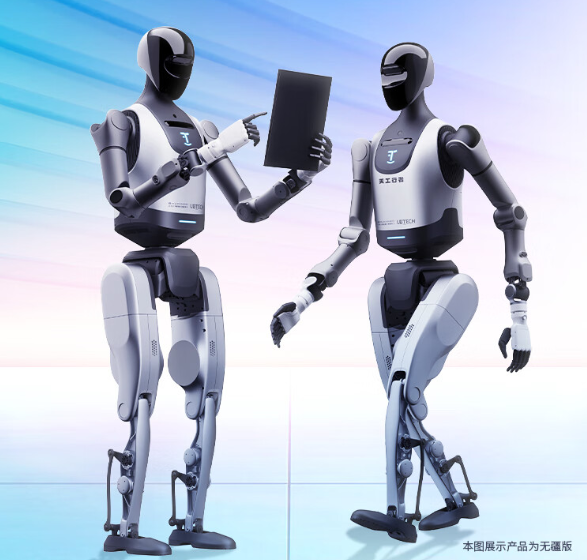
UBTECH Tiangong Xingzhe robot product display
Comparison: U1 vs Unitree G1 vs Zhiyuan A Series
Feature
UBTECH U1
Unitree G1
Zhiyuan A Series
Songyan Bumi
Height
~1.7m
1.27m
~1.6m
0.94m
Weight
~60-80kg (estimated)
35kg
~50kg
12kg
Degrees of Freedom
41
43
~30
~20
Price
299,000 yuan
99,000 yuan
150,000-200,000 yuan
<10,000 yuan
Positioning
Family companionship/education
Research/education/light companionship
Industrial/service/home
Children’s companionship
Operating System
ROSA 2.0
Open-source/self-developed
Self-developed
Self-developed
Interaction Depth
Emotional multi-modal
Basic voice/remote control
Task-oriented
Simple voice
Motion
Bipedal/stair climbing
Bipedal walking
Bipedal walking
Wheeled/bipedal
Brand Background
Industrial leader to consumer
Research-level startup
Industrial-level startup
Startup newcomer
Production Capacity
End of 2026 announcement
In mass production
Small-scale production
Pre-order stage
The U1’s differentiation is clear: full-size, ultra-bionic, emotional interaction, and industrial-grade technology transfer. Unitree G1’s advantage is cost-performance and research ecosystem, Zhiyuan A Series’ advantage is industrial scenario landing experience, and Songyan Bumi’s advantage is extremely low barrier. The U1 targets “budget-unconstrained, experience-focused, emotion-valuing” high-end family users.
Pros and Cons
Pros
Cons
1.7m full-size, emotional interaction experience approaching human
Users with extremely high technology maturity requirements unwilling to bear early product risks
Families with living spaces under 80 square meters where a 1.7-meter robot’s movement is restricted
FAQ
Q: Can the U1 do household chores?
A: The U1 currently can execute simple auxiliary tasks such as handing over objects, switching devices, and reminders, but cannot execute complex household chores like cooking, cleaning, or laundry. These functions require more advanced dexterous hands and environmental understanding capabilities, expected to gradually achieve realization in 2027-2028.
Q: What is the U1’s battery life?
A: Official battery life data has not been announced. Referencing the industrial Walker S2’s 3-minute autonomous battery swap technology, the U1 may adopt swap or fast-charging solutions. In home scenarios, daily charging 1-2 times is expected.
Q: Is the U1 safe? Could it injure children or elderly people?
A: The U1’s joint torque control is gentler than the industrial version, and collision detection sensitivity is higher, but the 1.7m/60-80kg form factor still poses risks in home environments. Recommend first use under adult supervision, avoiding letting young children interact with the U1 alone.
Q: Are subsequent maintenance costs high?
A: Maintenance costs for 41 servo joints are not low. UBTECH has not announced specific maintenance plans, but referencing industrial robot maintenance costs, annual maintenance expenses may range from 10,000-30,000 yuan. Recommend confirming maintenance policies and parts pricing before purchase.
Conclusion
The release of UBTECH’s U1 marks China’s humanoid robot industry formally moving from “industrial experimentation” to “consumer landing.” The 299,000 yuan pricing is a “brave” signal in the 2026 humanoid robot market—UBTECH believes there are already enough high-end families willing to pay for an “AI family member.”
But the U1’s success does not depend on how spectacular the launch demonstration is, but on its real performance after entering homes: can it give appropriate comfort when a child cries? Can it promptly alert when an elderly person falls? Can it walk stably in complex home environments without bumping into furniture? Can it maintain reliability over long-term use without frequent failures?
Answers to these questions require revelation after first-batch user deliveries at the end of 2026. UBTECH has established clear production ramp-up plans—2026 industrial humanoid robot annual production capacity target of 5,000 units, expanding to 10,000 units in 2027. The U1’s consumer-grade production scale and delivery rhythm will directly impact market confidence.
Humanoid robots entering homes is the “moon landing moment” of the AI era. The U1 may be the first “AI member” of Chinese families, or it may be another “concept ahead of product” expensive toy. The 299,000 yuan price buys not just a robot, but a vote for “future lifestyle.” Are you willing to cast this vote?
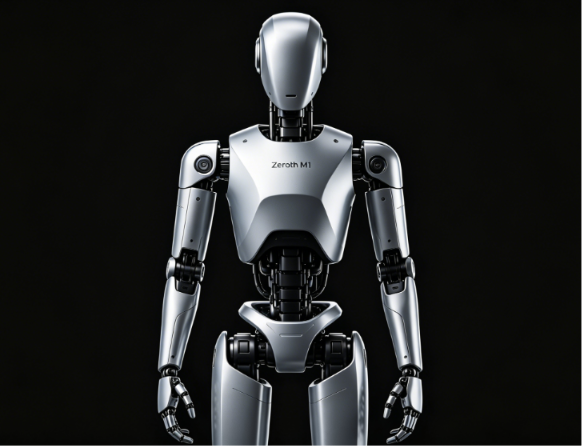
On May 9, 2026, Suzhou LeXiang Intelligent Technology Co., Ltd. officially announced that its embodied intelligence brand Zeroth’s M1 humanoid robot has successfully integrated with Tencent’s OpenClaw ecosystem, becoming the world’s first mass-producible humanoid robot to connect to this platform.
Embodied AI robot M1 official debut
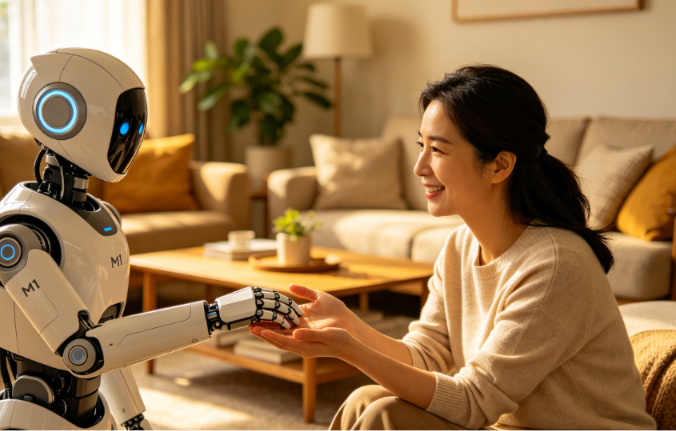
This milestone partnership marks AI Agent’s expansion from cloud and desktop applications to home physical terminals for the first time, completing the critical transition from “screen intelligence” to “embodied intelligence.”
At the launch event, LeXiang Technology and Tencent Cloud jointly demonstrated the results of this collaboration. Users can now remotely send commands to the “OpenClaw Agent” through the QQ interface, with the AI agent controlling the M1 robot to perform actions such as walking, turning, and following its owner. This natural language-driven robot control approach redefines human-robot interaction in home scenarios.
Technical Breakthrough: A Complete Loop from Cloud to Physical Terminals
The core value of the M1 robot’s integration with the OpenClaw ecosystem lies in achieving a complete AI Agent loop. Traditionally, AI Agents primarily run in cloud or desktop environments, with users interacting with AI through screens. Through collaboration with Tencent OpenClaw, the M1 robot gains a direct connection between cloud-based AI brain and physical body.
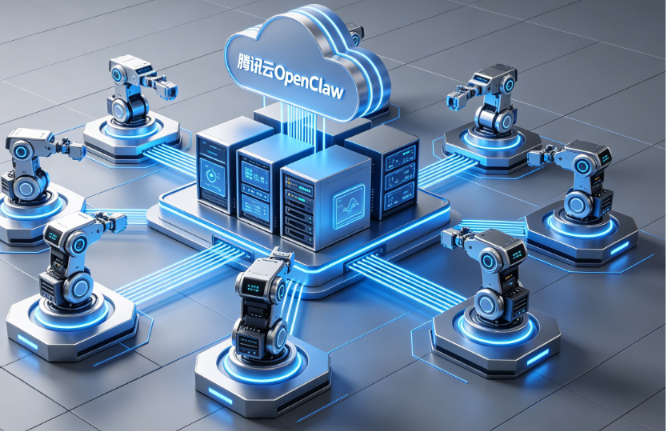
Specifically, Tencent Cloud’s QClaw platform provides the M1 robot with powerful cloud inference capabilities. When users send commands via QQ, the cloud-based AI Agent parses user intent and directly controls the robot’s motion system to execute corresponding actions. This integrated “perception-decision-execution” capability is precisely the core characteristic of embodied intelligence.
At the launch event, LeXiang Technology’s CEO stated: “We believe AI of the future should not be trapped in screens. The M1 robot gives AI its first real physical body, enabling it to interact in authentic three-dimensional space.” This philosophy clearly illustrates the essence of embodied intelligence—moving AI beyond the digital world into entities capable of perceiving environments and executing tasks.
Cloud AI connects physical robot body
Commercial Landing: 10,000-Unit Target and Ecosystem Expansion
Significantly, LeXiang Technology has reached an intention with Tencent for 10,000 hardware terminal integrations, demonstrating strong confidence in this collaborative direction. The M1 robot has successfully connected to OpenClaw and entered internal testing, with plans for official launch in late May and pre-sales starting in the first half of the year.
This commercial rollout timeline reflects LeXiang Technology’s pragmatic approach to embodied intelligence deployment. Unlike many companies still in the concept stage, LeXiang Technology possesses mass production capabilities, making it an ideal hardware carrier for Tencent’s OpenClaw ecosystem. Through the 10,000-unit target, both parties aim to accumulate real-world scenario data through scaled applications, further optimizing user experience.
For Tencent, choosing the M1 robot as OpenClaw ecosystem’s first physical terminal reflects its emphasis on home scenarios. As Tencent’s AI Agent platform expands from cloud and desktop into the physical world, humanoid robots serve as the ideal carrier for completing this expansion.
Industry Significance: Filling the AI-Robot Integration Gap
From an industry perspective, LeXiang Technology’s M1 robot integration with OpenClaw fills the “AI Agent + Household Robot” integration gap. In prior development, AI Agent and household robot sectors evolved separately, lacking effective intersection.
On one hand, AI Agents primarily operated in virtual environments—capable of processing information and invoking tools, but lacking physical execution capabilities. On the other hand, traditional household robots, while possessing locomotion abilities, had limited intelligence, struggling to understand complex commands or enabling natural interaction. The emergence of the M1 robot precisely bridges this gap—it possesses locomotion capabilities while gaining powerful AI reasoning through OpenClaw.
This integration represents a significant direction in AI development. Industry observers widely agree that with large model technology maturation, embodied intelligence will become the next major battlefield for AI commercialization. As a typical carrier of embodied intelligence, humanoid robots are transitioning from laboratories to households.
Humanoid robot serves smart home
Market Prospects: Scaling Path for Household Robots
LeXiang Technology’s 10,000-unit target for the M1 robot, while seemingly conservative, reflects current challenges in embodied intelligence commercialization. Compared to mature consumer electronics like smartphones and smart speakers, household robots face higher technical barriers and user expectations.
First is the price factor. Currently, mass-producible humanoid robots are generally priced in the tens of thousands of yuan range, exceeding most consumers’ budgets. LeXiang Technology needs to control costs while ensuring product performance to attract a broader user base.
Second is scenario adaptation. Home environments are complex and variable; robots need to handle various unexpected situations. Making robots genuine helpful assistants in family life rather than expensive toys is a question all players must answer.
Finally, privacy and security. Introducing robots into homes means extensive data collection and processing; users’ privacy protection concerns cannot be ignored. LeXiang Technology needs to establish trust at the technical architecture level, reassuring users about safety.
Despite challenges, the market prospects for embodied intelligence remain widely optimistic. Analysts predict that by 2030, the global household robot market could exceed 100 billion dollars. As a pioneer in this track, LeXiang Technology’s collaboration with Tencent will accumulate valuable experience for industry development.
Final Thoughts
From screens to bodies, AI is gaining genuine “freedom of action.” LeXiang Technology’s M1 robot integration with Tencent OpenClaw marks the formal opening of the embodied intelligence era. When AI is no longer just text and sound, but can walk, turn, and interact with family members, the integration of intelligent technology and daily life enters an entirely new phase.
What follows is whether the M1 robot’s official launch proceeds as scheduled and whether the 10,000-unit target is successfully achieved. These questions will be answered in the second half of the year. Regardless, May 9, 2026, has been inscribed in AI development history—the critical step from concept to reality for embodied intelligence, hereby established.