Tag: Health Monitoring

Health monitoring has become the most critical differentiator for smartwatches. The Huawei WATCH FIT 5 Pro builds a comprehensive protection system spanning from basic vital signs to chronic disease risks, including 24-hour heart rhythm monitoring, vascular elasticity assessment, and metabolic status analysis. The series is equipped with Huawei’s self-developed TruSeen 5.5+ algorithm, which the company claims can effectively reduce interference from factors such as movement and skin tone, thereby improving monitoring accuracy.

  • Zhongjian Tech Funding Signals Smart Glasses Market Split

    Zhongjian Tech Funding Signals Smart Glasses Market Split

    I. Funding and Team Composition

    Smart glasses company Zhongjian Technology, founded in 2023, has completed three funding rounds totaling tens of millions of yuan. Investors include Shokz, Gaofeng Patience Fund (under Professor Gao Bingqiang), Haochen Capital, SEEFund, listed company Appotronics (688007), and Professor Gao Bingqiang personally, with Qiyu Capital serving as exclusive financial advisor. Funds will advance R&D, with the first-generation product already completed.

    Founder Zhao Peng is a gold medalist of the 26th National Physics Competition, with a bachelor’s and PhD from Tsinghua University’s Department of Electronic Engineering, specializing in novel display and micro-nano optoelectronics technologies, with multiple SCI papers published. His career includes serving as Research Institute Director at Appotronics, responsible for frontier technology R&D and industrialization, focusing on novel displays and AR glasses, covering team building, technology innovation, product planning, R&D implementation, and business development. Zhao has traditional glasses industry resources, with relatives working in Danyang, a major glasses manufacturing hub.

    Danyang glasses factory lens coating production line
    Danyang glasses factory lens coating production line

    Among investors, Shokz is a bone conduction headphone company, Appotronics is Zhao’s former employer, and Professor Gao Bingqiang is an emeritus professor at HKUST’s Department of Electronic and Computer Engineering.

    II. Technical Solution and Product Form

    Zhongjian Technology’s core product is smart zoom daily glasses using electrochromic zoom optical devices, changing lens optical properties through electrical signals. The product integrates distance sensors, inertial sensors, posture sensors, etc., automatically adjusting lens power based on viewing distance.

    Electrochromic zoom glasses lens structure diagram
    Electrochromic zoom glasses lens structure diagram

    For anti-dizziness design, the product filters non-zoom noise signals by identifying user movement intentions through sensors. The zoom experience approaches single-vision glasses. The team is simultaneously advancing eye-tracking technology, further reducing dizziness through gaze-point adjustment. Optical design adopts a full-stack self-developed solution, with self-developed zoom components.

    The ultimate target form is consistent with ordinary glasses, but early versions will be strongly function-oriented with a tech-style appearance, integrating full automation and strong interaction functions, with subsequent iterations gradually reducing form factor and simplifying design. The product is planned for crowdfunding in 2026.

    III. Market Background and Demand Analysis

    With information technology development, myopia prevalence among post-80s and post-90s generations has risen significantly. The industry saying “age 43, eye transition” refers to people in their 40s beginning to experience presbyopia, with declining dynamic focusing ability, creating “myopia-presbyopia coexistence” vision needs. Current market solutions include using two pairs of glasses or progressive multifocal lenses.

    :单焦、双焦、三焦点和渐进镜片比较
    :单焦、双焦、三焦和渐进镜片对比

    Progressive multifocal lenses integrate multiple focal points on a single lens, simultaneously satisfying far, mid, and near vision needs, but suffer from narrow usable field of view, obvious dizziness, high channel fitting costs, and expensive retail prices. Electrochromic zoom optical devices can achieve single-lens zoom, higher integration, smaller size and weight, and lower cost. This technology has currently reached the industrialization critical point.

    China’s glasses market has exceeded 100 billion yuan scale.

    IV. Industry Competition Landscape

    From 2025 to 2026, the smart glasses market remains active. Public information shows: Xiaomi AI glasses entered the market at 1999 yuan starting price; Meta Ray-Ban continues iterating; Thunderbird Innovation completed Series C funding; Fourth Paradigm partnered with Anyka Microelectronics to release 13-megapixel full-scene AI glasses; Meizu StarV Snap AI shooting glasses with Snapdragon AR1 chip went on sale; XREAL, Yingmu Technology and other AR manufacturers actively raised funding.

    These products generally feature AI functions (shooting, voice assistant, real-time translation, etc.) as core selling points. Zhongjian Technology’s product positioning differs, with core functions being optometric zoom and AI functions as subsequent add-on directions.

    CES 2026 most anticipated smart glasses collection
    CES 2026 most anticipated smart glasses collection

    V. Analysis Perspectives

    1. Track Divergence Signal

    The smart glasses market is developing two parallel paths: one with AI interaction as core, emphasizing shooting, voice, translation and other functions, represented by Meta Ray-Ban, Xiaomi AI glasses, etc.; the other with optometric functions as core, emphasizing solving real vision problems, with Zhongjian Technology representing this path. The two paths are not mutually exclusive, but current product definition stages have different emphases.

    2. Crowdfunding Model Rationality

    Choosing crowdfunding as the debut channel has dual significance for electrochromic zoom as an entirely new category: first, validating real market demand; second, obtaining early user feedback to guide subsequent iterations. Considering progressive multifocal lenses’ long-standing user experience pain points, if the electrochromic zoom solution can achieve expected optical performance and wearing comfort, there is clear replacement space.

    3. Technology Maturity Assessment

    The judgment that electrochromic zoom devices “have reached the industrialization critical point” can be verified from two dimensions: first, Zhongjian Technology’s first-generation product has been completed; second, funding continues to be invested in R&D rather than mass production, indicating the product remains in optimization stage rather than large-scale manufacturing. The crowdfunding timeline set for 2026 also reflects the team’s prudent assessment of technology maturation pace.

    4. Competition Boundary Uncertainty

    Current smart glasses market competition boundaries have not solidified. AI-function-centered products may integrate zoom capabilities in future versions, while optometric-function-centered products are also planning to add AI functions. The two paths’ endgame may be convergence, but in the short term, product definition differences will determine respective target user groups and pricing strategies.

    5. Investors’ Industrial Logic

    Among the investor portfolio, Shokz (acoustic wearable devices), Appotronics (novel displays), and Professor Gao Bingqiang (semiconductors) represent different technology dimensions respectively, indicating capital recognizes the long-term logic of “glasses as visual entry point,” but has not formed consensus on specific technology paths, adopting a diversified layout strategy.

  • HUAWEI WATCH FIT 5 Series Launches: Can Enhanced Health Monitoring and Extended Battery Life Reshape the Smartwatch Landscape?

    Huawei officially launched the WATCH FIT 5 series on April 29, 2026, with a global press conference scheduled for May 7 in Bangkok, Thailand. The new lineup includes standard and Pro models, both positioning health monitoring capabilities and battery performance as core differentiators in an increasingly competitive smartwatch market.
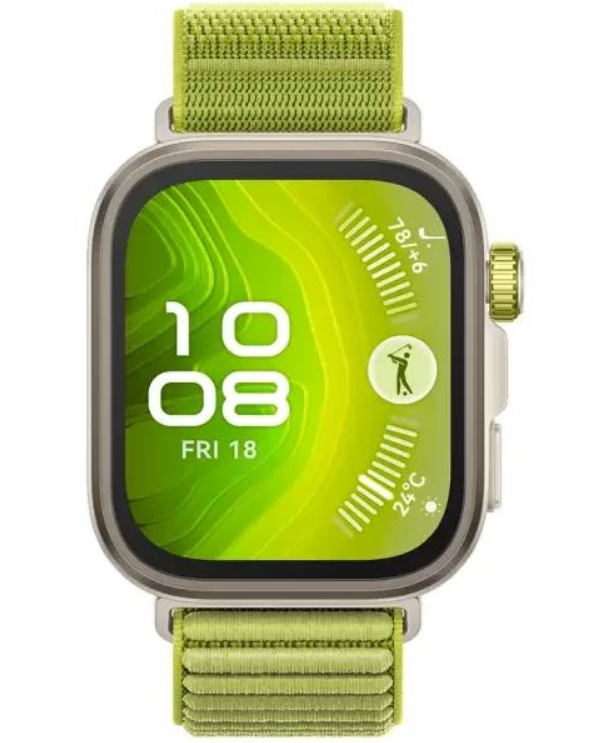
    HUAWEI WATCH FIT 5 Pro
    HUAWEI WATCH FIT 5 Pro

    Health Monitoring Evolution: From Data Recording to Risk Prediction

    The flagship WATCH FIT 5 Pro establishes what Huawei calls a “comprehensive protection system spanning basic vital signs to chronic disease risk assessment.” Beyond conventional 24/7 heart rate, blood oxygen, and sleep monitoring, the Pro model introduces four key capabilities:

    Electrocardiogram (ECG) Analysis enables users to quickly record ECG waveforms by touching the side sensor with their finger, assisting in arrhythmia screening within seconds.

    Pulse Wave Atrial Fibrillation and Premature Beat Alerts provide continuous cardiac rhythm monitoring around the clock. This feature proves particularly valuable for users with cardiovascular health concerns, enabling early detection of occult arrhythmias.

    Vascular Elasticity Detection assesses vascular health through pulse wave conduction velocity, offering early warnings for arteriosclerosis risk. As cardiovascular diseases trend younger globally, this capability fills a critical gap in smartwatch health features.

    Blood Glucose Risk Assessment uses optical signals to indirectly evaluate metabolic status, providing reference warnings for high-risk diabetes populations. It’s important to note this isn’t a professional blood glucose measurement device but rather a risk assessment service based on big data algorithms.

    The Pro model features an upgraded optical sensor system paired with Huawei’s proprietary TruSeen 5.5+ health algorithm. According to Huawei, the new algorithm effectively reduces interference from motion, skin tone, and ambient lighting factors, enhancing the stability and reliability of monitoring data.

    The standard WATCH FIT 5 targets cost-conscious users seeking quality health management features. It shares the same 6 LED and 6 PPG optical heart rate module architecture with the Pro version, supporting precise all-day heart rate monitoring, blood oxygen saturation measurement, scientific sleep tracking, and women’s health management functions.
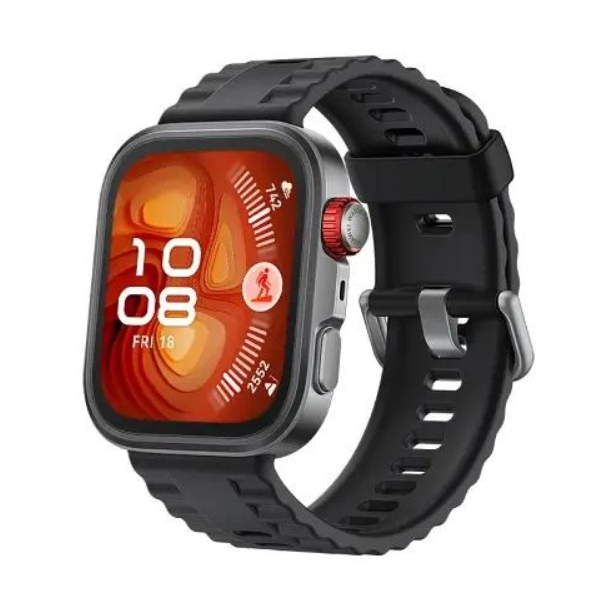
    The HUAWEI WATCH FIT 5 standard edition offers multiple color options with skin-friendly silicone band, weighing just 27 grams for comfortable extended wear and long battery life.
    The HUAWEI WATCH FIT 5 standard edition offers multiple color options with skin-friendly silicone band, weighing just 27 grams for comfortable extended wear and long battery life.

    Battery Breakthrough: From Daily Charging to Week-Long Power

    Battery life remains a fundamental concern for smartwatch users. Huawei employed different technological approaches to significantly enhance endurance across both models.

    The WATCH FIT 5 standard edition debuts high-silicon battery technology, boosting energy density by over 20% compared to traditional lithium batteries without increasing body weight. Official tests show the standard model delivers up to 7 days of battery life under typical usage scenarios (approximately 50 messages and 10 calls daily, with continuous health monitoring enabled), extending to 10 days under light use conditions.

    The Pro model features a 1.92-inch LTPO flexible display supporting adaptive refresh rate adjustment. This screen can reduce refresh rates to as low as 1Hz depending on displayed content, cutting power consumption by over 30% compared to conventional fixed-refresh displays. LTPO technology enables the Pro model to maintain balanced battery performance despite its expanded sensor suite and feature set.

    Notably, the standard edition weighs just 27 grams with a 9.5mm thickness, achieving equilibrium between extended battery life and comfortable all-day wear. For users requiring continuous health monitoring, the lightweight design substantially improves the wearing experience.

    Design Excellence and Professional Sports Features

    Huawei emphasized premium design and professional sports capabilities in the new series. The WATCH FIT 5 Pro’s Glacier White colorway debuts aerospace-grade nano-ceramic metal craftsmanship, paired with 2.5D sapphire glass and a titanium alloy bezel. Sapphire glass ranks just below diamond on the Mohs hardness scale, effectively preventing everyday scratches.

    For sports functionality, the Pro model supports over 100 exercise modes, adding professional trail running with segment navigation capabilities. Users can plan routes and track pacing across complex terrain. Golf enthusiasts benefit from vector maps for over 17,000 courses worldwide, with data on swing trajectories and putt distances readily accessible. Water resistance extends to 40 meters, covering shallow snorkeling and free diving scenarios.

    The standard edition maintains a clean, practical design philosophy with multiple color options. The silicone band features breathable perforations, enhancing comfort during athletic activities.
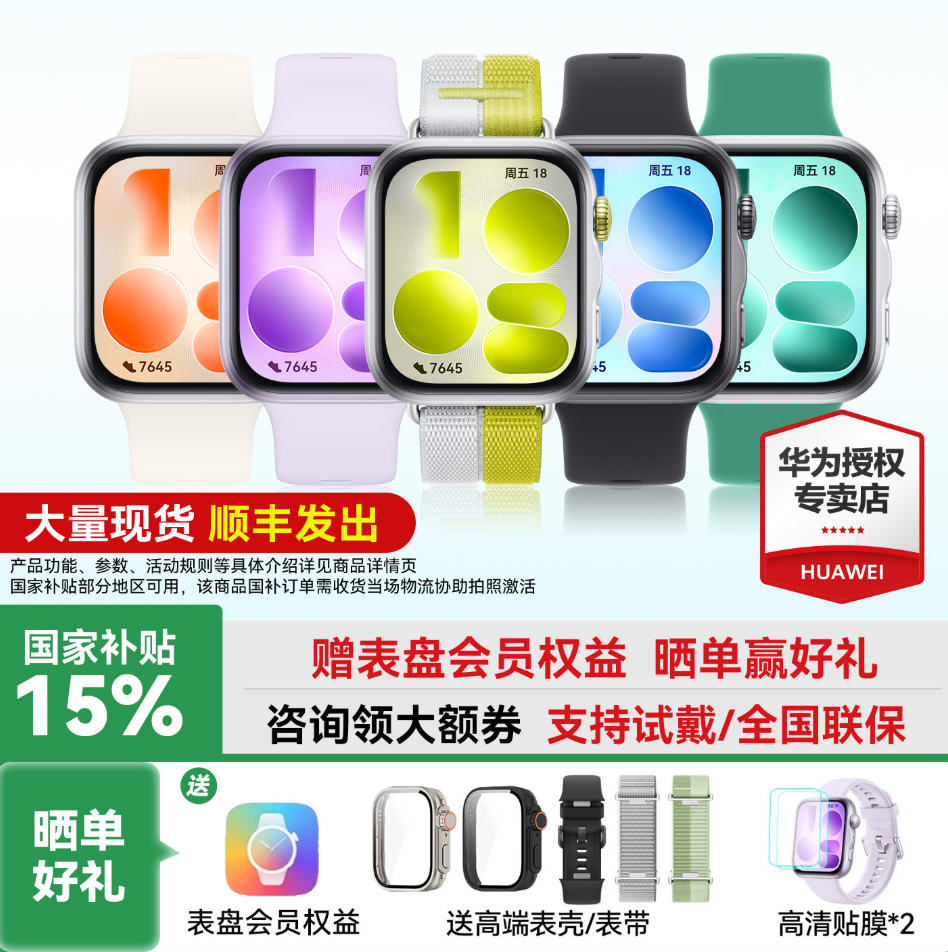
    The Huawei WATCH FIT 5 series spans various styles from athletic silicone bands to fashionable woven bands, catering to diverse user preferences.
    The Huawei WATCH FIT 5 series spans various styles from athletic silicone bands to fashionable woven bands, catering to diverse user preferences.

    Pricing Strategy and Market Positioning

    Huawei’s pricing demonstrates clear market segmentation. The WATCH FIT 5 Pro retails starting at 2,099 yuan (approximately $290), dropping to around 1,785 yuan after government trade-in subsidies. Pre-orders began April 29, with full availability from May 15. The standard model starts at 1,099 yuan (approximately $150), reaching approximately 935 yuan after subsidies, officially released on April 29 across all channels.

    Both products target the mid-to-premium segment spanning 1,000-2,000 yuan, competing directly with the Apple Watch SE and Samsung Galaxy Watch FE. With national trade-in subsidy support, domestic smartwatches at comparable price points offer enhanced cost performance.

    Beyond adult wearables, Huawei announced the global return of HUAWEI WATCH KIDS X1 series children’s smartwatches at the press conference. Though specific specifications remain undisclosed, this move signals Huawei’s continued investment in segmented market categories within its wearable ecosystem.

    Industry Outlook: The Next Battlefield for Smartwatches

    Wearable devices stand at a pivotal moment transitioning from “data display” to “proactive intervention.” Traditionally, ECG, blood glucose, and vascular elasticity testing required visiting medical institutions with professional equipment. Today, smartwatches bring these capabilities to everyday consumers, making health management more convenient and continuous.

    However, consumers should maintain realistic expectations regarding the distinction between smartwatch health monitoring and professional medical devices. Industry analysts note that medical-grade wearables must obtain NMPA Class II/III certification, with ECG monitoring errors controlled within 5%, capable of generating medical-grade reports interconnected with hospital systems. Most consumer smartwatches currently offer health data for reference purposes only, with error ranges potentially reaching 10-15%. Buyers should understand their specific needs and set appropriate functional expectations.

    Looking ahead to 2026, smartwatch market competition will intensify further. Advances in sensor technology, AI algorithm optimization, and battery capabilities will continuously improve product experiences. Simultaneously, as health management awareness grows, smartwatches equipped with professional health monitoring capabilities will attract increasingly discerning consumers.

    The WATCH FIT 5 series launch showcases Huawei’s technological prowess in wearables while delivering precise responses to evolving market demands. In the dual core tracks of health management and extended battery life, Huawei is charting its own path forward with concrete product offerings.