In the eyes of consumers, the name Dreame has long been inextricably linked with cleaning appliances—such as robot vacuums and hair dryers. However, at the 2026 Appliance & Electronics World Expo (AWE 2026) in China, the tech company shattered these preconceived notions. It officially unveiled its first pair of AR smart swimming goggles, the “AQUA 100,” thereby announcing its entry into the high-end smart wearable sector.
Priced at an estimated $329, this product embodies Dreame’s ambition to expand its scope from “home cleaning” into the realm of “personal health technology.” Is this merely a speculative foray into a new market, or a carefully calculated strategic maneuver? By conducting an in-depth analysis of the product’s specifications, technical details, and the competitive landscape, we may just find the answer.
Lightweight Breakthrough: A 68-Gram Body Solves a Key Industry Pain Point
For wearable devices such as smart swimming goggles, wearing comfort is the pivotal factor determining market acceptance. Previously, most smart goggles suffered from excessive weight due to the integration of components like batteries and display screens; prolonged wear often exerted pressure on the bridge of the nose and the eye sockets—a significant source of discomfort for both professional swimmers and enthusiasts alike.
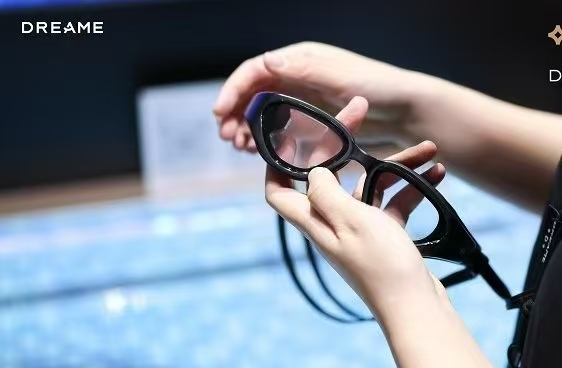
With the AQUA 100, Dreame demonstrates its accumulated technical expertise in product lightweighting: the device’s total weight is kept to approximately 68 grams—roughly 20% lighter than the mainstream smart goggles currently available on the market. This figure represents more than just a simple optimization of specifications; it reflects a precise insight into the specific demands of the swimming environment. For users who train for over 1,000 meters daily, this lightweight design significantly reduces fatigue during extended wear, thereby enhancing the overall user experience.
Beyond its weight advantage, the AQUA 100’s integrated, retractable nose bridge design also addresses a common pain point associated with traditional swimming goggles. Traditional goggles often require users to swap out nose pieces of various sizes to accommodate different facial structures—a process that is not only cumbersome but also carries the risk of accessory loss, which can render the entire product unusable. In contrast, the integrated retractable design requires no additional parts and flexibly adapts to a wide range of nose bridge sizes, thereby enhancing user convenience while simultaneously reducing long-term ownership costs.
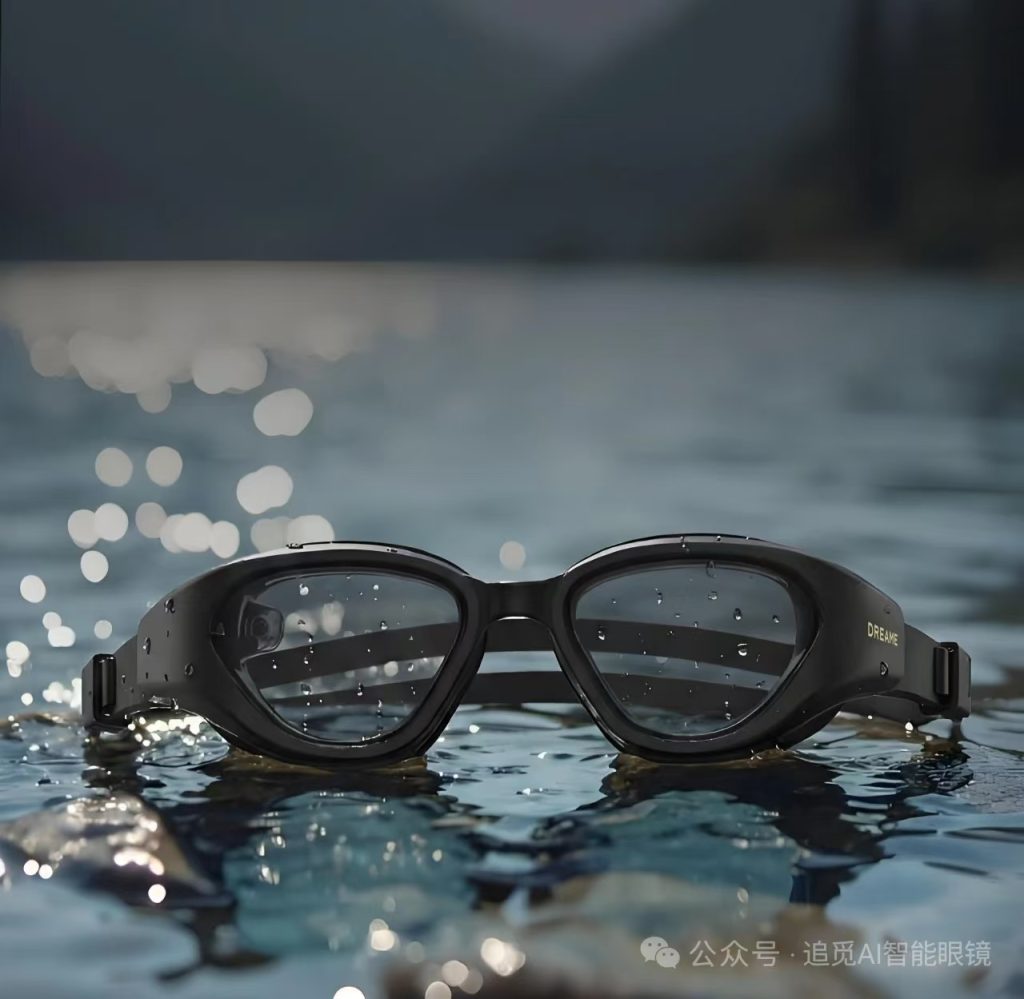
Furthermore, the device features a low-drag, fully symmetrical streamlined body design that effectively minimizes hydrodynamic resistance during swimming. This specific detail holds tangible practical value for professional swimmers focused on optimizing their training performance, while also serving as a testament to Dreame’s expertise in product design.
Core AR Technology: A Breakthrough in Underwater Applications Using Diffractive Waveguides
The core competitive advantage of AR smart swimming goggles lies in the stability and clarity of their underwater display technology. The AQUA 100’s most significant technical highlight is its adoption of diffractive waveguide technology—typically found in high-end AR glasses—rather than the prism-based solutions prevalent throughout the rest of the industry. This strategic choice immediately sets it apart from its competitors.
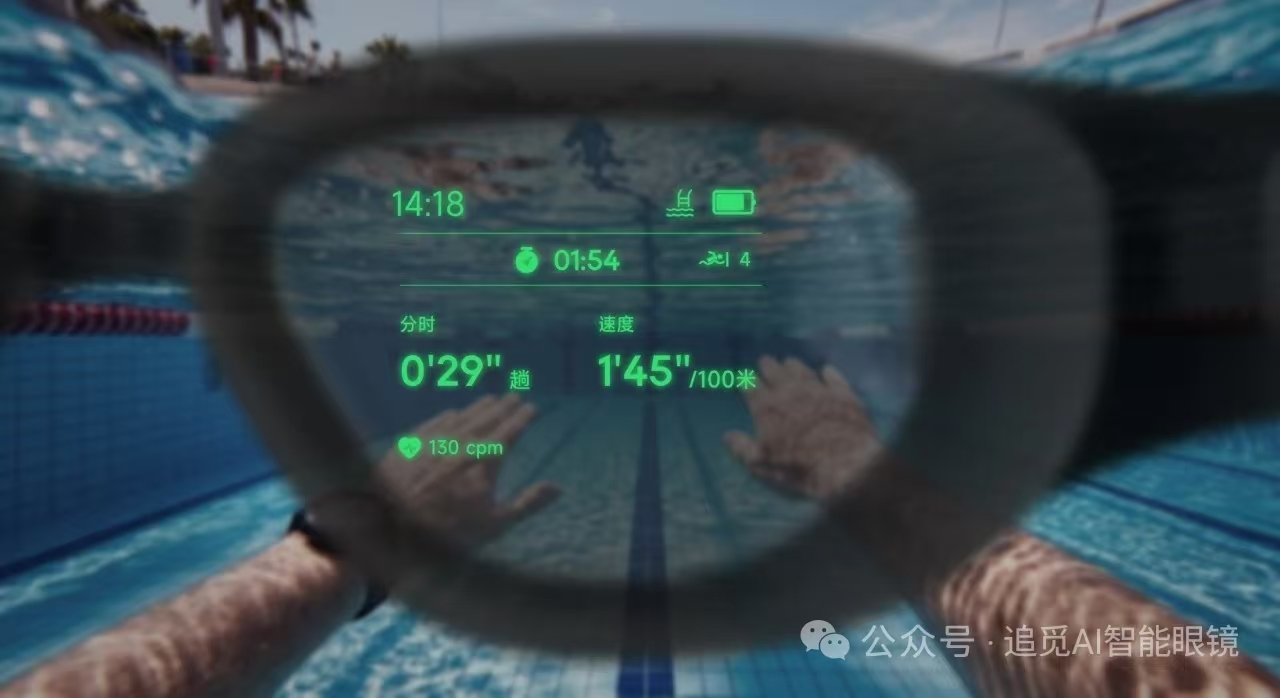
In terms of technical specifications, the AQUA 100 features a monocular green display with a resolution of 640×480 and a field of view (FOV) of 30°. The choice of a green display was not arbitrary; rather, it was an optimization based on underwater optical properties. Green light offers superior penetration and contrast in water compared to other colors, ensuring users can clearly read data while submerged. The 30° field of view strikes a balance between “data display” and “underwater visibility,” ensuring that the display area does not obstruct the user’s line of sight while simultaneously guaranteeing that data remains clearly legible.
Compared to traditional prism-based solutions, the advantages of diffractive waveguide technology are far more pronounced. First, it offers superior light transmission, resulting in lenses that appear more transparent; this eliminates the distinct “screen-like” sensation often associated with traditional smart goggles, thereby enhancing their aesthetic appeal. Second, it features a more compact structure, providing the technical foundation necessary for achieving a lightweight device design. In an interview, a representative from Dreame stated that the implementation of diffractive waveguide technology constituted one of the most significant investments during the AQUA 100’s R&D phase, serving as a core technological barrier that distinguishes the product.
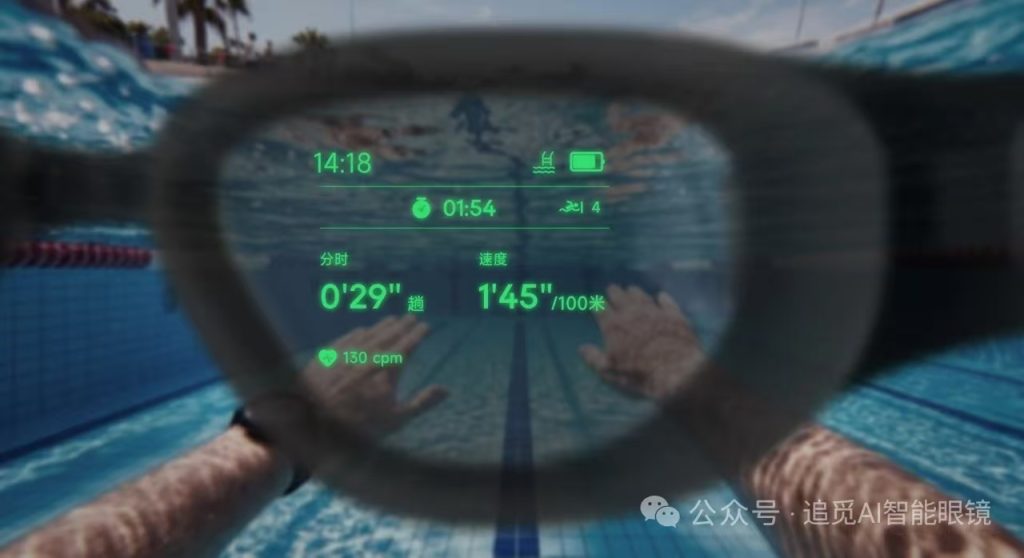
The content displayed underwater focuses on key swimming metrics—including duration, stroke rate, pace, heart rate, and distance—providing real-time feedback on the user’s training status. This proves immensely practical for swimmers who rely on data analysis to refine their technique and improve their performance.
Solidifying Core Capabilities: Anti-Fogging and Battery Life Establish a Robust Product Baseline
No matter how sophisticated the underlying technology may be, the AQUA 100 remains, fundamentally, a pair of swimming goggles. Consequently, core capabilities such as waterproofing, anti-fogging, and battery life serve as the essential prerequisites for its viability in the market. Dreame has not taken these fundamentals lightly, employing a multi-layered technical approach to ensure the product’s reliability.
Fogging is one of the most persistent pain points associated with swimming goggles; indeed, if the lenses fog up, even the most advanced AR display capabilities become entirely useless. The AQUA 100 addresses this issue through a combined solution featuring “wear-resistant silicone” and a “nano anti-fog coating.” According to official specifications, this anti-fog coating remains effective for at least 1,000 activation cycles (wipes)—meaning its anti-fogging properties are not a one-time feature. This ensures long-term underwater visibility and effectively resolves the chronic issue plaguing traditional goggles, where lenses tend to fog up after just a few uses. Furthermore, the product incorporates a proprietary sealing structure, which further enhances stability during underwater use and prevents water ingress from disrupting normal device operation.
In terms of waterproofing and battery life, the AQUA 100 meets the professional IP68 waterproofing standard, capable of withstanding prolonged underwater immersion—a core requirement for professional-grade swimming goggles. Regarding connectivity, it features low-power Bluetooth 6.0 technology; compared to Bluetooth 5.0, this offers more stable transmission and lower power consumption, enabling both rapid data synchronization and extended battery life.
As for battery endurance, the AQUA 100 delivers up to 7 hours of operation under typical usage scenarios. When viewed alongside market research data—which indicates that the vast majority of amateur swimmers do not swim for more than two hours per session—this level of battery life means a single charge can satisfy a user’s weekly needs (assuming one hour of swimming per day). Even during long-distance open-water training, users can effectively avoid any “battery anxiety.”
AI Empowerment: Upgrading from “Data Logging” to “Intelligent Coaching”
Dreame’s core strength lies in its AI and sensor technologies—an advantage that has been seamlessly extended to the AQUA 100. Unlike most smart goggles currently on the market—which merely record data—the AQUA 100 features Dreame’s proprietary “Sports & Health Large Language Model” built right in, marking a significant leap from simple “data logging” to sophisticated “intelligent coaching.”
Based on the user’s real-time performance metrics—including heart rate fluctuations, stroke rate, and pace—this model conducts multi-dimensional analyses to generate personalized training regimens. For instance, if the user’s swimming speed becomes excessive, causing their heart rate to spike, the system will display a visual prompt on the lens, guiding the user to adjust their breathing rhythm. Furthermore, by analyzing the user’s historical training data, the model can automatically calibrate the optimal training intensity for the following day—effectively providing the user with a personal AI coach on demand.
The true value of this feature lies in its ability to lower the barrier to professional-level swim training. For amateur swimmers who lack access to a professional coach, this AI-driven guidance helps them train more scientifically—preventing injuries caused by improper technique or excessive intensity—while simultaneously boosting training efficiency. Dreame has announced that, in the future, it will continue to enrich these AI capabilities through software updates, establishing deep integration with the Dreame Health App to create a comprehensive sports and wellness ecosystem.
Market Dynamics: Priced at $329—How Competitive Is It? With a projected price tag of $329, the AQUA 100 positions itself firmly within the premium segment of the smart swimming goggles market. Whether this pricing is justifiable—and whether it can secure a competitive edge in the marketplace—ultimately depends on the product’s intrinsic value and how effectively it differentiates itself from its rivals.
A comparison with competing products reveals that current market leaders in the premium smart goggles category—such as the FORM Smart Swim 2, priced at $249—derive their strength from a mature ecosystem, offering extensive training data and robust community features. In contrast, the AQUA 100’s core strengths lie in its use of diffractive waveguide display technology and AI-driven coaching capabilities; furthermore, its integrated nose bridge design offers superior convenience, giving it distinct and unmistakable differentiating features. For users who prioritize advanced technological experiences and professional-grade training support, the premium price point of the AQUA 100 appears entirely reasonable.
Compared to traditional swimming goggles (typically priced around $30), the price gap is substantial; however, the target demographics for the two categories are entirely distinct. Traditional goggles merely fulfill basic requirements for waterproofing and anti-fogging, making them suitable for casual recreational swimming. The AQUA 100, conversely, targets serious swimmers, tech enthusiasts, and existing users within the Dreame ecosystem—a demographic willing to pay a premium for professional-grade data, intelligent coaching, and a superior user experience.
Dreame officials have indicated that the AQUA 100 may launch with “early bird” promotional offers, potentially lowering the introductory price to $299 and further bolstering the product’s market competitiveness. Industry analysts suggest that this pricing strategy serves a dual purpose: it maintains the product’s premium market positioning while simultaneously appealing to a segment of potential customers who are more price-sensitive.
Summary: The Ambition and Challenges of Cross-Industry Expansion
The launch of the AQUA 100 by Dreame is not merely a serendipitous foray into a new sector, but a pivotal step in expanding its business horizons and strategically positioning itself within the personal health technology domain. The core value of this product lies in its ability to deeply integrate Dreame’s accumulated technological expertise—spanning sensors, AI algorithms, and optical display systems—with the specific demands of the swimming environment, thereby resolving numerous pain points associated with both traditional goggles and standard smart goggles.
A lightweight design weighing just 68 grams, diffractive waveguide display technology, AI-driven intelligent coaching features, and robust anti-fog and battery life capabilities collectively constitute the AQUA 100’s core competitive edge. While its $329 price tag may not be considered budget-friendly, given the professional-grade experience and technological innovation it delivers, the product is poised to stand out in the 2026 smart wearables market and emerge as a “dark horse” within this niche segment.
Naturally, Dreame also faces significant challenges: the smart goggles market is currently still in its nascent stage, and consumer acceptance remains to be cultivated. Furthermore, competitors such as FORM possess distinct advantages in ecosystem development; consequently, Dreame must continue to exert substantial effort in building its software ecosystem and refining its user operations. Additionally, as a newcomer to this cross-industry space, Dreame must actively gather user feedback from the swimming community to continuously optimize the product experience.
For consumers, if you are a serious swimmer in training, a technology enthusiast, or someone seeking a more scientifically grounded approach to training, the AQUA 100 is undoubtedly worth your attention. However, if your needs are limited to casual recreational swimming or if you are working with a limited budget, traditional swimming goggles remain the more cost-effective choice.
Note: This article is based on information presented at the AWE 2026 launch event and product specifications provided by Dreame. Specific retail pricing, product details, and actual user experience are subject to the final official release version.