Tag: Embodied Intelligence

Embodied Intelligence refers to a system in which an intelligent agent, possessing a physical body, perceives, acts, and generates intelligent behavior through dynamic interaction with its environment.

  • Ant Robbyant focuses solely on the “brain,” not the hardware.

    Ant Robbyant focuses solely on the “brain,” not the hardware.

    Sources familiar with the matter revealed that Robbyant, Ant Group’s embodied AI company, has abandoned the development of embodied intelligent hardware and is now solely focused on software, leading to the departure of many hardware testing staff.
    Robbyant
    Robbyant

    At the end of 2024, Shanghai Robbyant Technology Co., Ltd., a wholly-owned subsidiary of Ant Group, was officially established. Moving beyond the traditional path of “self-developed humanoid hardware,” Robbyant chose to focus on a universal embodied large model as its core, creating a standardized intelligent base compatible with all robots, forging a new path of open-source technology and industry collaboration.

    Unlike most companies that focus on developing their own humanoid robot bodies, Robbyant’s core strategy is very clear: it does not focus on manufacturing the hardware itself, but concentrates on developing a universal “brain” for robots.

    The industry logic is clear: the future forms of robots in service, industry, home, and elderly care scenarios will vary greatly, with bipedal humanoids, wheeled chassis, single/dual-arm robotic arms, and quadrupedal inspection robots coexisting. If every piece of hardware has its AI control system trained from scratch, the industry’s iteration speed will be severely hampered by high customization costs. Robbyant aims to provide a cross-configuration, reusable vision-motion model, enabling hardware manufacturers to quickly endow their devices with autonomous perception, planning, and operational capabilities without investing massive amounts of algorithm development resources.

    Robbyant has built a four-layer progressive embodied intelligence technology system, covering the entire process of robot perception, mapping, decision-making, and simulation inference. It is also one of the few embodied model stacks in China to achieve full-chain open source.

    LingBot-VA, as an embodied world model, realizes a human-like thinking logic of “predicting before acting”: inputting the current scene, the model simultaneously predicts the next environmental change and corresponding action sequence, equivalent to the robot having a built-in virtual simulation laboratory.

    In tests of flexible, high-precision tasks such as unpacking packages, folding clothes, and performing precise test tube operations, adaptation can be completed with only 30-50 sets of real-person demonstration data. The success rate of complex tasks is 20% higher than the international benchmark model Pi0.5, significantly reducing the training loss and data collection cost of real machines. The birth of Robbyant marks a significant step for a leading Chinese AI company, moving from online digital intelligence to a comprehensive entry into the physical world of embodied intelligence. Instead of focusing on creating a single blockbuster robot, it positions itself as “infrastructure,” empowering hardware across various industries with a universal LingBot model matrix.

    With the full open-sourcing of LingBot-VLA 2.0, an increasing number of domestically produced humanoid robots, service robotic arms, and wearable smart hardware will be equipped with this independently developed universal brain. In the future, whether it’s home service robots, commercial catering equipment, industrial flexible production lines, or first-person AI imaging wearable devices, all will rely on Robbyant’s spatial perception and motion decision-making capabilities to truly achieve autonomous environmental understanding and the completion of complex tasks, freeing them from manual remote control and propelling the entire physical AI hardware industry into a new phase of large-scale deployment.
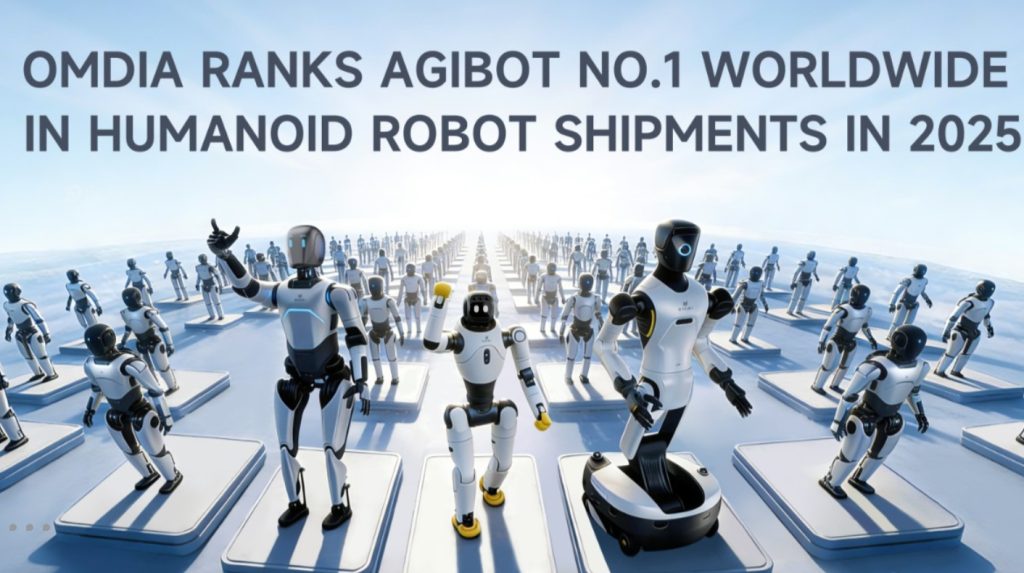
  • AGIBOT Chief Scientist Luo Jianlan Plans to Leave to Start His Own Business

    AGIBOT Chief Scientist Luo Jianlan Plans to Leave to Start His Own Business

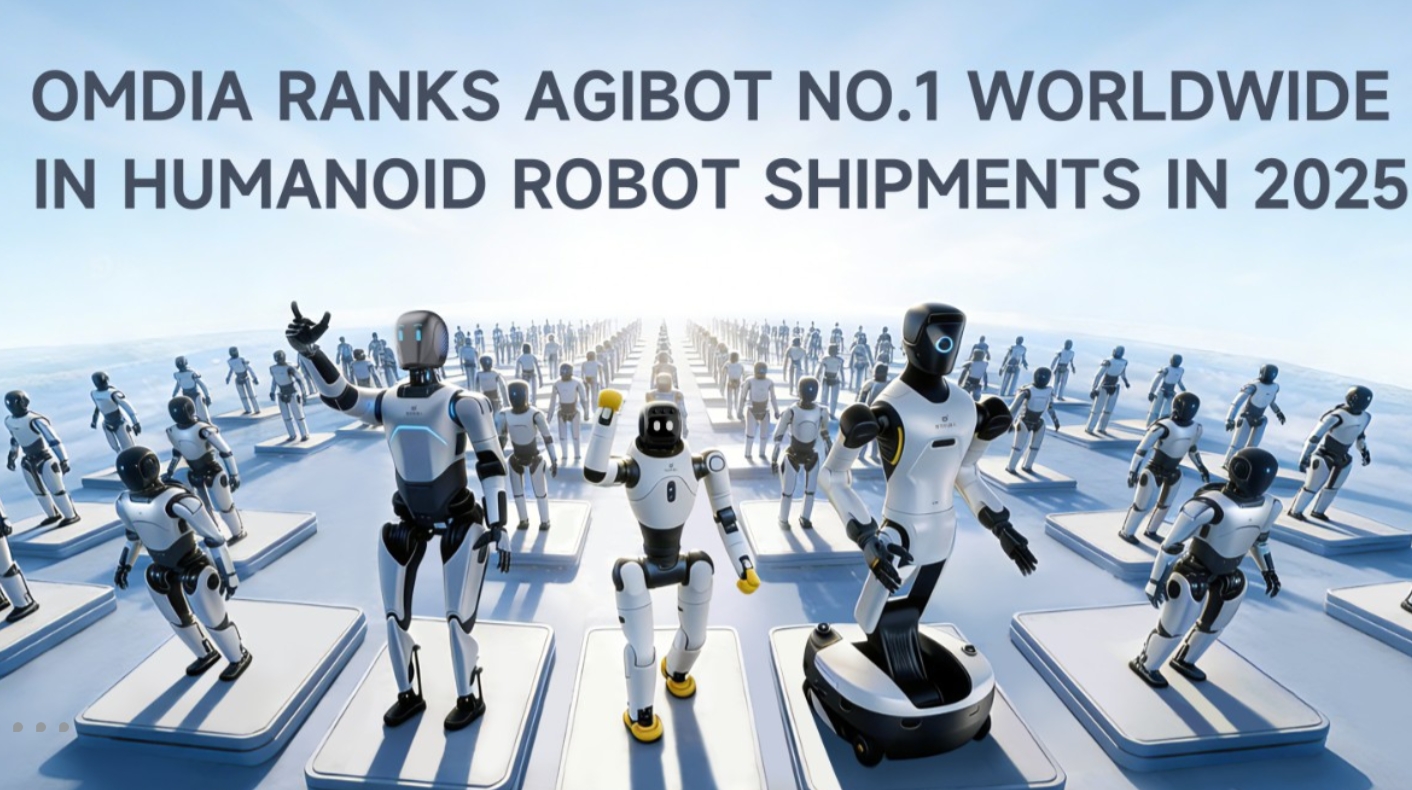
    Sources familiar with the matter revealed that Luo Jianlan, Chief Scientist of AGIBOT, is planning to leave the company to start his own business. He is currently in contact with industry investors, and his startup will focus on embodied intelligence.

    AGIBOT
    AGIBOT

    To delve deeper into the core field of robotic intelligent control, Luo Jianlan pursued advanced studies abroad, attending the University of California, Berkeley, where he earned a Master’s degree in Computer Science and a PhD in Robotics Control. He studied under renowned robotics scholar Pieter Abbeel, solidifying his theoretical foundation in robot learning and intelligent control. After graduating with his PhD, he did not stop at academic research but instead devoted himself to the forefront of global technology industry, working at Google X and Google DeepMind as a research scientist. He was deeply involved in exploring the industrial applications of reinforcement learning, experiencing firsthand the entire process of artificial intelligence technology from algorithm iteration to practical application, accumulating invaluable practical experience in both academia and industry.

    At a critical juncture where the global humanoid robot industry is accelerating its competition and domestically produced AI robots urgently need to overcome core technological bottlenecks, Luo Jianlan chose to return to China and officially join AGIBOT as Chief Scientist, Senior Vice President, and Partner, taking the lead in the research and development of AGIBOT’s embodied intelligence core technologies.

    Luo Jianlan’s core work involves building a systematic R&D system, leading the establishment of the AGIBOT Embodied Intelligence Research Center, and comprehensively guiding the development of cutting-edge robot algorithms, technological innovation, and engineering implementation. He predicts that in the next 3-5 years, embodied intelligence will move beyond the laboratory demonstration stage and enter a critical period of large-scale deployment. The industry’s core competitiveness will shift from competing on algorithm parameters to a comprehensive competition based on real-world data accumulation, hardware and software synergy, and engineering implementation efficiency. Only teams that adhere to “real-world deployment and closed-loop iteration” can achieve continuous technological breakthroughs.

  • Galbot’s IPO Revenue Halved by Auditor

    Galbot’s IPO Revenue Halved by Auditor

    Sources familiar with the matter revealed that Galbot, in its IPO preparation, brought in investment banks and accounting firms for guidance. However, during the financial audit, Galbot’s revenue was halved due to nearly half of its revenue being of low quality, consisting of related-party transactions and miscellaneous income.

    Galbot
    Galbot

    The impact of this revenue halving on Galbot’s IPO is currently unclear. This leading avatar company is valued at tens of billions, and investors are waiting for the IPO to exit.

    However, if it affects Galbot’s IPO, it will undoubtedly be a heavy blow to the current booming investment and financing in the avatar industry.

    This year, many leading avatar companies set very aggressive delivery targets to boost revenue for their IPOs, ranging from as high as 10,000 units to 1,000 units. Achieving 1,000 units would generate hundreds of millions in revenue, significantly boosting IPO prospects.

    However, the reality is far from ideal. With the first half of the year almost over, even delivering 100 units is proving difficult.

    While VLA and world models are very eye-catching in performance demos, they are ineffective in real-world scenarios, exhibiting poor success rates and reliability in task operations. Therefore, many embodied companies have begun poaching engineers from the traditional algorithm industry within the autonomous driving sector, using autonomous driving rule-based algorithms (perception, PNC, SLAM) for overfitting in an attempt to achieve commercialization.

    For embodied companies that are currently enjoying a surge in funding, this marks a critical juncture. Whether they can deliver on their IPO promises to investors will significantly impact future fundraising. Failed IPOs will severely damage investor confidence.

  • Galaxea AI Co-founder Zhao Xing to Start His Own Company

    Galaxea AI Co-founder Zhao Xing to Start His Own Company

    Sources familiar with the matter revealed that Zhao Xing, co-founder of Galaxea AI, will be leaving to start his own business. As co-founder and chief scientist of Galaxea AI, Zhao was primarily responsible for Galaxea AI’s humanoid robot technology. In early 2026, Xu Huazhe, co-founder and chief scientist of Xinghaitu, also left to start his own company, which will focus on the embodied intelligence consumer application market.

    Galaxea AI
    Galaxea AI

    Currently, Galaxea AI is preparing for its Hong Kong IPO. Zhao Xing’s departure will significantly impact its IPO process. Furthermore, Galaxea AI’s second-largest customer has also started developing its own humanoid robots. This not only means losing a major client’s revenue but also further consolidation in the humanoid robot market, with players in the 3C consumer electronics sector entering the fray.

    Galaxea AI’s second-largest customer is a leading mobile phone manufacturer. Leveraging its hardware capabilities accumulated in 3C consumer electronics, the manufacturer not only developed its own humanoid robot but also won a championship in a robot marathon. Mobile phone manufacturers possess stronger hardware capabilities; for example, in addressing the industry-wide headache of heat dissipation, this leading mobile phone manufacturer, with its accumulated heat dissipation technology in 3C products, has solved the heat dissipation problem much better than embodied robot companies. It’s safe to say that the avatar industry will be incredibly competitive this year, as players with significantly stronger hardware capabilities have entered the fray.

    As is well known, the avatar industry has undergone three major data transformations in 2025, from Yamato to Umi to Ego. In terms of models, it has evolved from the initial VLA to VLA and world models operating in parallel, and the emergence of native multimodal large models, among others.

    While avatars are still in their early stages, primarily showcasing technological demos, new technologies emerge in data and models every few months. This requires industry players to maintain a keen sense of opportunity, quickly recognizing and adapting to new technologies to avoid falling behind.

    However, this leading avatar company failed to react quickly enough and kept pace with industry changes. In early 2026, while other players were heavily investing in Umi or Ego data, this leading avatar company was still betting on Yamato. This bet was based on its desire to launch an IPO, which requires substantial revenue, currently achieved through selling more avatar robots. Galaxea AI lacks the performance scenario capabilities of companies like Unitree and Calcium Cloud, which require product and distribution capabilities. For Galaxea AI, its primary sales scenario is data acquisition, specifically digital data acquisition for mobile devices. Therefore, in its pursuit of an IPO and increased revenue, it’s betting heavily on mobile devices.

    However, although lagging behind the leading companies in terms of pace, this hasn’t affected Galaxea AI’s fundraising. This year’s fundraising has been like a flood, with investors flocking to players large and small. Having secured a leading position early on, the company successfully completed a multi-billion yuan funding round.