One-Sentence Verdict
If you believe the ultimate form of consumer health monitoring is “scanning your whole body as easily as stepping on a scale,” the Midjourney Scanner may be one of the most compelling concept hardware devices to watch in 2027—provided it crosses the chasm from prototype to regulatory approval.
Introduction: From Pixels to People
Midjourney, the company famous for generating award-winning AI art with an 11-person team, just made a shocking pivot. On June 17, 2026, it announced Midjourney Medical and unveiled its first hardware product: the Midjourney Scanner, a full-body ultrasonic CT device that looks like a sci-fi movie prop. Users stand in a shallow pool of water and slowly descend through a ring of thousands of transducers, generating a whole-body 3D image in about 60 seconds.
For a company that generated $200 million in annual revenue with just 11 employees and won a top art prize with Théâtre D’Opéra Spatial, this leap into medical imaging is as bold as Musk building rockets.
Product Overview: Echolocation in Water
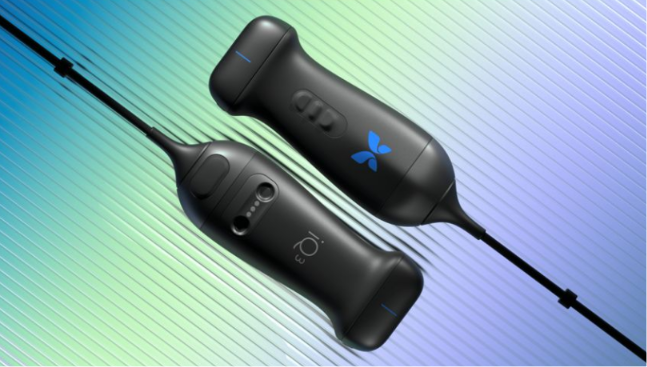
The core experience is uniquely futuristic. The user steps into a shallow pool, stands on a platform that slowly descends through a 70 cm diameter ring. This ring contains 40 Butterfly Network Ultrasound-on-Chip imaging modules, totaling 358,000 ultrasonic elements that capture data at 17 GB per second. Each body slice requires roughly 40 GB of raw data, reconstructed by 21 servers delivering 2 PFLOPS of compute power.
Midjourney compares the process to “a circle of dolphins using echolocation to observe you.” Sound waves travel through water at approximately 1,481 meters per second, while the platform descends at 4 cm per second. The ultimate goal: hundreds of slices in 60 seconds, producing 0.5 mm resolution images comparable to MRI—without radiation or powerful magnets.
Currently, this remains a Gen 1 prototype. Only about a dozen people have been scanned, and the actual process takes roughly 20 minutes due to bandwidth, algorithm, and data-transfer limitations.
Technical Specifications
| Parameter | Specification |
| Transducer Count | 358,000 (8,960 per chip × 40 modules) |
| Ring Diameter | 70 cm |
| Data Capture Rate | 17 GB/s |
| Data per Slice | ~40 GB |
| Reconstruction Compute | 2 PFLOPS |
| Reconstruction Servers | 21 |
| Target Scan Time | ~60 seconds |
| Current Scan Time | ~20 minutes (prototype limits) |
| Resolution | ~0.5 mm |
| Platform Descent Speed | 4 cm/s |
| Sound Speed in Water | ~1,481 m/s |
Business Model: Spa, Not Clinic
Perhaps the most striking aspect of the Midjourney Scanner is not its technology but its business model. The first Midjourney Spa is planned for San Francisco’s Union Square by the end of 2027, occupying 25,000 square feet across four floors. In addition to scanning rooms, the facility will feature hot tubs, saunas, cold plunges, and a gym. The initial deployment includes approximately 10 scanners.

This is not a clinic—it is a wellness center. To avoid complex FDA approval, the device initially offers only “body composition maps,” not disease diagnoses. Users can track muscle growth, fat distribution, injury recovery, post-surgical asymmetry, and long-term body changes. This positioning mirrors whole-body MRI services like Prenuvo and Ezra, falling under the FDA’s “general wellness” category.
Future diagnostic capabilities will require gradual FDA clearance. Midjourney says it will submit regular test results to apply for broader clinical claims over time.
Competitive Landscape: The Democratization Challenge
| Feature | Midjourney Scanner | Traditional MRI | DEXA Scan |
| Scan Time | ~60 sec (target) | 30-60 min | 10-15 min |
| Radiation | None | None | Low-dose X-ray |
| Cost per Session | Few dollars (target) | $1,000-3,000 | $100-300 |
| Repeatability | High (no radiation limits) | Moderate (cost limits) | Moderate (radiation limits) |
| Diagnostic Power | None (initially) | Yes | Limited |
| Regulatory Status | General wellness | Medical device | Medical device |
Midjourney’s long-term ambition is enormous: deploy 50,000 scanners worldwide by 2031, achieving one billion scans per month. The company claims that fewer than 12 of these machines could outperform all MRI machines on Earth combined.
Pros and Cons
Pros:
- No radiation, no magnetic fields—safe for frequent repeated scanning
- Extremely low cost (target: a few dollars per session)
- Consumer-grade experience, spa setting reduces medical anxiety
- Body composition tracking suits fitness, rehabilitation, and aging monitoring
- Proprietary AI segmentation algorithms automate image reconstruction
Cons:
- Current prototype scans take 20 minutes, far from the 60-second target
- Only about a dozen people tested, extremely small sample size
- Diagnostic capabilities require lengthy FDA approval pathways
- Whole-body screening may produce incidental findings, false positives, and overdiagnosis
- Health data privacy concerns (sensitive body image storage policies unclear)
- The American College of Radiology has warned that whole-body MRI screening lacks evidence for asymptomatic individuals
Buying Guide (2027)
Recommended for:
- Fitness enthusiasts tracking muscle and fat changes with quantified results
- Rehabilitation patients monitoring injury recovery and post-surgical asymmetry
- Health trackers building long-term body baseline data
- Early technology adopters experiencing “the future of health monitoring
Consider carefully if:
- You need disease diagnosis: initial offering has no diagnostic capability
- You are privacy-sensitive: whole-body scan data storage policies remain unclear
- You expect a mature product immediately: 2027 remains early with limited functionalit
Conclusion

The Midjourney Scanner is not a perfect device—20-minute prototype scans, a tiny test sample, and a lengthy regulatory path all need improvement. However, it precisely targets a market gap: consumers need affordable, repeatable, radiation-free body monitoring, and existing technologies (MRI is too expensive, DEXA uses radiation, smart scales are inaccurate) fail to deliver.
From “generating images” to “scanning human bodies,” Midjourney’s pivot is surprising yet logically consistent. Its accumulated expertise in AI image reconstruction, large-scale computation, and consumer user experience directly serves the core requirements of ultrasonic 3D reconstruction. Combined with Butterfly Network’s semiconductor ultrasound chip technology, this partnership has the potential to redefine preventive health monitoring.
If you are searching for a whole-body health tracking method as simple as stepping on a scale, the Midjourney Scanner deserves a spot on your 2027 watchlist. Just remember: it currently offers only “body composition maps,” not diagnostic tools. True medical-grade applications still face the dual test of time and regulation.