As home entertainment continues to evolve, “drinking at home” is transforming from a simple way to relax into a lifestyle ritual that prioritizes quality and convenience. However, recreating professional cocktails at home always faces a dilemma: either invest hundreds of dollars in base spirits and ingredients, only to waste money due to a lack of professional mixing knowledge; or compromise on taste by opting for premixed drinks. Against this backdrop, the BreakReal R1, touted as the “world’s first AI-powered cocktail machine with natural language interaction,” has been officially released.
Unlike mainstream automatic cocktail machines on the market, the BreakReal R1’s core selling point is “AI understanding flavor,” rather than simply executing fixed pouring instructions. Its early bird crowdfunding price of $999, 23% lower than the projected retail price, aims to carve out new growth opportunities in the high-end smart home market.
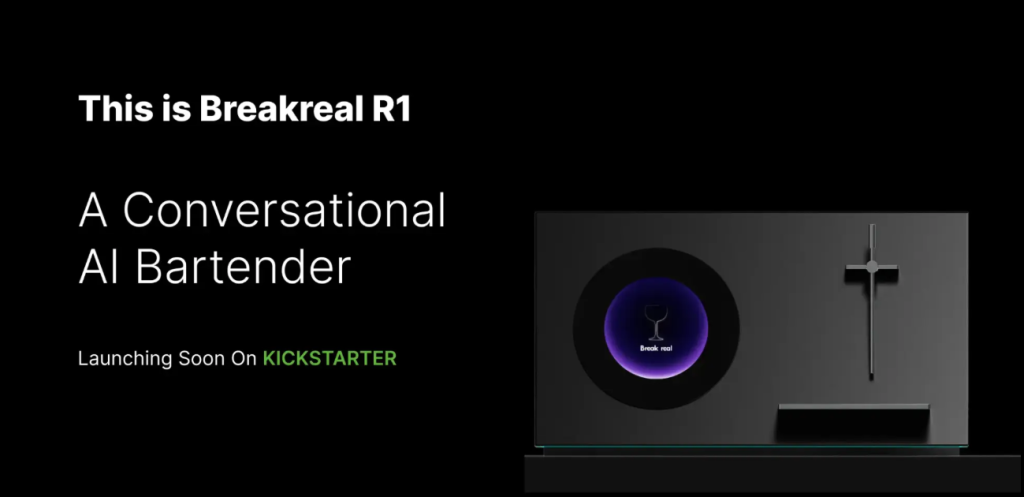
Core Breakthrough: From “Following Recipes” to “Understanding Flavor Needs”
Currently available automatic cocktail machines, such as Bartesian and Somabar, employ a “capsule-style” or “fixed menu” operating logic—users select preset cocktail categories on the device’s screen, and the machine dispenses liquid in fixed proportions, severely lacking flexibility and personalization.
The BreakReal R1’s differentiated advantage lies in its deep integration of AI technology with food flavor science, achieving a leap from “executing instructions” to “understanding needs.” Its core technology comprises two main components: Natural Language Processing (NLP) and an AI flavor vector system.
According to official disclosures, this device abandons traditional physical menus. Users don’t need to memorize complex recipes; they simply describe their needs using natural language. For example, “I want a light and refreshing drink for a gathering with friends,” or “I want a non-alcoholic, slightly acidic specialty cocktail.” The device’s conversational AI engine analyzes the scenario, emotions, and taste preferences, translating them into precise mixing parameters.
Even more competitive is its AI flavor vector system—considered the product’s technological moat. Unlike traditional “recipe-driven” devices, the R1 digitizes core dimensions such as sweetness, acidity, alcohol content, aroma, and mouthfeel, forming a quantifiable “flavor vector.” This means that even for the same “sweet and sour” taste, the system can fine-tune the ratio of syrup and juice based on the user’s historical feedback data, achieving a “personalized taste for everyone.” Simultaneously, based on over 500 built-in classic recipes, AI can generate uniquely crafted blends not found in the market through combinations of 8-10 ingredients, precisely catering to the needs of seasoned drinkers.
Hardware Testing: “Professional-Grade Precision” for Desktop Devices
For entry-level smart devices, hardware precision, hygiene, and stability are key to product competitiveness. The BreakReal R1 targets the market as a “desktop precision cocktail lab” in its hardware configuration.
In terms of mixing precision, the device employs a high-precision fluid control system of ±0.1ml—a level of precision comparable to professional semi-automatic coffee machines. Industry insiders say that even a 1ml error in bartending can disrupt the balance of the drink, especially when using ingredients like bitters and high-concentration syrups. Precise proportions are crucial for ensuring the perfect taste.
Regarding ingredient storage, the R1 supports 8-10 ingredients simultaneously, including spirits, syrups, juices, and soft drinks, covering over 90% of common cocktail bases and meeting the diverse needs of home users. Addressing common pain points of automatic bartenders such as “pipeline residue” and “difficult cleaning,” the device features a built-in electrolyzed water self-cleaning system that automatically cleans the pipes during or after mixing, reducing bacterial growth caused by sugar residue. It also includes a refrigeration module to ensure the freshness of perishable ingredients like juices, which is especially important in non-alcoholic beverage preparation.
In terms of portability and efficiency, the R1 is about the size of an A3 sheet of paper and weighs 15kg—not exactly lightweight, but within a reasonable range for desktop devices. Its weight ensures stability during operation and also allows for vehicle transport, making it suitable for outdoor scenarios such as camping. With a dispensing speed of 20-40 seconds per cup, it avoids waiting in line during family gatherings and basically meets the needs of moderately paced social drinking. In terms of interaction, the device supports three modes: touch control, voice control, and mobile app control, balancing privacy and remote operation needs.
Price and Value: What Makes the Crowdfunding Price Competitive?
According to BreakReal’s official pricing strategy, the R1 is expected to retail for $1,299, with a Kickstarter early bird price of $999, a 23% discount. Compared to similar products on the market, its pricing is in the high-end range, but its cost-effectiveness is significant.
Currently, similar products from Bartesian are priced around $300-$400, but require continuous purchase of dedicated capsules, resulting in higher costs per cup, and the flavor is fixed; Somabar is priced around $600-$800, mainly targeting business settings or high-end families, and is more difficult to operate; while entry-level professional semi-automatic coffee machines typically cost over $1,000.
From a long-term use value perspective, the crowdfunding price of $999 is quite competitive. Based on industry averages, the average price of a cocktail at a bar is about $15, while the cost of mixing a single cocktail at home using the R1 (base spirit + ingredients) is only $3-$5. For frequent drinkers, after 80-100 drinks, the price difference of the machine itself can be offset by the savings on bar spending, making it a high-value product in the long run.
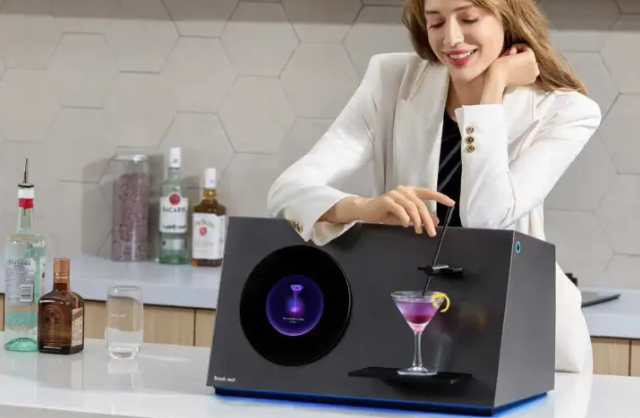
Risk Warning: These issues need to be considered in advance
Although the specifications and positioning of the BreakReal R1 are impressive, investors and consumers should still pay attention to four potential risks before participating in the crowdfunding:
First, the convenience of refilling ingredients. The device needs to be able to carry 8-10 kinds of ingredients simultaneously. Although it supports common bottled spirits on the market, it is necessary to confirm whether the interface is compatible with commonly used brands, or whether it is necessary to purchase official refill packs—this will directly affect long-term usage costs. It is recommended to pay attention to the detailed explanation of ingredient compatibility on the crowdfunding page.
Second, the depth of cleaning and maintenance. Although equipped with an electrolyzed water self-cleaning system, after prolonged use with syrups and juices, deep manual cleaning may still be necessary deep within the pipes. Consumers should assess whether they are willing to bear the cost of regular disassembly and maintenance.
Thirdly, noise level. The device contains a pump and a refrigeration compressor. Whether the operating noise is within an acceptable range in a quiet home environment is currently unknown; the official decibel data has not yet been released. It is recommended to pay attention to subsequent real-world testing and reviews.
Fourthly, inherent risks of crowdfunding. As a project about to launch on Kickstarter, even with a strong team, there may still be issues such as shipping delays and discrepancies between the mass-produced version and advertised specifications. Consumers who urgently need the device should weigh the waiting costs.
Conclusion: Who should buy this AI cocktail machine?
The core value of the BreakReal R1 lies in redefining the home cocktail-making scenario with AI technology, liberating “flavor” from fixed recipes, and balancing professionalism and convenience. The early bird crowdfunding price of $999 creates a differentiated competitive advantage in the high-end smart home market, but its target audience is not all consumers.
The target audience for this device includes: tech enthusiasts and early adopters who are keen to experience the latest AI hardware and are interested in natural language interaction technology; partygoers who frequently entertain friends at home and want to provide professional-grade drinks but don’t want to spend time learning bartending; camping enthusiasts with car power outlets who want to enhance their outdoor drinking experience; and frequent bar patrons who seek better taste than premixed cocktails while saving money by reducing the cost per drink.
However, for consumers who simply want low-cost drinking, are extremely fastidious and dislike hassle, or have extremely limited space, this device is not the optimal choice—direct drinking, DIY, or small, simple bartending tools may be more suitable.
Overall, the BreakReal R1 attempts to fill the market gap between “professional bartending” and “home convenience.” Its AI flavor vector system and natural language interaction capabilities are expected to become a new growth point for the home-based cocktail economy. For consumers who recognize its technological value and have a long-term need for home bartending, this Kickstarter early bird crowdfunding campaign may be the best time to secure a high-value product.