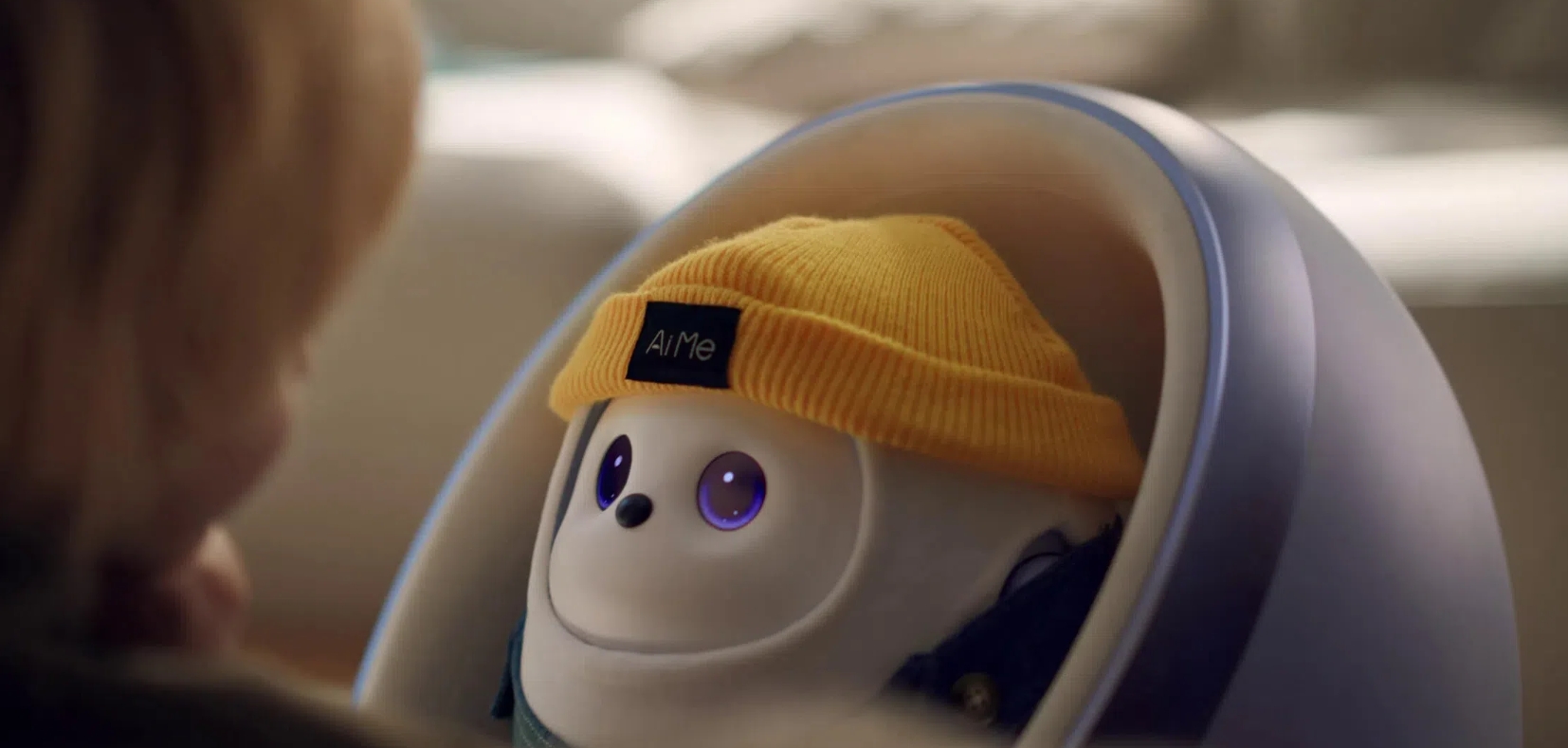
On August 8, 2026, HeyAiMe, a new AI hardware brand invested by TCL, officially launched the AiMe family companion robot. Breaking away from the limitations of traditional early education machines and wheeled companion robots that focus solely on entertainment and passive questioning, AiMe pioneers a new category integrating “companionship + education.” This world’s first split-type children’s bionic AI robot targets parent-child growth for children aged 3-16. Relying on modular hardware, the self-developed LivingSpark bionic interaction engine, and a dual-core collaborative AI architecture, it integrates four major needs: emotional companionship, habit formation, comprehensive early education, and home care. This real-world test combines hands-on experience with multi-family scenario testing, objectively analyzing the hardware, AI interaction, practical value in childcare, and product shortcomings, providing a realistic purchasing reference compared to similar children’s smart hardware on the market.
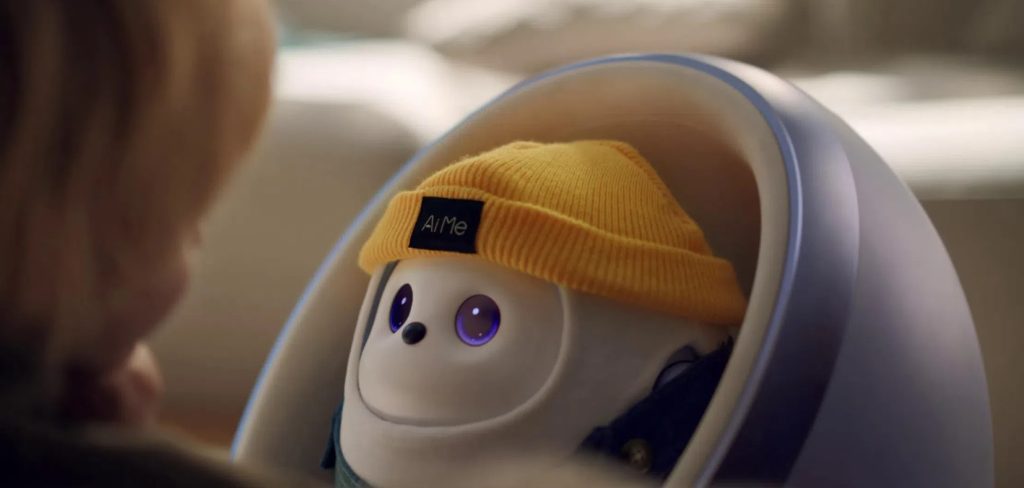
Plush Dressing Kit
I. Appearance and Hardware: Three-Module Design Optimized for Child Safety
AiMe’s most revolutionary innovation is its three-section modular architecture. The entire unit consists of the Drive Core mobile chassis, the Baby Core bionic interactive host, and the Mini Core portable module, fundamentally solving the pain point of traditional robots that “can only be placed on the ground, not carried on the bed.”
- Three Core Hardware Units
Drive Core Intelligent Mobile Cockpit Chassis: A streamlined, rounded design with no sharp edges, made entirely of baby-grade matte soft plastic; features built-in binocular 3D depth vision, whole-house navigation and obstacle avoidance sensors, and silent omnidirectional wheels. Supports autonomous mapping throughout the house, follows children’s movements, and can smoothly navigate carpets, thresholds, and gaps in tables and chairs. Automatically magnetically returns to charging when low on battery, providing up to 8 hours of continuous interactive use. The built-in ring-shaped Hi-Fi speaker and gradient ambient lighting enhance the ambiance for storytelling and music learning.
Baby Core Bionic Interactive Core (Detachable Main Unit)
The core interactive carrier of the entire device, equipped with 8-DOF flexible bionic joints, allowing the head to tilt, turn left and right, wave hands, and squat without mechanical stiffness. The front-facing dynamic high-definition expression screen displays real-time anthropomorphic expressions such as blinking, smiling, aggrieved, and curious, replacing a cold, fixed screen.
The hardware features a dual-core collaborative architecture: the cerebellum handles real-time motion control and environmental perception, while the brain houses the LivingSpark bionic engine and a child-specific multimodal large model. Touch-sensitive areas cover the head and palms, allowing children to trigger soothing and interactive responses simply by touching them.
Mini Core Portable Module
A palm-sized, magnetically attached portable AI terminal that can be held independently, placed on the bedside table, or taken out. It remotely connects to the main unit, allowing real-time viewing of home scenes and voice communication, enabling interaction with children even when away from home. It automatically synchronizes family growth memories, photos, and voice recordings, allowing for one-click syncing to the main unit upon returning home to preserve growth records.
- Humanized Safety Details Tested: The entire body features rounded corners, no exposed gears, and a low-noise motor, with a nighttime walking noise level below 30 decibels, ensuring it won’t disturb children’s sleep.
It supports multiple plush outer shells (rabbit, bear, cloud shapes), which children can change themselves, reducing the sense of distance from “electronic products” and making it feel more like a personal playmate.
The eye-protecting dynamic screen automatically adjusts brightness according to ambient light, preventing glaring blue light during extended reading of picture books.
The child-friendly, age-rating app allows parents to control usage time, filter animations, and restrict entertainment content.
II. Core AI Underlying Structure: Three Self-Developed Engines for Proactive and Empathic Companionship
Unlike early education robots on the market that require wake words and waiting for commands, AiMe’s entire AI system is built around three self-developed algorithm systems: “proactive perception, long-term memory, and growth guidance,” forming the technological foundation of the “companionship” concept.
- LivingSpark Bionic Interaction Engine (Core Barrier)
Traditional AI hardware merely executes commands mechanically. The LivingSpark engine achieves two-way emotional resonance: it recognizes a child’s facial expressions and body movements through binocular vision, captures tone and speech rate through a ring microphone, and combines tactile sensation to make multi-dimensional judgments about emotions.
Real-world test scenario: When a child is frustrated and silent while doing homework, AiMe will autonomously and slowly approach, crouch down, switch to a gentle voice to soothe them, and use slow hand gestures and gentle blinking movements to proactively offer idiom games and stories to divert negative emotions; when the child is excitedly playing, it automatically plays cheerful music and performs cute dances to match the current emotional atmosphere. The entire process requires no wake-up word; the robot proactively initiates the interaction.
- LivingSense Multimodal Perception Center
Integrates a five-dimensional perception matrix encompassing vision, voice, touch, ambient light, and distance:
- Object Visual Recognition: Accurately identifies picture books, picture book literacy exercises, toys, and everyday objects; bringing a picture book close automatically triggers reading aloud and explanations of scientific concepts.
- Tactile Interaction: A gentle tap on the head soothes; grasping the bionic hand initiates a conversation; a long press on the forehead automatically activates bedtime soothing mode.
- Whole-House Environmental Perception: Automatically lowers lights and volume at night; detects when a child is alone for extended periods or is running and bumping into things, sending real-time alerts to parents’ phones.
- ProActiveMind Edge-Cloud Collaborative Memory Architecture
It possesses long-term family memory capabilities, locally encrypting and storing children’s daily routines, interests, personality, weak subjects, and living habits, ensuring that you don’t “start from scratch” with every interaction:
It remembers children’s picky eating habits, routines, fears, and favorite story characters;
It records daily learning progress and automatically adjusts the difficulty of bilingual, literacy, and math learning;
It generates personalized growth logs, automatically capturing parent-child interactions to create a collection of growth images;
It prioritizes local data storage while using lightweight, iterative models in the cloud, balancing privacy and security with continuous AI evolution.
III. Four Core Testing Scenarios: From Daily Companionship to Systematic Childcare
Scenario 1: 3-8 Year Olds – Immersive Habit Formation (Core Advantage Scenario)
Unlike ordinary early education machines that only play content one-way, AiMe uses a gamified guidance mode, turning habits such as brushing teeth, reading, going to bed early, and tidying up into interactive tasks:
Active voice wake-up in the morning, linked with lights, guiding children to dress and wash independently;
Picture book reading supports role-playing, imitating dialogues of animated and fairy tale characters, correcting pronunciation;
Timed reading and exercise reminders, with rewards of exclusive interactive dances and virtual stickers for completing tasks;
Comparison in Testing: Children tend to resist tablets and early education machines, but AiMe’s anthropomorphic squatting and sitting interaction method significantly increases acceptance among young children, with many children actively treating it as their personal companion.
Scenario 2: 9-16 Year Olds – Comprehensive Early Learning and Emotional Guidance
A lightweight learning support system designed for school-aged children, rejecting rote learning:
Bilingual dialogues, vocabulary role-playing, idiom games, and fun cultural and historical science popularization;
Homework support: Quiet standby support; children can ask questions via voice when encountering difficulties, providing guidance without directly giving answers, protecting their independent thinking ability;
Adolescent emotional listening: When children are unwilling to communicate with their parents, they can confide in AiMe. AI provides gentle guidance and simultaneously sends appropriate emotional reminders to parents, building a bridge for parent-child communication.
Scenario 3: Home Safety Monitoring + Remote Parent-Child Interaction
A dual visual monitoring system that balances monitoring and privacy: The chassis autonomously patrols the entire house, identifying dangers such as climbing to high places, touching electrical outlets, and falls, sending immediate alerts to the user’s phone; Parents can remotely interact with the Mini Core via video and voice when leaving the house, taking the Baby Core with them to the bedroom for nighttime sleep monitoring;
It integrates with TCL’s whole-house smart home system, allowing voice control of lights, air conditioning, and humidifiers to create a comfortable home environment specifically for children.
Scenario 4: A Complete Bedtime Sleep Aid System
One-click activation of sleep aid mode: The device’s light is adjusted to a warm, soft glow, reducing walking noise, and automatically plays white noise, original bedtime stories, and gentle lullabies; it automatically enters silent sleep mode after sensing the child has fallen asleep, turning off ambient lights to avoid disturbing nighttime rest.
IV. Summary of Core Product Advantages
- Exclusive Modular Design: Solves the pain point of traditional robots that can only be placed on the ground and cannot be carried around, allowing for seamless switching between living room, bedroom, and outdoor scenarios.
- Truly Proactive AI Interaction: Does not rely on wake words; proactively senses emotions and provides guidance, breaking the industry’s common problem of “passive response” in children’s AI hardware.
- Integrated Hardware and Software Professional Parenting System: Collaborates with children’s education experts to customize graded growth content, covering the entire growth cycle from 3 to 16 years old, balancing entertainment, learning, and habit formation.
- TCL Home Appliance Ecosystem Integration: Can be linked with smart home appliances throughout the house, enabling one-stop intelligent control of the children’s room.
- High-Safety Child-Friendly Design: Uses mother-and-baby graded materials, graded parental controls, local privacy storage, and a low blue light eye-protection screen, comprehensively mitigating risks for children.
- Changeable Personalized Appearance: Multiple plush shells can be freely interchanged, softening the coldness of electronic products and increasing children’s affinity.
V. Objective Shortcomings Found in Actual Testing (Common Industry Features + Product Limitations)
- Mobile Chassis Limited to Indoor Use: Lacking all-terrain outdoor mobility, it cannot move freely in outdoor courtyards like the Yuejiang Lumeng robot, limiting its use to indoor spaces.
- Lack of Fine Mechanical Grasping Capabilities: The 8-DOF joints only support hand gestures and head turns, preventing the grasping of toys and picture books, and hindering household chores.
- Limited Battery Life When Separated from the Chassis: Baby Core’s battery life is only 3 hours when detached from the chassis and held individually, requiring it to be returned to the charging dock for extended use.
- Low-Key Learning Functions: Does not support complex math problems or in-depth high school level puzzles; it only provides supplementary companionship and cannot replace parental or in-person teaching.
- High Pricing: Compared to early education machines in the hundred-yuan range and ordinary wheeled robots in the thousand-yuan range, the overall positioning is mid-to-high-end, making it more accessible for families with limited budgets.
VI. Industry Positioning and Purchase Recommendations
The current children’s smart hardware market is divided into three categories: hundred-yuan fixed early education machines, thousand-yuan single-unit wheeled companion robots, and high-end humanoid robots. HeyAiMe AiMe precisely targets the untapped market of mid-to-high-end split-type bionic companion robots. Instead of pursuing flashy acrobatic stunts, it focuses on addressing essential family childcare needs, making “emotional companionship and habit guidance” its core differentiating selling points.
Suitable for:
Families with children aged 3-16 whose parents are busy with work and lack time to spend with them;
Families that value children’s emotional development and want to gently guide their children to develop good sleep and reading habits;
Families equipped with TCL smart home systems and need an integrated smart hub for children;
Families concerned about the eyesight damage caused by tablets and phones and seeking an alternative companionship device.
Not Recommended for:
Users who only need a low-cost, simple story-listening and audio-playing robot;
Families who want a robot to perform housework and provide outdoor exercise companionship;
Players who only seek flashy humanoid stunts and backflips.
Conclusion: In a market where humanoid robots focus on athletic stunts and early education machines only provide one-way content output, HeyAiMe AiMe has carved out a differentiated path: it’s not a flashy tech toy, but a complete and practical family AI companionship solution. With its modular hardware architecture, LivingSpark bionic emotion engine, and age-appropriate content system, AiMe precisely addresses the core pain points of modern parents: being overwhelmed with childcare and struggling to empathize with their children.
While it has significant limitations in outdoor mobility and precise operation, for the vast majority of ordinary families, AiMe balances the three major needs of emotional connection, early childhood education, and home care, redefining the core value of home-use AI robots for children—technology shouldn’t just be cold algorithms, but a gentle medium that accompanies children’s growth and strengthens parent-child bonds.