Tag: AI Wearable Devices

Refers to the category of wearable intelligent hardware products with AI computing capabilities. 2025 marks the explosion year of AI wearable devices. GlassClaw AI glasses, together with products such as smart rings and pendants, constitute a diversified AI hardware ecosystem, providing users with full-scenario intelligent service coverage from health monitoring, office collaboration to emotional recording.
  • Tech Giants Collectively Bet on Screenless AI Hardware

    When OpenAI announced plans to launch a compact screenless device by the end of 2026 with a target shipment of 100 million units, the entire technology industry was electrified. This announcement not only signifies the birth of a new product but marks a collective bet by tech giants on a “screen-free” AI hardware future.

    From Phones to Screenless Devices: A Fundamental Shift in Interaction Paradigm

    For a long time, smartphones have been the primary interface between humans and the digital world. However, this interaction method has inherent limitations—users must actively take out their devices from pockets, unlock the screen, and find the corresponding application. Tech companies are realizing that a true AI assistant should be as ubiquitous as air, rather than trapped behind a glass screen.

    OpenAI is collaborating with MediaTek and Qualcomm to develop mobile processors, with mass production expected in 2028. But more noteworthy is CEO Sam Altman’s hint that the “ultimate form may not look like a phone we’re familiar with at all”—instead, it would be an AI terminal without apps, relying entirely on voice interaction.
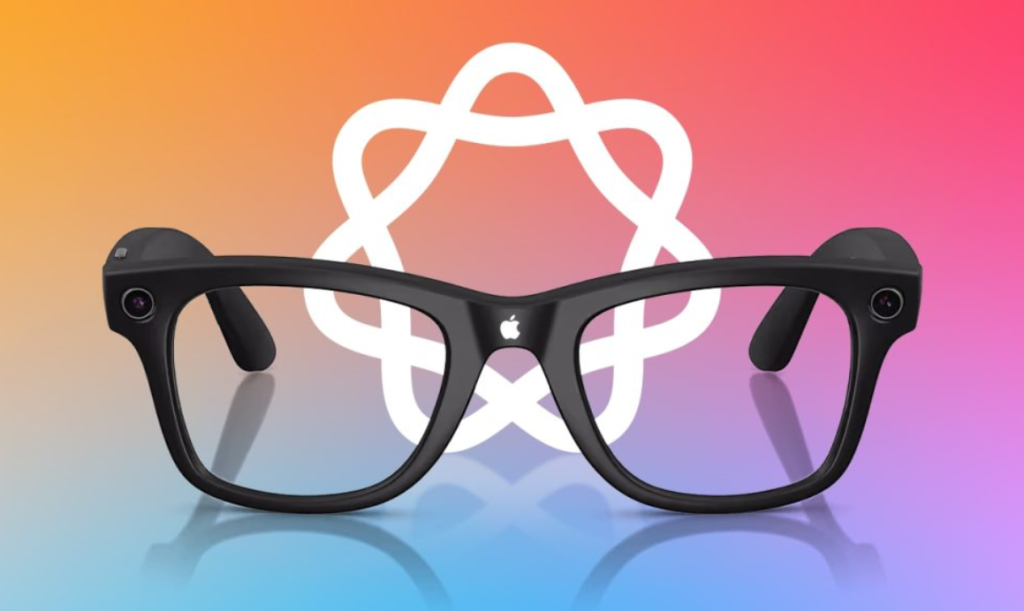
    Conceptual design of Apple’s AI glasses, featuring a design without a display screen and a dual-camera setup that supports gesture control.
    Conceptual design of Apple’s AI glasses, featuring a design without a display screen and a dual-camera setup that supports gesture control.

    Apple is equally accelerating development of its first AI smart glasses, codenamed “N50.” To pursue lightweight design, this device abandons the display screen, adopting a dual-camera solution supporting gesture control, while offloading computing tasks to paired iPhones for power balance. Apple’s designers are testing various frame styles, aiming to make the product look more like fashionable everyday glasses rather than tech gadgets.

    Meta Ray-Ban Has Already Validated the Market
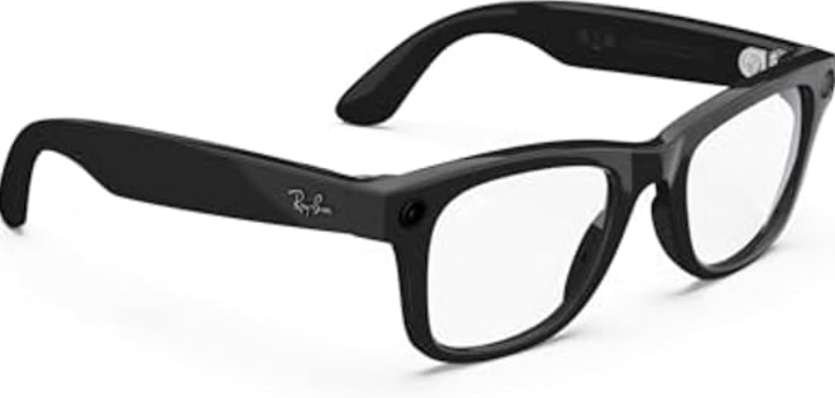
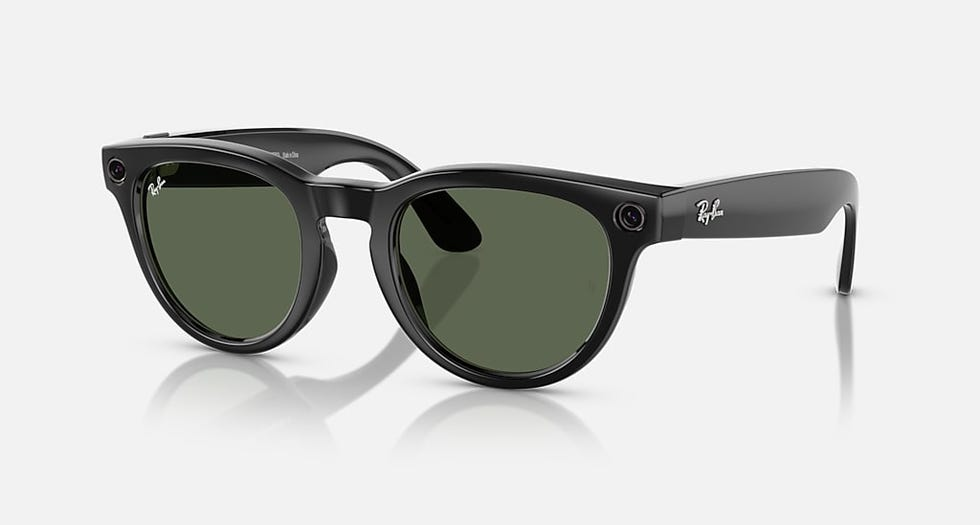
    The Meta Ray-Ban smart glasses feature a minimalist black design and currently hold the largest market share globally, accounting for 85.2% of the market.
    The Meta Ray-Ban smart glasses feature a minimalist black design and currently hold the largest market share globally, accounting for 85.2% of the market.

    In this screenless AI hardware race, Meta has established an absolute lead with its Ray-Ban series. Data shows that Ray-Ban smart glasses currently hold 85.2% of the global smart glasses market—a figure intimidating enough to pressure any competitor.

    Meta’s new AI model, Muse Spark, has begun embedding into the smart glasses ecosystem, significantly enhancing the device’s multimodal understanding capabilities. Users can not only use it for calls and music but also have the AI assistant “see” objects in front of them and provide descriptions or suggestions. This leap from “hearing” to “seeing” transforms smart glasses into a genuine “second brain” for users.

    Supply Chain Challenges and Domestic Opportunities

    The rapid development of screenless AI hardware is reshaping the upstream supply chain landscape. The exponential growth in AI computing demand has driven the optical communication chip market.

    Domestic manufacturer Everbright Huaguang’s VCSEL and optical communication chip product lines saw revenue surge 1036.79% year-over-year in 2025, demonstrating explosive growth.

    However, hidden concerns exist behind this high growth. The manufacturing process for high-end EML chips is more than three times more complex than traditional laser chips, with core patents almost entirely monopolized by international giants.The domestic localization rate remains below 10%. Global high-end production capacity has been locked through 2028, constituting a core bottleneck for screenless AI hardware mass production.

    For Chinese enterprises, this presents both challenges and opportunities. At the Dreame AI smart ring booth at the Canton Fair, on-site contract amounts exceeded one million RMB, demonstrating robust international demand for domestic screenless AI products.

    From Health Monitoring to Children’s Education: Scene Applications for Screenless Design

    Screenless design is finding product-market fit in specific segments.

    In the health wearable sector, Dreame’s AI smart ring weighs only 2.6 grams, delivering an ultra-light, barely noticeable wearing experience. It integrates multimodal sensors to collect round-the-clock health data and leverages AI algorithms for professional analysis. This lightweight solution is highly appealing to health-conscious users who dislike bulky wearable devices.
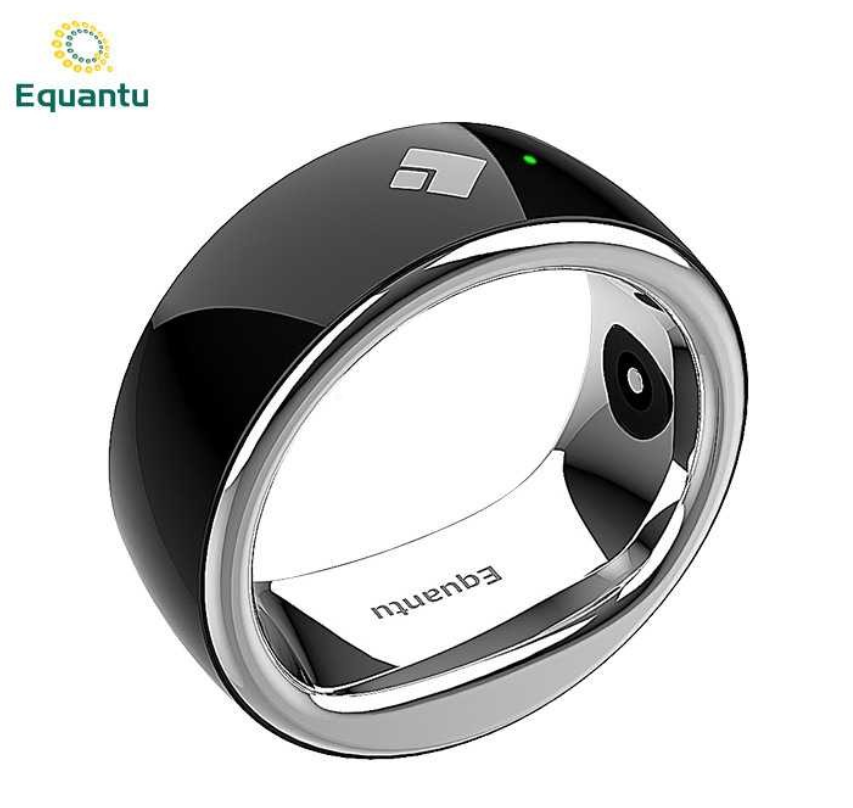
    The AI-powered smart ring weighs only 2.6 grams and allows for “comfortable wear.” It integrates multi-modal sensors to collect health data 247.
    The AI-powered smart ring weighs only 2.6 grams and allows for “comfortable wear.” It integrates multi-modal sensors to collect health data 247.

    The children’s hardware market also favors screenless design. Seewo’s Seedpace AI interactive story machine for the North American market features no screen as its defining characteristic, using story cards and audio interaction to engage children while allowing parents to manage content through an app. This design directly addresses parents’ concerns about screen harm.

    The Future Contest: Replacement or Supplement?

    Despite the enthusiasm from tech giants, whether screenless AI hardware can truly replace phones remains uncertain. Currently, screenless devices are more likely targeting the “scenario gaps” that phones cannot cover—during exercise, commuting, or when hands are occupied. These scenarios require quick responses and information access rather than deep immersion.

    The real test lies in user experience. Technical maturity, user habit cultivation, commercial pricing, and other factors will determine the ultimate fate of this emerging category. OpenAI’s first device is expected to be priced between $200-300; whether consumers will embrace it remains to be seen in the next 12 months.

    When AI steps out of screens and integrates into everyday items like glasses, rings, and necklaces, our way of interacting with the digital world may undergo fundamental change. This race, just beginning, deserves continued attention.
  • The Ambition Behind 40 Grams: How IFlytek’s GlassClaw AI Glasses Are Rewriting Industry Rules

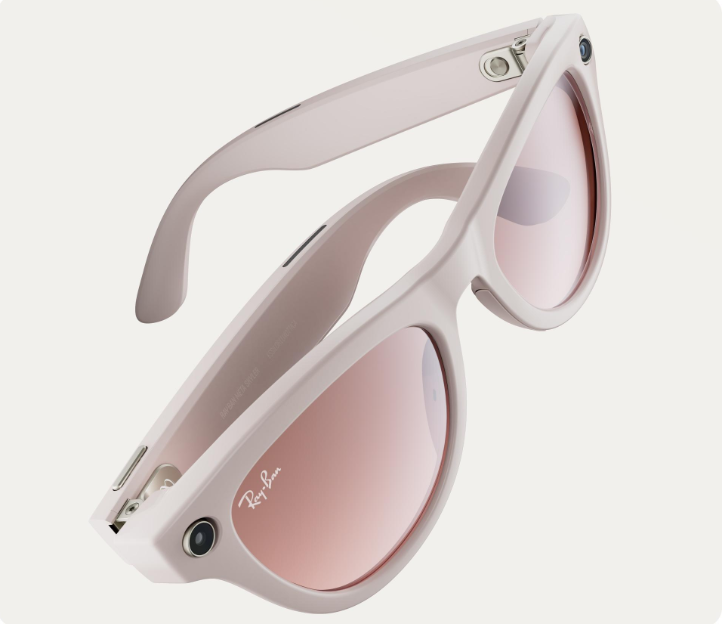
    Meta Ray-Ban smart glasses lead the industry with their lightweight design and AI capabilities, providing users with seamless intelligent experiences
    Meta Ray-Ban smart glasses lead the industry with their lightweight design and AI capabilities, providing users with seamless intelligent experiences

    From Voice Recognition Giant to AI Agent Pioneer

    iFlytek is no longer satisfied with an AI that can only “speak.”

    On April 15, 2025, the company famous for its voice recognition technology officially launched the AstronClaw upgrade, unveiling nine innovative products in one go and presenting for the first time a complete “software-hardware integrated” AI Agent architecture. The most eye-catching product at this launch event was a pair of AI glasses weighing just 40 grams—GlassClaw.

    “Our goal is not to create a conversational assistant, but to become the execution hub of the physical world,” iFlytek stated clearly at the launch event. This strategic shift means that large language model competition has already moved from algorithm benchmarking to a new battlefield of embodied intelligence and multimodal interaction.

    40 Grams: Technical Breakthrough Behind Lightweight Design

    While the industry is still debating the feasibility of AI glasses, GlassClaw has delivered an impressive answer with its 40-gram weight.

    A standard pair of prescription glasses weighs approximately 20 to 30 grams, while GlassClaw adds only 10 to 20 grams on top of that. This means users can virtually achieve all-day comfortable wearing, completely bid farewell to the traditional problem of smart glasses “pressing down on the nose bridge.”

    Supporting this lightweight design is a series of technological innovations. GlassClaw adopts a voice-visual collaborative perception architecture, achieving real-time environmental semantic completion through cloud-end linkage. Technically, GlassClaw has overcome two major challenges faced by AI glasses: lip movement recognition and remote sound capture. Even in high-noise environments, the device can accurately capture user voice commands, significantly improving usability in complex scenarios.

    AI smart glasses are evolving towards lightweight and stylish designs, balancing technological appeal with everyday wearing comfort
    AI smart glasses are evolving towards lightweight and stylish designs, balancing technological appeal with everyday wearing comfort

    Software-Hardware Integration: Redefining the AI Interaction Paradigm

    The release of GlassClaw represents not just a breakthrough in a single product, but also iFlytek’s reconsideration of the AI interaction paradigm.

    Traditional AI assistants are limited to cloud computing and screen-based interaction, where users must proactively initiate requests to receive services. The software-hardware integrated GlassClaw achieves end-cloud collaborative computing, enabling AI to proactively perceive the physical world, understand user intentions, and execute corresponding actions.

    Taking the Canton Fair itinerary planning as an example, the traditional approach requires users to manually search for information, write schedules, and enter them into calendar applications one by one. With GlassClaw, users simply issue a command, and the system automatically integrates local notes, online data, and personalized preferences to generate a complete itinerary and sync it to calendars and to-do lists.

    The transformation from “you ask, it answers” to “you tell, it does”—this shift is redefining the way humans collaborate with machines.

    Industry Landscape: AI Glasses Track Accelerates Restructuring

    GlassClaw’s entry has intensified competition in the AI glasses sector.

    Meta’s Ray-Ban smart glasses, launched in 2023, have sold over a million units cumulatively, becoming a benchmark product in the AI glasses field. Hardware giants like Samsung and Apple are also actively deploying, attempting to secure a position in this emerging track.

    The domestic camp is equally determined. In addition to iFlytek’s GlassClaw, companies like Baidu, Xiaomi, and Huawei are developing their own AI glasses products. Supply chain data shows that global smart glasses shipments increased by over 300% year-over-year in the first half of 2025, with the market scale expanding rapidly.

    Notably, AI glasses are forming a collaborative ecosystem with smart rings, pendants, and other wearable devices. iFlytek’s AstronClaw platform supports multi-device interconnection, allowing users to link GlassClaw glasses with smart rings for richer interactive experiences.

    Strategic Intent Behind Technical Roadmap

    The recruitment positions reveal glimpses of iFlytek’s technical ambitions.

    Recent job postings cover areas including smart location selection (spatial data modeling), global sales forecasting (supply chain operations optimization), Agent Skill development (MCP service architecture design), and multi-agent collaboration (complex business logic architecture). iFlytek aims to build not a laboratory demo, but a truly deployable AI Agent product.

    This strategic intent is clear: whoever masters software-hardware integration capabilities will build an ecosystem moat. In the increasingly intense competition of large language models, the end-cloud collaborative AI Agent ecosystem is expected to become enterprises’ new defensive barrier.

    Outlook: The Next Decade of AI Hardware

    The release of GlassClaw marks China’s entry into the “software-hardware integrated” era of AI Agents.

    With continued technological breakthroughs, AI glasses will become even more feature-rich. From basic voice interaction to complex multimodal perception, from single device control to full-scene intelligent connectivity—AI is moving from screens into reality, becoming a capable assistant in people’s lives.

    GlassClaw weighing 40 grams may just be a beginning. In the future, we can expect even lighter and smarter AI hardware products, fundamentally changing the way humans interact with machines.

    It’s not just an AI that can chat—it’s an AI that can get things done for you. iFlytek is serious this time.