Recently, global tech giant Meta officially announced a key personnel appointment: Xu Rui, a former core executive of Xiaomi and ByteDance’s hardware businesses, will head the newly formed AI hardware team at Meta’s Superintelligence Lab (MSL).
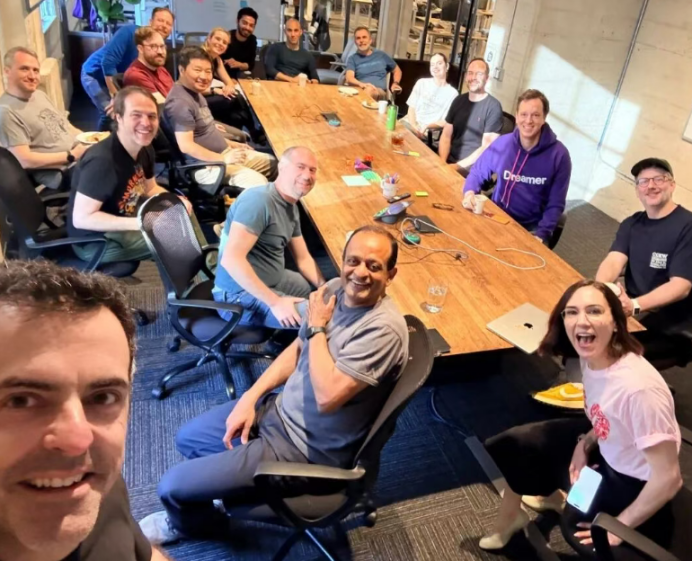
Previously, Dreamer, an AI hardware startup founded by former Xiaomi Vice President Hugo Barra, was acquired by Meta in March of this year, with Xu Rui joining as a core member. This move not only signifies the completion of a key piece in Meta’s smart hardware strategy but also clearly signals a strategic shift in its R&D focus from “meta-universe infrastructure” to “AI-native devices.”
As Meta’s newly established strategic engine, MSL is personally led by Alexandr Wang, a leading figure in the field of artificial intelligence infrastructure. The lab was established to address the urgent need for next-generation computing terminals driven by the explosion of generative AI.
According to industry disclosures, MSL’s AI hardware team has initiated a deep structural restructuring, with a large number of senior engineers and product experts from Reality Labs smoothly transitioning to the new department, achieving full integration of software and hardware resources. Unlike traditional hardware R&D, which follows the logic of “specifications define products,” the MSL team’s core objective focuses on the underlying interaction paradigm of “AI native.”
The team is dedicated to overcoming the challenge of deeply integrating large-scale model capabilities with physical carriers, exploring new device forms with proactive context awareness, multimodal natural interaction, and local privacy computing. Alexandr Wang previously clearly stated Meta’s long-term vision: to transcend the reliance on a single smartphone screen and build a distributed computing network centered on personalized AI agents. To this end, MSL will focus on optimizing edge AI computing power, low-power sensor arrays, and seamless cross-terminal collaboration protocols, striving to launch an AI hardware product line that truly reshapes the human-machine relationship within the next two to three years, making intelligent services as natural as air.
Xu Rui, a senior hardware technology expert and serial entrepreneur, has previously worked at Intel, Lenovo, Xiaomi, and ByteDance. During his time at Xiaomi, he spearheaded the globalization of the TV business from zero to profitability. At ByteDance, he also created blockbuster hardware products with over a million units sold, possessing comprehensive industry experience spanning consumer electronics and cutting-edge AI hardware.
Looking globally, the AI hardware sector is experiencing an unprecedented inflection point. Over the past decade, the mobile internet, with its touchscreens and high-speed networks, has completely reshaped lifestyles. Now, standing at the forefront of the big data era, industry consensus is increasingly clear:
The next generation of personal computing gateways will inevitably be AI-native. From Silicon Valley tech giants to innovative Chinese companies, the global industry chain is collectively focusing on hardware forms for the “post-smartphone” era.
Simultaneously, with the continuous decline in the cost of large-scale inference on the edge, the commercialization of new solid-state batteries and flexible materials, and the vigorous evolution of open-source chip architectures, the bottlenecks of computing power, battery life, and cost that once constrained the widespread adoption of AI hardware are being broken down one by one. Future smart terminals will completely shed the label of “application container” and evolve into “digital extensions” with spatial understanding, emotional resonance, and autonomous decision-making capabilities. Z
Meta’s integration of top talent and its ambitious MSL strategy not only represents a strategic upgrade to its own technology ecosystem but also points the way for the entire consumer electronics industry to evolve from “functional overlay” to “intelligent endogenous” transformation.
It is foreseeable that the explosive growth of AI hardware will spawn a trillion-dollar incremental market and profoundly reshape the industrial logic of education, healthcare, office work, and entertainment.
In the wave of technology democratization and open collaboration, hardware innovation is returning to its original “human-centered” focus. As leading global laboratories continue to push the boundaries of interaction, AI devices will deeply integrate into daily life in a lighter, more seamless, and more accessible manner.
In this historical process of reshaping computing paradigms and productivity patterns, the deep integration of China’s well-developed hardware supply chain and cutting-edge global algorithms will undoubtedly provide a solid foundation for the large-scale deployment of AI hardware. The future is here; AI-native hardware is unstoppable in opening the door to a new era of human-machine symbiosis, creating a more efficient, convenient, and imaginative intelligent life for users worldwide.