In late June 2026, ZuzuZoos, an AI-native tech toy brand, officially announced the completion of a Pre-A round of financing worth tens of millions of yuan, becoming the most watched startup project in the pet emotional AI hardware sector recently.
The funds were clearly allocated to five main areas: continuous iteration of the edge-specific pet emotional big data model, production line expansion and hardware mass production, building an original IP worldview ecosystem, simultaneous expansion into the US and Chinese markets, and recruitment of core teams in algorithm, structure, and IP design. The brand secured significant institutional investment within just one year of its founding, its core competitiveness stemming from a rare, multifaceted founding team:
- Founder Dong Xiaonan: Former investment banking analyst at Morgan Stanley, and former General Manager of the Moody business unit at the contact lens unicorn, where he drove the brand’s GMV from 200 million to 1 billion RMB, with deep expertise in female consumer engagement;
- Hardware R&D Head: Former core mechanical structure engineer for DJI’s robotic vacuum cleaners, possessing 15 years of experience in robot motion control and bionic structure development, and the core hardware designer for three pet companion robots;
- IP Creative Team: Featuring senior designers from Pop Mart and Disney, focusing on differentiated trendy toy character designs;
- AI Algorithm Team: From leading model companies such as Zhipu AI, developing its own multimodal recognition model for pet voiceprints and tactile perception.
The current market for smart pet hardware is highly homogenized, with most products offering only basic functions like feeding and monitoring. ZuzuZoos breaks free from this “tool-type pet device” framework, positioning itself as a “silicon-based pet companion”. It transforms AI robots into portable, independent, and emotionally sensitive virtual pet partners, precisely addressing the needs of young people living alone, experiencing separation anxiety from their pets, and seeking emotional support. This is the core logic behind the strong investor confidence in its growth potential. Industry data shows that the domestic market for emotional companion robots is expected to exceed 130 billion yuan by 2026, with lightweight hardware combining trendy appeal and AI interaction representing a relatively untapped market segment.
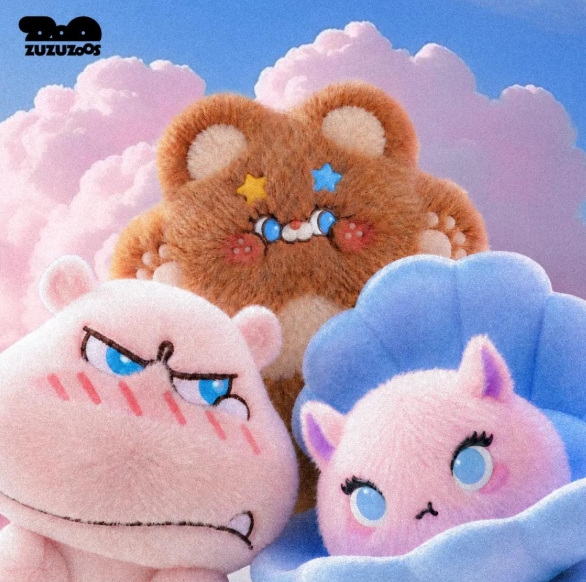
In-depth Real-World Testing and Review of Three Core AI Pet Companion Devices The brand launched three original IP bionic AI pet robots: the seashell “Pearl,” the silicone bear, and the hippo interactive robot. These robots focus on home companionship and alleviating pet anxiety while also providing human emotional interaction. Pre-orders begin in July, with full-channel availability expected by the end of the year. This review analyzes the product from four dimensions: design, core AI capabilities, suitable pet scenarios, and advantages and disadvantages.
(I) Shell IP Pearl AI Pet Comfort Companion Machine
Basic Hardware Parameters: The entire device is encased in a skin-friendly short-pile plush shell, featuring 3 sets of biomimetic mechanical degrees of freedom, an automatically opening and closing shell structure, a built-in independent voice speaker, a near-field infrared sensor, and a Bluetooth 5.3 low-latency module, supporting up to 12 hours of battery life.
AI Core Capabilities Tested:
- Human-Pet Dual Voiceprint Recognition Algorithm: A local offline model accurately distinguishes between four types of voiceprints: human speech, cat purring, dog barking, and stress howling. When a pet is home alone and makes continuous anxious cries, the shell automatically and slowly opens, playing customized low-frequency soothing white noise (simulating the chest vibration sound effect of a mother cat/dog), effectively alleviating separation anxiety;
- Remote Two-Way Voice Interaction: The microphone can be remotely activated via a mobile app, allowing interaction with the pet through the pearl body. The shell’s opening and closing rhythm follows the rise and fall of the voice, providing a more tangible interactive experience compared to ordinary camera voice communication;
- Multi-Pet Memory Storage: The app records the voiceprints of cats and dogs at home, individually recording the duration of each pet’s restlessness when alone, generating a weekly home mood report.
Suitable Scenarios & Real-world Testing Advantages and Disadvantages
✅ Advantages: Soft, rounded design; cats actively seek shelter in the shell-shaped compartment; offline AI requires no constant internet connection, automatically soothing even when offline; the shell shape also serves as desktop decoration.
❌ Disadvantages: Limited shell opening range; weaker interaction perception for large dogs; no built-in treat dispenser, lacking a positive reward interaction mechanism. Suitable for: Cat-owning families, single owners of small dogs, and users who value aesthetics in their home decor.
(II) Silicone Bear AI Tactile Interactive Pet Companion Robot
Basic Hardware Parameters: Full body made of food-grade silicone bear paws + plush body; 4 biomimetic degrees of freedom (raising paw, hugging, folding ears, waving paw); body covered with multi-touch tactile sensors; detachable treat dispenser at the bottom; built-in vibration feedback module.
AI Core Capabilities Tested
- Tactile Behavior Recognition: Rare in the industry, this pet tactile perception AI recognizes four types of pet actions: rubbing, scratching, gentle biting, and patting, with corresponding different responses: When a pet gently rubs its paw, the bear lowers its head and folds its ears to listen; after prolonged rubbing against the device, the bear automatically wraps its arms around the pet, simulating cuddling; frequent scratching indicates boredom, and the bear automatically waves its paws to amuse the pet.
- Treat-Linked Incentive Mechanism: The app allows for timed feeding, and the bear’s paw movements synchronize with the release of freeze-dried treats, forming a positive “interaction-reward” training logic to correct destructive habits and excessive barking.
- Emotional Memory Development System: The AI records pet interaction preferences over time, such as cats preferring belly rubbing or dogs liking handshakes, and will actively trigger corresponding actions. The more the interaction is used, the more it matches the pet’s personality.
Suitable Scenarios & Tested Advantages and Disadvantages
✅ Advantages: The bionic hugging interaction is unique in the market for pet hardware; the soft touch won’t hurt the pet’s gums; the training function can replace simple pet trainers; 15-hour battery life, no worries about all-day standby. ❌ Disadvantages: The silicone bear paw design easily attracts cat hair, requiring frequent cleaning; the device is relatively large, taking up valuable space on small apartments. Suitable for: Families with multiple pets, puppies and kittens, and pet owners needing behavioral correction.
(III) Hippo AI Emotional Pet-Playing Robot
Basic Hardware Parameters: Trendy and cute appearance, dual bionic degrees of freedom for mouth opening and closing and tail swinging, built-in laser-based pet-playing module, high-volume emotional sound effect library, lightweight body suitable for placement next to cat trees or dog beds.
AI Core Capabilities Tested
- Visual Prediction of Abnormal Pet Postures: When integrated with a home security camera, AI identifies when a pet is squatting alone for extended periods, pacing back and forth, or circling anxiously, automatically activating the laser pet-stimulating device to divert negative emotions.
- Hundreds of Customizable Emotional Voices: The brand collaborated with a game audio team to create a unique, humorous sound effect for the hippo. It emits a soft purr when the pet is quiet and a light, playful sound effect to distract it when agitated.
- Low-Noise Pet-Sstimulating Design: The laser module provides a soft, dim light that won’t damage the pet’s eyes. Mechanical movement noise is only 28dB, which won’t irritate sensitive cats and dogs.
Suitable Scenarios & Tested Advantages and Disadvantages
✅ Advantages: Minimal size, flexible placement; laser pet-stimulating device accurately depletes pet energy, reducing furniture damage; trendy design suitable for young pet owners.
❌ Disadvantages: No physical tactile interaction, less pet stickiness compared to the teddy bear; short battery life, requires charging after 2 hours of continuous use. Suitable for: Energetic young pets, cat owners in small apartments, and users who prefer lightweight smart devices.
III. Horizontal Competitive Product Comparison: ZuzuZoos’ Core Differentiated Advantages
Currently, mainstream pet AI hardware falls into two categories: one is tool-type feeding/monitoring devices like Petkit and Homan, focusing on diet and safety monitoring; the other is ordinary AI voice speakers, lacking pet-specific bionic interaction. ZuzuZoos’ three products form three major differentiating barriers:
- Bionic Mechanical Interaction + Multimodal AI Fusion: Not relying on a single camera for monitoring, it utilizes touch, voiceprint, and motion sensing to allow pets to experience “physical companionship,” rather than a cold electronic device;
- Dual Attributes of IP Toy + Pet Hardware: It combines home decoration, portable toy, and pet comfort, simultaneously satisfying pet owners’ aesthetic and pet-raising needs;
- Lightweight On-device Offline AI: The core recognition algorithm runs locally, offering stronger privacy. Even in offline scenarios, it can autonomously comfort pets, unlike similar products that heavily rely on the cloud.
IV. Market Outlook and Product Summary
From a funding perspective, ZuzuZoos fills the gap in the emotionally supportive AI pet toy market. The DJI hardware team ensures the practical application of its bionic structure, the founder’s consumer background accurately addresses the pain points of female pet owners, and the IP system lays the foundation for long-term repeat purchases and peripheral product development.
Based on real-world testing of the three products, the following purchasing recommendations are provided:
- For cat owners and those prioritizing aesthetics in their home decor: Choose the pearl shell version;
- For owners with multiple pets, those needing pet training, and those who enjoy immersive interaction: Choose the silicone bear version;
- For those with small apartments, energetic young pets, and limited budgets: Choose the Hippo Robot version.
Shortcomings also objectively exist: Currently, the three products cannot integrate with third-party smart litter boxes or smart feeders, resulting in weaker ecosystem integration compared to established pet appliance brands. Furthermore, the products currently lack physiological monitoring modules (body temperature, heart rate), indicating a lack of health monitoring functionality, which is a key area for future upgrades and subsequent funding rounds.
In the long run, with the implementation of this round of funding worth tens of millions, ZuzuZoos will continue to improve its large-scale pet-specific models, expand its wearable collar accessories, and leverage trendy toy IPs to achieve two-way emotional companionship between humans and pets. This is expected to reshape the current industry status quo where smart pet hardware only focuses on tool functions.